
VAPE FAQs
How Do You Inhale A Vape?

Oct
Many adult users who transition from traditional cigarettes to portable electronic devices find the inhalation process unexpectedly puzzling. They draw as they always have — a tight, two‑step pull into the mouth and then the lungs — only to experience weak output, an uncomfortable sensation, or a device that fails to respond. The frustration is not about the device being defective; it is about a mismatch between the user’s learned technique and the way a particular piece of engineering was designed to be used.
This article unpacks the mechanical, electrical, and design factors that dictate how a device delivers its output and how your inhalation behaviour interacts with that system. It does not prescribe a single “correct” method; instead, it equips you with the knowledge to recognise what a device expects from you and to choose equipment that aligns with your natural rhythm. Authorised retailers such as OZVAPE Shop present detailed, standardised specifications that make this alignment far easier than guessing from packaging alone.
Understanding What Matters: Core Engineering and Design Factors
To inhale comfortably and consistently, it helps to look past the exterior and understand the four engineering layers that directly shape every draw you take.
Internal Architecture and Output Consistency
At the heart of every device is a heating element — a coil, often arranged as a mesh or wire — that converts stored energy into the thermal output needed to produce an aerosol. The architecture of this element and the way it is wicked determines whether each puff feels identical to the last or tails off into harshness.
When a heating element cannot maintain a stable temperature across the length of a draw, the user notices: early fractions of a second give a full, balanced sensation, but by the third second the heat spikes, leading to irritation. Quality designs mitigate this through precise resistance control and even wicking, ensuring the temperature remains within a narrow band regardless of draw duration. For someone who inhales slowly and deliberately, a device that ramps temperature late in the draw will feel punishing. For a brief, habitual puffer, the inconsistency may pass unnoticed. Understanding this helps you select a device whose thermal behaviour matches your inhalation cadence.
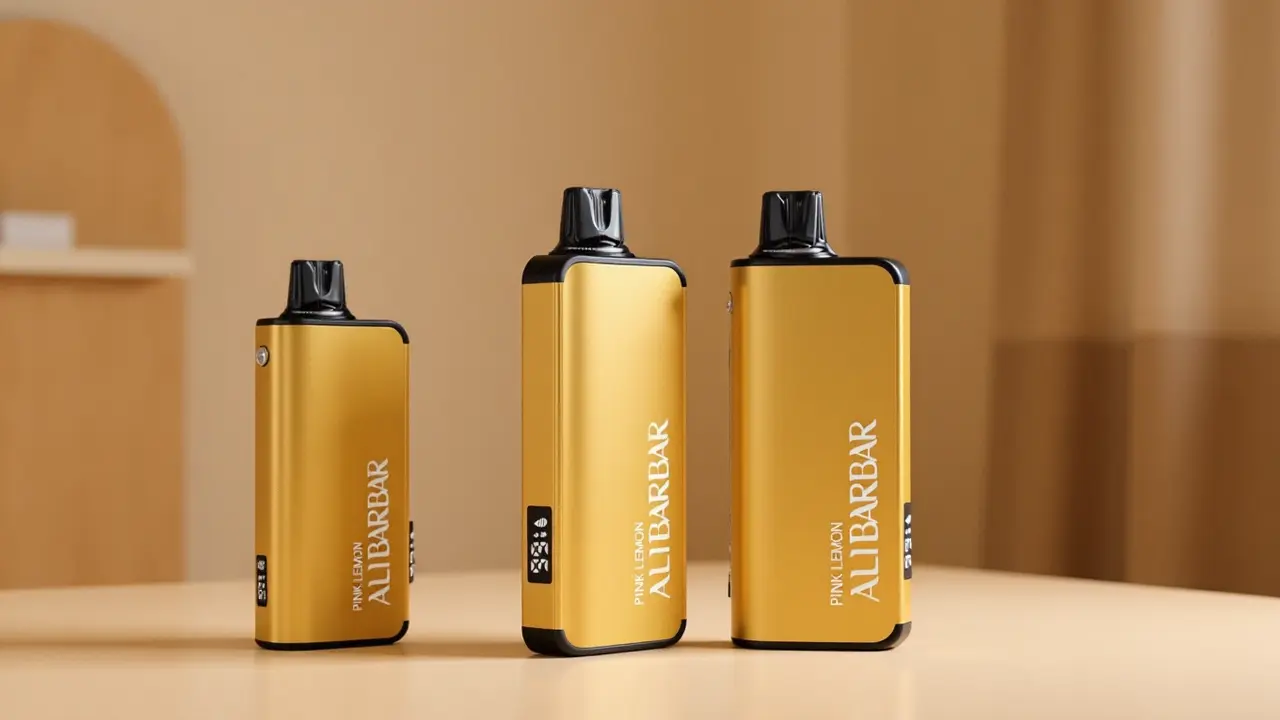
The ALIBARBAR INGOT series, for instance, uses a mesh coil architecture that spreads heat across a larger surface area. This does not make it “better” in an absolute sense, but it does mean that users who prefer a steady, medium-length draw are less likely to encounter a sharp temperature rise mid‑inhalation — an engineering choice worth noting if you have experienced that specific irritation.
Power Management and Status Transparency
Every portable device relies on a power cell. As the cell depletes, its ability to deliver a stable voltage to the heating element degrades. The effect on inhalation is direct: a weaker output forces the user to draw harder and longer to achieve a satisfying result, which can overheat the coil and produce a burnt taste. Worse, if the device gives no clear warning that power is low, the user may interpret the poor performance as a device fault and discard it prematurely — or, conversely, keep drawing aggressively and damage the internals.
Transparent status indicators — whether a simple multi‑step LED or a more precise display — are not a luxury. They let you anticipate when a draw will feel thin and adjust your expectations or recharge. A device that conceals its charge level forces you to operate blind, and in that blindness, the natural response is to inhale with force, compounding the problem. When evaluating any unit, ask: “Does this device tell me when the power is about to fall below the threshold that will alter my draw?” If the answer is no, you will be compensating for an engineering gap with your lungs.
Physical Design and Material Durability
The shape of the mouthpiece, the profile of the airflow inlet, and the overall ergonomics of the body determine how a device fits into your life and your hand. Mouth‑to‑lung inhalation, which most resembles a cigarette draw, benefits from a narrow, contoured mouthpiece that limits air intake and allows the user to pull with gentle suction. Direct‑lung inhalation requires a wider bore and a less restrictive airflow path to deliver the higher volume of aerosol directly into the lungs in a single, smooth inhale.
Beyond shape, the materials matter. A mouthpiece made from a cheap polymer may feel acceptable on day one but can degrade quickly from repeated contact, becoming rough or absorbing heat in a way that irritates the lips. A device that is too heavy or poorly balanced will tire the hand during an extended session, subtly altering your grip and the angle of the draw. These factors are not cosmetic; they are the physical interface through which every inhalation is mediated.
Modularity and Lifecycle Flexibility
Over time, every heating element and wick ages. In a sealed, pre‑filled unit, the user has no choice but to accept a gradual decline in draw quality as the coil accumulates deposits. The final third of the device’s rated lifecycle may deliver an output that is noticeably hotter, thinner, or requires more effort to pull. If your inhalation technique was calibrated to a fresh unit, that comfortable rhythm will be strained.
Modular devices — those with replaceable pods, coils, or refillable reservoirs — allow the user to restore the original draw characteristics at will. The act of inhalation remains consistent because the wear part is renewed. This is not about cost alone, though the economics are favourable: it is about the stability of the sensory experience. Someone who values a predictable draw every time, for months on end, will find that modularity is the only reliable path.
Applying These Criteria to Real-World Options
Different inhalation styles call for different engineering profiles. Real devices fall on a spectrum, and understanding where a particular family sits helps you avoid disappointment.
For the user who wants a tight, cigarette‑like draw: Compact units with automatic draw activation and a non‑adjustable, restricted airflow are the natural starting point. The ALIBARBAR INGOT 9000 exemplifies this approach. Its mouthpiece is designed to mimic the sensation of pulling on a filter, and the draw‑activated firing mechanism means the device responds to your inhalation without any button press. This reduces cognitive load: you simply draw, and the device matches your tempo. The trade‑off is that those who prefer a looser, airier inhale will find it too constrained.
For the user who wants flexibility: Adjustable airflow has become the most practical feature for bridging mouth‑to‑lung and direct‑lung preferences. The ALIBARBAR Ice Adjust 12000 allows the user to slide a control that alters the volume of intake air. Closing the airflow tightens the draw; opening it creates a wider, cooler stream of output suitable for direct lung inhalation. This adjustability means one device can serve you throughout the day as your preference shifts — something that a fixed‑airflow unit cannot offer.
For the user who prioritises long sessions without degradation: High‑capacity devices such as the ALIBARBAR INGOT 15000 pair a larger power reserve with a coil architecture that resists breakdown over extended use. From the first draw to the five‑thousandth, the output temperature and density remain within a tighter tolerance. This consistency is not magic; it is the result of thermal mass and wicking design that accommodates a slow, steady depletion curve. For a person who inhales gently but takes many draws per day, this means the last inhalation of the week feels remarkably like the first.
Other device families across the broader market may emphasise vapour production or exotic materials, but if inhalation comfort and predictability are the priority, these criteria provide a yardstick.
A Practical Framework for Evaluation
When you next consider a portable electronic device, use this step‑by‑step methodology to evaluate how well it will mesh with your inhalation habits:
Identify your default draw style. Do you naturally pull vapour into your mouth before inhaling (mouth‑to‑lung), or do you breathe it straight into your lungs (direct‑lung)? If you are unsure, pay attention to how you sip from a straw — a gentle mouth‑to‑lung pull mirrors that action.
Examine the airflow path. Look for specifications or physical controls that indicate airflow adjustability. A device that offers multiple settings gives you room to experiment. A fixed, narrow bore almost mandates mouth‑to‑lung; a wide, open bore expects direct‑lung inhalation.
Test or inspect the mouthpiece contour. If possible, hold a display unit (or review high‑resolution images) and assess how the mouthpiece sits between your lips. A comfortable seal is essential for a controlled draw. Sharp edges, unusual angles, or cheap materials will become more annoying over time.
Check power status feedback. Does the device show you its remaining charge via clear, incremental indicators? If the only warning is a blinking light when the battery is nearly dead, expect inconsistent draws in the final portion of the charge cycle.
Determine lifecycle flexibility. Sealed units promise simplicity but lock in a degradation curve. Modular systems allow you to swap the wear component (pod or coil) at the first sign of draw degradation. Match the architecture to your tolerance for change.
Use side‑by‑side specifications. Authoritative retailers publish comparable metrics: draw‑activation versus button‑activation, airflow configuration, rated operational life, and mouthpiece material. Laying these specifications side by side removes guesswork. For instance, comparing the ALIBARBAR INGOT 9000 against the Ice Adjust 12000 on a single page would instantly reveal which one is pre‑configured for a tight draw and which one hands control to the user.
Common Selection Errors and Industry Observations
Experience shows that many inhaling difficulties are self‑inflicted, not because users lack intelligence, but because they fall into predictable traps.
Overweighting puff count while ignoring draw consistency. A device advertising thousands of puffs may sound economical, but if the coil performance plummets after the first few hundred, the remaining puffs will be an exercise in irritation. A harsh draw on puff number 800 undermines any savings. Look instead for evidence of thermal stability throughout the rated lifecycle.
Assuming visual similarity indicates identical engineering. Two devices that share the same profile and mouthpiece shape may differ radically in coil design and airflow tuning. A user who “upgrades” from one compact unit to another of equivalent appearance might find the inhalation experience jarring if the internal architecture favours a different draw style. Read the technical summary, not just the picture.
Undervaluing modularity in the cost‑per‑draw calculation. A sealed unit that degrades gradually forces the user to adapt their inhalation force as the weeks go by, often without realising it. The subtle increase in effort can lead to strain or dissatisfaction. A modular unit that enables coil replacement keeps the draw constant; the true cost comparison must include the value of that consistency.
Confusing “automatic draw” with “one‑style‑fits‑all.” A draw‑activated device simply means it fires when you inhale; it does not mean the airflow and output are calibrated for your preferred inhale style. Many users assume that if no button is pressed, the device will somehow adapt to them. In reality, the airflow architecture is fixed, and if it does not match your lungs, the device will feel unresponsive or tight regardless of the activation method.
From an industry perspective, there is a clear divide between manufacturers that invest in thermal modelling and those that prioritise aesthetic novelty. A portable device is fundamentally a thermal system, and like any such system, it has a finite envelope of stable operation. Brands that disclose operating specifications and provide airflow options are signalling that they have engineered for the user’s variable physiology. Those that obscure how the device behaves under different draw durations are implicitly asking the user to compromise — and that compromise usually lands hardest on the person inhaling.
Frequently Asked Questions
Q: What is the difference between mouth‑to‑lung and direct‑lung inhalation?
A: Mouth‑to‑lung mimics the draw of a traditional cigarette: you pull the aerosol into your mouth first, then inhale it into the lungs. Direct‑lung inhalation draws the aerosol straight into the lungs in one continuous breath, similar to breathing through a wide tube. The two styles require different airflow and mouthpiece designs.
Q: How do I know if a device is designed for mouth‑to‑lung use?
A: Look for a narrow mouthpiece, restricted airflow (often non‑adjustable), and automatic draw activation. Devices marketed as “cigarette‑like” or those with a tight puff resistance are typically optimised for mouth‑to‑lung.
Q: Is it harmful to inhale a device “wrong”?
A: Inhaling in a way the device is not engineered for is unlikely to cause physical injury, but it can lead to overheating the coil, producing a harsh or burnt‑tasting output. Repeatedly drawing too hard on a restricted device can strain the internal components and shorten its useful life.
Q: Why does my device feel hot when I take a long draw?
A: Long draws extend the time the coil is energised, raising its temperature beyond the normal operating range. If your preferred inhale length causes consistent overheating, choose a device with a larger coil surface area or adjustable airflow to introduce more cooling air.
Q: Should I draw slowly or quickly?
A: It depends on the device’s airflow design. A restricted device rewards a slow, gentle draw that allows the output to accumulate in the mouth. A wide‑open direct‑lung device works better with a faster, breath‑like inhale. Start slowly and adjust until the draw feels smooth and comfortable.
Q: How do I adjust airflow if my device allows it?
A: Typically, a sliding switch or rotating ring near the mouthpiece or base alters the size of the air intake. Closing it restricts air and tightens the draw; opening it increases air volume and loosens the draw. Experiment in small increments to find the setting that feels natural.
Q: Can I inhale without pressing a button?
A: Many devices feature draw‑activated firing, meaning they activate automatically when you inhale through the mouthpiece. If a device has both a button and draw activation, you can choose either — but button activation requires a conscious press before you inhale.
Q: How long should a draw last?
A: There is no universal rule, but a comfortable draw usually lasts between 1.5 and 3 seconds. If you need longer to achieve satisfaction, the device’s output may be too low for your preference, or the airflow may be too restricted for your inhalation style.
Q: Why does the draw feel different at the end of a device’s life?
A: As the coil accumulates residue and the wicking degrades, heat transfer becomes uneven. This can create hot spots and a thinner, harsher output. Sealed units offer no remedy; modular units allow you to replace the degrading part and restore the original draw.
Q: What should I do if a new device feels uncomfortable to inhale?
A: Check the airflow setting (if adjustable) and try altering your draw strength. If discomfort persists, the device’s mouthpiece geometry or coil design is likely incompatible with your natural inhalation style. That mismatch is not a failure; it simply means the device was engineered for a different user profile.
Conclusion
Inhalation is a dialogue between your body and a carefully tuned electromechanical system. The device brings thermal stability, airflow design, and power management; you bring your learned breathing patterns and sensory expectations. When the two conversations are in harmony, the experience is seamless. When they are out of step, even the most expensive unit can feel broken.
The most useful thing you can do is to stop guessing and start asking the engineering questions outlined above. Does the device communicate its status? Does its airflow design match your lung pattern? Can you maintain its performance over time? Authoritative resources that present standardised specifications — such as the detailed product pages at OZVAPE Shop — make these evaluations straightforward. They let you compare devices side by side based on the factors that actually affect your daily comfort, not on headline numbers that look impressive in isolation.
The right inhalation technique is not a secret handed down from experts; it is the natural, effortless result of using a device that was genuinely designed for the way you already breathe.