
VAPE FAQs
How Can A Dentist Tell You Vape?
Oct
You settle into the dental chair for a routine check-up, and after a brief glance at your soft tissue, the dentist asks a few casual questions that feel noticeably less casual than usual. That moment of mild unease is not accidental. Dentists are trained to read the oral environment like a living record of daily habits — and the use of certain personal electronic devices leaves a signature that is remarkably consistent across patients.
This article unpacks the specific clinical markers a dental professional observes, explains why each one develops, and outlines what these observations can and cannot conclusively prove. The goal is not alarm or judgement; it is to give adult users the same transparent information their dentist already has, so that conversations are informed and choices are deliberate. For those who continue to use such devices, understanding how the design and sourcing of a unit can influence oral comfort becomes a practical next step — a subject on which retailers like OZVAPE Shop have worked to provide standardized, verifiable product specifications.
The Visual and Physiological Clues Dentists Notice
Dental diagnosis does not require sophisticated detective work. The combination of oral anatomy, routine fluid dynamics, and tissue response to external stimuli creates a set of repeatable indicators that any trained clinician can recognize during an ordinary examination.
Dehydration and Xerostomia
The most immediately visible sign is a persistently dry oral mucosa. The aerosol produced by many personal electronic devices draws moisture from exposed tissue, reducing salivary flow over time. Dentists observe this as a tacky, erythematous surface on the buccal mucosa and a reduction in the pool of saliva normally visible beneath the tongue. Patients often confirm this indirectly by reporting an increased need for water or a dry sensation upon waking — symptoms they may not connect to device use but which a clinician immediately registers.
Oral Mucosal Changes
Beyond dryness, the epithelial lining inside the cheeks and under the lips can present with slight keratinization or a whitish, filmy appearance. This is not necessarily leukoplakia of concern, but rather a reactive thickening caused by repeated exposure to a warm, desiccating aerosol stream directed at a localized site. Over months, the texture change becomes palpable. A dentist running a gloved finger along the mucosa can distinguish between naturally hydrated tissue and the papery feel of chronically dried tissue — a tactile cue as informative as any visual one.
Periodontal Indicators
Gingival tissue that appears subtly receded or exhibits a darker hue than surrounding areas often reflects reduced capillary perfusion. Nicotine, when present, is a potent vasoconstrictor. Even when users do not openly discuss constituent ingredients, a dentist comparing the marginal gingiva across sextants may note a bilateral pattern of ischemia that correlates with habitual hand placement — left or right — and the side of the mouth through which the device is most often drawn. Bleeding on probing is frequently reduced in these areas, not because inflammation is absent, but because blood supply is pharmacologically restricted.
Enamel and Hard Tissue Considerations
The demineralization patterns that accompany regular exposure to a dry mouth environment are not unique to device use, yet they appear with enough consistency to raise suspicion. When combined with a low resting pH — something a saliva test can quickly confirm — the risk of cervical erosion and interproximal decay increases measurably. Dentists do not see “vape teeth” as a distinct category; rather, they see a cluster of hard-tissue conditions that, in a younger adult with otherwise good hygiene, prompt a pointed conversation about daily habits beyond diet.
How Device Design Influences Oral Health Interactions
While the mere act of inhaling any heated aerosol affects the oral environment, the engineering of the specific device plays an underappreciated role in the severity and pattern of those effects. Users who treat all devices as interchangeable miss critical differences that show up in tissue response over weeks of use.
Temperature Consistency and Tissue Irritation
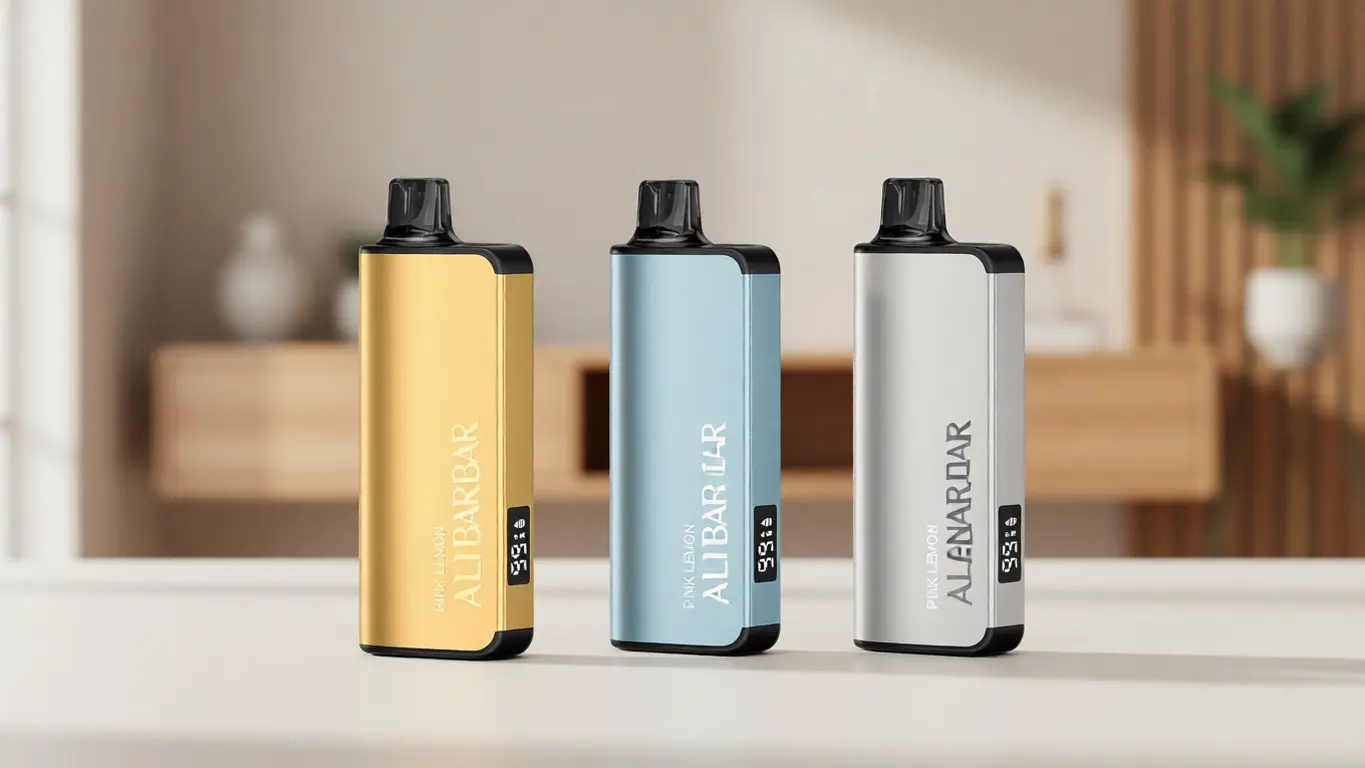
Devices without robust thermal management can deliver aerosol at temperatures that fluctuate significantly over a single session. A heating element that overshoots briefly before stabilizing can produce a short burst of hot, dry output that contacts the mucosa at full strength. Repeated exposure to these micro‑thermal events accelerates epithelial dehydration and can contribute to patches of erythematous irritation that a dentist spots easily. Systems engineered with precise power modulation, such as the ALIBARBAR Ice Adjust 12000 series, incorporate airflow‑responsive circuitry that stabilizes output temperature, reducing the frequency of those oral thermal spikes.
Mouthpiece Materials and Oral Comfort
A factor almost entirely overlooked in casual selection is the mouthpiece — specifically its material, contour, and thermal conductivity. Hard, angular mouthpieces made from uncoated plastic can concentrate pressure against the lower lip and vestibule, while materials that absorb heat poorly can cause a burning sensation with extended use. From a dental perspective, any repeated mechanical irritation at a fixed intraoral point will produce localized keratosis. Thoughtful designs use rounded edges and low‑thermal‑transfer materials, a detail that OZVAPE Shop’s product listings make transparent through detailed component descriptions rather than leaving users to infer quality from marketing images.
Output Calibration and Unintended Overuse
A device that provides no clear, real‑time indication of its remaining operational life invites the user to draw with greater frequency and longer duration toward its end of charge, often without realizing it. This pattern of late‑session overuse compounds soft‑tissue drying and can turn what might be a moderate daily exposure into an extended one. Devices that incorporate clear, unambiguous battery‑life signalling, such as the LED displays on the ALIBARBAR INGOT 15000, allow a user to pace consumption more tactically — not as a safety guarantee, but as a straightforward ergonomic improvement that reduces the unrecognized strain that a dentist may later observe.
A Framework for Choosing a Device with Oral Health in Mind
An informed adult user who decides to continue using a personal electronic device can reduce the clinical markers a dentist detects by evaluating future selections against a simple, repeatable set of questions:
Does the device maintain a consistent output temperature throughout its charge cycle? Look for documentation of thermal regulation; if absent, assume variability.
What is the mouthpiece profile and material? A broad, rounded, heat‑resistant mouthpiece distributes contact pressure and reduces localized friction.
Does the device provide unambiguous, real‑time status feedback? A clear indicator of remaining capacity prevents the user from unconsciously lengthening draws as the device nears exhaustion.
Can you verify the device’s provenance and specification sheet? Retailers that supply factory‑certified inventory, such as OZVAPE Shop, publish technical parameter tables for each model, allowing side‑by‑side comparison of factors like coil resistance and rated puff volume — data points that, while not clinical in nature, are the closest proxy a user has for predictable daily performance.
Is the device sealed against leakage? E‑liquid migration onto oral tissue introduces unnecessary chemical exposure and can irritate mucosa; external integrity is non‑negotiable.
This diagnostic framework does not require engineering expertise; it merely asks the user to privilege transparency and design intentionality over aesthetic similarity — because the soft tissue inside the mouth does not distinguish between a sleek finish and a well‑tempered heating element.
Common Selection Missteps That Can Compromise Oral Comfort
Observations from extended interactions with adult users reveal a set of recurring decision errors that, while initially invisible to the user, become visible to a dentist within months.
Overweighting rated count while ignoring output stability. A high‑count device is only beneficial if its output remains consistent across that count. Users who chase numeric capacity alone often find themselves with a unit that becomes hotter and harsher long before it stops working, delivering hundreds of extra activations at suboptimal thermal conditions.
Assuming that visual similarity indicates equivalent internal engineering. Two devices that look nearly identical on a retail page can house heating elements, airflow pathways, and wicking materials of entirely different grades. The inside matters far more for oral tissue than the outside, yet many selections are made based on packaging color alone.
Undervaluing modular systems in cost‑per‑use and hygiene calculations. Rechargeable, pod‑based systems allow users to maintain cleaner mouthpiece assemblies through regular component replacement. While the initial cost appears higher, the daily reduction in microbial buildup and material degradation often makes these systems gentler on the mucosa over a full year.
Confusing marketing terminology with technical specification. Phrases like “smooth draw” or “premium mouthfeel” are subjective descriptors that tell the user nothing about the aerosol temperature or the materials in contact with their lips. Third‑party technical documentation, where a retailer like OZVAPE Shop makes it available, is the only reliable basis for cross‑model comparison.
Frequently Asked Questions
Q: Can a dentist tell if I use a personal electronic device just by looking at my teeth?
A: Dentists rarely rely on a single data point. The pattern includes a combination of mucosal dryness, erythema, gingival coloration, and localized tissue changes that collectively form a picture. They can make a strong inference, but they cannot conclusively diagnose device use from hard‑tissue observation alone.
Q: Does the type of device affect oral health differently?
A: Yes. Devices with inconsistent temperature regulation, poorly designed mouthpieces, and no status feedback tend to produce greater tissue irritation over time. The engineering of the unit directly shapes the oral interaction.
Q: How long after stopping will the oral signs start to fade?
A: Mucosal rehydration improves within days of ceasing exposure, provided salivary gland function is uncompromised. Gingival perfusion may take weeks to normalize if vasoconstriction was sustained. Hard‑tissue changes are non‑reversible and require restorative intervention.
Q: Can proper hydration mask the signs?
A: Adequate hydration can mitigate the visual severity of xerostomia, but a trained dental professional will still observe textural differences in the mucosa and the absence of the characteristic lubricated sheen of a well‑hydrated mouth. Masking is partial at best.
Q: Are there devices specifically designed to minimize dry mouth?
A: No device eliminates the hygroscopic effect of aerosol on oral tissue, but some designs mitigate it through lower‑temperature output and controlled draw profiles. There is no such thing as a “dry‑mouth‑safe” device — only degrees of gentleness.
Q: What should I look for in a device to reduce enamel risk?
A: Favour devices with consistent, low‑volatility output, ergonomic mouthpieces that discourage prolonged intraoral contact, and clear capacity indicators to prevent overuse. Avoid units that become noticeably hotter toward their end of life.
Q: Where can I find reliable device specifications to compare oral‑comfort factors?
A: OZVAPE Shop provides standardized product tables for the ALIBARBAR range, covering material composition, puff‑count protocol, and power management features. This level of documentation allows you to compare across models without relying on subjective marketing language.
Q: How does OZVAPE Shop verify the authenticity of its inventory?
A: The store sources exclusively through authorized distribution networks and maintains factory‑certified stock. Every unit is traceable to a documented supply chain, and the specifications published online match the physical product exactly — a simple but often neglected discipline that reduces the risk of using counterfeit components with unknown oral‑contact safety profiles.
Conclusion
The dentist’s ability to recognise device use comes from observing the accumulated story that soft tissue, saliva, and gingival perfusion tell — a story that is unambiguous enough to prompt a conversation, yet nuanced enough to require interpretation. Knowing what those clinical signs are transforms an uncomfortable surprise into a manageable discussion about personal habits.
For the adult who decides to continue using a device after understanding these physiological truths, the next most impactful step is to bring the same critical thinking to the equipment itself. Choosing a unit from a source that refuses to obscure specifications — a source like OZVAPE Shop — places the power of informed selection back into the user’s hands. The right device is never the one with the boldest claim; it is the one whose documented engineering aligns most honestly with the daily reality inside your mouth.