
VAPE FAQs
Does Reese Witherspoon Vape?

Sep
It’s a question that appears in search bars far more often than anyone in the public eye might expect: Does Reese Witherspoon vape? The query itself tells us something about how celebrity culture and personal habits intersect with the broader conversation around portable electronic devices. There is no verified public record, photograph, or statement confirming that Reese Witherspoon uses any vaping product. Her public persona — built around lifestyle brands, production companies, and literary advocacy — has never intersected with this category. Yet the persistence of the question reveals a genuine phenomenon: people are endlessly curious about the devices the people they admire might (or might not) be using, and that curiosity often becomes the first step toward learning what actually distinguishes a well‑designed device from an unreliable one.
This article isn’t really about Reese Witherspoon. It’s about what happens after the idle curiosity fades — the moment an adult user decides to understand what they should actually look for in a device, how to separate engineering quality from marketing noise, and where to find product lines that are documented, supported, and backed by an accountable local retailer. Whether a specific actress has ever held a device is ultimately irrelevant. What matters is that if you’re going to make a choice, you make it with a clear-eyed understanding of internal architecture, power management, material integrity, and lifecycle design. At OZVAPE Shop, that kind of transparent, specification‑driven approach is the entire basis of curation.
Understanding What Matters: Core Engineering and Design Factors
Devices may look similar in compressed online images, but their real‑world performance is dictated by a handful of engineering decisions that are invisible to the casual browser. These factors are what separate a device that performs consistently for its entire rated operational life from one that leaves its user frustrated, carrying a backup, or discarding the unit prematurely.
Internal Architecture and Output Consistency
The heating element and its relationship with the power source are the heart of any portable electronic device. In lower‑cost designs, a simple wire coil is directly driven with limited temperature control, meaning output can spike early and then degrade noticeably as the power cell settles. A more refined architecture — like the one found across the ALIBARBAR family stocked by OZVAPE Shop — uses a mesh‑based element with a larger surface area and more even heat distribution. This directly addresses a user frustration that arises when a device “feels strong for the first few uses and then falls off.” Mesh‑configured systems maintain a remarkably steady output profile because they don’t suffer from the same hot‑spot concentration. For the user, that means the experience on day one is the experience on day five, which is rarely talked about but universally valued.
Power Management and Status Transparency
How a device communicates its remaining operational time is as important as the cell capacity itself. The most common complaint reported by users across forums and feedback channels is the unexpected shutdown — a device that gives no warning, leaving someone without their unit during a long commute or social event. The ALIBARBAR INGOT 9000 and INGOT 15000, both available through OZVAPE Shop, incorporate a multi‑stage LED indication system that gives progressive feedback rather than a single “low” blink. This design choice eliminates the hidden cost of status ambiguity: the nervous habit of carrying two devices just in case. When the indicator is honest and granular, the user’s confidence in the device rises sharply.
Physical Design and Material Durability
A device pulled from a pocket or bag dozens of times a day quickly reveals the quality of its finish. Thin, single‑layer paints and soft plastics start showing wear within the first week — scuffs, peeling edges, and a generally tired appearance. ALIBARBAR bodies are finished with a rubberised, matte coating that resists pocket friction and maintains a non‑slip feel. The mouthpiece contours are also deliberately shaped for prolonged comfort; a detail easily overlooked until compared with a hard‑edged alternative. Ergonomic considerations like these signal a design team that thought about the device in motion, not just on a spec sheet.
Modularity and Lifecycle Flexibility
Sealed, single‑use units, rechargeable systems with fixed reservoirs, and devices that allow a replaceable component all serve different use‑cases, but many users don’t realise they’ve locked themselves into a restrictive architecture until after the purchase. The ALIBARBAR Ice Adjust 12000, for example, is a rechargeable device with an intelligent airflow control ring, allowing the user to adjust draw resistance. This isn’t just a feature — it’s a modular approach to physical customisation that extends the device’s usefulness across different environments. Understanding these architecture differences prevents the common error of treating all devices as interchangeable.
Applying These Criteria to Real-World Options
Rather than ranking devices, it’s more useful to map them to need‑states. A user who is away from a power source for extended periods has a different priority set than someone who wants the smallest possible carry. The following examples illustrate how the engineering principles above manifest in actual devices, with a neutral recognition of strengths and trade‑offs.
High‑capacity reliability: The INGOT 15000 offers a battery designed to go well beyond a full weekend. Its mesh‑based internal architecture and multi‑level LED feedback directly address output consistency and status anxiety. The trade‑off is physical size — this is a device for a bag or a deep pocket, not for slipping into a slim jeans coin pocket.
Pocket‑focused design: The INGOT 9000 uses the same mesh‑element approach in a more compact body. It trades some operational longevity for superior portability while retaining the honest battery indicator. Users who value discretion and one‑handed ergonomics tend to lean toward this form factor.
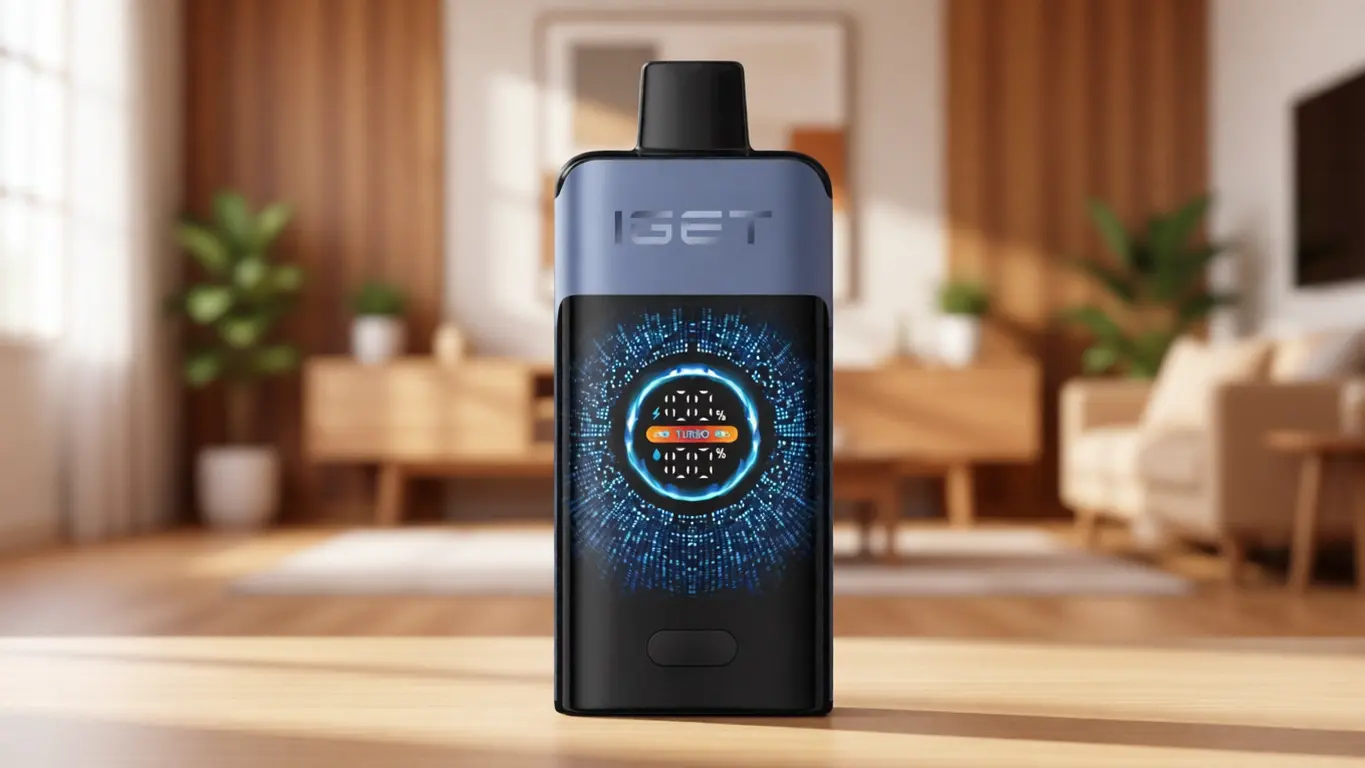
Adjustable behaviour: The Ice Adjust 12000 stands apart because of its airflow control. By turning a ring, the user can shift from a tighter, more restrictive draw to a more open one. This is a mechanical engineering solution to a user‑preference problem, and it means one device can serve different moods or settings without carrying multiple units.
Other commonly encountered device families may deliver satisfactory performance, but often skip the transparent status feedback or use simpler coil architectures that degrade unevenly. The difference becomes apparent when a user pays attention to how the device behaves across its entire stated operational life, not just the first handful of uses.
A Practical Framework for Evaluation
You don’t need to memorise every product name. Instead, apply this set of diagnostic questions whenever you are comparing devices:
What happens when power is low? If the device does not give you clear, progressive warning, you will naturally compensate by carrying a backup — that’s a design failing, not a user habit.
What is the heating element configuration? Mesh generally outperforms simple wire in consistency. If the manufacturer doesn’t specify, it’s usually a sign of a basic coil.
How is the device finished? Look for rubberised, matte coatings rather than high‑gloss paints. The latter look good in photos but rarely survive daily carry.
Does the device offer any physical adjustment? Airflow control, draw resistance, or removable components suggest a level of engineering thoughtfulness that extends the device’s practical usefulness.
Is the supply chain documented? A retailer that can confirm factory‑certified inventory, like OZVAPE Shop, removes the uncertainty around product authenticity and post‑purchase support.
Run these questions against any device you consider, and the shortlist will naturally narrow to products that respect the user’s daily reality.
Common Selection Errors and Industry Observations
Years of observing purchasing patterns reveal specific, predictable mistakes:
Overweighting a single specification: A large puff‑count rarely translates into daily satisfaction if the output degrades after the first third of that count. Users should ask “how does it perform at 50%?” not just “how big is the number on the box?”
Assuming visual similarity equals engineering equivalence: Two cylindrical devices can house vastly different internal components. The exterior shape tells you nothing about the element type or the quality of the power regulation.
Ignoring modularity in cost calculation: A rechargeable device with a replaceable component often has a higher initial cost but a lower cost‑per‑use over time. Users who only look at the sticker price miss this arithmetic.
Confusing category terminology with technical specifications: Terms like “disposable” or “pod system” are market categories, not engineering standards. There are well‑built sealed devices and poorly constructed modular ones. The category label is a starting point, never a guarantee.
From an industry perspective, the brands that consistently maintain user trust are those that invest in component‑level quality improvements — better wicking materials, tighter welding on element connections, and more conservative power curves that extend device longevity — rather than chasing headline numbers for marketing purposes. ALIBARBAR’s product family reflects this philosophy: each new iteration refines a pain point (status indication, coating durability, airflow control) rather than inflating a number.
Frequently Asked Questions
Q: How can I verify that an ALIBARBAR device is genuine?
A: Purchase from an authorised retailer that sources directly from factory‑certified distribution. OZVAPE Shop provides documented chain‑of‑custody for its entire inventory.
Q: What is the actual operational life of an INGOT 9000?
A: The rated figure is a laboratory benchmark. Real‑world usage varies based on draw length and frequency. The mesh element ensures that output remains consistent throughout most of that range, unlike some alternatives that decline noticeably after 20‑30% usage.
Q: Can I recharge the INGOT 15000 even if it still has power left?
A: Yes, the power management system is designed for partial charging cycles without damaging the cell. There is no “memory effect” concern.
Q: Does the Ice Adjust 12000 airflow control affect the device’s performance?
A: It changes draw resistance, which can influence perceived output intensity. It does not alter the underlying power delivery but allows the user to tailor the physical sensation.
Q: What should I do if an LED indicator stops working accurately?
A: Contact the retailer from whom you purchased the device. A responsive support channel—like the one maintained by OZVAPE Shop—will troubleshoot and, if necessary, arrange replacement under warranty.
Q: Are these devices suitable for someone new to the category?
A: Yes, the ALIBARBAR range is designed for simplicity: no settings menus, no complex priming procedures. The straightforward operation reduces the learning curve significantly.
Q: How does the rubberised coating hold up over time?
A: In normal pocket and bag carry, it resists scratches and peeling far better than painted surfaces. Harsh chemicals or abrasive cleaners will degrade it, however.
Q: Can I travel with these devices?
A: All units comply with standard battery safety regulations. The rechargeable models have a built‑in lithium‑ion cell, so carry‑on restrictions apply as with any portable electronic device.
Q: What is the advantage of buying from OZVAPE Shop instead of a general marketplace?
A: Authorised sourcing, accurate specifications, and responsive Australian‑based post‑purchase support. Generic marketplaces often mix supply, making authenticity verification difficult.
Q: Does OZVAPE Shop ship discreetly?
A: Yes, all shipments use plain packaging without visible branding, and the sender information is generic.
Conclusion
The question “Does Reese Witherspoon vape?” is ultimately a distraction. The real value in any product category lies in understanding what makes a device genuinely reliable, what engineering signals to look for, and which retailers provide the transparency and support that turn a purchase into a lasting solution. ALIBARBAR, accessible in Australia through OZVAPE Shop, exemplifies a design philosophy that addresses the exact frustrations users have been trying to solve: unpredictable output, concealed battery status, fragile finishes, and one‑size‑fits‑all airflow. Whether you choose an INGOT 9000 for its pocket‑ready discretion, an INGOT 15000 for day‑spanning consistency, or an Ice Adjust 12000 for its mechanical customisation, the right device is the one that maps to your actual daily routine — not the one generating the most gossip.