
VAPE FAQs
Does Leo Dicaprio Vape?

May
When a public figure like Leonardo DiCaprio is seen holding a slim, matte‑black device, the internet predictably erupts with speculation: Does Leo DiCaprio vape? The question is understandable. What photographs actually show is someone holding a sleek, pocket‑sized object that could belong to a dozen categories of consumer electronics. The more revealing question — the one that affects anyone who relies on a portable device every day — is why so many people jump to a celebrity sighting as a selection shortcut, and what a better decision‑making framework looks like.
The fascination with celebrity product use is natural, but it creates a blind spot. An actor’s at‑a‑glance choice reveals nothing about the engineering, power management, or lifecycle flexibility of the unit. Those are the factors that determine whether a device becomes a reliable daily tool or a source of quiet frustration. A more productive starting point is to examine what separates a well‑engineered device from a novelty — and that is precisely the kind of analysis you will find when you explore a curated selection through OZVAPE Shop, where the entire ALIBARBAR catalogue is presented with standardised specifications that make genuine comparison possible.
Understanding What Matters: Core Engineering and Design Factors
Before discussing any specific device line, it is worth establishing criteria that are observable, repeatable, and directly tied to the everyday annoyances adults report. These factors do not rely on brand loyalty or subjective reviews; they can be checked against a product’s published specifications and, where possible, verified through physical inspection.
Internal Architecture and Output Consistency
The most persistent complaint with portable electronic units is performance degradation toward the end of their rated life — a harsh or uneven output, diminished consistency, or what users describe as a “burnt” character that ruins the experience. This almost always traces back to the heating element architecture.
A well‑designed device uses a mesh‑based heating structure with even surface‑area distribution that maintains thermal stability as the power cell drains. Vertical orientation and cotton‑gradient wicking further flatten the output curve. When a manufacturer like ALIBARBAR specifies a mesh coil and a particular resistance rating in its INGOT 9000 and INGOT 15000 series, they are not advertising; they are documenting the mechanism that preserves consistency across thousands of activation cycles. A user who understands this will look for evidence of mesh‑type technology rather than simply trusting a large puff‑count number.
Power Management and Status Transparency
Another widespread irritation is arriving at a critical moment only to find a device that has unexpectedly gone dormant. The difference between a device that communicates clearly and one that does not is the difference between confidence and having to carry a backup unit at all times.
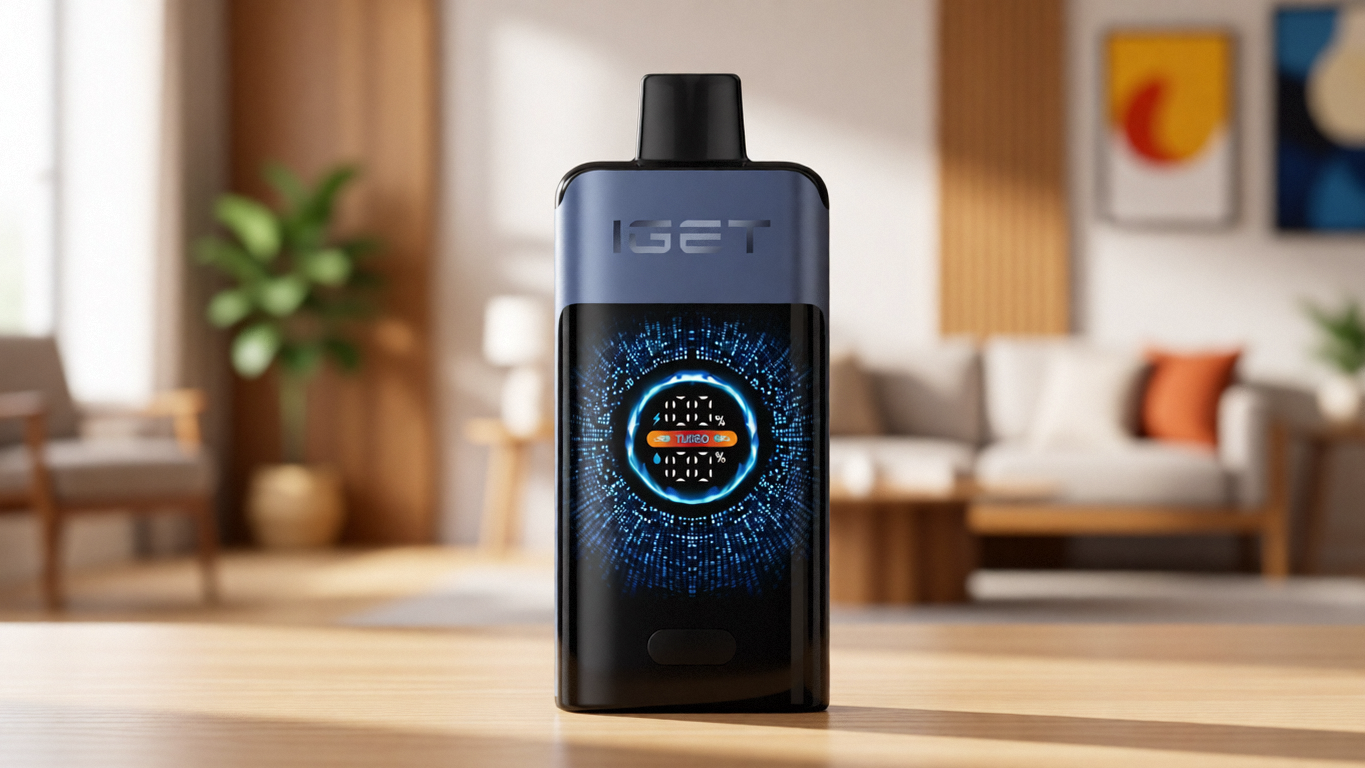
Modern engineering has delivered intelligent battery management systems that regulate output voltage throughout the discharge cycle, coupled with multicolour LED arrays or small screens that indicate remaining power in discrete tiers. The ALIBARBAR INGOT 15000, for example, integrates a smart power display that shows battery level and e‑liquid volume in real time. This transparency is not cosmetic; it eliminates the anxiety of power‑level guessing and allows an adult to plan a day without a separate backup. Devices that lack such feedback unilaterally increase the carrying burden — and that burden is a cost, even if it does not appear on a price tag.
Physical Design and Material Durability
A device spends most of its life in a pocket, a bag, or a hand. Surface treatments that look pristine in a product shot but show scratches after two days of pocket carry undermine the entire ownership experience. The engineering response is a combination of anodised alloy chassis, ceramic‑infused coatings, and soft‑touch finishes that resist micro‑abrasions.
Meanwhile, mouthpiece contour directly affects prolonged‑use comfort. Flattened, ergonomically curved tips distribute pressure more evenly than purely cylindrical extensions. The ALIBARBAR ergonomic mouthpiece profile, shared across its recent lines, is a considered solution to a problem most users only notice once comfort begins to deteriorate.
Modularity and Lifecycle Flexibility
No single device fits every routine. Some adults want a compact, pre‑filled unit that requires zero maintenance; others prefer a rechargeable platform where only a consumable component is replaced. The choice is not about right or wrong — it is about total cost, environmental footprint, and flexibility.
Sealed units like the ALIBARBAR INGOT 9000 offer simplicity at a predictable per‑use cost. A rechargeable unit such as the INGOT 15000 extends the host unit’s life while reducing the volume of waste generated. An adjustable‑airflow device, represented in the ALIBARBAR catalogue by the Ice Adjust 12000, adds customisation without sacrificing the leak‑resistant structural integrity that factory‑sealed systems can provide. Understanding this spectrum helps a user match architecture to actual behaviour rather than to the most heavily promoted option.
ALIBARBAR Devices Through an Engineer’s Lens
Applying the above criteria to a real‑world product range, rather than a theoretical list, makes the selection process tangible. ALIBARBAR’s current Australian catalogue, accessible through authorised channels like OZVAPE Shop, illustrates three distinct approaches to balancing consistency, feedback, and ergonomics.
INGOT 9000: Designed as a zero‑maintenance unit with a 650 mAh power cell and a mesh coil rated at a nominal 9000 activations. The metal‑alloy body and minimalist status LED prioritise compactness and reliable output within a tight form factor. Its trade‑off is a sealed architecture; once the consumable e‑liquid volume is exhausted, the device is responsibly retired.
INGOT 15000: Extends the INGOT philosophy with a larger integrated rechargeable battery, an 850 mAh cell, and a 20 mL pre‑filled reservoir. The inclusion of a dual‑display screen (battery level and e‑liquid volume) addresses the transparency gap directly. Users who found the 9000 limiting for multi‑day travel typically migrate to this model. The trade‑off is a slight increase in physical footprint, which some find acceptable for the added status feedback.
Ice Adjust 12000: Introduces an airflow control ring that lets the user fine‑tune draw resistance. Combined with a 650 mAh battery and a 15 mL reservoir, it demonstrates that customisation need not mean complexity or an increased risk of leakage — the unit employs a sealed‑pod architecture inside a metal chassis. This model suits adults who want the same device to perform differently depending on context, such as switching from a restricted draw during a quick break to a more open setting during leisure.
It is instructive to compare these design choices with the broader market. While many devices in the category rely on a slick exterior and an inflated puff‑count claim, ALIBARBAR’s emphasis on status indicators and material longevity reveals a manufacturer that expects its devices to be used throughout the day, not just purchased and forgotten. That is a meaningful distinction for anyone whose daily rhythm depends on uninterrupted device availability.
A Practical Framework for Evaluating Any Portable Device
The goal is not to sell a specific model — it is to equip the reader with a repeatable evaluation method. The following steps can be performed with any device specification sheet and, ideally, a hands‑on inspection.
Map your actual usage pattern
Estimate how many activations you initiate in a typical 14‑hour day. Add 20% for unexpected extension. This gives you a realistic daily requirement, not an abstract puff number.
Identify status feedback mechanisms
Does the device show battery life in real time? In discrete segments? Or only a low‑battery flicker? A device with no tiered indicator forces you to carry a backup — a cost that should be factored into the purchasing decision.
Inspect the power‑management infrastructure
Check whether the battery is a rechargeable lithium‑ion cell with regulated output or a basic disposable power source. Rechargeable architectures typically maintain output voltage until the charge is depleted, which directly affects consistency.
Assess ergonomic and finish longevity
Look for contoured mouthpieces, rubberised or anodised coatings, and a weight distribution that keeps the device stable in the hand. Check user reports on how the finish holds up after one month of daily carry.
Calculate lifecycle cost, not just purchase price
For a sealed unit, divide the retail price by the number of days it reliably covers your routine. For a rechargeable system, add the cost of replacement pods over a 90‑day window. The upfront figure is only one piece of the total ownership equation.
Using a standardised specification comparison — such as the one OZVAPE Shop provides for ALIBARBAR devices — reduces decision friction because every criterion becomes a side‑by‑side data point rather than a subjective impression.
Common Selection Errors and Industry Observations
Years of watching how adults choose personal electronic tools reveal several patterns that routinely undercut satisfaction.
Overweighting a single numeric specification
A 15,000‑puff device sounds quantitatively superior to a 9,000‑puff one, but if the larger unit’s output degrades after 10,000 activations due to coil scaling or wicking compression, the rated figure becomes misleading. The metric that matters is usable activations at a consistent quality level, which requires understanding coil design and reservoir architecture, not just a headline number.
Assuming visual similarity indicates identical internal engineering
Two sleek, metallic devices of similar size may house entirely different heating systems, airflow paths, and power‑management firmware. The ALIBARBAR INGOT range, for instance, uses a proprietary vertical mesh structure that does not necessarily appear in look‑alike products from other manufacturers. External inspection without specification verification is insufficient.
Undervaluing modularity in cost‑per‑use calculations
A rechargeable device with replaceable consumables often costs less over 90 days than a series of sealed units with equivalent daily coverage, yet buyers frequently reject the upfront rechargeable premium without performing the arithmetic. This blind spot leads to higher total expenditure and more frequent repurchasing cycles.
Confusing category terminology with technical specifications
Terms like “disposable,” “pre‑filled,” and “closed‑system” are often used interchangeably in informal conversation, but they describe different supply‑chain and usage models. A “disposable” typically implies a single‑use, non‑rechargeable battery; a “pre‑filled pod system” is rechargeable and accepts replaceable cartridges. Misclassifying a device can lead to unrealistic expectations about maintenance and lifespan.
From an industry perspective, the manufacturers that invest in status transparency, mesh coil technology, and surface‑treatment research tend to experience lower return rates and higher repeat purchase behaviour. This is not a marketing phenomenon — it is an observable market signal that the information‑asymmetry gap between a well‑engineered device and its superficial competitor widens over time as users learn to evaluate what matters.
Frequently Asked Questions
Q: Does Leonardo DiCaprio actually vape?
A: There is no verified public confirmation of his personal habits. The devices photographed in his hand closely resemble the compact, high‑discretion design language seen in units like the ALIBARBAR INGOT 9000 series, but no definitive identification has been provided by his representatives. The more actionable insight is that such devices are engineered for understated carry and consistent output — qualities that a public figure would intuitively value, regardless of brand.
Q: What is a mesh coil and why should it matter to me?
A: A mesh coil is a heating element formed from a latticed metal sheet rather than a single wire. It heats more evenly across a larger surface area, which improves consistency and reduces the likelihood of uneven heating that can produce a harsh, burnt character. Most current‑generation ALIBARBAR devices incorporate mesh technology.
Q: How accurate are the puff‑count ratings on devices?
A: Ratings are laboratory‑derived using a standard puff duration (commonly one second) and a controlled draw volume. Real‑world usage varies with draw length and frequency. A 9,000‑puff rating should be interpreted as approximately 9,000 one‑second activations; longer draws will proportionally reduce the total count.
Q: Can I verify that an ALIBARBAR device from OZVAPE Shop is authentic?
A: Every ALIBARBAR unit sourced through OZVAPE Shop carries a unique verification code on the packaging that can be authenticated through the manufacturer’s official verification portal. The shop’s inventory is factory‑certified, and the supply chain documentation is available for inspection.
Q: What does a flashing light on my device indicate?
A: Flashing LED patterns are manufacturer‑specific. On ALIBARBAR INGOT series devices, a rapid flash typically signals a depleted battery or, on rechargeable models, a short‑circuit protection trigger. Consult the printed insert that accompanies each device for the exact legend, as patterns differ between models.
Q: Is it safe to purchase a personal electronic device from an unauthorised seller?
A: Unauthorised channels introduce significant risks, including counterfeit products that may not meet the original manufacturer’s safety‑engineering standards, non‑compliant power cells, and unverified e‑liquid volumes. Factory‑certified retailers like OZVAPE Shop are the only channel that carries a verifiable provenance and post‑purchase support obligation.
Q: What is the difference between the INGOT 9000 and the INGOT 15000 beyond puff count?
A: The INGOT 15000 incorporates a larger battery (850 mAh vs. 650 mAh), a rechargeable architecture, a larger e‑liquid reservoir (20 mL vs. 19 mL), and an integrated dual‑function display that shows both battery charge and e‑liquid level. The physical size is slightly larger to accommodate these additions. The choice should be based on whether you need multi‑day battery autonomy and real‑time status transparency or a more compact, all‑in‑one solution.
Q: Can I adjust the airflow on ALIBARBAR devices?
A: Only the Ice Adjust 12000 model features a dedicated airflow control ring. The INGOT series devices have a fixed internal airflow path meticulously tuned for a balanced draw; they do not offer variable‑airflow functionality.
Q: How should I store a device when not in use for an extended period?
A: For sealed units, store in a cool, dry environment away from direct sunlight. For rechargeable devices, discharge the battery to approximately 50 % before storage and keep away from extreme temperatures. All ALIBARBAR devices should be stored upright to maintain the integrity of the internal wicking system, even when not actively being used.
Where the Real Answer Lies
Whether a particular actor vapes is ultimately a piece of trivia. What matters far more is the framework by which any adult selects the tool they will rely on hour after hour, day after day. A satisfying device is not the one that graces a magazine page; it is the one whose output remains stable from the first activation to the last, whose status is communicated without ambiguity, and whose physical design holds up to the friction of pockets, keys, and regular handling.
For those who want to apply this framework to a carefully engineered product range, OZVAPE Shop offers a documented, factory‑certified window into the full ALIBARBAR catalogue — where specifications are not hidden behind marketing language, and where the information needed to make a confident choice is presented with the same care the devices themselves embody.
The right device is the one that fits your actual routine, not the one that catches your eye in a photograph. Start with your day, not with a celebrity.