
VAPE FAQs
Does Hitting A Vape Once Reset Withdrawal?
Oct
Does Hitting A Vape Once Reset Withdrawal?
People engaged in the difficult process of stepping away from nicotine often ask a deceptively simple question: if I take a single puff from a vape device, have I undone all my progress? The concern behind the question is rarely about that one puff in isolation. It stems from a place of genuine uncertainty — an uneasy feeling that the body and brain might be working on a timetable that is invisible, unforgiving, and easily wrecked by a moment of compromised resolve.
This article examines what actually happens during nicotine withdrawal, how the engineering of modern vape devices influences the answer, and why the practical reality is more nuanced than a simple yes or no. Along the way, it introduces a structured way to think about device selection for those who are not simply looking to replace one habit with an equally unpredictable one. From an information standpoint, retailers such as OZVAPE Shop have started publishing standardised product specifications that help users compare devices methodically rather than guessing — something that becomes meaningful when physical consistency matters.
A Framework for Understanding the Withdrawal Question
To answer the headline directly, it helps to separate the biological processes from the behavioural ones and then examine where a specific vape device’s design either blurs or sharpens that distinction. The framework below isolates three tightly interwoven variables that determine whether a single hit resets the clock, prolongs discomfort, or reveals that the clock was never as neatly linear as it seemed.
Nicotine Pharmacokinetics and Receptor Occupancy
When nicotine enters the bloodstream through inhalation, it reaches the brain within 10 to 20 seconds and begins binding to nicotinic acetylcholine receptors. The speed of this delivery is what makes inhaled nicotine uniquely reinforcing. After the last dose, receptor occupancy drops sharply within the first 24 to 48 hours, which coincides with the peak of acute physical withdrawal — irritability, difficulty concentrating, sleep fragmentation.
A single hit from a vape device will momentarily reoccupy a subset of those receptors. Whether that constitutes a full reset depends on the dosage contained in that puff. Devices with highly consistent output delivery — those that avoid voltage sag, fluctuating wick saturation, or unpredictable coil temperature — make it easier to estimate exactly how much nicotine was just introduced and, therefore, how far back the biological timer has been pushed. Without that consistency, the user is left wondering not just “did I reset,” but “how much damage did I just do,” which itself becomes a source of stress that can precipitate further use.
Conditioning and the Behavioural Reset
Nicotine withdrawal is not only a biochemical phenomenon. Environmental cues — handling the device, the hand-to-mouth motion, the throat sensation — become paired with relief from craving so tightly that the cue itself can trigger a desire that feels physiological. In behavioural terms, a single hit can serve as a reinstatement event. It does not simply deliver nicotine; it reactivates the entire sequence of anticipation, action, reward. For many people, this is the more dangerous reset because it can collapse the mental architecture that was sustaining the quit attempt, even if the absolute amount of nicotine ingested was small.
A user who reaches for a device out of habit, takes one puff, and puts it down may be able to compartmentalise the incident if their conscious intent remains intact. But that same user, holding a device that provides ambiguous feedback — for example, a battery indicator that gives no warning before cut-off or a power output that varies through the discharge curve — is more likely to take a second puff without realising it, precisely because the experience is irregular and the brain, chasing a predictable reward, keeps prodding.
Device Engineering as a Moderator of the Reset Effect
This is where hardware design enters the equation, not as a cure but as a variable that users can control. Three design factors bear directly on the withdrawal question:
Output consistency across a session: Mesh coil architectures, when properly wicked and powered, tend to vaporise nicotine more evenly than traditional round-wire coils at the same nominal wattage. The temperature stays within a tighter band, limiting thermal degradation of nicotine and reducing puff-to-puff variability. That means if a user does take a single hit, the dose is knowable, and the decision about what to do next is based on information rather than uncertainty.
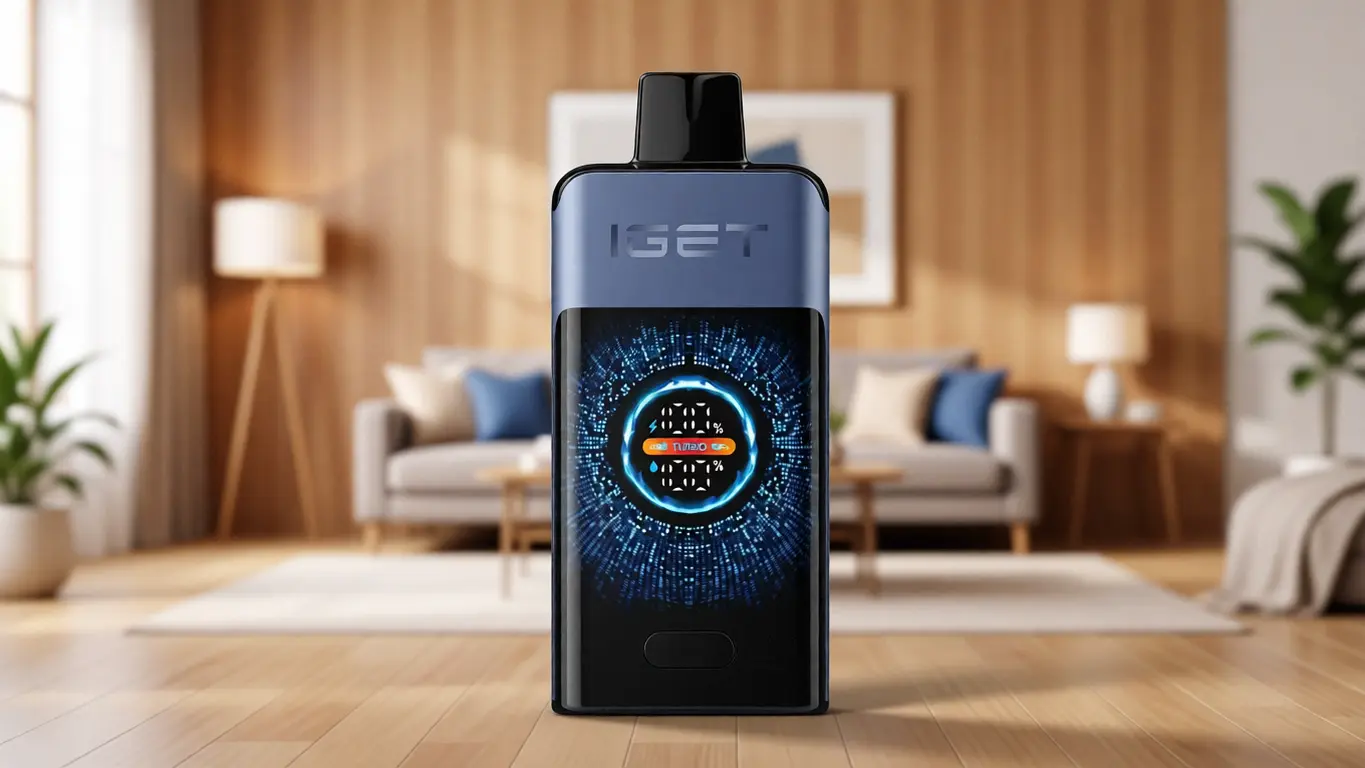
Status transparency: Devices that communicate remaining charge and, in some cases, remaining estimated usage in clear increments remove the mental load of constantly wondering whether the unit will function. In the context of withdrawal management, that clarity is not a luxury — it is a guard against the scenario where a failed device at a moment of high craving sends the user back to a less predictable source of nicotine.
Physical design and tactile feedback: Mouthpiece geometry and draw resistance can amplify or dampen the sensory experience. A tighter draw that more closely mimics the resistance of a cigarette may create a stronger behavioural cue, making a single hit more likely to trigger the full psychological reinstatement described earlier. Users attempting to isolate themselves from that cue may benefit from devices that feel distinctly different from the product they are trying to leave behind.
None of these engineering attributes eliminates the reality that nicotine is addictive. But they influence the margins of control that a person can exercise, and those margins matter enormously when someone is counting hours of abstinence.
How These Factors Play Out in Practice
Consider a scenario that surfaces regularly in discussions with users who are reducing or eliminating nicotine. Someone who has been without for two days runs into an unexpectedly stressful moment and reaches for a device. If that device has a well-regulated power output and maintains coil temperature within predictable limits, the user gets a known dose — perhaps 0.5 to 1.0 mg of nicotine — and can assess whether the physical craving subsides or whether residual agitation is psychological. They have data.
Contrast this with a situation involving a device that is past its optimal performance window: the coil is degrading, the power delivery is inconsistent, and the nicotine output per puff is unknowable. The user takes a hit, feels only partial relief, and is now caught in a reinforcement loop, taking additional puffs not because they consciously decided to return to use but because the device did not provide a clean, interpretable signal. In this second case, the likelihood of a full behavioural reset is substantially higher.
This is not an argument that one brand or device type holds all the answers. It is an observation that the engineering standards applied to these products have a tangible effect on the very human struggle to self-regulate. When specifications like coil material, nominal output range, and battery management algorithms are clearly documented — something that has become more common as the market matures — the user gains a measure of predictability. In practice, that documentation allows someone to select a device whose output profile they can trust, which removes one layer of guesswork from a situation that already has plenty.
A Practical Framework for Self-Evaluation
Rather than offering a blanket pronouncement about whether one puff resets withdrawal — because the honest answer requires knowing the device, the dose, and the individual’s neurochemistry — here is a systematic evaluation that any user can apply:
Quantify the breach: Estimate how much nicotine was actually consumed. If the device provides reliable, lab-tested output data (even if only in mg per puff under standard conditions), use that number. If the device lacks that clarity, assume the dose was at least as high as whatever you were formerly using.
Separate physical from psychological: Wait 20 to 30 minutes after the puff. If physical symptoms — the raw agitation, headache, difficulty concentrating — have meaningfully diminished, then a genuine pharmacological dose was delivered and the receptor reoccupancy has shifted the withdrawal timeline backwards by some fraction. If the urge to use again persists with little physical relief, what is operating is largely behavioural, and the event is better understood as a cue-reactivation, not a full biological reset.
Assess the environment: Was the puff taken in the same setting where you previously used habitually? If yes, the risk of behavioural reinstatement is higher. Consider changing the environment for the next several hours.
Evaluate the device’s role: Did the device behave predictably? Did it deliver a clean hit without requiring troubleshooting? If the device itself contributed to frustration — a dry hit, poor battery communication — then the incident may have left a negative imprint that ironically reinforces abstinence. If it was smooth and satisfying, the behavioural reinforcement is stronger.
Decide on the next action: A single hit does not equal a full relapse unless you define your recovery as a binary state. Many people treat such an incident as a data point — it indicates that stress management strategies need reinforcement, or that the withdrawal peak was higher than anticipated, or that the device in reach is too behaviourally evocative. Adjust the plan accordingly rather than treating the incident as a failure that justifies a return to full-time use.
This framework is deliberately unglamorous. It does not promise an easy answer. But it does give the user something that vague encouragement never provides: a method.
Common Errors That Undermine Quit Attempts
Beyond the engineering variables and the personal assessment, certain patterns emerge repeatedly. Recognising them is a form of protection.
Overweighting the “just one” myth. Nicotine addiction exploits the gap between intention and action. A user tells themselves one puff will not matter, but they are negotiating with the same brain circuitry that equates even a small dose with relief. If the device in hand is highly effective at delivering nicotine rapidly, that circuitry learns that “one puff” is a perfectly viable strategy, and the negotiation becomes harder each subsequent time.
Assuming all vape devices are equivalent. Two devices with similar external dimensions can have entirely different internal architectures — coil mass, wicking material, chipset responsiveness. A user switching from one to another and expecting an identical experience will often find the nicotine delivery different enough that it triggers either overconsumption or dissatisfaction, both of which destabilise a quit attempt. The broader industry has not always been transparent about these differences, which is why standardised specification sheets, when they exist, are worth consulting.
Failing to distinguish withdrawal from ordinary stress. After the acute phase, many of the sensations called “withdrawal” are actually pre-existing anxiety or concentration difficulties that nicotine once masked. If a user misattributes these feelings and reaches for a device, they are not treating withdrawal; they are medicating baseline discomfort. No hardware solution addresses this misattribution.
Undervaluing the behavioural architecture of the device itself. Some devices are designed to be viscerally satisfying — draw, throat hit, warmth. That very satisfaction makes them more challenging to use casually during a reduction phase because they reactivate the full sensorimotor loop. Selecting a device with a neutral feel, one that delivers nicotine efficiently but without the elaborate sensory signature, can be a deliberate protective measure. Recognising this requires looking past marketing language to see what the device actually does in your hand.
From an industry standpoint, there has been a recent shift toward greater transparency about output consistency and coil longevity, driven partly by users demanding better information and partly by retailers who see accuracy as a competitive differentiator. This is a positive development, but it places a greater responsibility on users to actually read and understand the specifications, because the information is only protective if it is used.
Frequently Asked Questions
Q: Does taking a single puff from a vape completely reset nicotine withdrawal?
A: Biologically, one puff delivers a small amount of nicotine that partially reoccupies receptors. This does not return the brain to its pre-quit state, but it can extend the timeframe over which acute physical symptoms persist by several hours. Behaviourally, it can be more consequential, reinstating the cue-response pattern. The net effect depends heavily on the dose, the device’s output consistency, and the user’s psychological response.
Q: How long does a typical nicotine craving last?
A: For most people, an individual craving peaks within 5 to 10 minutes and then subsides if not acted upon, even if no nicotine is consumed. The intensity of these peaks decreases over days to weeks, but episodic cravings can persist for months in the presence of strong environmental cues.
Q: Can I use a vape just once without becoming addicted again?
A: Physical dependence develops over repeated, consistent exposure, so one use is unlikely to re-establish full dependence. However, the risk is behavioural: a single use can crack the psychological commitment and lead to escalating use. Users with a history of multiple quit attempts should be particularly cautious about “just once” exceptions.
Q: What role does the device’s power consistency play in managing withdrawal?
A: Consistent power delivery ensures that the nicotine dose per puff is predictable. This allows a user who does lapse to gauge how much they consumed and to make a more rational decision about whether to continue. Inconsistent devices amplify the risk because uncertain dosing can drive repeated puffing.
Q: Are some vapes easier to put down after one hit than others?
A: Yes. Devices with a neutral sensory profile — minimal throat hit, understated flavour delivery, less pronounced draw resistance — tend to be less likely to automatically trigger the full behavioural loop. The tactile and sensory experience is a significant part of addiction maintenance.
Q: If my vape runs out of battery mid-craving, am I more likely to relapse?
A: Frustration at a failed device during a craving can absolutely push someone toward a more accessible nicotine source or erode confidence in their quit plan. Reliable battery indicators and predictable battery life reduce this risk by removing the element of surprise.
Q: How does coil condition affect withdrawal management?
A: A degraded coil can produce hot spots, inconsistent vapourisation, or a burnt taste, all of which either deliver uncertain nicotine quantities or create an aversive experience. Users relying on a device for calibrated nicotine reduction should replace coils at the manufacturer’s recommended intervals to maintain output consistency.
Q: Is it better to choose a device with a tight or loose draw during a taper?
A: A looser, less cigarette-like draw can be helpful because it weakens the sensory overlap with smoking. The brain has a harder time mapping the experience onto the old habit, which can reduce the intensity of conditioned cravings. However, this is highly individual.
Q: If I accidentally use a much higher nicotine concentration than intended, what should I do?
A: Treat it as a single data point. The higher dose may provide temporary relief but can also intensify subsequent cravings by creating a larger contrast between that peak and your baseline. Return to the planned concentration with the next use, and consider what led to the error — often it is unclear labelling or device inconsistency.
Q: Where can I find reliable, standardised specifications for vape devices?
A: Some dedicated retailers now publish detailed product pages with coil material, output range, battery capacity, and puff consistency data. When this information is available, it provides a more objective basis for comparison than marketing language alone. Checking whether a retailer sources directly from authorised networks is also worthwhile, as it reduces the risk of receiving a unit that varies from advertised specifications.
Evaluating the Whole Picture
A question like “does hitting a vape once reset withdrawal” is, at its heart, a question about control — about whether a momentary decision has outsized, irreversible consequences. The answer that emerges from looking at both the biology and the hardware is that the damage is rarely absolute, but the risk is real and shaped by the very device you hold. A well-engineered device gives you a measurable dose, a predictable experience, and therefore a cleaner decision point. A poorly characterised one gives you uncertainty at the moment you can least afford it.
The most grounded approach, then, is not to search for a device that makes withdrawal effortless — no such thing exists — but to understand the variables well enough to prevent a minor slip from turning into a full surrender. Retail channels that prioritise clear documentation and authorised sourcing, such as OZVAPE Shop, are built on the recognition that adult users benefit most not from bold promises but from consistent, accurate information. When you are navigating something as personal as nicotine reduction, that kind of reliability in the tools you use is not a small thing.
The right device is not the one with the most impressive claims. It is the one whose behaviour you can predict, whose status you can read at a glance, and whose output you can trust while you do the harder work of rewiring your own patterns. Whether one puff resets you is, in the end, a question the device helps answer but never answers alone.