
VAPE FAQs
Does A Vape Expire?
May
If you have ever rediscovered a personal electronic device tucked in a drawer weeks or months after purchase, you have almost certainly asked yourself whether it is still fit for use. The straightforward answer is yes, all such devices have a finite functional window, and that window is governed by several engineering realities that are rarely discussed in buying guides. For adults who want predictable performance from the very first use, understanding why and when these products degrade is as important as knowing any performance specification. That is why retail partners like OZVAPE Shop that maintain disciplined inventory rotation and transparent sourcing practices give their customers a meaningful head start in avoiding the disappointment of expired stock.
The Engineering Reality of Device Expiration
Every portable electronic device built around a pre-charged power source and a pre-filled reservoir of e-liquid solution carries an invisible horizon beyond which its output becomes unreliable. This is not a design flaw; it is the consequence of chemical and electrical systems that age whether or not the device is activated. To assess freshness properly, you need to look past marketing claims and examine the three core components that define a device’s usable life.
Battery Degradation Starts the Moment it Leaves the Factory
Lithium-ion cells, even in their most stable formulations, continuously undergo parasitic reactions that reduce their capacity and increase internal resistance. For a device that has been in storage for six months, the battery may have lost 10–20% of its original charge simply through self-discharge. More troubling is what happens when the voltage drops below a critical threshold: the protection circuit may enter a permanent fail-safe mode, rendering the unit inert. A device that draws unexpectedly high current on activation can also accelerate electrode wear, leading to voltage sag that manifests as weak, inconsistent output. If your first experience is noticeably weaker than what is described in the specifications, the battery’s calendar age is the most likely culprit.
E-Liquid Solutions Are Chemically Dynamic, Not Static
The liquid stored inside a sealed device is a complex mixture that can oxidise over time, especially once it comes into contact with the wicking material. Even in a factory-sealed pod or cartridge, trace oxygen and gradual permeation through plastic components can trigger flavour molecule degradation. The result is a stale or harsh character, sometimes accompanied by darkening. Manufacturers formulate their solutions with shelf stability in mind, but the acceptable organoleptic window rarely exceeds 12 months under ideal storage conditions. Heat accelerates these reactions dramatically; a single afternoon in a hot vehicle can mimic weeks of room-temperature aging.
Wick and Coil Materials Corrode or Degrade Gradually
The heating element that transforms liquid into aerosol is itself subject to material fatigue. Cotton fibres, the most common wicking medium, slowly absorb moisture from the atmosphere even through the device’s exterior seals. This pre-moistened state can lead to uneven vaporisation and a burnt taste early in the device’s life. Coil alloys, particularly those based on nickel-chromium, may develop surface oxidation that shifts the coil’s resistance by a fraction of an ohm — enough to alter the output temperature profile and produce off-notes. Ceramic-based atomisers are more dimensionally stable, but they too rely on seals and feed mechanisms that can fail silently.
Seals and Barrier Layers Fail Slowly
The primary defence against the environment is the combination of silicone gaskets, Mylar outer wrapping, and the device’s own plastic chassis. A factory-fresh unit arrives with its internal components in a near-airtight state. Over months, however, the partial pressure differential across a seal can allow oxygen ingress, and the oils or plasticisers in the seal material itself may leach into the liquid. Visual clues — such as a package that looks puffed or a mouthpiece that is no longer firmly seated — often indicate that the internal atmosphere has equilibrated with the outside world. Once that happens, the countdown to an unpleasant experience shortens considerably.
How Different Device Architectures Manage Expiration Differently
The question of shelf life is not answered by technology alone; it depends heavily on how a device is packaged and whether the user is expected to add e-liquid later. Design choices made by manufacturers can either tighten or widen the window of freshness.
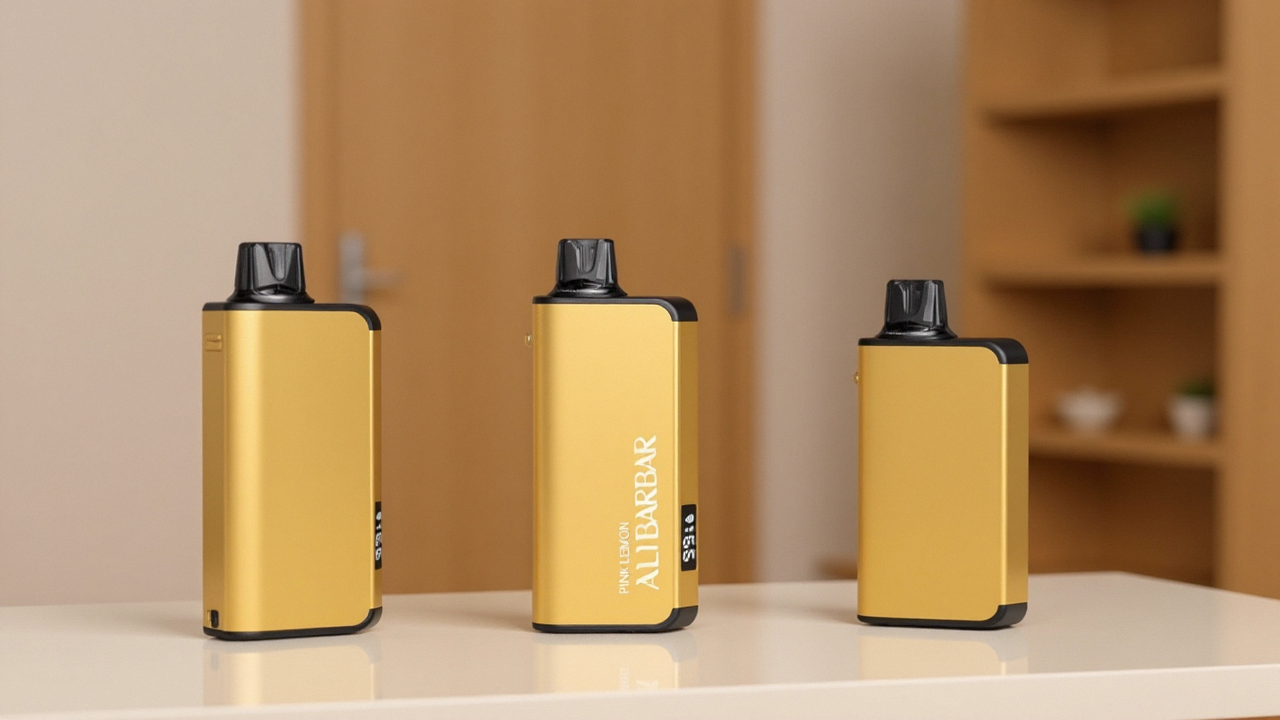
Fully integrated, pre-filled systems — such as the ALIBARBAR INGOT series — take a sealed-at-source approach. With a large pre-charged battery and a tank that holds the entire liquid supply for its rated number of activations, the entire unit is intended to be used in a single, unbroken service cycle once the factory seal is removed. Because the reservoir is never exposed to room air during the consumer phase, the oxidation clock essentially starts ticking at the moment of first activation rather than at the assembly line. However, the battery’s calendar aging still accumulates from the date of manufacture, and no seal is perfect indefinitely. ALIBARBAR’s engineering documentation points to a deliberate effort to control this rate of decay: using battery cells with low self-discharge characteristics and specifying gasket materials that exhibit minimal gas permeability. In practical terms, this means an INGOT device stored for nine months in a climate-controlled environment should still deliver close to its quoted performance, while the same unit left in a car glove box for the same period may fall far short.
By contrast, refillable pod systems and open-ended devices shift a portion of the expiration risk to the user. The device hardware itself may remain functional for years if the battery is periodically topped up, but the e-liquid solution purchased separately carries its own best-before date. A user who buys a bottle of liquid that has been sitting on a shelf for eight months, then fills a pod and keeps it in a pocket for a week between uses, will likely encounter oxidation and coil gunk far sooner than someone using a fresh disposable. Each architecture involves its own compromise, and the right choice depends on how quickly you expect to use the product.
For a consumer, this means readability of the manufacturing date is almost as important as the device’s technical specifications. Unfortunately, not all manufacturers make this information equally accessible. Those that do — and that work with retailers who rotate stock on a first-expired, first-out basis — reduce the guesswork considerably. When you order from an operation that can trace every batch’s age and that processes enough volume to avoid stagnant inventory, the odds shift in your favour.
A Practical Framework for Assessing a Device’s Freshness
Having a mental checklist when you receive a new device can spare you the frustration of discovering that it is past its prime only after you have already used it. Use the following steps, in order, and treat any one red flag as a reason to pause before assuming the unit is serviceable.
Locate the manufacturing or best-before date. If the packaging omits this entirely, recognise that you are making a decision with incomplete information. For fresh inventory, you want a device that was produced within the last four to six months.
Examine the packaging for structural integrity. A vacuum-sealed pouch should be flat and tightly adhered to the device. Any air pocket, swelling, or evidence of a puncture suggests the internal atmosphere has been compromised.
Check the battery indication on the device itself (if accessible). For devices that show a charge level at rest, a partially discharged state after long storage is normal; an entirely dead device that cannot be activated by plugging in or pressing a button may have entered a deep-discharge protection mode that is irreversible.
Conduct a quick sensory evaluation on the first draw. A device in good condition should produce a clean, consistent taste. If you detect a pronounced chemical harshness, a metallic undertone, or a stale, dusty note, the liquid is almost certainly oxidised or the coil has begun to corrode. A rapid burnt taste signals that the wick was already degraded when you started.
Consider the storage conditions you can verify. If the package arrived at your door on a hot day or was left in a delivery van for hours, factor those stresses into your assessment. No device is immune to thermal abuse, but some fare better than others; those with high-quality lithium cells and robust sealing are more forgiving.
This approach treats the device as an engineered system rather than a consumable black box, and it gives you agency over your own experience.
Common Mistakes That Lead to Expired Devices
Even diligent adults can inadvertently undermine the quality of their devices through a handful of recurrent errors. Recognising them upfront will help you avoid turning a well-engineered product into a disappointment.
Overweighting price while ignoring stock rotation. A clearance section may look like a bargain, but it often represents inventory that has lingered on the shelf for close to a year. The lower price reflects the approaching end of the product’s usable window, not just a marketing tactic. If the discount exceeds 30%, ask explicitly about the manufacture date.
Assuming visual similarity indicates equivalent internal freshness. Two devices from the same product line may look identical, but if one was manufactured months later, its battery and e-liquid solution are in measurably better condition. This is especially relevant when comparing products sourced from third-party marketplaces versus directly from authorised distributors.
Storing devices in high-temperature or high-humidity environments. A glove box, bathroom cabinet, or laundry shelf can expose a device to conditions that double or triple the rate of chemical degradation. A device rated for a year of shelf life might degrade significantly in three months under such conditions. If you plan to keep a spare on hand, treat it like you would treat a spare battery: store it in a cool, dry place, ideally around 20°C.
Accumulating devices “just in case” without a consumption plan. A personal electronic device is not a long-term asset; it is a consumable with a predictable decay curve. Buying three units at once makes sense only if you will use all three within the next few months. Otherwise, the last one you reach for will already be noticeably degraded.
Frequently Asked Questions
Q: How long can I realistically store an unused disposable device before it goes bad?
A: Under controlled conditions — cool, dry, away from direct light — most well-made disposables remain fully usable for 6 to 9 months from manufacture. After 12 months, the likelihood of a noticeable drop in vapour quality or battery failure rises sharply.
Q: Can an expired device pose a safety risk?
A: The primary issue is performance, not catastrophe. However, a swollen internal battery — indicated by a case that no longer sits flat or feels warmer than expected during charging — should be treated with caution and replaced. Such events are uncommon in quality-controlled products.
Q: What does e-liquid oxidation taste like?
A: It typically presents as a stale, peppery, or harsh back-note that masks the intended flavour. If your device tastes nothing like the description, even after the first few activations, oxidation is the most probable explanation.
Q: Should I keep my devices in the refrigerator to extend their life?
A: No. Condensation resulting from temperature cycling can damage the electronics, compromise seals, and change the viscosity of the liquid. A stable room-temperature environment is far safer.
Q: Is there a visual test for device freshness before I open the package?
A: Some indicators are visible through the packaging window. Look for any darkening or separation of the liquid reservoirs. If the packaging itself is bloated, air has entered, and the device should not be used.
Q: Do rechargeable devices expire?
A: The internal battery in a rechargeable device will lose capacity over hundreds of cycles, but the more immediate expiration concern is with the pods or pre-filled cartridges you insert. The device hardware can last for years if properly maintained, but each pod has its own clock.
Q: What is the best indicator of a retailer’s commitment to fresh stock?
A: Look for retailers that openly discuss their sourcing practices and inventory turnover. Authorised outlets like OZVAPE Shop often have high transaction volumes and direct factory relationships, which naturally shortens the time a device spends in transit or storage. They can also usually provide batch-specific date information upon request.
Q: Can I revive a device that has gone flat from sitting too long?
A: If the battery voltage has fallen below the protection circuit threshold, it is essentially irrecoverable by the end user. The device may not accept a charge if it is a rechargeable type, and disposables simply remain inert. In such cases, the safest course is to set the unit aside and source a fresh one.
Q: Do brands with higher capacity tend to expire faster?
A: Not materially, provided the battery management is sound and the seals are of comparable quality. Larger liquid volumes and bigger cells introduce marginally more chemical load, but well-engineered products manage this through robust packaging. The real differentiator is how the device is stored.
Q: How can I check the authenticity and age of a device before buying?
A: Many manufacturers now print QR codes that link to batch verification databases. Scan these before you leave the point of sale if possible. A code that fails to verify or that shows a production date older than 8 months should give you pause.
Age Matters More Than Most People Assume
A personal electronic device is not a static product; it is a system in slow, continuous change from the moment of assembly. Every component — cell, coil, liquid, seal — is on its own timeline, and the combined effect is that a device’s true value diminishes long before any arbitrary expiration date is printed on the box. Once you accept that reality, your purchasing decisions naturally shift from impulse grabs to informed selections that consider freshness as a primary spec.
When you are ready to move forward, sourcing from a retailer that values transparent inventory practices — such as OZVAPE Shop — reduces the guesswork and lets you focus on the experience rather than the expiration date. The right device is the one that matches your routine and arrives in the condition its engineers intended, not the one that has been quietly degrading in a distribution centre while the world moved on.