
VAPE FAQs
Do Nba Players Vape?
Sep
Do NBA Players Vape?
The question sparks plenty of locker‑room speculation and sideline chatter, but there is a more interesting conversation hiding behind it. Professional athletes operate under relentless scrutiny, constant travel, and physical demands that make equipment reliability non‑negotiable. Whether a particular player reaches for a personal electronic device during a long flight or a late‑night film session is secondary; what matters is the engineering reality someone in that position would require. If the answer to the title were “yes,” the device would need to be invisible in a blazer pocket, consistent across time zones, and impossible to mistake for anything that wastes a single second of a tightly scheduled day. That set of requirements offers a remarkably useful lens for any adult evaluating portable electronics, and OZVAPE Shop exists to make sense of that exact territory.
Introduction
Most of the speculation about athletes and personal devices falls apart because it focuses on gossip rather than usage patterns. An NBA player spends around 42 nights a year on the road, clears security checkpoints dozens of times, and often moves between hotel rooms, arenas, and charter flights with nothing more than a small carry‑on. Any electronic tool that travels alongside them must survive in a bag with chargers, headphones, and recovery gear without leaking, misfiring, or demanding constant attention. Those aren’t elite requirements; they’re simply the baseline for someone who cannot afford gear that fails mid‑road‑trip. The purpose of this article is to strip away the celebrity intrigue and examine what an informed user — NBA player or not — should demand from a portable electronic device in 2025. Through that evaluation, the ALIBARBAR collection available at OZVAPE Shop becomes a natural reference point, not because of hype, but because its design priorities align precisely with these real‑world demands.
What an Athlete’s Routine Reveals About Device Engineering
A schedule that relocates the user between three cities in five nights is an unforgiving test environment. While most consumers evaluate a device based on a single day at a desk or a weekend out, an NBA player’s usage pattern exposes weaknesses that casual users might never encounter. The following factors explain why a particular category of portable electronics survives this kind of life while others frustrate their owners into abandoning them.
Consistency Across Every Power Cycle
The number one complaint among frequent travelers isn’t flavour or touch sensation; it’s degradation. A device that performs identically on its hundredth activation as it did on its first is rare, and that rarity is a direct function of heating element architecture. In simple terms, the coil assembly must maintain resistance stability even when the device has been roused from sleep twenty times in an evening. Devices that rely on basic wire‑and‑wick setups often drift after prolonged intermittent use, delivering an increasingly thin output that signals the unit is nearing the end of its usable life prematurely. A user who depends on a calming, predictable experience during a high‑pressure interlude has no tolerance for that kind of decline.
Recognizing a well‑engineered thermal system is partly a matter of specification transparency. Look for devices that state their coil material and wicking design explicitly. Mesh architectures tend to distribute heat more evenly and resist the hot‑spot formation that accelerates liquid consumption without improving output, making them a safer bet for users who need day‑long reliability.
Power Management That Communicates Honestly
Nothing is more disruptive than a device that shuts down mid‑use when you believe you still have half a tank. NBA players don’t have the luxury of rummaging for a spare in the tunnel. Their devices need to communicate remaining capacity with enough granularity that the user can decide, at a glance, whether to pack the unit or grab a fresh one before heading to the bus. Vague three‑colour LED schemes — green, blue, red — are a known source of frustration because green often means “somewhere above 30%,” which is useless information. More advanced designs integrate multi‑segment displays or haptic alerts that leave no room for misinterpretation.
The hidden cost of status ambiguity is backup overload. When a device refuses to tell you exactly when it will expire, the rational response is to carry two or three. That adds weight, bulk, and a layer of decision fatigue that professional athletes have expressly taught us to avoid. Devices that provide a clear countdown or precise battery‑level indicator eliminate the need for redundancy, which is a genuine quality‑of‑life upgrade for anyone with a streamlined carry.
Build Quality That Outlasts a Season
Pocket‑friendly means something different at 6’9″ than it does for an office worker, but the underlying principle holds: a device must disappear into a garment without protruding awkwardly or catching on fabrics. Furthermore, an NBA player’s hands might grip a water bottle or a basketball a hundred times before ever reaching for a personal electronic device, so the mouthpiece should be shaped for instinctive placement, not fumbling. Surface finishes matter too. Matte, rubberised coatings resist scratches from keys and retain their texture for months, whereas high‑gloss plastics show micro‑abrasions after a single weekend.
Material durability extends to the seals and internal baffles that prevent leakage. Devices that remain inverted in a gym bag for hours must have a leak‑proof architecture. A single drop of leaked liquid on a pair of game‑worn sneakers or a tablet screen is not just a mess; it represents a catastrophic failure of engineering that the user will never trust again.
Modularity and the Long Road Trip
A West Coast swing comprises four cities in six nights. A device that supports only a sealed, pre‑filled configuration might be convenient for a dinner out, but it becomes wasteful and expensive when you’re activating a brand‑new unit every other day for two weeks straight. Rechargeable systems with replaceable pods or cartridges dramatically lower the per‑use cost and reduce the number of items that must be stocked in the travel case. For users who fly internationally, modularity also means being able to carry a single battery host and a small number of sealed consumables, which is far easier to pack than a dozen fully‑disposable units.
This is not an argument against single‑use form factors. They have a place when absolute simplicity is paramount — a late‑night walk to the bus, a quick break between shootaround and film. But a thoughtful rotation between different architectures often yields the most efficient and satisfying daily routine.
Applying These Criteria to Real‑World Options
When the checklist is written this way — consistency, honest power feedback, durable build, and intelligent modularity — the field narrows quickly. Many widely available devices are designed for the casual Friday‑night user and cannot survive the daily grind of a traveling professional. The ALIBARBAR family, however, appears purpose‑built for exactly this kind of scrutiny.
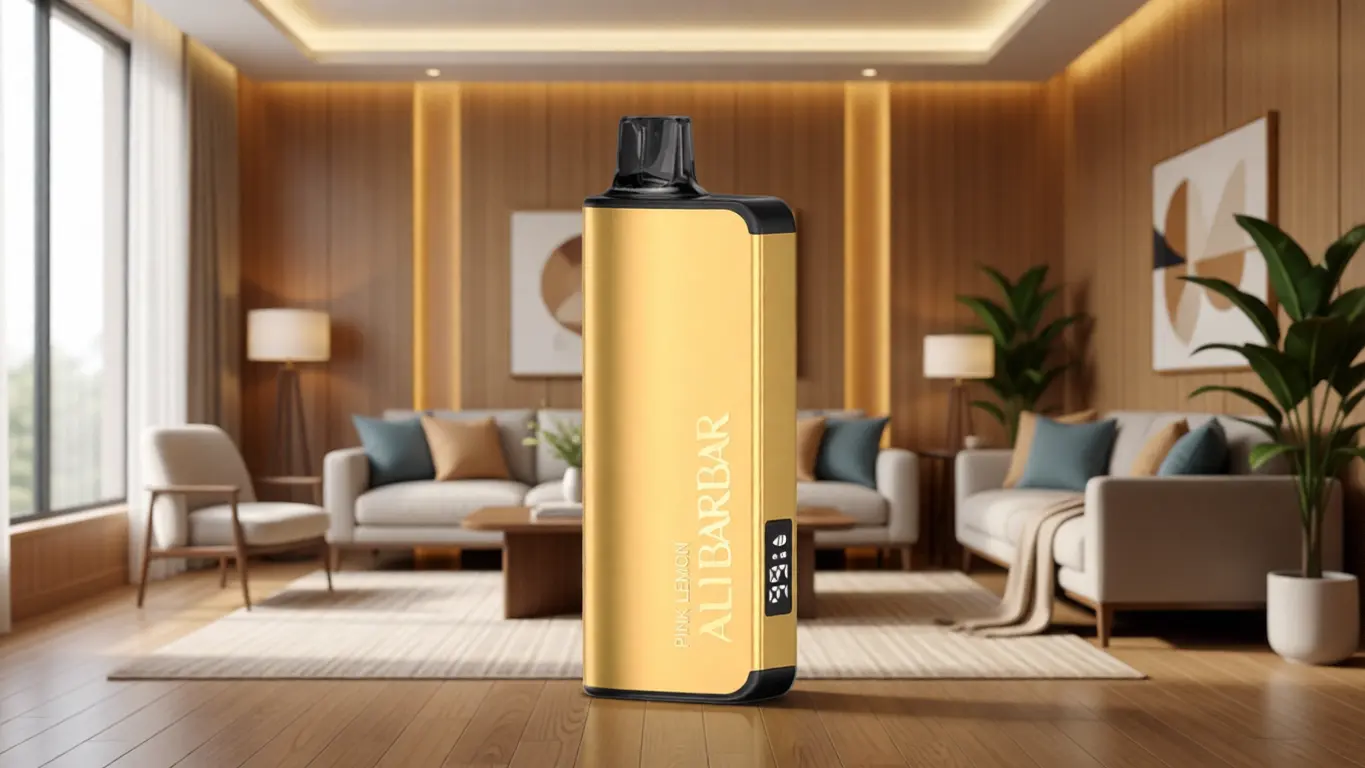
The ALIBARBAR INGOT 9000 demonstrates that a compact, pre‑filled device need not sacrifice output stability. Its internal architecture, built around a refined mesh coil, maintains a steady character across its entire lifespan. Users report that the final activations feel nearly indistinguishable from the first, a testament to the thermal management engineering inside a unit that fits in the coin pocket of jeans. The device communicates remaining status through a subtle window that shows draw count, removing ambiguity and eliminating the need for a backup.
For those who routinely face 16‑hour days, the ALIBARBAR INGOT 15000 extends that philosophy with substantially greater capacity while keeping the same pocket‑friendly silhouette. The 15000’s power algorithm includes an automatic temperature‑regulation loop that prevents overheating even during back‑to‑back use, a safeguard that matters when someone is sitting in an airport lounge and using the device more frequently than they would at home. Although it is a larger unit, its weight distribution and soft‑touch coating make it feel secure in hand, not as though it might slip.
The ALIBARBAR Ice Adjust 12000 introduces a dimension of personalisation that resonates with anyone who has strong preferences about draw resistance. Its adjustable airflow ring lets the user fine‑tune the inhalation effort from a tight, concentrated pull to an open, airier mouth‑to‑lung experience. For a professional who might want a meditative, deliberate draw before a free‑throw routine and a quicker, more casual one on the bus, that flexibility is not a gimmick; it is a direct alignment with how people actually use these devices in different contexts.
These examples do not represent an exhaustive catalogue, but they illustrate a pattern: ALIBARBAR products address the specific pain points that an active, mobile adult would encounter. They are not marketed on flash; they’re built for consistency, clarity, and endurance. That is why OZVAPE Shop has chosen to anchor its device selection around this particular brand, ensuring that every unit shipped matches the documented specifications and performs exactly as the engineering promises.
A Practical Framework for Everyday Evaluation
Users do not need an NBA paycheck to benefit from the same evaluation criteria. Here is a reproducible method for assessing any portable electronic device before committing to a purchase:
Check the specification sheet for coil material. If the manufacturer doesn’t state the coil type, assume it is a basic round‑wire build with limited lifespan. Mesh‑based systems are more predictable.
Examine the status feedback mechanism. Does it merely flash a colour, or does it give a precise readout? If the indicator is vague, mentally budget for a second unit.
Hold the device in your hand — or imagine the dimensions relative to your daily pocket. Will it protrude or snag? Is the mouthpiece contoured for natural engagement?
Calculate the cost per active‑day, not per unit. A device that lasts two days and costs $25 yields a $12.50/day cost; a rechargeable host with $8 pods that last three days each might bring that down to under $5/day. Modularity wins if usage is daily.
Read the warranty and support policy before you need it. At OZVAPE Shop, for instance, every ALIBARBAR product is backed by an accessible local support team, which means that a device that fails prematurely isn’t a dead loss.
Test for leakage by storing the device inverted for an hour before the first use. If it passes, it’s likely sealed well. If not, return it immediately.
This checklist moves the decision away from brand loyalty and onto functional alignment. It is precisely the kind of thinking that separates a gadget from a reliable tool.
Common Selection Errors and Industry Observations
Even well‑intentioned users sabotage their own satisfaction by falling into a handful of predictable traps.
Overweighting capacity while ignoring consistency. Some devices promise enormous usage numbers but degrade so severely after 50% depletion that the second half of the unit’s life is a chore. A smaller, steadier device almost always outperforms a larger, erratic one.
Equating visual similarity with engineering parity. Two devices may look identical in product photos, yet one could use a ceramic core with capillary‑force delivery while the other uses unpacked cotton that scorches under rapid draw. Surface design is the least informative signal of quality.
Undervaluing modularity in cost‑per‑use calculations. The initial price of a rechargeable device with replaceable cartridges appears higher, but over a six‑month period it typically saves 40‑60% compared to buying equivalent single‑use units. Many consumers fail to extend their calculation beyond the first checkout page.
Confusing marketing terms with technical specifications. Words like “pro,” “max,” or “ultra” are not standardised and offer no insight into coil composition, liquid‑wicking method, or power‑delivery regulation. The industry has no incentive to clarify this, which is why informed buyers rely on verified specifications and trusted retail channels rather than packaging superlatives.
From a supply‑chain perspective, the gap between manufacturers that invest in automated quality control and those that rely on batch sampling is enormous. Devices from automated lines have uniformity that single‑sample testing cannot guarantee, which is why OZVAPE Shop’s commitment to factory‑certified inventory is not just a slogan — it is the only mechanism that reliably keeps duds out of a user’s hands.
Frequently Asked Questions
Q: Do professional athletes actually use these devices?
A: Public speculation aside, the requirements that would make a device suitable for an elite athlete — consistent output, clear status feedback, leak‑proof construction — are identical to the requirements that make it suitable for any adult with a demanding schedule. The ALIBARBAR series meets those standards, regardless of who carries it.
Q: What is the difference between the INGOT 9000 and the INGOT 15000 besides capacity?
A: While the 15000 obviously offers extended use, it also incorporates a more sophisticated power‑management chipset that actively prevents thermal stress during consecutive draws. The 9000 prioritises compactness and simplicity.
Q: How can I verify that my device is an authentic ALIBARBAR product?
A: Every unit sold through OZVAPE Shop includes a unique authenticity code that can be verified on the dedicated brand portal. The packaging also carries subtle security features that unauthorised channels cannot replicate.
Q: Is the Ice Adjust 12000 suitable for someone who prefers a tight draw?
A: Yes. The adjustable airflow mechanism can be dialled down to a very restricted setting that mimics the resistance of a traditional mouth‑to‑lung device, then opened up for a more relaxed pull.
Q: Do I need to carry a backup if I use an ALIBARBAR device?
A: The precise status display on the INGOT series eliminates the guesswork that forces users to carry a spare. If you monitor the remaining capacity, a single unit should suffice for a full day.
Q: How does OZVAPE Shop handle devices that arrive non‑functional?
A: The support team offers a replacement or credit for any unit that fails within the documented operational parameters. The process is handled by local staff who understand the product line thoroughly.
Q: Can I travel internationally with these devices?
A: Most ALIBARBAR units use a sealed battery architecture that complies with airline carry‑on regulations, but always confirm the latest airline policy before departure. The devices do not emit any vapour when not activated, which simplifies security screening.
Q: What makes the ALIBARBAR range more expensive than some alternatives?
A: The cost reflects mesh‑coil engineering, rigorous sealing, honest power delivery, and the backing of a retailer that verifies every batch. Lower‑priced alternatives often compromise on one or more of these dimensions, leading to a shorter useful life.
Q: Is there a device for someone who rarely uses one but wants it to work perfectly when they do?
A: The INGOT 9000 serves that scenario well. Its pre‑sealed design means there is zero maintenance, and its stable output means that even after weeks of intermittent use, the activation quality remains unchanged.
Q: How long does shipping take within Australia from OZVAPE Shop?
A: Standard orders typically arrive within 2‑5 business days, with express options available. The dispatch process includes a final visual inspection to confirm the device’s condition before it leaves the warehouse.
The Choice Is Yours, and It Should Be Informed
The question “Do NBA players vape?” is ultimately a distraction from the real value hidden inside it: the set of demands that a professional‑grade device must satisfy just to survive a week on the road. Once you internalise those demands — consistency, transparency, durability, flexibility — you begin to see the market through a much sharper lens. The ALIBARBAR family, available through OZVAPE Shop, happens to align with those demands not by accident but by design. The INGOT 9000, INGOT 15000, and Ice Adjust 12000 each solve a different practical problem, and each does so without expecting the user to make sacrifices.
This analysis does not require you to believe that any athlete has ever held one of these devices. It only requires you to recognise that the same principles that would make a device acceptable to a time‑poor, image‑conscious professional are the principles that will make your own daily experience friction‑free. The right device is the one that disappears into your life and does its work silently. Find that one, and you’ll never again be curious about what anyone else is carrying.