
VAPE FAQs
Do Fire Alarms Pick Up Vape?

Sep
The question of whether fire alarms detect vapour from personal electronic devices is more nuanced than a simple yes or no. It sits at the intersection of fire safety engineering, aerosol physics, and the everyday reality of using these devices indoors. For anyone who uses a portable electronic device in environments where smoke detection systems are present—hotels, residential buildings, workplaces, or even their own homes—understanding this interaction is not academic curiosity. It is a practical necessity that can prevent unnecessary evacuations, awkward conversations, and potential penalties.
This article examines the technical relationship between common fire detection technologies and the aerosol produced by modern electronic devices. It explains why some alarms activate while others remain silent, and provides a framework for understanding the risk. Whether you are a regular user assessing your options or someone responsible for managing a property, the information here will help you navigate this question with genuine clarity.
At OZVAPE Shop, we believe that informed users make better decisions. Our role is to provide the technical context that allows adult users to understand how their chosen devices interact with the environments they occupy. This article is part of that commitment.
How Different Fire Detection Technologies Respond to Aerosol
Not all fire alarms are built alike. The technology used to detect combustion by-products varies significantly, and this variation is the primary factor determining whether an electronic device’s output will trigger an alarm. Understanding these differences is essential.
Ionisation Smoke Detectors
Ionisation detectors are the most sensitive to small particles. They work by passing a small electrical current through ionised air within a sensing chamber. When combustion particles enter this chamber, they disrupt the current flow, triggering the alarm.
Why this matters: The aerosol produced by most modern personal electronic devices consists of particles typically ranging from 0.1 to 1.0 microns in diameter. Ionisation detectors are particularly sensitive to particles in this size range. This means that under the right conditions—sufficient output volume, proximity to the detector, limited air circulation—an ionisation alarm can respond to vapour.
Key consideration: Sensitivity varies by device output. High-output configurations produce a denser aerosol cloud that is more likely to reach the threshold required to trigger an ionisation detector. Lower-output devices operating in well-ventilated spaces are significantly less likely to cause activation.
Photoelectric Smoke Detectors
Photoelectric detectors operate on a different principle. They use a light source and a light-sensitive sensor positioned at an angle. Under normal conditions, the sensor does not detect the light beam. When smoke particles enter the chamber, they scatter the light, causing some of it to reach the sensor and trigger the alarm.
Why this matters: Photoelectric detectors are generally more responsive to larger particles typical of smouldering fires. The aerosol from electronic devices tends to be composed of smaller particles, which means photoelectric detectors are generally less sensitive to vapour than ionisation units.
Practical observation: In controlled testing, photoelectric alarms demonstrate significantly lower activation rates from device vapour compared to ionisation models. However, this is not absolute. High-density vapour clouds in enclosed spaces can still produce sufficient light scattering to trigger a response.
Multi-Sensor and Aspirating Detectors
Modern fire detection systems increasingly combine multiple sensing technologies. Multi-sensor detectors incorporate both ionisation and photoelectric elements, sometimes with heat sensors. Aspirating systems actively draw air samples into a detection chamber. These systems are common in commercial buildings and high-value residential properties.
Why this matters: These systems are designed to reduce false alarms through algorithmic analysis. They compare inputs from multiple sensors before triggering an alarm. This can reduce the likelihood of activation from non-combustion aerosols. However, it also means that a sustained, dense vapour concentration near the detector inlet can still exceed thresholds.
Real-world implication: The sophistication of these systems does not guarantee immunity. Their primary purpose is to improve discrimination, not to allow aerosol-generating activity in spaces where it is prohibited. Users should never assume that advanced detection systems are incapable of responding.
Practical Factors That Influence Activation Probability
Understanding detection technology alone is insufficient. The actual likelihood of an alarm activating depends on a constellation of environmental and behavioural factors.
Proximity to the Detector
Distance from the detection device is the single most significant variable. Fire alarms are typically mounted on ceilings, where smoke naturally rises. The aerosol from a personal electronic device is warm relative to ambient air and will rise toward the ceiling. The closer the user is to the detector, the higher the probability of activation.
Practical guidance: If you are in a space with a ceiling-mounted detector, the risk increases with your proximity to that detector. Using a device directly beneath an alarm unit is the highest-risk scenario.
Air Circulation and Ventilation
Air movement dilutes and disperses aerosol particles. In a well-ventilated space with active air conditioning, open windows, or ceiling fans, the concentration of vapour reaching the detector is significantly reduced. Conversely, in a sealed room with no air circulation, the aerosol accumulates and remains at higher concentrations for longer periods.
Practical guidance: The most effective single measure for reducing alarm activation risk is ensuring adequate ventilation. This is not a guarantee, but it substantially alters the conditions required for an alarm to trigger.
Output Volume and Duration
The quantity of aerosol generated per activation and the duration of use directly affect detection probability. A single brief activation at low output in a ventilated space has minimal chance of triggering an alarm. Sustained use at high output in a confined space with poor ventilation has a significantly higher probability.
Practical guidance: Understanding your device’s output characteristics is useful. Devices with adjustable output allow users to moderate their output if they are in an environment where alarm activation is a concern. However, this should never override compliance with local regulations and property policies.
A Framework for Assessing Risk in Any Environment
Rather than relying on anecdotal reports or absolute claims, a systematic approach is more reliable. Consider these questions in sequence:
What type of detection system is present? Ionisation? Photoelectric? Multi-sensor? This information is often available from property management or building documentation.
What is the output level of your device? Higher output increases aerosol density. Lower output reduces concentration.
What is the distance between your typical use position and the nearest detector? Greater distance and physical obstructions reduce risk.
What is the ventilation status of the space? Active air circulation reduces risk. Sealed environments increase it.
What is the duration of use? Brief, intermittent use carries lower risk than continuous sustained output.
By applying this framework, a user can make a reasonable assessment of their specific situation. It is not a substitute for understanding and complying with applicable laws and property rules, but it provides a rational basis for decision-making.
Industry Observations and Common Misconceptions
Several persistent misconceptions surround this topic. Addressing them directly improves understanding.
Misconception: “I’ve never set off an alarm, so it never happens.”
This is survivorship bias. Absence of activation in past use does not predict future outcomes. Environmental conditions, device characteristics, and detection system types vary widely. A device that never triggers a photoelectric alarm in a ventilated home may activate an ionisation alarm in a sealed hotel room.
Misconception: “All alarms are equally sensitive.”
As outlined above, sensitivity varies dramatically by detection technology. Assuming uniform behaviour across all alarm types is incorrect and can lead to unexpected activation.
Misconception: “Using a device in a hotel bathroom with the exhaust fan running is completely safe.”
Bathroom exhaust fans vary in effectiveness. Many are designed for odour removal, not for evacuating aerosols. Additionally, hotel bathrooms often have smoke detectors installed directly inside or immediately outside the door. The combination of a small enclosed space and a detector in close proximity creates a high-risk scenario regardless of fan operation.
Industry pattern: Property managers and fire safety professionals consistently report that the majority of nuisance activations from personal electronic devices occur in hotel rooms, multi-unit residential buildings, and commercial properties with ionisation-based detection systems. This pattern aligns with the technical analysis above.
Frequently Asked Questions
Q: Can a fire alarm directly detect the vapour from my device?
A: Yes, under specific conditions. Ionisation smoke detectors are most sensitive to the particle size range produced by most personal electronic devices. Photoelectric detectors are generally less sensitive but can still activate under sustained, high-density conditions.
Q: Will opening a window prevent my alarm from going off?
A: Opening a window significantly reduces risk by diluting and dispersing the aerosol. However, it does not guarantee immunity. The effectiveness depends on factors including room size, air movement patterns, and proximity to the detector.
Q: Are hotel fire alarms more sensitive than residential ones?
A: Hotels often use interconnected multi-sensor systems designed to reduce false alarms while maintaining high sensitivity to genuine threats. The specific sensitivity depends on the property’s installation and maintenance practices. There is no general rule that hotel systems are uniformly more or less sensitive.
Q: Will using a lower-output setting on my device reduce the risk?
A: Yes. Reducing output decreases the volume of aerosol generated per activation, which reduces concentration in the air. This lowers the probability of reaching the detection threshold of any alarm type.
Q: Can I test my device’s effect on an alarm without setting it off?
A: Controlled testing should only be conducted in spaces designed for that purpose, such as fire safety testing facilities. Deliberately testing an alarm in an occupied building can cause unnecessary evacuation and incur penalties. This is not recommended.
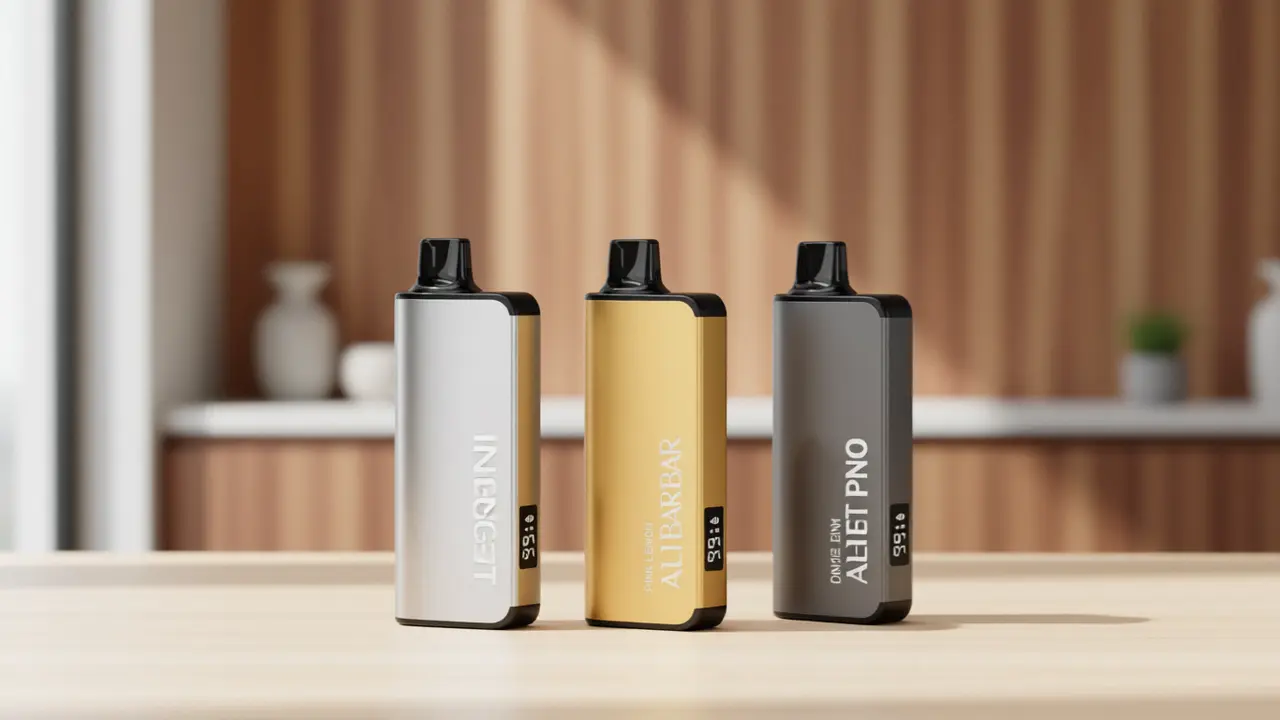
Q: Does the type of device—disposable, rechargeable, or pod-based—affect alarm activation?
A: The primary variable is the output volume and particle size distribution, not the form factor. Two devices with similar output characteristics will produce similar aerosol profiles regardless of their architecture. The device design that matters most is the heating configuration and power delivery, which determine output characteristics.
Q: Are there devices specifically designed to reduce detection risk?
A: No manufacturer designs a device with the primary goal of evading fire detection systems. Some devices with lower output levels incidentally produce less aerosol, but this is a by-product of their design for user experience, not a specific anti-detection feature.
Q: What should I do if my device sets off an alarm?
A: Do not attempt to disable or remove the alarm. Evacuate if required by building policy. If it is a false activation, notify property management or the relevant authority. Attempting to silence an alarm yourself may violate fire safety regulations.
Q: Are there legal consequences for setting off a fire alarm with vapour?
A: Consequences vary by jurisdiction and property policy. Some buildings impose fines for nuisance alarm activations. In commercial settings, repeated false alarms can lead to penalties from local fire authorities. Understanding the specific policies of the property you are in is essential.
Q: Does distance from the alarm matter?
A: Significantly. The closer you are to a ceiling-mounted detector, the higher the concentration of aerosol reaching the sensing chamber. Using a device directly beneath an alarm increases risk substantially.
Conclusion
The question of whether fire alarms detect vapour from personal electronic devices does not have a universal answer. The interaction is determined by detection technology, environmental conditions, device output characteristics, and user behaviour. Ionisation alarms are more sensitive. Photoelectric alarms are less sensitive but not immune. Ventilation, distance, and duration of use are all significant variables.
The most reliable approach is informed risk assessment. Understanding the type of detection system you are near, moderating output in sensitive environments, and maintaining adequate ventilation are practical steps that reduce—though never eliminate—the probability of activation.
At OZVAPE Shop, we provide access to a range of devices that allow adult users to make choices aligned with their priorities. Whether you prioritise lower output for discretion or higher capacity for extended sessions, the technical information you need to make that decision should be available and transparent. Our role is to offer that clarity, not to instruct you on where or how to use your device.
The right decision is the one that respects both your needs and your environment. Understanding the technology is the first step toward making that decision with confidence.