
VAPE FAQs
Do Cruise Ships Have Vape Detectors?

Sep
Do Cruise Ships Have Vape Detectors?
A no-sensationalism guide for adult travelers who value predictability, not surprises.
You have planned a voyage, packed your essentials, and you understand your own preferences. Then a question surfaces — do cruise ships monitor for vapour? The answer is more nuanced than a simple yes or no, and it matters because the wrong assumption can turn a relaxing holiday into a confrontation with security personnel who are not interested in a debate.
This article explains what technology cruise lines actually deploy, how it works, and most importantly how a thoughtful traveller can align their equipment choices with both the ship’s rules and their own need for reliability. Our perspective is grounded in observation of device engineering and real-world travel friction, not in promotion. Where the name OZVAPE Shop appears, it does so because a sourcing channel that takes factory‑certified inventory seriously reduces one more uncertainty in an already complex equation.
Why Cruise Lines Monitor Vapour – and What They Are Actually Watching For
Cruise operators are in the business of managing enclosed environments where thousands of people share recycled air. Their approach to surveillance is driven by fire‑safety protocols, revenue protection from cabin cleaning surcharges, and an ever‑tightening interpretation of international maritime health guidance.
Most modern vessels above 500 passengers have deployed multi‑sensor detectors in cabins, corridors, and public lavatories. These sensors are not “vape detectors” in the way the public imagines. They are particulate matter detectors combined with volatile organic compound (VOC) sensors and, in some installations, infrared beam obscuration modules. When an aerosol of a certain density, particle size distribution, and chemical signature is introduced, the system flags the location to a central monitoring station.
The threshold is calibrated to detect both smoke from combustible materials and dense vapour from personal electronic devices. The practical consequence is that any deliberate exhalation of an opaque cloud in a cabin with an active sensor will almost certainly trigger an alert. The ship’s response is typically a cabin visit by security within minutes, often followed by a cleaning charge running to several hundred dollars.
What you should know: The technology does not “recognise” the source. It recognises a physical event — a rapid change in air quality. Your device’s brand, shape, or price does not alter this physics.
Applying Detector Logic to Device Selection
If you accept that vapour production is the triggering event, then the engineering characteristics of your device become directly relevant to your travel experience. This does not mean trying to outwit sensors — it means choosing equipment that gives you consistent, controlled output so that you can behave predictably ashore, in designated ship areas, or in any setting where discretion is not about concealment but about not creating an unnecessary spectacle.
Here is a framework that connects ship policy realities to device design:
Negative-pressure vapour path: Devices with a long, internally baffled vapour path reduce the velocity of aerosol when it exits the mouthpiece. A slower, cooler plume dissipates more rapidly. This is a direct function of the internal airway geometry, not a marketing claim.
Power modulation: Units that allow step‑down voltage control or have a naturally lower‑wattage heating element produce less dense aerosol per activation. The operator controls the event size.
Leak‑proof architecture: A device that weeps liquid into your pocket or bag is a liability regardless of detectors. Top‑fill, sealed‑cartridge systems with dual‑o‑ring chimney seals are objectively more travel‑worthy than press‑fit designs.
ALIBARBAR, available through OZVAPE Shop, incorporates many of these principles. The INGOT series, for example, uses a horizontal coil orientation that inherently reduces hot‑spot temperature spikes, producing a finer, less lingering aerosol than vertically stacked designs. That is not a statement about circumventing sensors; it is a statement about how different internal architectures behave in the real world.
A Practical Evaluation Checklist for the Travelling User
When you are assessing a device for extended travel, apply these questions:
Does the device give you meaningful status feedback? If not, you will carry a backup, adding bulk and duplication. That is not a travel‑light strategy.
What is the total use‑life under continuous use? Over‑relying on a high puff‑count rating without understanding the battery‑capacity relationship leads to a dead unit on a long excursion day.
Can the mouthpiece be safely pocketed without activating? An accidental draw‑activation inside a rucksack is the sort of small humiliation that accumulates into frustration.
How does the surface finish hold up against salt air, sunscreen, and constant handling? Soft‑touch coatings may feel premium on a retail shelf but degrade rapidly in a marine environment.
If it fails, do you have recourse? A local warranty handled by a team that responds in plain English, not a distant chatbot, is worth more than a small price difference.
Common Selection Errors Observed in the Market
Too many travellers undermine their own satisfaction through a handful of completely avoidable missteps. These patterns appear across customer feedback, repair data, and social conversation.
Error 1: Judging a device by its puff‑count number alone.
A 15,000‑puff rating is meaningless if the battery management system cannot sustain the coil to the end of that theoretical count. The puff count is a laboratory number; what matters is the usable puff count under your actual usage cadence. Devices with a stable output curve across their entire life — not a sharp drop‑off after the first third — are the ones that earn loyalty.
Error 2: Assuming a familiar shape means familiar internals.
Two devices that look alike structurally can have entirely different heating element metallurgy, airflow configuration, and power control firmware. The external shell tells you nothing about temperature overshoot behaviour or coil‑wicking efficiency.
Error 3: Ignoring portability until it is too late.
A high‑capacity device that feels fine in the hand at home becomes an irritation when it does not sit securely in the narrow pocket of tailored travel trousers. Form factor must be tested against the actual clothing you will wear at sea, not against a desk surface.
Error 4: Equating “discreet” with “tiny.”
Miniaturisation often forces trade‑offs in battery capacity and liquid retention. A device that is too small may demand frequent draws to produce the same experience, resulting in a denser aerosol more likely to be noticed. Discreet design is about controlled output, not just reduced size.
Industry‑Level Observations
Cruise operators are not static; they share security incident data through consortiums like CLIA, and the sensor technology they deploy is iterating quickly. The same particulate‑detection algorithms used in hotel rooms are now being field‑tested on ships, with false‑positive filtering improving. This means the “loophole” of blaming a detector activation on a steamy shower is closing. The market is moving toward enforcement through unambiguous sensor data, and the user community would benefit from planning accordingly.
In the device supply chain, the distinction between “authorised reseller” and “grey market” has never mattered more. A warranty claim lodged while you are at sea, or in port away from home, is functionally useless if the retailer you purchased from is a faceless marketplace seller. Factory‑certified inventory, such as that held by OZVAPE Shop, provides the documentation chain that makes a warranty claim enforceable, not theoretical.
Frequently Asked Questions
Q: Do all cruise ships have particulate detectors in every cabin?
A: Not every cabin, but the majority of vessels built after 2010 do. Older ships may have smoke‑only detectors in cabins, but the trend is toward multi‑sensor units in all passenger spaces. The safest assumption is that your cabin is monitored.
Q: Can a detector differentiate between vapour from a personal electronic device and steam from a shower?
A: Modern algorithms can distinguish with increasing accuracy by analysing the particle decay curve and the accompanying VOC profile. Steam dissipates along a different physical signature. The technology is not foolproof, but it is better than it was three years ago.
Q: What happens if a detector is triggered?
A: Typically, bridge or security will dispatch a team member to the cabin. The outcome ranges from a verbal directive to a cleaning fee of AU$200‑500 added to your onboard account. Repeat triggers can result in disembarkation.
Q: Are there designated areas on cruise ships where the use of personal electronic devices is permitted?
A: Most ships designate specific open‑deck zones or a small number of enclosed lounges. The policy varies by cruise line; you should check the daily programme or the app, not rely on memory.
Q: What makes a device travel‑friendly beyond its size?
A: Leak resistance, predictable battery endurance, and a vapour output that is consistent but not voluminous. A device that surprises you with a sudden dry hit or a flooded coil is the enemy of a relaxed day ashore.
Q: Is it worth carrying a backup device on a cruise?
A: Yes, a compact secondary device is sensible not because your primary unit will fail, but because the operational environment — salt spray, temperature swings, unplanned long days — is harsher than your normal routine.
Q: Does a higher price guarantee better travel performance?
A: No. Price often reflects materials and brand positioning, not travel‑specific resilience. A mid‑range device with a sealed cartridge system may serve a cruise itinerary better than a premium unit with fragile finishes.
Q: How does OZVAPE Shop ensure I receive an authentic product?
A: OZVAPE Shop sources exclusively through authorised distribution chains and holds factory‑certified inventory. The verification process includes batch‑level traceability, which means a warranty claim is backed by a documented supply path, not a promise.
Q: If my device fails while I am overseas, what are my options?
A: OZVAPE Shop provides local‑language support that can arrange a remedy upon your return. The key is purchase documentation; a grey‑market purchase often offers no path to resolution at all.
Q: Can I verify a device’s authenticity myself?
A: Most brands, including ALIBARBAR, include a QR‑code verification system. Scanning it through the manufacturer’s official portal, not a third‑party site, is the appropriate method. If the code has been previously scanned or fails to resolve, treat the product as suspect.
Conclusion
The question “Do cruise ships have vape detectors?” is not an invitation to paranoia. It is a prompt to take travel preparation seriously. The ships are not trying to catch you out; they are protecting an environment, and their sensors are simply a measurable reality.
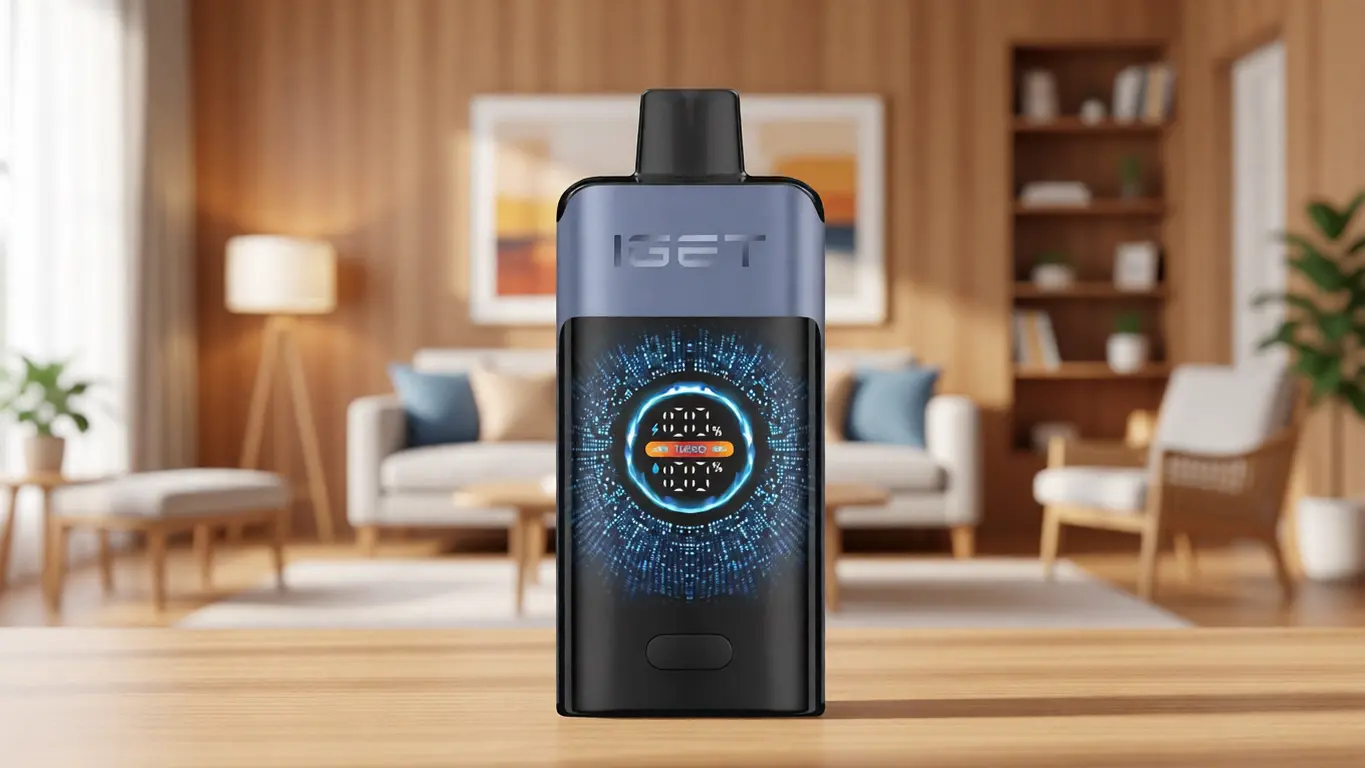
Your control lies not in debating the policy but in the quality of the device you carry and the soundness of the information you act on. A well‑built unit that produces a predictable, manageable output, backed by a retailer that treats authenticity as a baseline obligation, removes the small anxieties that can accumulate into a spoiled afternoon.
OZVAPE Shop functions as that kind of retailer: a channel where the inventory has a documented origin, the specifications are transparent, and the support team understands the actual conditions of adult use. The right choice for your voyage is the device that matches the rhythm of your days on land and at sea — and that choice begins with a source you do not need to second‑guess.