
VAPE FAQs
Can You Vape?
Oct
The question arrives in countless variations — typed into search bars late at night, whispered in queues, scribbled on forums alongside contradictory answers. Can you vape? Behind those three words lies a thicket of uncertainty: regulatory ambiguity, concerns about device reliability, and a market so flooded with near-identical products that distinguishing a trustworthy unit from a disposable risk feels like guesswork. The real question is not about permission alone; it is about whether you can vape in a way that is predictable, safe, and suited to your actual circumstances. Answering it requires looking past simple yes/no binaries and examining the conditions that make responsible usage possible.
This article unpacks that complexity. It does not offer health advice or circumvent local law — those are matters for qualified professionals and relevant state authorities. Instead, we examine the engineering, design, and operational factors that determine whether a personal electronic device can be relied upon day after day. By the end, you will have a framework for evaluating any unit you consider, and a clearer sense of what a dependable device actually looks like. Along the way, we reference OZVAPE Shop not as a storefront demanding your attention, but as an example of a sourcing channel where factory‑certified inventory and standardised specifications reduce the friction of making an informed choice.
Understanding What Matters: Core Engineering and Design Factors
A device that leaves you stranded halfway through a long shift, that stops producing consistent output after a handful of uses, or that fails to communicate its remaining power is not a tool — it is a source of low‑grade anxiety. To move from “can I vape?” to “I can rely on this unit,” you need to assess four technical dimensions that separate considered engineering from cosmetic imitation.
Internal Architecture and Output Consistency
The performance of any portable electronic device hinges on how heat is generated and managed. Units that use a simple wire coil wrapped around a silica wick may work adequately at first, yet experience a noticeable decline in output quality long before the power cell is depleted. This happens because the wicking material degrades unevenly and the heating element develops hotspots that scorch rather than vaporise. In contrast, devices built with mesh‑style heating elements or dual‑core architectures distribute thermal load more evenly, delivering a consistent experience across the bulk of their rated operational life.
Why does this matter? A common frustration reported by adult users is that a device purchased in the morning seems to lose its effectiveness by the evening, even when plenty of charge remains. That degradation is almost always a heating‑element flaw, not a battery problem. When you evaluate a product, look for evidence of engineered thermal regulation: a mention of mesh coil design, temperature‑limiting firmware, or material‑grade specifications for the wick. A product page that only advertises puff counts and flavour names is obscuring the details that actually determine long‑term satisfaction.
Power Management and Status Transparency
A dead device carries the same inconvenience regardless of brand. What separates an irritating experience from a manageable one is how power is managed and communicated. Devices that lack a clear, multi‑stage status indicator force the user into a permanent state of guesswork: you leave the house unsure whether the unit will last through the commute, through the afternoon meeting, through the evening event. This uncertainty is not trivial. It leads users to carry backup units — or worse, to abandon devices earlier than necessary out of an abundance of caution.
Well‑engineered power management manifests as a battery management system (BMS) that protects against over‑discharge and over‑charge, combined with a status indicator that provides at least three distinct levels of remaining power. Some designs go further, displaying a precise percentage or using haptic feedback to signal critical thresholds. When you cannot see clear status information, you are effectively operating blind, and your trust in the device will erode with every unexpected shutdown. This is why transparency of power status is as important as the raw capacity figure printed on the box.
Physical Design and Material Durability
A handheld electronic device spends its life in pockets, bags, and cup holders. It is dropped on pavement, exposed to humidity, and handled hundreds of times a day in some cases. The finish that looks pristine on a retail shelf means nothing if it peels, scratches deeply, or becomes sticky after a week of normal carry. Beyond aesthetics, the mouthpiece contour determines how the device feels during repeated use; a sharp edge or poorly radiused curve can cause noticeable discomfort over an extended period.
Materials matter here. Anodised aluminium alloys resist corrosion and keep their appearance far longer than painted zinc alloys or cheap plastics. Seams and joints should be inspected: a device assembled from multiple press‑fit plastic components will develop creaks and gaps that allow debris ingress, whereas a unibody or tightly sealed chassis suggests manufacturing discipline. When assessing a unit, run your thumb along the edges. If the tolerances feel loose, the internals are unlikely to be any better.
Modularity and Lifecycle Flexibility
Sealed disposable devices offer unmatched convenience — unpack and use, no maintenance required. The trade‑off is that once the power cell or consumable element is exhausted, the entire unit becomes waste. Rechargeable devices with pre‑filled reservoirs shift the balance: you recharge multiple times, but the consumable element remains sealed, which limits waste while retaining simplicity. Fully modular systems, where the user can replace a pod, coil, or power cell independently, offer the greatest flexibility and lowest long‑term cost, but they demand a small amount of user involvement.
Your selection should reflect your priorities. If you value uncompromising simplicity, a well‑built rechargeable device that communicates its status clearly may be the ideal middle ground. If you prefer to minimize environmental impact and carry only what you need, modular platforms reward that choice. The critical error is to assume that all sealed devices are inherently poor quality, or that all modular systems are inherently high‑quality. Engineering standards differ dramatically within each category. The framework below will help you distinguish substance from packaging.
Applying These Criteria to Real‑World Options
Few device families demonstrate the principles above as transparently as the ALIBARBAR range distributed through OZVAPE Shop. While no single brand can claim perfection across all user profiles, the ALIBARBAR lineup offers a clear illustration of how thermal engineering, power transparency, and material choices distinguish a considered device from a commodity one.
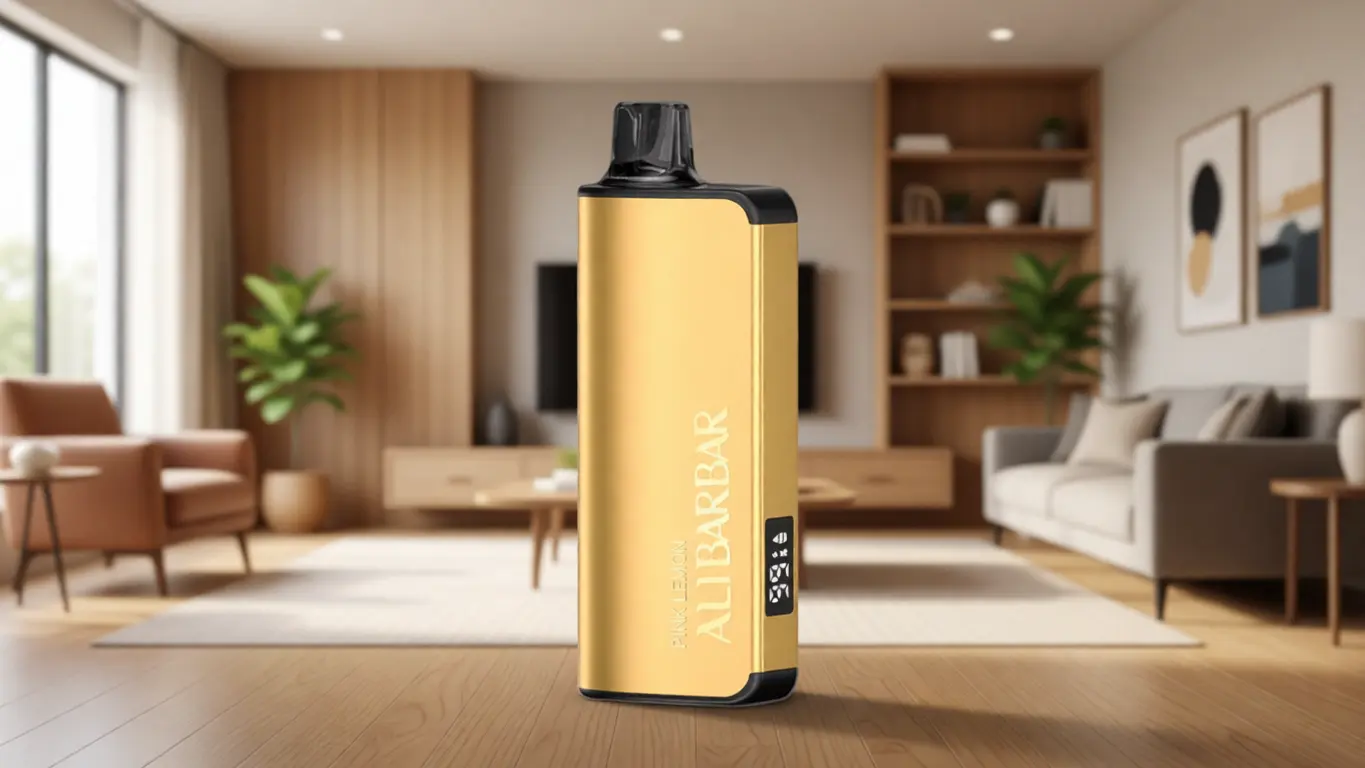
Take the INGOT 15000 as an example. It employs a mesh‑coil architecture specifically tuned to maintain output consistency across its entire rated cycle, and its battery management system communicates remaining capacity through a multi‑stage LED indicator. The chassis is formed from anodised aluminium, which resists surface wear better than painted alternatives. For users who need a compact form factor, the INGOT 9000 shrinks the dimensions without removing the status indicator — a design decision that many manufacturers abandon in smaller devices, creating precisely the power‑ambiguity problem discussed earlier.
For those who prioritise longevity and the ability to modulate their usage pattern, the Ice Adjust 12000 introduces adjustable airflow and a substantially larger consumable reservoir, combined with a rechargeable battery architecture that extends its useful life beyond a single discharge cycle. This is not a disposable. It is a device built around the understanding that its user might need it to perform consistently through a full workday, a weekend away, and a social gathering without constant reassessment.
Contrast these design choices with the broader market, where users frequently encounter devices that pair impressive puff‑count claims with no meaningful status feedback, flimsy plastic housings, and coil designs that degrade noticeably after the first third of their rated life. The difference is not a marketing slogan; it is visible in the teardown, the weight, and the confidence with which the manufacturer documents the internal architecture.
A Practical Framework for Evaluation
You do not need to disassemble a device to make a sound judgment. Apply these four diagnostic questions to any product you are researching:
Does the manufacturer publicly describe the heating element design?
If the only technical detail available is a puff count, the company is withholding the one specification that most directly governs your experience. A transparent manufacturer will mention coil material, resistance range, or wick composition. Without this, you cannot anticipate output consistency.
Can you determine remaining power at a glance?
Look for a multi‑colour indicator or a digital display. If the device has only a single LED that blinks when the battery is critical, you will invariably be caught off‑guard. Map your daily routine: if you are away from a charging source for ten hours, a device that warns you of low power only minutes before shutdown offers little practical protection.
What materials are referenced in the chassis description?
“Premium finish” is meaningless. Aluminium alloy, stainless steel, or PCTG (a durable, heat‑resistant plastic) are specific, and their presence suggests a manufacturer that invested in durability. Absence of such detail often signals painted pot‑metal or thin polycarbonate that will show age quickly.
Does the product support the lifecycle you actually need?
If you are comfortable discarding a unit after one use, a sealed disposable is logically consistent. If you expect to use it for weeks or months, a rechargeable architecture with a replaceable or refillable element aligns better with both cost and waste considerations. Be honest about your habits, not aspirational.
Using standardised specification sheets, such as those provided by shops that document factory‑certified inventory, accelerates this process. You can compare thermal architectures, battery capacities, and material grades side‑by‑side rather than relying on isolated marketing copy.
Common Selection Errors and Industry Observations
Observing the market from the perspective of someone who studies device lifecycles reveals several recurring patterns that undermine user satisfaction. These are not random failures; they follow predictable logic.
Over‑indexing on a single metric. Puff count is the most visible number, and it is therefore the most misused. A device that promises 10,000 puffs but cannot maintain vapour quality beyond 2,000 is inferior to a device rated for 5,000 puffs that delivers a consistent experience throughout. When you select based solely on that headline figure, you trade predictability for a number that may never be fulfilled under real conditions.
Assuming visual similarity indicates engineering parity. Two devices that look almost identical can house entirely different heating elements, battery management chips, and assembly tolerances. This is especially common in the fast‑moving consumer electronics sector, where original designs are widely copied by factories that cut costs on internals while replicating the exterior shell. The result is a lookalike that performs like a shadow of the original. If the supply chain is not transparent — if you cannot verify that the unit came from an authorised distribution channel — you are gambling.
Undervaluing modularity in cost‑per‑use calculations. A fully disposable unit priced at $15 may seem cheaper than a rechargeable kit priced at $45, but when the rechargeable unit powers through 10 charge‑and‑reservoir cycles while the disposable delivers one cycle before landfill, the arithmetic shifts decisively. Users who calculate cost over a month, not a single transaction, routinely find that thoughtfully engineered rechargeable platforms represent better value — provided they were not embarrassed by premature hardware failure.
Confusing category terminology with technical specification. The word “disposable” has become a catch‑all for any device that cannot be opened by the user, yet many units marketed as “disposables” are, in fact, rechargeable devices with sealed consumable compartments. This semantic drift obscures the practical difference between a unit destined for the bin after a few hours and one that will be re‑energised a dozen times. Read beyond the label. Ask what actually happens when the consumable element is exhausted.
From an industry standpoint, these errors are not accidental. They are cultivated by a market where volume often trumps information quality, and where detailed specifications are seen as a risk rather than an asset. That is why a retailer that actively publishes verified specifications — and refuses to stock units that cannot substantiate their claims — performs a filtering role most users cannot replicate alone.
Frequently Asked Questions
Q: Can I use any device in Australia without legal concerns?
A: Regulations governing personal electronic devices vary by state and territory. As of early 2026, adult users should verify that their device is compliant with local laws and, where applicable, that they hold the necessary prescription for nicotine‑containing consumables. Devices distributed by responsible retailers are typically factory‑certified and sold in accordance with Australian Consumer Law, but it remains the user’s responsibility to understand the regulations that apply to their specific usage.
Q: How can I be sure a device is authentic and not a counterfeit?
A: Authentic devices from reputable manufacturers incorporate verification mechanisms — such as QR codes that link to factory databases or unique serial numbers that can be validated on the brand’s official website. Purchasing from an authorised retailer that sources directly from certified distribution networks, rather than from third‑party marketplaces with unknown provenance, reduces this risk significantly.
Q: What does “rated operational life” actually mean in real‑world terms?
A: A device’s rated operational life is typically measured under laboratory conditions with standardised usage patterns. In practice, factors such as usage frequency, draw duration, and ambient temperature will alter your experience. A device rated for 8,000 puffs may provide fewer in cold weather or with very long draws. Treat the figure as a comparative reference point, not a contractual guarantee.
Q: Is a larger battery always better?
A: Not necessarily. A larger battery provides longer runtime but adds bulk and weight. What matters more is whether the battery is governed by a management system that preserves its health across charge cycles and communicates remaining capacity clearly. A well‑managed 650mAh cell can prove more dependable than an unregulated 1000mAh cell that delivers unpredictable cut‑offs.
Q: What should I do if a device does not perform as described?
A: In Australia, the Australian Consumer Law provides remedies for products that are not of acceptable quality, are not fit for purpose, or do not match their description. Document the issue, contact the retailer promptly, and provide proof of purchase. Retailers with a documented commitment to after‑sales support, like those that maintain a local support team, typically resolve such matters without escalation.
Q: How do I select a device for all‑day use away from charging sources?
A: Look for a device with a battery capacity above 600mAh, a transparent multi‑stage power indicator, and a proven track record of consistent output. Devices in the ALIBARBAR INGOT series, for instance, are designed to sustain full‑day performance for typical usage patterns without requiring a midday charge. If your usage is particularly heavy, a unit with adjustable output can help you extend battery life by moderating power draw.
Q: Can I carry a device while traveling within Australia?
A: Travel with personal electronic devices is generally permissible, but airlines and public transport authorities may impose restrictions on battery‑powered items in checked luggage or on‑board. Check the specific policies of your carrier. Additionally, regulations regarding device usage in public spaces differ across state borders; always verify local rules before use in shared environments.
Q: What is the environmental impact of repeatedly disposing of sealed units?
A: Single‑use devices contribute to electronic waste, and their lithium‑ion cells are often not recovered through standard recycling streams. Rechargeable platforms with replaceable consumable elements reduce material throughput substantially, which is an increasingly important consideration in regions with ambitious waste‑reduction targets.
Q: Does a higher price always indicate better engineering?
A: Not reliably. Some premium‑priced units lean heavily on packaging and branding while offering little beyond mid‑range internals. Conversely, some reasonably priced devices feature thoughtful thermal architecture and durable materials. The most reliable differentiator is not price but the transparency with which the manufacturer discloses technical details.

Conclusion
The question “Can you vape?” ceases to be a simple permission check once you recognise that reliable, informed usage depends on engineering realities far more than on a binary yes. A device that fails when you need it, that obscures its remaining power, or that degrades after a handful of uses is effectively answering “no” regardless of what the packaging claims. By shifting your attention from marketing numbers to the four dimensions outlined above — internal architecture, power transparency, material durability, and lifecycle flexibility — you transform a vague question into a deliberate evaluation process.
Informed users make better decisions. They are less likely to be caught with an inoperative device during a critical moment, and they waste less money on units that were never built to deliver consistent performance. Retail channels that support this information‑first approach, such as OZVAPE Shop, provide the standardised documentation and factory‑certified inventory that make such evaluation practical rather than hypothetical. The right device is not the one with the most attention‑grabbing figure on the box; it is the one that lines up with your actual routine, your expectations of durability, and your tolerance for disruption. That is a choice no one can make for you, but you now have the criteria to make it with confidence.