
VAPE FAQs
Can You Vape Water?
Oct
Plain water seems harmless. That very assumption makes the question “Can you vape water?” both common and potentially dangerous. It arises from a reasonable line of thinking: if a device heats a liquid into an aerosol, why wouldn’t the simplest liquid work? The answer touches on thermodynamics, materials engineering, and respiratory biology — none of which cooperate with the idea.
At OZVAPE Shop, we field this inquiry regularly, often from adults who are genuinely trying to understand the boundaries of their devices. The question deserves a response that is as technically clear as the devices we supply. This article unpacks what actually happens when someone attempts to inhale water vapour from a personal electronic device, why modern devices are specifically engineered to resist such misuse, and how to recognise the design factors that separate proper aerosol generation from a hazardous experiment.
Why Water Behaves Differently Inside a Heating Chamber
The Boiling Point Problem and Superheated Instability
Most handheld vaping devices operate by rapidly heating a liquid to a temperature where it transitions into a fine aerosol — ideally between 180°C and 250°C. They are calibrated for liquids with boiling points well above 100°C. Water abruptly boils at 100°C under normal pressure. Inside the confined wick-and-coil system of a typical device, however, the behaviour is less predictable.
As the coil heats water, pockets of liquid flash into steam, expand violently, and create pressure spikes. The result is not a smooth aerosol but a chaotic mix of spitting hot droplets and short-lived steam. Users typically experience scalding on the lips or throat, violent popping sounds, and immediate failure of the wicking material, which is not designed to handle the surface tension and thermal conductivity of pure water. This isn’t a minor difference in taste — it’s a fundamental mismatch between the fluid and the heating architecture.
Why Aerosol Production Requires More Than Steam
The distinction between steam and the dense aerosol produced by a properly functioning device is critical. Steam is gaseous water at atmospheric pressure; it condenses rapidly and delivers little active transport for any intended compounds. A true aerosol, by contrast, consists of countless microscopic liquid droplets suspended in air, each capable of carrying dissolved components. Generating that droplet distribution depends on a liquid’s viscosity, boiling range, and ability to wet the wicking medium. Water, with its high surface tension and single sharp boiling point, breaks down the process at every stage. The coil overheats intermittently, the wick scorches, and the output is a burst of heat rather than a cool, predictable plume.
Device Architecture and Why It Works Against Water
Wicking Materials and Liquid Compatibility
Modern devices, including every ALIBARBAR unit available through OZVAPE Shop, use food-grade cotton or advanced ceramic‑fibre wicks engineered for the specific rheology of propylene glycol, vegetable glycerine, and their blends. These wicks are optimised for capillary action with viscous, slower-moving liquids. Introduce water, and the wick floods instantly — the liquid arrives at the coil too quickly, leading to uneven heating and a phenomenon known as “dry hit” followed immediately by flooding, as the temperature drops below vaporisation thresholds before rebounding into an overheated spike.
This cycle of thermal shock strains the resistance wire, degrades the cotton, and can cause premature coil failure. Users who have accidentally diluted their e‑liquid with water often report a burnt taste that persists even after refilling with the correct formulation, indicating permanent damage to the heating element.
Power Calibration and Status Transparency
A well-engineered device includes power management that anticipates the thermal load of standard formulations. When water is present, the resistance readings can fluctuate, confusing the output regulation. Many modern battery modules interpret the erratic current draw as a fault and either throttle power or stop firing altogether. This is a safety feature, not a defect. It reflects the kind of engineering discipline that separates devices designed for predictable, safe use from those that leave the user to guess.
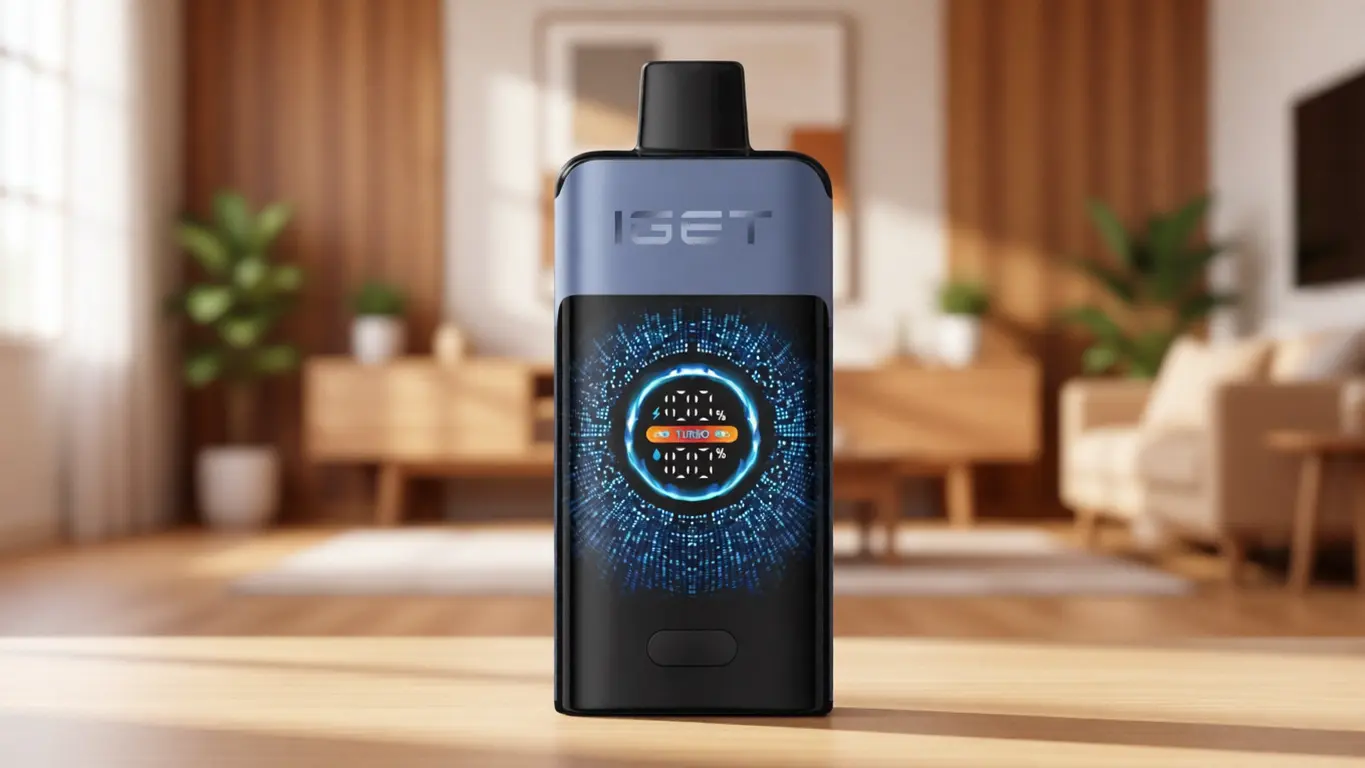
The absence of transparent status feedback in lower-quality devices compounds the risk: someone experimenting with water might receive no warning until the device becomes dangerously hot. That’s one reason why the clear status indicators on properly built units — the sort that allow a user to monitor remaining charge, coil condition, or draw count — are not conveniences but safety tools.
Health Risks That Go Beyond Device Damage
Thermal Injury and the Anatomy of a Steam Burn
Inhaling steam is not a gentle process. The respiratory tract is lined with delicate mucous membranes that are highly susceptible to thermal injury. Even a single inhale of steam-laden air can cause immediate epithelial damage, triggering inflammation, oedema, and a heightened risk of secondary infection. Children and elderly individuals are especially vulnerable, but any adult can suffer a burn severe enough to require medical attention. Those burns are not always painful at first — the danger lies in silent swelling that restricts breathing hours later.
Pathogens and the False Sense of Purity
Water is not sterile once it has been sitting in a tank at room temperature. Stagnant water in a dark, warm reservoir is an ideal breeding ground for bacteria, including Legionella pneumophila, the cause of Legionnaires’ disease, and various biofilm-forming pseudomonads. Commercial e‑liquids use antimicrobial base ingredients like propylene glycol specifically because they inhibit microbial growth. Water, lacking these properties and any preservative, can turn a device into a delivery system for live bacteria directly into the lungs. This is not a theoretical concern — it is the same mechanism behind outbreaks linked to improperly maintained humidifiers and respiratory therapy equipment.
Misinterpretation of “Water-Based” Formulations
A handful of products on the market describe themselves as “water-based” vaping solutions. These are not water in any simple sense. They contain a blend of solubilisers, stabilisers, and usually a small fraction of water to modify vapour temperature or delivery characteristics, all suspended in a system designed to maintain aerosol quality. Attempting to replicate them with tap or bottled water ignores the chemistry that makes them safe and functional. The distinction is analogous to the difference between a pharmaceutical inhalation solution and a glass of water — one is precisely engineered; the other is a solvent with no delivery framework.
Applying These Criteria to Real-World Options
When you evaluate any personal electronic device — and we see this daily at OZVAPE Shop with customers comparing the ALIBARBAR INGOT 9000, INGOT 15000, or Ice Adjust 12000 — the question is never “can it vape water?” but “how tightly is it designed for its intended medium?” The most reliable models exhibit exactly the characteristics that make water a poor match: wicking materials selected for a narrow band of liquid properties, precise temperature control, and sealed housings that discourage unauthorised refills.
Take the sealed-system architecture of a single-use or pre‑filled device. These units eliminate user‑servicing errors entirely by locking the liquid pathway away from any possibility of contamination or substitution. The trade‑off is that the user cannot refill them with anything, including water — and that limitation is a protective measure. On the other end of the spectrum, a modular device with a refillable pod requires a user to understand the implications of what they put into it. The manufacturer provides a baseline, but the safety boundary is maintained by the user’s knowledge.
A side-by-side comparison of a closed-system ALIBARBAR device and an open-system competitor might, on the surface, suggest that the open system offers more freedom. But that freedom includes the freedom to make hazardous choices. Users who prioritise long-term safety and predictability tend to gravitate toward devices with tightly controlled liquid architecture — not because they are less flexible, but because they remove the most dangerous variable.
A Practical Framework for Self‑Assessment
If you are holding a device and wondering whether a particular liquid is safe for it, ask five diagnostic questions:
What is the boiling range of this liquid, and does it overlap with the device’s intended temperature band?
If the liquid boils at 100°C while the device targets 200°C, the coil will overheat the medium and produce steam, not aerosol.
Does the wicking material retain its capillary rate with this liquid?
Water moves too quickly; it floods. Oils move too slowly; they scorch. The wick must match the fluid’s mobility.
Will the liquid support microbial growth if left sitting for hours?
If the answer is yes and the device lacks antimicrobial materials, the respiratory risk escalates.
Does the device provide clear status feedback — temperature, power draw, short‑circuit protection — to alert you to a fault?
Without such feedback, you are operating blind, and water-induced faults are unlikely to announce themselves before damage occurs.
Has the manufacturer stated explicitly that the device is compatible with this liquid?
If no such statement exists, the user becomes the de facto tester, bearing all the liability.
Apply this framework, and the question of water answers itself. More broadly, the same methodology helps evaluate any device’s real-world safety envelope, including the products we stock at OZVAPE Shop, where every component is specified for the formulations it ships with.
Common Misconceptions and Industry Observations
Misconception 1: “Water vapour is just steam, and steam is harmless.”
Steam scalds. Even when it doesn’t produce an immediate burn, chronic inhalation of moist heat irritates the airway and can exacerbate conditions like asthma. The harm is cumulative and often overlooked in casual experimentation.
Misconception 2: “Adding water to e‑liquid makes it milder.”
While a small fraction of distilled water is sometimes used in DIY mixing (under 10%) to adjust throat hit or wicking, doing so without understanding the overall formulation can lead to phase separation, coil gurgling, and unpredictable temperature spikes. It is not a harmless tweak; it is a chemistry change.
Misconception 3: “If a device doesn’t stop me from using water, it must be fine.”
The lack of a hard lock does not imply safety. Many adult products assume a baseline of informed consent. The responsibility falls on the user to know the limits of their equipment, much as a driver is expected not to pour water into a fuel tank simply because the fuel cap opens.
From an industry vantage point, this confusion persists because the hardware and the liquids evolved along separate paths. Device manufacturers optimise for the media that dominate the market; liquid manufacturers formulate for specific hardware classes. Water sits entirely outside that relationship. The companies that invest most heavily in safety engineering — like those behind the ALIBARBAR range — design their products to fail gracefully when abused, but no design can outwit every human impulse. That’s why transparent education matters as much as circuit-level safeguards.
Frequently Asked Questions
Q: Can I vape water in any vaping device?
A: No. Standard personal vaporisers are not designed for water. Attempting to do so can cause immediate burns, device failure, and exposure to bacteria.
Q: What happens if I accidentally inhale steam from a water-filled tank?
A: You may experience a sharp crackling sensation, a blast of hot droplets, and potentially a burn to the lips, tongue, or throat. If you feel persistent discomfort after such an event, seek medical evaluation, as airway swelling can be delayed.
Q: Are there any “water vaping” products that are safe?
A: Some ultrasonic humidifier-style devices release cool water mist, but they are intended for ambient humidity, not deep lung inhalation. They are not vaping devices and do not produce a respirable aerosol in the technical sense.
Q: Can I use distilled water instead of tap water to be safe?
A: Distilled water reduces mineral content but does not address the boiling point mismatch, thermal injury risk, or bacterial growth inside a warm tank. It is not a safe substitute for properly formulated e‑liquid.
Q: Why do e‑liquids use propylene glycol and vegetable glycerine instead of water?
A: PG and VG have higher boiling points, produce stable aerosols, act as humectants, and possess antimicrobial properties. They are the product of decades of inhalation toxicology research into safe carrier fluids, while water lacks these protective characteristics.
Q: Can I use water to clean my vape coil or tank?
A: Only for external cleaning of disassembled parts, and only if they are thoroughly dried before reassembly. Residual water inside a coil head or wick will cause the problems described above.
Q: If a device is “water-resistant,” does that mean I can use water inside it?
A: No. Water resistance refers to ingress protection from outside moisture, not internal liquid compatibility. The tank pathway remains subject to the same engineering constraints regardless of the housing’s seal rating.
Q: Are there any plans for commercial water-based vaping products?
A: A small number of companies have experimented with water-thinned formulations for specific therapeutic applications, but these are tightly controlled pharmaceutical preparations, not consumer liquids. No meaningful commercial market exists for a pure-water vaping product because the aerosol science does not support it.
Q: What should I do if someone tells me they vaped water and it was fine?
A: Anecdotal reports of no injury do not constitute safety evidence. Thermal damage and infection can occur sporadically. One person’s momentary luck does not validate a practice that is inherently dangerous.
Q: Where can I find devices that are properly designed for their intended liquids?
A: Authorised retailers like OZVAPE Shop provide factory-certified devices with transparent specifications and usage guidance. Always verify that the device you purchase is supplied with clear instructions regarding compatible media.
An Informed User Is a Safer User
The question “Can you vape water?” seems simple, but answering it requires grappling with a web of physical constraints, material limitations, and biological risks. The short answer — don’t — gains meaning only when you understand exactly how a properly engineered device handles its medium and why substituting an incompatible liquid turns a precision instrument into a hazard.
Adult users deserve more than warnings; they deserve the engineering literacy to assess any device they pick up. The ALIBARBAR range, and all the products we present at OZVAPE Shop, represent a deliberate choice to align device architecture with media that have been evaluated for long-term respiratory safety and consistent performance. That alignment is not a marketing slogan but a hard-edged design requirement.
Ultimately, the right device for you is the one that respects your body’s tolerance, matches your daily patterns, and never invites you to become a test subject for an unproven idea. Stay curious, but let that curiosity lead you deeper into understanding, not into the risky territory of improvisation.