
VAPE FAQs
Can You Vape Cannabis?
Sep
Can You Vape Cannabis?
A technical guide to device selection, compatibility, and informed decision‑making for adult Australian users
Introduction
The question “Can you vape cannabis?” is deceptively simple. It is asked by people who have heard about portable electronic devices, seen sleek hardware, and want to understand whether the equipment they already own — or are considering buying — can be used with cannabis‑derived products. The answer is not a single yes or no. It depends entirely on two things: the form of cannabis being used (dry herb, oil, wax, cartridge‑based distillate) and the specific engineering of the device you intend to use. Ignoring this intersection is the source of most user frustration, wasted expenditure, and safety concerns.
This article is written for adults who approach procurement with the same seriousness. We will examine the core technical factors that determine whether a device is suitable for cannabis inhalation, explain how to evaluate hardware before purchase, and identify the common errors that lead to disappointment. Throughout, we will refer to real‑world device architectures — including some that are available through channels like OZVAPE Shop — to illustrate the principles, but our aim is never to advocate for a particular use case. Instead, we want you to possess the knowledge to make a choice that is both legally compliant and technically sound for your personal circumstances. The references to the ALIBARBAR device family that follow are for comparative engineering analysis only. Nothing in this text should be interpreted as a recommendation to use any product with a controlled substance.
Understanding What Matters: Core Engineering and Design Factors
Before you can answer whether a given device is suitable for cannabis, you must understand the interplay between heating technology, power delivery, material compatibility, and the form of cannabis you intend to use. Each factor addresses a genuine user frustration that has been repeatedly observed in the field.
Internal Architecture and Output Consistency
The heating element is the heart of any electronic vaporising device. There are three architectures relevant to cannabis use:
Conduction ovens (common in low‑cost dry‑herb devices) heat the material directly by contact with a hot surface. They are inexpensive but notoriously inconsistent. The outer layer of herb can char while the centre remains under‑extracted, leading to harshness and wasted material. For cannabis flower, a conduction device will work, but the experience is often unpleasant and inefficient.
Convection systems pass heated air through the material without direct contact. This gives more even extraction, better flavour, and less chance of combustion. High‑quality dry‑herb vaporisers almost exclusively use convection or hybrid (conduction‑assisted‑convection) designs. If you plan to use cannabis flower, this is the engineering feature that separates a reliable device from a frustrating one.
Coil‑and‑wick atomisers (used in oil cartridges and pre‑filled tanks) rely on a resistance wire wrapped around a wicking material. The coil heats the cannabis extract — usually a distillate or CO₂ oil — to the point of vapourisation. The critical variables here are the coil material (ceramic, quartz, or traditional cotton) and its resistance, which determines the optimal power range. A coil rated for less than 1.0 ohm often runs too hot for cannabis oils and can break down delicate terpenes or even burn the oil, producing unpleasant by‑products. A mismatch between the cartridge’s coil and the device’s power output is the single most common reason a user says a cannabis oil device “tastes wrong” or “hits harshly”.
Why this matters: Users consistently report that a device “stopped working well after a few days.” In many cases, that’s because they have paired a cannabis oil cartridge with a device that dumps too much wattage, degrading the coil rapidly. A well‑engineered device will either limit its output to a safe range or offer adjustable voltage so the user can match it to the cartridge’s specification. Without that, you are operating blind and will likely destroy the cartridge — and the active compounds within — much sooner than necessary.
Power Management and Status Transparency
Lithium‑ion batteries are the universal power source for portable vaporisers. Their behaviour under load — especially when driving a sub‑ohm coil or a convection oven that requires sustained energy — affects both safety and longevity. A device with sloppy power regulation can allow voltage to sag as the cell depletes, resulting in inconsistent vapour production over a session. Conversely, a device that cuts power abruptly when the battery reaches a certain threshold leaves the user guessing how much usable life remains.
For cannabis use, predictability matters even more. Someone using a dry‑herb conduction device may need a specific temperature range to activate certain cannabinoids without burning. If the device cannot hold that temperature consistently, the session becomes a trial‑and‑error process. A clear battery indicator — preferably a multi‑level LED or a digital display — is not a luxury; it is a necessity for anyone who does not want to carry a spare device.
Physical Design and Material Durability
Cannabis‑focused devices are often carried in pockets, bags, or protective cases alongside other items. The mouthpiece material and the device’s external finish must withstand friction, occasional drops, and residue build‑up. A poorly applied paint coating can flake off within a week, and plastic mouthpieces can impart an undesirable taste when heated repeatedly.
Look for devices with:
Medical‑grade stainless steel or ceramic heating chambers (for dry herb).
Glass or zirconia mouthpieces for a neutral flavour path.
PVD‑coated or anodised aluminium bodies that resist scratching.
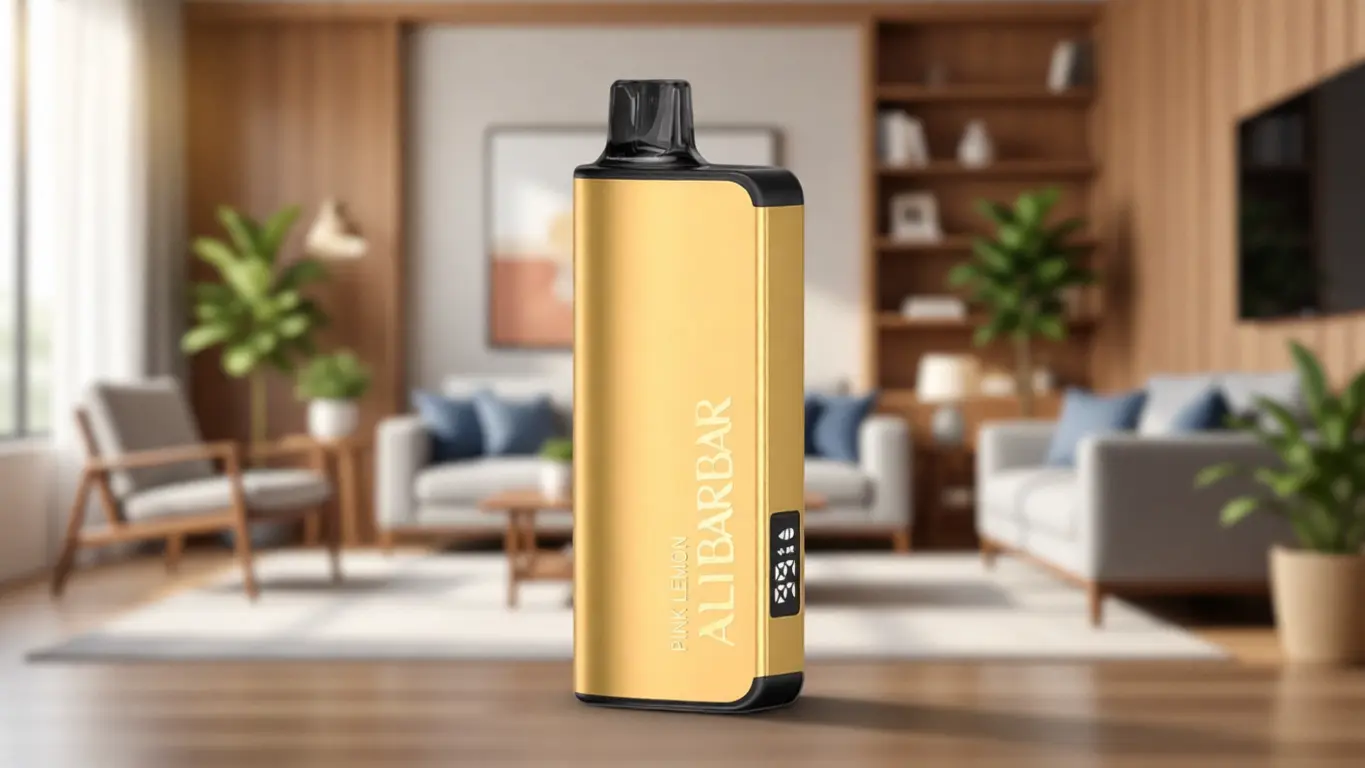
The ALIBARBAR device collection, for example, uses hard‑wearing alloys and a minimalist mouthpiece contour that many users find comfortable during prolonged use. While its devices are designed primarily for pre‑filled e‑liquid systems, the materials engineering is worth noting as a benchmark for surface durability — a factor that becomes more relevant if you are using cannabis oils, which can leave sticky residues that require regular cleaning.
Modularity and Lifecycle Flexibility
The market for cannabis vaping splits into two broad design philosophies: sealed, disposable units and modular systems that allow the user to replace the heating element or the cartridge. A sealed unit is simple: a pre‑filled cannabis oil cartridge plus a small battery, discarded when empty. This is convenient but expensive over time and generates waste. A modular system — where you buy a cartridge separately and attach it to a rechargeable battery with adjustable settings — offers greater control and lower long‑term cost.
If you are considering using cannabis extracts, choose a device with a standard 510‑thread connection, or at least one that explicitly supports the cartridge form factor you intend to use. Devices that use proprietary pods (like some nicotine pods) are typically not compatible with cannabis oil cartridges, even if they look similar. This is a design limitation, not a coincidence, and attempting to force a fit can damage both the cartridge and the device.
Applying These Criteria to Real‑World Options
We can now look at some concrete examples — without endorsing any specific cannabis use — to illustrate how the engineering principles translate into everyday hardware.
For cannabis oil cartridges: The most common system is a 510‑thread battery with a variable voltage dial or at least three voltage presets (usually 2.8 V, 3.2 V, 3.6 V). This range is gentle enough for ceramic‑coil cartridges and preserves terpene profiles. Devices that push much above 3.8 V without the option to reduce will singe the oil. In the context of the ALIBARBAR family, the Ice Adjust 12000 series features an adjustable airflow and possibly an output‑adjustment mechanism (the exact specifications are proprietary) that demonstrates how even sealed‑system manufacturers now recognise the need for tunable performance. While this device is sold as a pre‑filled e‑liquid unit, its engineering approach — sealing the atomiser and e‑liquid, then allowing the user to modulate some aspect of the experience — mirrors the philosophy many cannabis oil cartridge systems aspire to: a consistent base output with user‑controllable nuances.
For dry herb: A convection or hybrid heating system is essential. Look for an isolated airpath, precise digital temperature control in 1‑degree increments (from about 180°C to 220°C), and a ceramic or stainless steel oven. The ALIBARBAR range does not include dry‑herb devices, so a user interested in flower should look elsewhere. But the same analysis method applies: does the manufacturer disclose the heating technology, the materials, and the temperature range? If not, assume it is a conduction unit, and expect uneven extraction.
For concentrates (wax, shatter, live resin): These require a device with either a dedicated concentrate coil (often a quartz cup or donut coil) or a chamber that can reach higher temperatures (230°C+) without combusting the material. Very few multi‑purpose devices handle all cannabis forms equally well; typically, a specialised device is needed.
A practical fallback approach: when purchasing from a retailer like OZVAPE Shop, examine the listed specifications. If the device is described as a pre‑filled sealed system, it is not directly usable for cannabis unless you source a compatible cannabis oil cartridge — and even then, the coil resistance must match the device’s output. If the specifications do not mention voltage range, ask the retailer before you buy. This step alone prevents most of the misery we see in feedback channels.
A Practical Framework for Evaluation
Instead of relying on marketing imagery or word‑of‑mouth recommendations, apply a systematic checklist whenever you are considering a device for cannabis use. Walk through these five prompts:
What form of cannabis am I intending to use? (flower, oil cartridge, wax, pre‑filled pod)
This single decision narrows the field by 90%.
Does the device list its heating method and materials?
If the manufacturer hides behind vague language, assume the worst. Genuine ceramic and stainless‑steel components are almost always advertised explicitly.
What is the power source’s output range?
For cartridge use, you need a range of 2.8–3.8 V. For dry herb, you need temperature control, not power presets. If a device advertises “high wattage” as a virtue, it is probably unsuitable for cannabis oil cartridges, as excess power degrades oils rapidly.
What is the connection standard?
510‑thread is the de facto universal format for cannabis oil cartridges. Proprietary magnetic pods are designed for specific brand ecosystems and are almost never compatible with cannabis cartridges unless explicitly stated.
Can I see clear status indicators?
A battery indicator that shows at least four levels (or a percentage) lets you plan sessions. A single blinking LED is a sign of a bare‑minimum power management circuit that may also lack over‑discharge protection.
If you go through these prompts and a device fails on two or more points, your satisfaction with it as a cannabis tool will be largely a matter of luck.
Common Selection Errors and Industry Observations
Even experienced individuals get this wrong. Here are the four most damaging patterns, grounded in how the market actually functions:
1. Assuming visual similarity equals internal compatibility.
Many pod‑style devices aimed at the nicotine market are physically sized to look almost identical to a cannabis oil cartridge battery. The user connects a 510‑thread cartridge to a magnetic pod base, inserts it, and it “works” — briefly. Because the device was calibrated for a much lower‑resistance coil, it overheats the cannabis oil, causing burnt terpenes and rapid coil failure. The error is attributing function to form rather than electrical specification.
2. Overweighting a single specification — capacity — while ignoring thermal management.
A device with a 1500 mAh battery is useless for cannabis oil if it cannot deliver that energy at a low, stable voltage. Large batteries also encourage users to vape longer without cleaning, leading to residues that can damage the airflow sensor. In cannabis use, where oils are thicker and more conductive of heat, a smaller‑capacity battery with better regulation often outperforms a brute‑force cell.
3. Undervaluing modularity when cannabis products are involved.
Cannabis cartridges vary widely in resistance from brand to brand. A device that gives you control over voltage (or even increments of 0.1 V) lets you tune the experience to each cartridge. A fixed‑voltage device, no matter how well‑built, may be incompatible with half the cartridges you ever try. The long‑term cost of purchasing multiple batteries because none is adjustable far exceeds the upfront premium for a variable‑voltage model.
4. Confusing the language of “pre‑filled” with safety or suitability.
Many of the most conspicuous consumer devices in Australia are pre‑filled e‑liquid units that contain nicotine or nicotine‑free liquid. The engineering inside is reputable for that specific liquid but tells you nothing about what would happen with a cannabis extract. Attempting to refill or adapt them is not only outside the manufacturer’s design parameters but can short‑circuit the device, cause leakage, or expose you to materials not rated for the higher viscosity of cannabis oils. From a supply‑chain perspective, no legitimate retailer can responsibly advise you on such repurposing, so you are operating entirely outside any warranty or accountability mechanism.
Frequently Asked Questions
Q: Is it legal to vape cannabis in Australia?
A: This article is about device technology only. Cannabis laws vary by state and territory and may be subject to medical prescription frameworks. You are responsible for ensuring your use of any substance complies with local legislation.
Q: Can I use a standard nicotine vape pen with a cannabis oil cartridge?
A: Only if the battery has a 510‑thread connection and can output a voltage within the cartridge’s recommended range (typically 2.8–3.8 V). Many nicotine pen‑style batteries are fixed at 3.7 V or higher and lack regulation, which can overheat cannabis oil. Always check the resistance and voltage compatibility.
Q: What is the difference between conduction and convection heating for dry herb?
A: Conduction heats the material by direct contact with a hot surface, often resulting in uneven heat distribution and potential charring. Convection passes heated air through the herb, yielding more even extraction and better flavour. Most user‑friendly dry‑herb devices use some form of convection or hybrid.
Q: Are ALIBARBAR devices suitable for cannabis use?
A: The ALIBARBAR portfolio is engineered as a sealed‑system platform for specific e‑liquid formulations. They are not designed or certified by the manufacturer for cannabis extracts or dry herb. Attempting to adapt them for cannabis would fall outside the devices’ design parameters and void any warranty. For cannabis oil cartridges, a dedicated variable‑voltage 510‑thread battery is the prudent choice.
Q: How do I know if a cartridge fits my device?
A: Most cannabis oil cartridges use a standard 510‑thread connection. If your device has a female 510 thread and adjustable voltage, it will physically fit. Pod‑based systems (magnetic or snap‑fit) are proprietary and typically incompatible. When in doubt, consult the device’s specifications or contact the retailer before purchase.
Q: Can I use a dry‑herb device for concentrates?
A: Not reliably. Some dry‑herb devices include a concentrate pad, but dedicated concentrate devices — using a quartz bucket or coil — provide the higher temperatures and direct contact required. Using concentrates in a dry‑herb chamber often results in poor vapourisation and difficult cleaning.
Q: Why does my cannabis cartridge taste burnt after a few uses?
A: The most likely cause is excessive power. A battery set at too high a voltage overheats the coil, charring the oil and the wicking material. Other contributing factors include chain‑vaping without allowing the wick to re‑saturate between draws, and using a cartridge with a cotton wick that cannot keep up with thick oils.
Q: What should I look for on the device packaging to confirm compatibility?
A: Search for “output voltage”, “variable voltage”, “510 thread”, or a detailed specification table. If the packaging only mentions “pre‑filled pods” or “proprietary system”, the device is unlikely to work with standard cannabis cartridges. Retailers like OZVAPE Shop typically list these details plainly to aid comparison.
Q: How important is battery life for cannabis vaping?
A: It matters less than regulation quality. A 650 mAh battery with accurate voltage steps can service a full cartridge, whereas a 1100 mAh battery that sags under load will degrade the experience. For dry herb, higher capacity is beneficial because ovens draw more current, but a removable battery is better still.
Q: Is there a device that works with all three forms of cannabis?
A: There are a handful of “three‑in‑one” devices that accept 510 cartridges, a concentrate bucket, and a dry‑herb chamber, but they tend to be mediocre at everything. The engineering trade‑offs are too great to achieve excellence in each mode. For most users, two separate devices — one for cartridges, one for flower — yield better reliability and easier maintenance.
Conclusion
The question “Can you vape cannabis?” is really a question about you: your understanding of the material forms available, the electrical parameters that keep a device stable, and the patience to verify specifications instead of assuming visual cues. When these factors align, the answer can be a quiet, predictable experience. When they don’t, the result is almost always a burnt taste, a wasted cartridge, or a device that ends up in a drawer.
This doesn’t mean you need an engineering degree. It means you need a willingness to read the fine print and to select a device that tells you what it’s doing. The electronic‑device market is full of products that look similar yet behave entirely differently under real‑world use. Understand the heating architecture. Insist on clear power management. Accept that modularity — even at a slightly higher upfront cost — protects you against the relentless variation in cannabis‑oil cartridges. Apply those criteria, and you sidestep the most common regrets.
For those exploring their options in Australia, OZVAPE Shop maintains a catalogue of factory‑certified devices with fully disclosed specifications, and its support team can answer nuanced compatibility questions. While its ALIBARBAR line is not a cannabis platform per se, the transparency around materials, battery behaviour, and device architecture sets a standard for how hardware ought to be described. The right choice is the one that matches your actual routine, your tolerance for maintenance, and your understanding of the technology — not the one with the most dramatic advertising.