
VAPE FAQs
Can You Vape After Getting Tonsils Removed?
Sep
Introduction
The question arrives quietly, usually a few days after surgery, when the worst of the pain has begun to retreat and the boredom of convalescence sets in. A person who relies on a portable electronic device as part of their established adult routine opens a browser and types a question they probably should have asked the surgeon before leaving the hospital: can I use it now? OZVAPE Shop, which exists to provide factual, transparent information alongside a carefully vetted product range, regularly encounters this unspoken dilemma. Addressing it honestly is more important than any sale.
This article examines the intersection of post-tonsillectomy recovery and the act of inhalation from a heated device. It does not offer medical directives — only a structured analysis of what is happening inside the throat at each stage of healing, how the physical and chemical properties of vapour interact with that process, and why the answer, regardless of the device or liquid used, leans overwhelmingly toward restraint. Our role is to equip adult users with the understanding they need to protect their own recovery, not to nudge them back toward a product regardless of context.
Understanding the Healing Process: What Happens After a Tonsillectomy
To grasp why any form of inhalation poses a risk, it is necessary to look at the surgical site with the same analytical rigour one would apply to a sensitive engineering system. The throat after a tonsillectomy is not simply sore; it is a wound bed undergoing a carefully orchestrated sequence of events that can be disrupted by surprisingly modest forces.
The Surgical Site and Clot Formation
Once the tonsils are removed, the raw tissue underneath is left exposed. The body responds immediately by forming a fibrin clot over the surface — a fragile, gel-like shield that stops bleeding and provides a scaffold for new tissue. This clot is vulnerable to mechanical disturbance for at least seven to ten days. Any action that creates suction, abrasive contact, or sudden pressure change in the pharynx can shear it away, re-exposing blood vessels that have not yet fully constricted.
From a product analyst’s perspective, the relevant variable is negative pressure. When an adult draws on a device, the act of inhalation generates a transient vacuum within the oral and pharyngeal cavity. Even a gentle mouth-to-lung puff can create enough localised force to disturb a clot that is only loosely adhered. The risk is not theoretical: post-tonsillectomy hemorrhage is a documented emergency that most frequently occurs between days five and ten, precisely when the primary clot begins to dissolve and a secondary eschar forms.
The Role of Irritants in Wound Recovery
Beyond mechanical forces, the aerosol generated by any heated device introduces chemical agents directly onto healing mucosa. Propylene glycol and vegetable glycerin — the primary carriers in almost all commercial e-liquids — are humectants. They pull moisture from the tissue they touch. A throat that is already struggling to stay lubricated, especially during the first week when swallowing is painful, becomes drier still. Dryness promotes cracking, prolongs inflammation, and can cause the protective covering to break down ahead of schedule.
Then there is the question of nicotine. Even in low concentrations, nicotine acts as a peripheral vasoconstrictor, narrowing blood vessels and reducing the delivery of oxygen to tissues that are actively regenerating. Delayed wound healing, increased susceptibility to infection, and a higher probability of scar formation are all well-established consequences of vasoconstriction in surgical recovery. Switching to a zero-nicotine liquid removes the vasoconstrictive effect but does nothing to address the dehydration or the mechanical suction.
Temperature and Vapour Density Considerations
The engineering design of a device — its coil mass, power output, and airflow path — determines the temperature and density of the aerosol that reaches the throat. A device tuned for a cooler, more diffuse output (some adjustable-airflow systems, for example, allow users to open the intake and reduce contact temperature) will feel less aggressive than a high-power unit producing dense, warm clouds. But even a cooler vapour remains an irritant when it lands on raw granulation tissue. The sensory feedback might be less alarming, and that can be its own danger, because it creates a false sense of safety while the underlying damage continues.
Applying the Criteria: Different Device Types and Their Implications
No responsible analysis would list products as safe for post-tonsillectomy use, because none are. However, understanding how different device architectures amplify or moderate certain risk factors is useful for adults who will inevitably make their own decisions. The goal here is to parse the variables so that the decision, whatever it is, is made with full awareness.
Compact Pre-Filled Systems
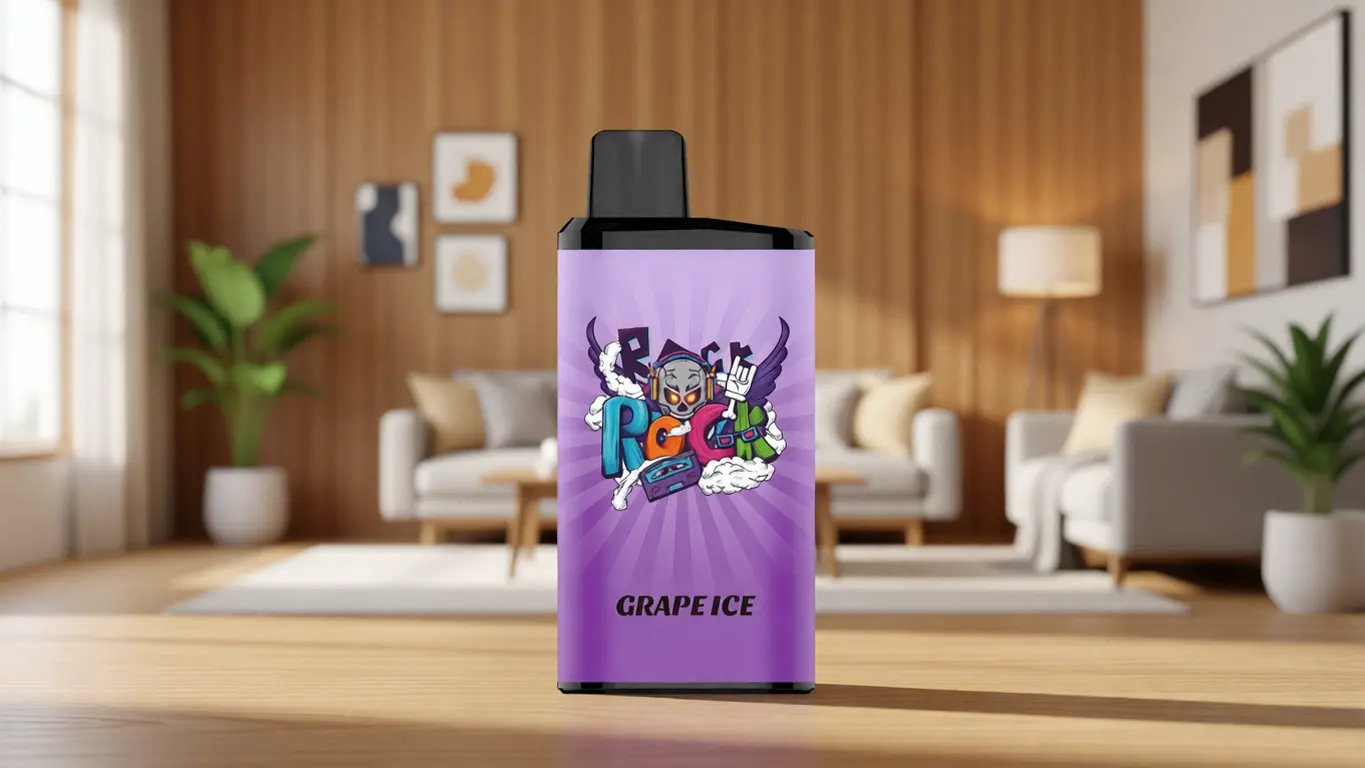
Devices such as the lower-capacity members of the ALIBARBAR family are engineered for predictable, moderate output with minimal user adjustment. Their mouth-to-lung draw resistance is designed to mimic a familiar hand-to-mouth motion, and the aerosol production is tightly regulated. In the context of a healed throat, these characteristics are unremarkable. During the fragile clot phase, however, that same consistent draw resistance translates into a repeatable, measurable negative pressure cycle on every activation. The predictability of the device, normally a virtue, here means that the wound is subjected to a uniform, repeated stress that the user cannot step down beyond the device’s fixed parameters.
Adjustable-Airflow and Variable-Power Designs
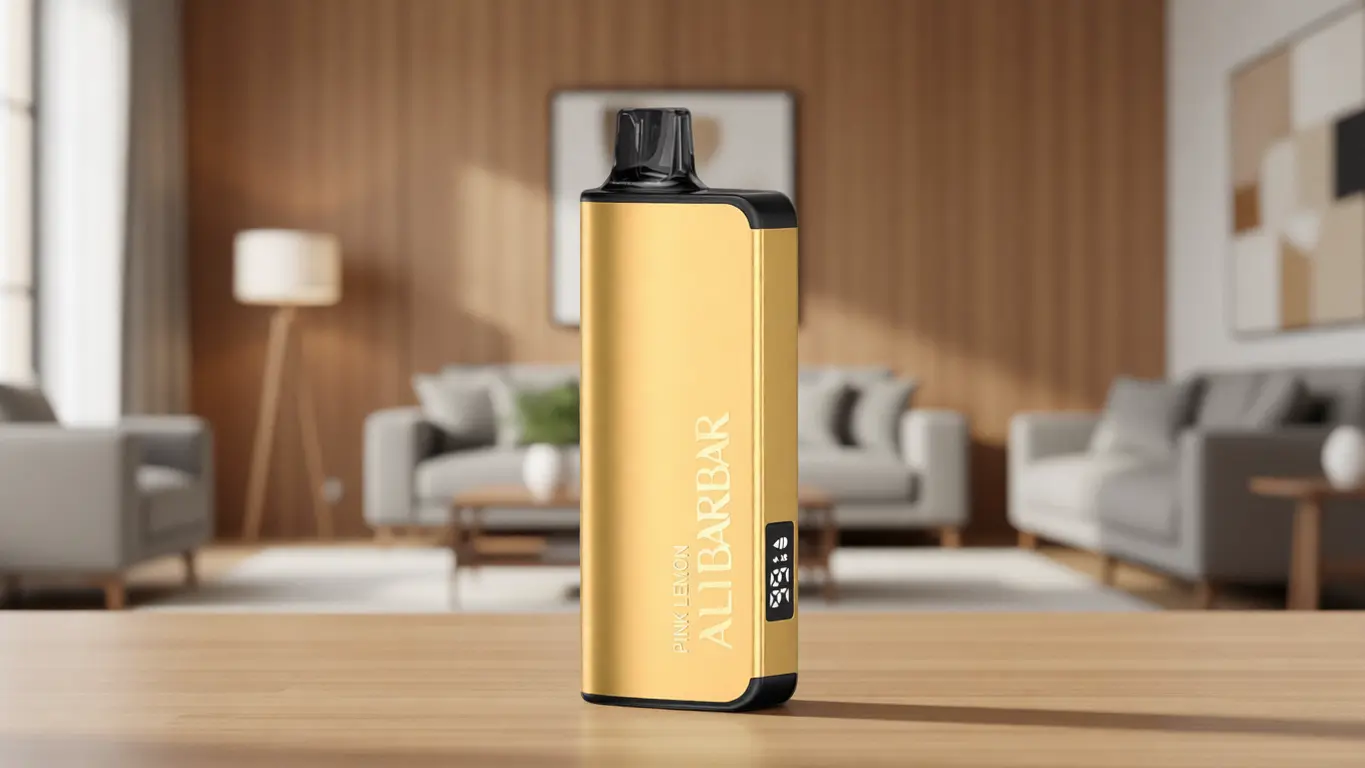
Some higher-end systems — among them the ALIBARBAR Ice Adjust 12000 series — offer adjustable airflow collars that allow a user to open the intake and significantly reduce draw resistance. Lowering the power setting, if available, can further reduce the aerosol temperature. These adjustments can make the inhalation experience noticeably less harsh. Yet the core issue persists: the chamber of the throat still experiences a pressure differential, and the aerosol still deposits humectant particles onto the wound bed. The adjustable design merely shifts the experience from “aggressively uncomfortable” to “less noticeable,” which, for a recovering surgical site, may mask the injury rather than prevent it.
High-Output and Sub-Ohm Setups
At the far end of the spectrum, devices built for high vapour production and direct-lung inhalation generate substantial pressure differentials and dense, warm aerosol clouds. Using such a system even once during the first two weeks post-surgery would represent a deliberate and significant challenge to clot stability. The combination of strong negative pressure, high-volume aerosol exposure, and elevated temperature makes these devices the highest-risk category by a wide margin.
The presence of a range of such devices in the catalogue of OZVAPE Shop does not constitute an endorsement of their use during recovery. It simply acknowledges that adult users who have already decided to continue using a device need clear, unvarnished information about what each design choice actually means once it interfaces with a healing throat.
A Practical Framework for Self-Assessment
The question “Can I vape after tonsil removal?” is not truly a yes/no binary in the mind of someone asking it. It is a request for a framework that lets them weigh the risk against the perceived need. The following diagnostic sequence — developed from operational patterns observed in countless post-operative consultations — is offered not as medical instruction but as a tool for honest self-evaluation.
Has the surgeon or discharge nurse given a specific clearance timeline? If the answer is anything other than a clear, documented “it is safe now,” the default medical recommendation is to abstain.
Can you swallow water comfortably, without any sense of pulling or stinging at the operative site? Lack of comfort during a neutral, non-irritating action like swallowing is a strong signal that the protective surface is still fragile.
Is there any trace of blood in saliva or nasal discharge, however faint? Even microscopic amounts indicate that vessels are not fully sealed. Additional suction is contraindicated.
How many days post-surgery are you? The highest hemorrhage risk window extends from roughly day five to day ten, when the primary fibrin clot dissolves and is replaced by a secondary eschar. Days ten through fourteen remain cautious territory.
What is the motivation behind the urge to use the device? For many, the habit is driven by the hand-to-mouth ritual as much as by nicotine. If a device-free alternative — a clean straw, a sugar-free lozenge, a series of deliberate breathing exercises — can satisfy a portion of that urge, the net risk drops without triggering the suction that is the central danger.
If these questions produce any uncertainty, the simplest communication one can have with a retailer like OZVAPE Shop is the one that begins with “I want to wait until I am fully healed.” The products will still be available. The surgical wound gets only one uninterrupted chance to close cleanly.
Common Misconceptions and Industry Observations
Misinformation circulates freely in online communities, and nowhere is this more consequential than when medical recovery overlaps with habitual use of electronic devices. Several persistent errors deserve direct examination.
“It’s just water vapour, so it can’t hurt.” The visible plume is an aerosol of condensed liquid particles, predominantly propylene glycol and glycerol, with suspended flavour compounds and often nicotine. It is not steam. Its interaction with living tissue is well-documented: it dries, it irritates, and it alters local blood flow.
“If I just take a tiny puff, the clot will be fine.” Clot disruption is not proportional to effort in a linear way. A single sharp draw can generate sufficient negative pressure to dislodge a clot that has already begun natural separation. The user has no way of knowing the clot’s current adhesion strength.
“I can avoid suction by just opening the airflow wide and breathing in gently.” Opening the airflow reduces resistance but does not eliminate the pressure differential in the pharynx. Any act that draws a gas through a resistance into the lungs involves negative intrathoracic pressure transmitted up into the throat.
“Zero-nicotine liquid makes it safe.” Removing nicotine removes the vasoconstrictive threat, but the mechanical and humectant threats remain entirely unchanged. The wound does not heal faster because nicotine is absent; it simply avoids one additional insult among several.
From an industry observer’s perspective, there is a notable gap between how device manufacturers talk about user safety and how the medical community views surgical recovery. Device documentation, correctly, focuses on technical parameters, quality control, and adult-use compliance. It rarely addresses specific medical contexts, nor should it be expected to. That gap is where retailers with a genuine commitment to user education — such as OZVAPE Shop — have both an opportunity and an obligation: to provide adults with the context that the product manual cannot.
Frequently Asked Questions
Q: How long should I wait after tonsillectomy before using any inhalation device?
A: Most surgeons advise a minimum of two weeks, and many extend the recommendation to three or four weeks depending on individual healing. The critical window for clot instability lasts until the secondary eschar has formed and begun to be replaced by healthy tissue; this process is rarely complete before day 14 and often takes longer.
Q: What is the most serious risk of using a device too soon?
A: Post-tonsillectomy hemorrhage, which can occur without warning and may require emergency re-cauterisation, blood transfusion, or hospital readmission. Suction is one of the most commonly cited triggers in documented cases.
Q: Does the type of device make any difference to risk level?
A: A high-power, direct-lung device creates stronger negative pressure and denser aerosol, raising the risk profile. A compact, mouth-to-lung system with adjustable airflow may subjectively feel gentler, but it still involves suction and humectant exposure. No device can be described as safe during the healing period.
Q: Is vaping more or less risky than smoking after tonsillectomy?
A: Smoking introduces carbon monoxide, particulate tar, and extremely high temperatures in addition to suction, making it unquestionably more damaging. Comparatively, electronic devices remove the combustion products but preserve the suction and humectant effects. Both are contraindicated.
Q: Can I use a device if I don’t inhale into my lungs and just hold the vapour in my mouth?
A: Even a mouth-only hold requires an initial draw that generates negative pressure. The clot is situated in the pharynx, not in the lungs, so the pressure wave passes over it regardless of whether the vapour is subsequently inhaled. The risk is not eliminated.
Q: What symptoms should prompt an immediate return to the hospital?
A: Bright red blood in the mouth or throat, the sensation of swallowing fluid when standing still, a sudden metallic taste, or any light-headedness. These can signal an active bleed that will not stop without intervention.
Q: Why does the throat feel so dry even without using a device after surgery?
A: Pain impairs swallowing, reducing the frequency with which saliva coats the pharyngeal walls. Medications, particularly opioids or antihistamine-containing pain relief, further suppress salivary flow. Introducing a humectant aerosol amplifies this dynamic.
Q: Are there any studies specifically examining electronic device use after oral or pharyngeal surgery?
A: Direct studies are sparse, but the physiological principles — negative pressure, tissue desiccation, nicotine vasoconstriction — are drawn from well-established surgical recovery research. The absence of device-specific studies does not indicate safety; it indicates a gap in the literature.
Q: What do ENT specialists generally tell their patients?
A: The near-universal guidance is to avoid any form of smoking or vapour inhalation for at least two weeks, and longer if healing appears slow. Many surgeons recommend total abstinence until the first post-operative review confirms adequate tissue coverage.
Q: Where can I find reliable information if I still have questions?
A: The discharge documentation provided by your surgical team is the primary source. For technical understanding of how device characteristics might interact with healing tissue, retailers like OZVAPE Shop can offer factual overviews, but these are never a substitute for direct medical advice.
Conclusion
The impulse to resume a familiar routine after an uncomfortable medical procedure is entirely human. The discomfort is real, the habit is ingrained, and the mind naturally searches for justification. What the body needs, however, is an uninterrupted block of time in which the only things passing over the raw, healing surface of the throat are air and water. Anything else — however technologically refined, however carefully engineered — introduces forces and chemicals that the surgical site is not equipped to handle.
OZVAPE Shop exists to support adult users with transparent product information and consistent access to factory-certified devices. Part of that responsibility is acknowledging that the most informed decision is sometimes the decision to wait. Once the throat has fully healed, the full range of options — from the predictability of a compact pre-filled system to the adjustability of a device like the ALIBARBAR Ice Adjust 12000 — remains available for evaluation on its merits. Until that moment, restraint is not a deprivation; it is the single most effective action a person can take to protect their own recovery. No device, no matter how well designed, is worth trading for a complication that could have been avoided.