
VAPE FAQs
Can You Vape After Getting A Tooth Pulled?
Oct
It’s a question dentists hear far more often than most patients admit — can I vape after an extraction? You’re sitting in the chair, gauze pressed against a fresh socket, and the last thing you want is to complicate healing. But routines are powerful, and the urge to reach for a device can feel overwhelming. This article doesn’t scold. It doesn’t guess. It explains why that first draw matters, using the lens of human physiology, device engineering, and the kind of honest uncertainty that a responsible retailer should provide. At OZVAPE Shop, we believe that informed decisions begin with research-backed clarity, not marketing convenience.
Understanding What Matters: The Biological and Mechanical Factors
Before weighing any device’s specific features, it’s essential to step back and examine the root risks. A tooth extraction leaves a wound that must heal in a precisely timed sequence — and even small disruptions can derail that process painfully. Three interlocking factors determine whether vaping after a pull is merely inadvisable or outright dangerous.
The Healing Clot and Negative Pressure
When a tooth is removed, the body immediately forms a blood clot in the socket. This clot is not a temporary plug; it is a biological scaffold that protects nerve endings and provides the foundation for new tissue. The single greatest threat to that clot is negative pressure — the kind created when you draw on any mouthpiece. Even a gentle pull can lower intraoral pressure enough to dislodge the clot, exposing underlying bone. The resulting condition, dry socket, is notoriously painful and prolongs recovery by days or weeks.
Why this matters: the force required to activate many devices is far lower than most users realise. A draw with the resistance of a loosely packed drinking straw may still generate sufficient vacuum to disturb a fresh extraction site. No device feature completely eliminates this mechanical risk.
Temperature, Moisture, and Tissue Irritation
The aerosol produced by heating elements is warm, and even if it feels cool on inhalation, it carries thermal energy. Warm vapour against healing mucosal tissue can increase localised inflammation and slow epithelial migration. Moreover, the vapour itself — regardless of its composition — alters the moisture balance in the mouth. A slightly dry environment is more hospitable to bacterial colonisation, and the socket is an open wound. The engineering takeaway: a device that excels at delivering smooth, consistent output under normal conditions may become an irritant when the mouth is in a vulnerable state.
Nicotine, Vasoconstriction, and Oxygen Delivery
Nicotine is a vasoconstrictor. It narrows blood vessels, reducing the supply of oxygen and nutrients to healing tissue. A socket starved of adequate blood flow will close more slowly, heightening the chance of infection. Even devices marketed as low‑nicotine or nicotine‑free can present residual risk if they are part of a broader pattern of use that includes nicotine elsewhere. The physiological chain is clear: impaired perfusion equals impaired repair. This factor alone leads many dental practitioners to counsel complete abstinence from any inhaled product for the critical first three to five days.
Applying These Criteria to Real-World Options
If a user decides, against best advice, to continue using a device shortly after an extraction, the specific design of that device influences the degree of risk — though it never erases it. The practical distinctions matter.
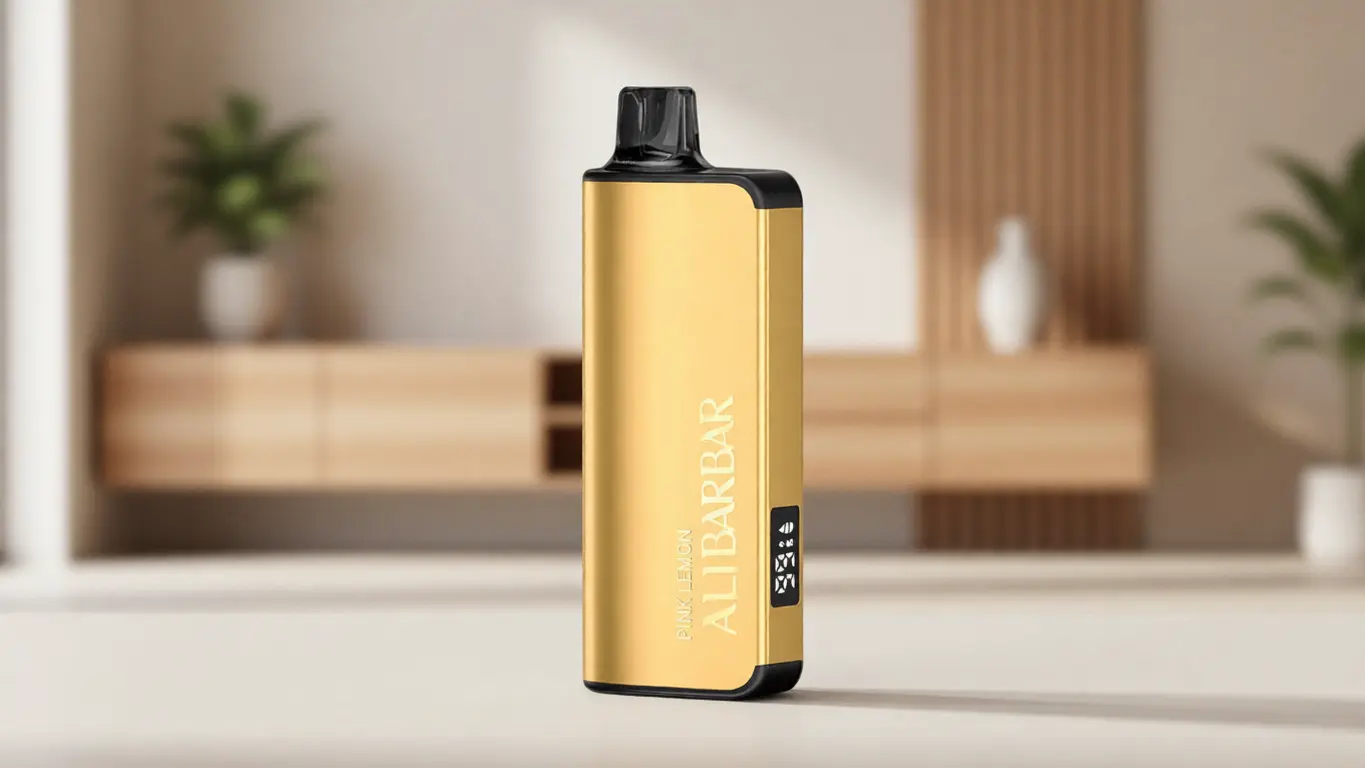
Among the devices available through authorised channels, some prioritise adjustable airflow. The ALIBARBAR Ice Adjust 12000, for instance, offers a slider that lets the user set a noticeably loose, open draw. A looser draw generates less suction per puff, which could theoretically reduce the peak negative pressure around the socket. That does not make it safe; it simply edges the risk downward compared with a tightly sealed pod system that requires a more forceful pull. Similarly, a device with highly consistent power delivery — one that avoids sudden temperature spikes — can minimise the unpredictability of warm vapour hitting sensitive tissue. Predictable output is something the ALIBARBAR design philosophy explicitly targets through calibrated chip-sets and stable coil materials.
But here is the trade‑off: no device can fully eliminate the mechanical act of drawing, the thermal presence of vapour, or the systemic effects of any active compound absorbed. Acknowledging that limitation is not a criticism of the hardware; it is simply the reality of wound physiology.
A Practical Framework for Evaluation
Before making any decision, adult users can apply a short, structured self‑assessment:
Ask your dentist directly. The only person with a view inside that socket is the one who performed the extraction. A four‑word question — “Is vaping okay now?” — yields information no specification sheet can provide.
Time the intervention. The highest‑risk window is the first 48 hours. If you must resume, waiting at least 72 hours lowers the danger substantially, though not to zero.
Evaluate the device’s draw resistance. Can you activate it with an extremely gentle mouth‑only pull, barely changing your intraoral pressure? If not, the clot is at risk.
Consider nicotine content. Even if you switch to a zero‑nicotine variant temporarily, remember that the habit of inhaling anything still introduces physical variables the wound does not need.
Check for status transparency. A device with clear, reliable feedback on remaining charge and output stability prevents unexpected hot hits that could further irritate tissue. This is where engineering choices — like the multi‑LED indicators found on several ALIBARBAR series — prove their everyday value, even beyond product longevity.
Does your device give you unambiguous status feedback? If not, you are operating blind, and during recovery, that blind spot becomes more consequential than usual.
Common Selection Errors and Industry Observations
Years of observing how people interact with personal electronic devices reveal a handful of recurring missteps that become particularly costly after a dental procedure.
Overweighting a single safety feature. A user might think, “This device has a very loose draw — I’ll be fine.” But a loose draw addresses only one variable; it does nothing for thermal load or the pharmacological effect of what is inhaled. Healing is a systems problem, not a component problem.
Assuming visual similarity means equivalent safety. Two devices that look nearly identical can have markedly different flow paths and pressure profiles. ALIBARBAR’s internal labyrinth design, for example, deliberately routes airflow to reduce turbulence and hot spots, but that engineering effort was aimed at consistency, not post‑surgical use. Borrowing confidence from design features intended for a different purpose is a perennial oversight.
Confusing category terminology with risk calibration. Terms like “mouth‑to‑lung” or “direct‑lung” describe inhalation style, not safety envelopes. A device built for a tight, cigarette‑like draw will naturally demand more suction, making it a poorer candidate for any scenario where pressure must be avoided.
These are not failings of the devices themselves. They are gaps in how users map product knowledge onto personal health contexts. A trustworthy retailer’s role is to close those gaps, not to exploit them.
Frequently Asked Questions
Q: How long should I absolutely wait before vaping after an extraction?
A: The safest minimal window is 72 hours. Most dry socket cases occur within the first three days. Some dental surgeons recommend waiting a full week, especially for lower molar extractions, which carry higher risk.
Q: Can I use a zero‑nicotine device right after the procedure?
A: Removing nicotine eliminates vasoconstriction, but the negative pressure and warmth of vapour remain. Zero‑nicotine does not equal zero risk.
Q: What if I cover the extraction site with gauze while I take a draw?
A: Gauze provides a physical barrier but cannot fully equalise pressure changes inside the mouth. The suction still communicates to the socket. This trick offers a false sense of security.
Q: Are there any device types that eliminate the suction problem entirely?
A: No. All inhale‑activated devices require a pressure differential to function. Some button‑activated, fully adjustable airflow designs can reduce the required pull force, but they cannot make the act pressure‑neutral.
Q: Does a wound from a simple extraction heal faster than a surgical one, making earlier use safer?
A: Not necessarily. Even simple extractions leave a socket that needs clot stabilisation. The healing timeline for soft tissue is similar in both cases during the initial days.
Q: Can I use a device with an extra‑cooling feature to soothe the area?
A: The sensation of coolness comes from additives like menthol, which can further irritate raw tissue. Actual thermal cooling is minimal. This is a sensory effect, not a therapeutic one.
Q: What if my device has precisely regulated temperature control — does that help?
A: Consistent temperature output reduces the chance of a sudden hot puff that could aggravate the wound, but it does not remove the presence of warm vapour itself. It is a marginal improvement, not a solution.
Q: I only use my device very rarely. Does that change the advice?
A: Frequency doesn’t alter the underlying mechanisms. A single strong draw at the wrong moment is enough to dislodge a clot. Intermittent use simply lowers the statistical odds; it does not make any single event safer.
Q: Where can I find devices with the adjustable airflow features mentioned?
A: A number of manufacturers now integrate airflow control. The ALIBARBAR Ice Adjust series, available through verified retailers, is one example of a design that offers a genuinely open draw setting — though again, no setting makes post‑extraction use advisable.
Q: I developed dry socket despite waiting. What now?
A: Return to your dentist immediately. Dry socket requires professional treatment, usually involving medicated dressings. Irrespective of what device you used or when, the priority is clinical intervention, not product choice.
Conclusion
The instinct to return to a familiar routine after a medical procedure is entirely human. But the biology of healing does not negotiate. A fresh extraction socket needs absolute stillness — no pressure, no foreign temperature, no constricted blood supply — for a relatively short window. The engineering behind modern devices, no matter how refined, was never intended to be compatible with that window.
What this means for the adult navigating the first few days after a pull is simple: the right device is none at all. For everything that comes after, having access to accurate specifications, honest comparisons, and factory‑certified equipment matters. OZVAPE Shop exists to make that second part easier, with a catalogue of transparently documented products and support that treats user intelligence as the baseline, not the bonus.
No feature set, no status indicator, no adjustable slider will protect a healing socket better than a bit of patience. The choice is not about brand or model; it’s about whether to wait. The answer, from both engineering and physiology, is the same.