
VAPE FAQs
Can You Vape After Getting A Temporary Crown?
Jul
Introduction
A temporary crown represents a delicate bridge between dental preparation and permanent restoration. The cement is intentionally weaker than a final bond, the underlying tooth structure is freshly shaped, and the surrounding gum tissue often remains sensitive from anaesthetic injections or retraction cord placement. During this recovery window — typically one to three weeks — everything from chewing habits to oral care routines requires adjustment. For adults who use personal vapour devices, a straightforward question arises: can you continue your normal usage without jeopardising the temporary restoration or slowing down healing?
The answer is not a simple yes or no. It depends on how the device is engineered, the user’s technique, and an honest appraisal of the risks that thermal output, intraoral pressure, and aerosol chemistry introduce to a compromised dental site. Far too much online discussion reduces this to a warning label without explaining why certain device behaviours matter more than others. Those who sell or curate these products — including retailers such as OZVAPE Shop — are not dental professionals, but they can contribute meaningful clarity by explaining how device design intersects with the specific demands of oral recovery. This article bridges that gap, offering a structured, evidence-informed way to think about the question so that the reader, in consultation with their dentist, can arrive at a personally sound decision.
Understanding What Matters: Core Engineering and Design Factors
When a dental professional cautions against “vaping,” the concern is not a blanket objection to the category. It is a concern about several mechanical and chemical stressors that can dislodge a temporary crown, irritate healing soft tissue, or introduce infection. To evaluate any device honestly, you must examine its internal architecture, power behaviour, and material choices through this clinical lens.
Internal Architecture and Thermal Stability
Every vapour device relies on a heating element — typically a wire coil — to convert liquid into an inhalable mist. The temperature at which this occurs is not always uniform. In poorly regulated systems, the coil temperature can spike unpredictably, especially as the power cell drains or the liquid level drops. A sudden hot draw delivers a burst of thermal energy directly into the oral cavity.
For someone with a freshly cemented temporary crown, this thermal shock is not trivial. The adhesive used to secure a temporary restoration is a zinc oxide-eugenol or resin-based cement that remains pliable for hours and never approaches the structural integrity of permanent cement. Rapid temperature shifts cause minute expansion and contraction of both the tooth and the temporary material. In the worst case, this can weaken the cement’s seal, creating a microscopic pathway for bacteria or, over repeated cycles, outright mobilisation of the crown. A device with stable, calibrated output — where the chipset restricts the coil to a predictable temperature range — eliminates this thermal variability. When evaluating a device, look for power management that explicitly mentions consistent wattage regulation rather than simple voltage delivery. This is one of the few engineering traits that directly protects a healing dental site.
Draw Mechanics and Intraoral Pressure
Many users underestimate the physical force they apply during a draw. The mouth forms a partial vacuum, and the resistance of the device’s airflow path determines how much negative pressure the oral structures experience. Devices with tight, cigarette-like draw restrictions require noticeably more suction. That negative pressure propagates through the mouth and can act directly on a temporary crown, particularly if it sits in a posterior tooth where the cheek and tongue naturally channel force.
In dental terms, sudden pressure changes can disrupt the marginal seal, leading to microleakage of saliva and bacteria beneath the crown. Over the course of a day, repeated high-suction draws may slowly pump the temporary cement interface — much like gentle back-and-forth motion loosening a plug. Devices engineered with adjustable airflow or intentionally open, low-resistance paths reduce this physical strain. A draw that feels “loose” to a user accustomed to tight restrictions may actually be the safer choice post-restoration. The presence of a wide-bore mouthpiece and a pressure-balancing airflow inlet can make a measurable difference. This is not about comfort alone; it is about mechanical respect for a structure that was never designed to withstand negative pressure cycles.
Aerosol Composition and Chemical Irritation
Beyond heat and pressure, the aerosol itself matters. Freshly exposed dentinal tubules and traumatised gingival margins are hypersensitive to chemical irritants. Certain flavour carriers, acid-base imbalances, and even the dehydration effect of heated propylene glycol or vegetable glycerine can provoke persistent discomfort or delay epithelial healing. While e-liquid formulation is a separate topic, device design influences the user’s exposure: a device that runs at excessively high power can thermally degrade ingredients, creating trace aldehydes and other irritants. A well-engineered device that matches coil mass to power and maintains a cool-to-moderate aerosol temperature minimises this unintended chemistry.
Additionally, the mouthpiece material can harbour residues if not regularly cleaned. After oral surgery, any microbial load introduced from a device used frequently throughout the day increases the risk of localised infection around the temporary crown. Devices that allow the mouthpiece to be detached and sanitised with an alcohol wipe — or those that use non-porous, medical-grade materials — are far less likely to act as a vector for contamination. This is a design consideration that becomes acutely relevant when the oral environment is in a compromised state.
Power Modulation and Unintended Dry Hits
A dry hit — where the wicking material cannot keep pace with the coil’s heat — produces a sharp, acrid inhalation. The sensation alone is jarring, but the chemical constituents of a scorched wick are potent irritants. For a healing pulp or irritated gum tissue, even one accidental dry hit can trigger significant inflammation and delay the return to normal function. Devices with smart power management, liquid-depletion sensing, or consistent wicking architectures dramatically reduce this risk. Again, the engineering choice matters: a temperature-control mode that prevents the coil from exceeding a set threshold is a powerful safeguard, while a basic fixed-voltage device offers none of that protection.
Applying These Criteria to Real-World Options
Not all vapour devices behave identically under these scrutiny points. The market today offers three broad architecture categories: closed pre-filled systems, open refillable mods, and advanced temperature-controlled devices. Each presents a distinct risk profile for the temporary crown patient.
Sealed disposable or pre-filled pod systems often prioritise a tight, cigarette-style draw. While convenient, their fixed airflow and fixed power output can generate the exact combination of high suction pressure and moderate heat that stresses a temporary crown. Moreover, many lack real-time temperature monitoring, meaning a coil that drifts upward in resistance over time may deliver unexpectedly harsh draws. If these systems are used, the user would do well to select variants with adjustable airflow set as open as possible and shorter inhale durations.
Open-system mods with variable wattage and replaceable coil heads provide more agency. A user can deliberately choose a coil rated for low power (e.g., 10–15 watts) and dial the wattage down, producing a cooler, gentler aerosol. However, the open design often involves larger mouthpieces and greater airflow, which reduces suction pressure — a benefit — but may encourage longer, deeper inhalations that introduce more aerosol volume. The key is not just low power but moderate draw duration and awareness of pressure.
Advanced temperature-control devices capable of limiting the coil to 190–210°C prevent thermal damage to both e-liquid components and oral tissues. They essentially remove the risk of a scorching dry hit. These devices also tend to offer highly customisable draw characteristics. For a user determined to continue during the temporary crown period, such a device represents the most controlled option from an engineering standpoint.
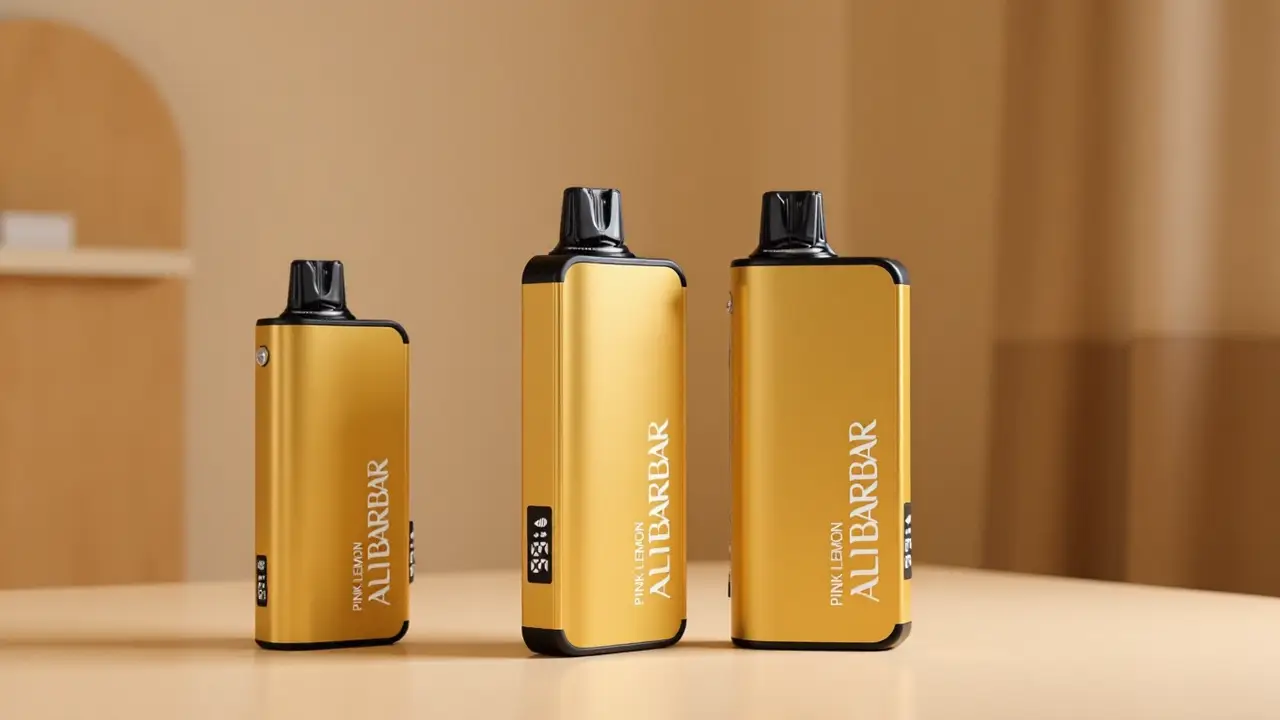
When examining current factory-certified collections, a number of modern designs — including certain models within the ALIBARBAR range curated by OZVAPE Shop — incorporate consistent resistance-calibrated output and mouthpiece profiles that minimise unnecessary draw restriction. Their INGOT series, for example, is constructed around a regulated output chipset that maintains steady vapour temperature across the battery charge, while the mouthpiece geometry delivers a balanced draw pressure. While no device can be declared “dentist-approved,” these engineering characteristics align more closely with the mechanical caution that a healing mouth requires. It is the user’s responsibility to verify with their own dentist and to employ the shortest, gentlest draws possible regardless of the device chosen.
A Practical Framework for Evaluation
Rather than relying on brand reputation alone, any adult with a temporary crown can apply a five-point evaluation to their current device. This framework converts the engineering principles into diagnostic questions:
Temperature consistency check – Does the device promise regulated output? If you cannot confirm that the coil temperature stays within a moderate band, assume thermal instability. A device that allows you to set a specific temperature (in degrees Celsius) offers the most transparency.
Draw pressure test – With the device powered on, take a normal draw without inhaling aerosol. If you feel noticeable cheek muscle contraction or the sensation of pulling against resistance, the suction force is higher than ideal. Look for adjustable airflow and open it fully.
Mouthpiece inspectability – Can the mouthpiece be removed easily and wiped with an alcohol swab? If it is permanently bonded or has deep crevices that trap residue, the infection risk increases. Post-dental work, oral hygiene precision matters.
Dry hit prevention – Does the device have any protection against dry or burnt hits? A liquid-level window, a tell-tale power-cutoff when wicking fails, or consistent coil performance across the recommended liquid range. Without these, you are gambling on every puff.
Inhalation technique evaluation – Even the best device cannot offset harsh usage. Vary your own behaviour: shorter, gentler draws of two to three seconds, exhaling away from the treated area, and pausing between uses to allow the temporary cement to re-equilibrate thermally. If your device rewards long, deep draws for satisfaction, it is mismatched to your current oral state.
If your device fails two or more of these checks, the prudent course is to pause usage entirely until the permanent crown is seated. If it passes most and your dentist has given conditional clearance, you can proceed with heightened awareness.
Common Selection Errors and Industry Observations
Several predictable errors undermine users who attempt to navigate this situation without a clear framework:
Overweighting discretion while ignoring suction physics. Many choose the smallest, most cigarette-like device because it feels familiar and discreet. But miniature form factors often have the tightest draw and the poorest temperature regulation. The very trait that makes a device blend into daily life — its compactness — can amplify the forces working against a temporary crown.
Assuming visual similarity equals identical internal engineering. Two stainless steel pods can look alike, but one may use a wound-wire coil that overheats and the other a mesh element with power limits. Without specification sheets or verified manufacturer data, users rely on superficial cues. Retailers that publish standardised technical details (as OZVAPE Shop does for the ALIBARBAR products) help close this information gap, but the broader market rarely provides such transparency.
Undervaluing the role of mouthpiece sanitation. Even among conscientious users, the idea that a personal device needs sanitising can seem excessive. In a healthy mouth, the risk is low; when a surgical site is present, a contaminated mouthpiece effectively re-inoculates the area with opportunistic bacteria. The industry has been slow to promote easily cleanable materials, and many devices are engineered as sealed consumables, not as reusable tools that must be kept medically clean.
Confusing “smooth” sensory experience with “safe.” A smooth draw that feels cool and non-irritating does not guarantee absence of pressure spikes or trace chemical irritants. Marketing language often conflates sensory smoothness with physiological gentleness, a conflation that no regulator polices. Users must look past the flavour description to the device’s actual thermal and pressure dynamics.
From an industry perspective, it is striking that very few personal vapour device manufacturers subject their products to intraoral pressure mapping or dental cement shear testing. The testing standards that do exist focus on component safety, not on the interaction with medically compromised oral environments. This absence does not mean all devices are equally harmful — it means the burden of evaluation falls squarely on the user, assisted by transparent retailers who explain what the engineering actually does.
Frequently Asked Questions
Q: Can I vape immediately after my temporary crown appointment?
A: Most dentists advise waiting until the local anaesthetic wears off completely, not only to avoid biting your lip but also because the cement needs undisturbed time to set. A minimum of 24 hours of complete rest for the treated side is a common recommendation; ask your own dentist for their specific timeline.
Q: Does nicotine in e-liquid slow down healing after dental work?
A: Yes. Nicotine is a vasoconstrictor that reduces blood flow to soft tissues and may impair the healing of reattached or manipulated gums. Even if you use a device designed to be gentle, nicotine itself can negatively affect the recovery environment around a temporary crown.
Q: Are zero-nicotine vapes safe during temporary crown healing?
A: They remove the vasoconstriction concern, but they still generate heat, suction pressure, and aerosol particles that can irritate the site. While some dental professionals view them as a less harmful alternative, they are not risk-free. The same mechanical cautions apply.
Q: If I use a temperature-control device set low, is it okay?
A: A low temperature setting (under 200°C) reduces thermal shock and dry hit risk, which is beneficial. However, suction pressure remains an independent factor, so you must also ensure an open airflow and gentle inhalation. This combination offers the most controlled scenario but still requires dentist approval.
Q: What should I do if my temporary crown feels loose after vaping?
A: Stop using the device immediately and contact your dentist. A loose crown can trap debris, allow bacterial ingress, and may eventually come out, risking damage to the prepared tooth. Do not attempt to re-cement it yourself.
Q: Can I cover my temporary crown with gauze or wax while vaping?
A: This is not recommended. Gauze can introduce fibres, and wax may melt or dislodge. The forces are internal (suction, heat), so an external covering does not shield the cement seal effectively. It is better to modify the draw technique and device choice than to add foreign material.
Q: How does OZVAPE Shop help customers who ask about dental precautions?
A: OZVAPE Shop provides detailed technical specifications for each device, enabling users to compare draw resistance, power regulation, and cleaning accessibility. While they cannot offer medical advice, this transparency helps an informed conversation with a healthcare provider.
Q: Is it safer to use a disposable device or a refillable one during the temporary crown period?
A: Neither category is inherently safer; it comes down to the device’s specific draw pressure, temperature control, and mouthpiece cleanability. A high-quality temperature-controlled refillable can be gentler than a tight-draw disposable, just as a well-engineered low-resistance disposable may outperform a poorly set-up refillable. Evaluate each unit on the five-point framework.
Q: Can I reduce the risk by exhaling through my nose?
A: Exhaling through the nose does not meaningfully reduce intraoral suction during the inhale phase. The negative pressure is created before the exhale, so this technique offers minimal protection against crown displacement.
Q: Where can I find vaping devices with the safest engineering for post-procedure use?
A: Look for devices that publish their output consistency, offer adjustable airflow, and allow mouthpiece removal for sanitisation. Reputable retailers that provide standardised data — such as OZVAPE Shop for the ALIBARBAR range — enable a side-by-side comparison that prioritises mechanical safety over marketing claims.
Conclusion
The question “Can you vape after getting a temporary crown?” is not a simple permission request. It is a test of whether the user understands the interplay between device engineering and the fragile biological-mechanical interface that exists in their mouth. Heat, suction pressure, chemical irritation, and bacterial contamination are not theoretical risks; they are the precise forces that dental cement is not designed to combat over repeated cycles. While no vapour device can be declared categorically harmless in this context, products with stable temperature control, low-resistance airflow, and sanitiseable mouthpieces reduce the load on the healing site more than others.
Making an informed choice requires access to transparent technical information — the kind that allows a user to check draw pressure, thermal stability, and cleanability before a single puff. Retailers that commit to publishing these details, such as OZVAPE Shop with its factory-certified ALIBARBAR selection, empower the user to bring measurable data into the dental chair conversation. The right device during recovery is not the one with the most attention-grabbing flavour or the smallest form factor; it is the one whose engineering aligns with the humility that a healing tooth demands. Ultimately, the decision rests with you and your dentist, armed with an unflinching look at what your device actually does inside your mouth.