
VAPE FAQs
Can You Vape After A Filling?
Jun
After a dental filling, the mouth becomes a sensitive recovery zone. The gum tissue around the injection site may be inflamed, a small blood clot can form at the puncture point, and the tooth itself — while restored — sits in a region temporarily vulnerable to pressure changes, heat, and chemical irritants. It’s no surprise that many adults who rely on personal electronic devices immediately ask: can I use my device now, or do I need to wait?
This is not a question with a one-word answer. It requires an understanding of how a filling procedure alters the oral environment and how different device characteristics interact with that environment. While OZVAPE Shop does not offer medical advice, years of observing how real users interact with their devices have given us a clear picture of the engineering factors that matter most when the mouth is healing. What follows is a factual, research-informed look at the considerations, timelines, and device choices that can help you make a responsible decision.
Understanding the Post-Filling Oral Environment
How a Filling Procedure Affects the Mouth
A filling is not a simple surface repair. The process often involves local anaesthesia, which means a needle penetrating soft tissue. That injection site forms a small clot—nature’s plug. The gum may be tender, swollen, or slightly abraded from the clamp used to isolate the tooth. Even after the numbness has worn off, the soft tissue needs time to stabilise. In the hours immediately following the procedure, any action that creates negative intraoral pressure or introduces heat and foreign compounds can disturb that healing cascade.
The Role of Negative Pressure and Suction
Using a personal electronic device requires drawing air through a mouthpiece. That draw generates measurable suction. After a filling, the sudden pressure drop can:
Dislodge a clot at the injection site, causing bleeding and prolonging discomfort
Irritate the gum margin around the freshly placed restoration
In cases where the filling is deep and close to the nerve, pressure fluctuations may trigger sharp, transient pain
The amount of suction depends heavily on the device’s airflow architecture. Devices that demand a tight, cigar-like pull or whose draw sensors degrade with use—forcing harder, longer inhalation—are particularly risky. At OZVAPE Shop, a common frustration we hear from users is that inconsistent draw activation leads to a compensatory tightening of the cheek muscles, unintentionally multiplying the suction force. That is exactly the kind of mechanical stress a healing mouth cannot afford.
Thermal and Chemical Considerations
Vapour from these devices is rarely at ambient temperature. Even without direct heat, some devices deliver an aerosol stream that’s noticeably warmer than body temperature. Heat on recently manipulated tissue can increase swelling and prolong sensitivity. Moreover, the compounds in the aerosol — including flavourings and humectants — may be mildly irritating even under normal conditions. On a gum surface still recovering from the local anaesthetic injection, that irritation is amplified.
Applying These Considerations to Device Use
The key variable is time. Most dentists advise waiting until the anaesthetic has entirely worn off — usually two to three hours — before eating or drinking to avoid accidental trauma to the numb tissue. For any activity that introduces suction, a more conservative window of 12 to 24 hours is prudent. This gives the injection site time to epithelialise and the gum tissue to settle.
If you do choose to use a device after that waiting period, the device’s design matters substantially:
Airflow resistance: Devices with a tighter draw require more negative pressure. Choosing one with a more open, airy airflow path reduces intraoral stress.
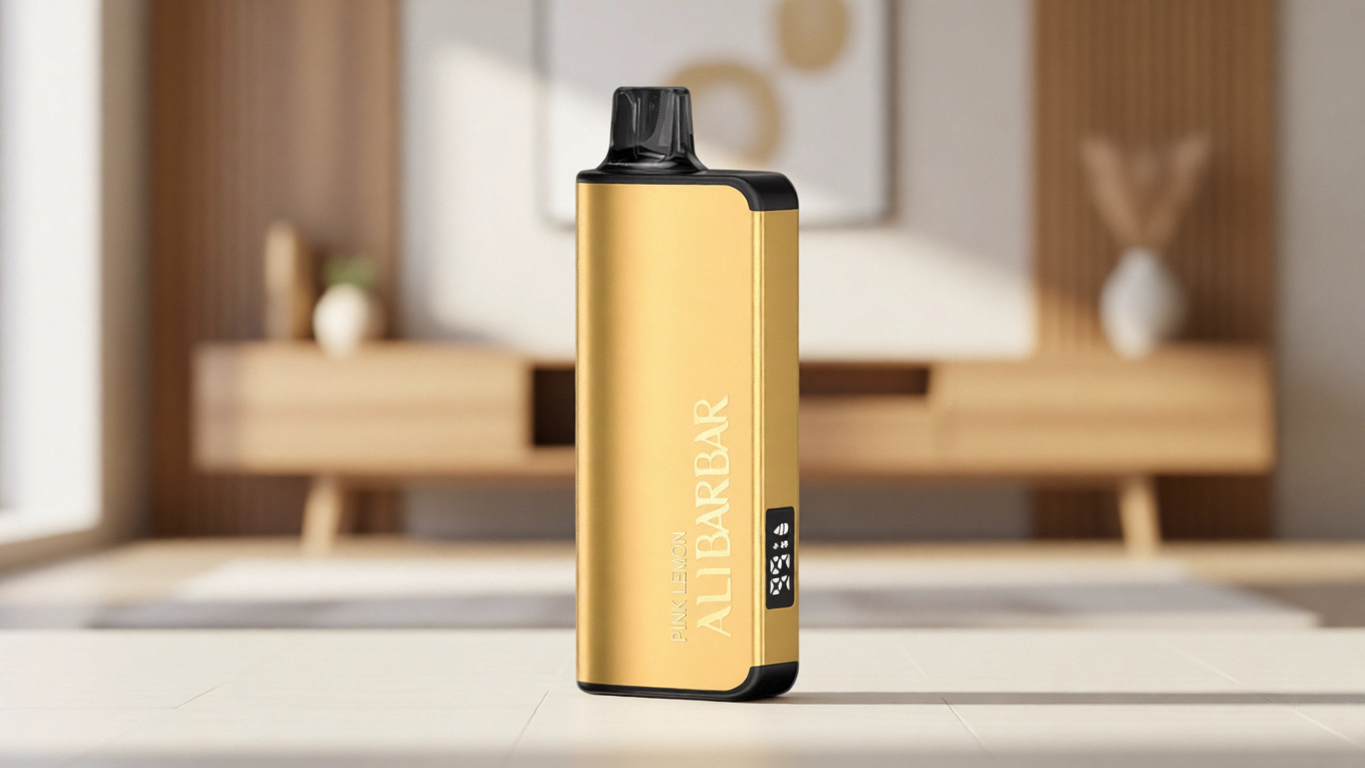
Draw sensor behaviour: Some auto-draw devices activate with a feather-light pull, while others require a distinct suction spike. The gentler the activation threshold, the better. Devices engineered for consistency over their lifetime — like those in the ALIBARBAR family, where the draw sensor calibration remains stable across the unit’s capacity — help you avoid the trap of pulling harder as the device ages.
Temperature control: Look for devices that manage output temperature well and deliver vapour at a consistently cool temperature, avoiding thermal spikes.
It’s worth noting that even a device optimised for a gentle draw still creates negative pressure. There is no “dentist-approved” device; only devices that pose a lower mechanical burden relative to others. The safest course remains to wait longer rather than to rely on design features to circumvent biological reality.
A Practical Framework for Post-Dental Care with Devices
If you are considering use after the recommended healing window, a structured, cautious approach reduces risk:
Wait for full sensation: Confirm that every area numbed by the anaesthetic has returned to normal sensitivity. Bite gently on a piece of gauze — if you can’t feel pressure evenly, wait longer.
Check the injection site: Gently rinse with saltwater. If you see any active bleeding or if the clot looks disturbed, postpone use.
Select the lowest-resistance airflow setting: If your device allows airflow adjustment, open it to the draw you find almost too loose. This minimises the pressure differential.
Take short, gentle draws: Think of sipping from a straw rather than pulling on a milkshake. Keep sessions brief — under a minute — and monitor for any aching or tenderness.
Stop at the first sign of discomfort: Discomfort is a signal that the tissue is not ready. Continuing through it can set healing back.
These steps do not guarantee safety; they merely tilt the odds in your favour. They are most effective when you already have a clear understanding of your device’s draw characteristics. At OZVAPE Shop, we maintain detailed specifications on airflow, sensor type, and output consistency for every piece of equipment we stock precisely because that kind of informed matching — between a user’s needs and a device’s behaviour — is what turns a transaction into a responsible choice.
Common Selection Errors and Industry Observations
In our interactions with adult users across Australia, we have observed several patterns that lead to unnecessary post-procedure complications. These are rarely discussed but have real consequences.
Assuming all devices are equally gentle. A compact device may look harmless, but its internal airflow path may be narrow and require high suction pressure. Visual similarity tells you nothing about the engineering; only specifications or hands-on comparison can reveal the draw effort.
Ignoring the declining performance of disposable units. Many pre-filled devices deliver a consistent experience for the first portion of their rated life, then the draw sensor becomes less responsive. Users compensate by pulling harder — exactly the wrong thing after dental work. A device that provides clear status feedback (like a battery or liquid-level indicator) allows the user to anticipate when performance may degrade and plan accordingly.
Overlooking the benefit of modularity. Sealed units force you to work with whatever draw characteristics they provide. Replaceable-pod systems that allow you to swap between different resistance pods give you control in moments when a particularly gentle draw is necessary — for instance, during the days following a filling.
From an industry standpoint, the trend toward high-capacity, long-life disposables has inadvertently introduced a new challenge: extended operational life means a user may be on the same device for weeks, and if that device’s draw tightens or sensor degrades mid-cycle, the user has no easy way to adjust. This is why, when we evaluate devices for OZVAPE Shop, we pay particular attention to draw sensor calibration stability over the full lifespan of the unit, not just the first few hundred activations.
Frequently Asked Questions
Q: How long should I wait after a simple filling before using my device?
A: Most oral surgeons and dentists recommend at least 24 hours for any suction activity. The injection site needs time to stabilise, and the gum tissue must recover from the clamping and instrumentation. Waiting until the next day is the standard conservative advice.
Q: Can the suction dislodge a new filling?
A: With modern composite fillings (light-cured resin), the restoration is fully hardened immediately. Dislodgement from suction alone is unlikely. However, if you have a temporary filling or a deep amalgam restoration that is still curing mechanically, suction pressure could theoretically cause movement. The greater risk is to the surrounding soft tissue, not the filling material itself.
Q: Are there any devices that are completely safe to use after a filling?
A: No device eliminates risk entirely. The act of drawing on a mouthpiece always creates negative pressure. Some devices, however, are engineered to require extremely low draw force and to deliver vapour at a consistent, cool temperature, making them a less mechanically stressful option — but they are not clinically risk-free.
Q: What about dry socket? I thought that only happened after an extraction.
A: Dry socket (alveolar osteitis) is a complication of tooth extraction, where the blood clot in the bone socket is lost. It does not apply to a routine filling. However, a similar principle applies to the soft tissue clot at the anaesthetic injection site. Losing that clot can cause bleeding and a raw, painful ulcerated area — not as severe as a dry socket, but still unpleasant and slower to heal.
Q: Does the flavour of the device matter for healing?
A: Some flavourings may cause a mild stinging sensation on abraded gum tissue, but there is no strong evidence that specific flavours significantly impair healing. The bigger issue is that the presence of any foreign substance on a fresh wound can provoke inflammation. The simplest approach is to avoid exposing the area to anything other than sterile saline until the gum looks intact.
Q: If I wait a full day, can I use my device as normal the next morning?
A: If your gum looks pink, the injection site has closed, and there is no tenderness, gentle use is likely acceptable. Start with the lightest possible draw and a very short session. If you feel any pulling sensation or ache, stop and wait another 12 hours.
Q: Is there a difference between a manual-draw device and a button-activated one?
A: Button-activated devices generally still rely on the user drawing air through the mouthpiece to cool the coil and deliver vapour. The button merely controls heating; the airflow still requires inhalation. The suction load depends on the airway design, not the activation method.
Q: Can I use a mouthpiece shield or a longer drip tip to reduce suction?
A: A wider-bore mouthpiece can reduce the velocity of the incoming air stream and lower the perceived “pull,” but it does not fundamentally change the negative pressure in the oral cavity. The total volume of air you draw in still creates the same pressure differential. It may offer a marginal comfort benefit, but it is not a protective measure.
Q: What should I do if I use my device too soon and feel pain?
A: Stop immediately. Rinse your mouth with warm saltwater to soothe the area. Avoid further use for at least another day. If pain persists or bleeding resumes, contact your dentist. Most early-use injuries heal without intervention, but a professional evaluation is wise if symptoms don’t resolve.
Q: Where can I find reliable specifications on draw resistance and sensor behaviour?
A: Not all manufacturers publish this data. OZVAPE Shop provides standardised product information that includes airflow characteristics, power profiles, and sensor type wherever possible, giving you a consistent basis for comparison if you need to prioritise a gentle draw during recovery.
Conclusion
The question “Can you vape after a filling?” isn’t about permission; it’s about physics and biology colliding in a mouth that’s been temporarily compromised. The suction required to operate any personal electronic device can slow soft tissue healing and cause unnecessary pain, especially in the first 24 hours. No engineering trick can fully override that.
That said, the market now includes devices with exceptionally smooth draw sensors, stable temperature output, and consistent performance across their lifespan — characteristics that at least give a healing mouth a gentler environment if use is resumed carefully. Your best protection is not a particular brand or a specific product line, but a clear understanding of what your chosen device demands mechanically and how long your gums actually need to settle.
By the time you’re evaluating those factors, you’re no longer relying on guesswork. You’re making the kind of informed, measured decision that sets a good recovery apart from a painful one.