
VAPE FAQs
Can You Take A Vape Into A Concert?
Aug
Understanding the Real Friction: Concert Entry and Personal Electronic Devices
For many adults, attending a live concert is a carefully planned experience—tickets secured, outfit chosen, transport arranged. Yet one practical question often gets overlooked until the moment of entry: what happens to the personal electronic device in your pocket? The anxiety is real. Stories circulate of long‑absent friends who had their devices confiscated at the gate, of awkward moments with security, or of being forced to choose between missing the opening act and walking back to the car. The truth is that the answer depends far more on specific venue policy and local regulation than on the device itself, and most people discover the boundary only after they have crossed it.
At OZVAPE Shop, we believe that informed adults make better decisions, and that begins with clear, no‑nonsense information. This article provides a structured breakdown of what you actually need to know before you head to a concert—covering venue rules, device design considerations, practical strategies, and the common mistakes that lead to disappointment. Along the way, we reference real‑world device families such as the ALIBARBAR range, not as a sales pitch, but because their engineering choices directly influence the concert‑goer’s experience in ways that many users never consider until it is too late.
What Actually Determines Whether You Can Bring a Device Into a Venue
The confusion around concert entry starts with a false assumption: that there is one universal rule. In reality, three separate factors intersect, and each carries varying weight depending on where you are and who is scanning your ticket.
Event‑Specific Policy vs. General Venue Policy
Most large concert venues in Australia operate under strict public gathering regulations that prohibit certain categories of items. These are typically listed on the venue’s website under “Conditions of Entry,” and they frequently include clauses about “electronic smoking devices,” “vaporisers,” or similar terminology. However, enforcement is often at the discretion of the security personnel on the day, and a device that is permitted at one event may be barred at another under the same roof if the promoter has requested tighter controls. This inconsistency is the single biggest source of frustration.
If a venue has no blanket ban, the decision usually rests on whether the device can be mistaken for a prohibited item or whether its design suggests it will be used during the event. This is why device design becomes a practical issue: a bulky unit with flashing LEDs and a prominent mouthpiece will draw attention in a way that a slim, matte‑finish unit will not.
Security Screening and Discretion
Even at venues that technically allow personal electronic devices, the screening process introduces another layer of risk. Security teams are trained to look for potential hazards, and they rely on quick visual assessments. A device that is ambiguous—one that could be a USB power bank, a medical device, or something else—faces far fewer questions than one that clearly matches the silhouette of a product the venue has flagged internally.
This does not mean you should conceal a device. It means that if you plan to carry one, understanding how its physical design interacts with the security environment is a responsible step. Devices with removable, modular components may raise extra questions at a quick glance, whereas sealed, singular‑body designs tend to pass through screening with minimal friction.
Legal and Age‑Restriction Overlays
Australia’s regulatory framework around personal electronic devices is complex, and certain classifications cross into territory that venues are legally obligated to police. Even if your device does not fall into a restricted category, the onus is on you to prove compliance if challenged. Venues that serve alcohol, for example, operate under additional layers of scrutiny, and their staff are unlikely to engage in nuanced discussions at the gate.
Because the legal landscape varies by state and can shift with public health directives, the safest approach is to check each venue’s most recent event‑specific guidelines. Doing so transforms a stressful guess into a straightforward checklist.

Device Design Factors That Influence the Concert‑Goer’s Experience
If you do bring a device, its design can make the difference between a seamless evening and a series of small but constant irritations. The same engineering principles that determine daily reliability also shape how discreetly and confidently you can navigate a high‑security environment.
Size, Silhouette, and Visual Discretion
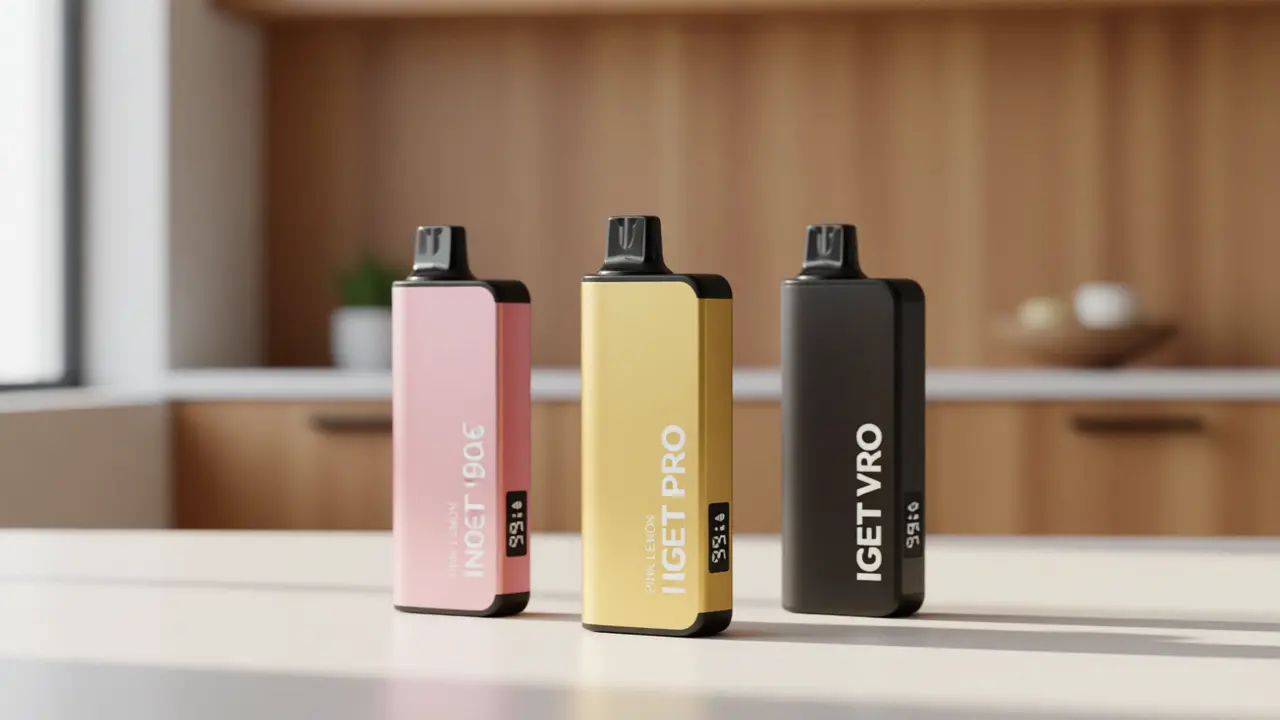
The ALIBARBAR INGOT series exemplifies a thinking that prioritises low‑profile ergonomics. Units such as the INGOT 9000 and INGOT 15000 are shaped without unnecessary protrusions, and their surfaces resist light reflection—a detail that seems minor until you are standing under a security tent’s fluorescent lights. A device that stays flat against the body and fits entirely within a standard pocket is inherently less conspicuous than one that demands its own pouch or holster.
The Ice Adjust 12000, meanwhile, features a sliding airflow controller that is integrated flush with the body rather than protruding as a separate knob. This type of industrial design choice may not appear on a specification sheet, but it reduces the number of elements a security screener might instinctively tap or ask about.
Battery Longevity and Status Transparency
Concerts routinely last three to four hours, and logistical delays can extend that significantly. A device that loses power midway through an event leaves its user in an irritating limbo—unable to activate it if needed, yet still carrying the dead weight. The ALIBARBAR INGOT 15000 is engineered for extended operational life, and its output‑level indicators provide unambiguous status feedback. For a concert‑goer, that clarity means you know before you even leave home whether the device will outlast the evening’s headliner. Ambiguous indicators, by contrast, force you to carry a backup unit, which compounds the screening risk.
Material Durability Under Physical Stress
A concert crowd is an unforgiving environment. Bags get crushed at the barriers, pockets are pressed against railings, and devices are often dropped onto concrete during moments of excitement. Surface treatments that show wear after a single outing not only look poor but can also raise questions about the device’s internal integrity. The hard‑coat finish applied to the ALIBARBAR INGOT bodies is designed to resist scuffing and fading, which means the device remains presentable and structurally sound even after repeated exposure to the rough‑and‑tumble of live events.
Modularity and the Backup Conundrum
Some users prefer sealed, pre‑configured units for their simplicity—there is nothing to detach, nothing to lose. Others gravitate toward rechargeable or replaceable‑component systems because they allow cost‑per‑use optimisation. The dilemma at a concert is that modular devices can inadvertently separate under vibration or impact, while sealed units avoid that risk entirely. The ALIBARBAR family is predominantly sealed‑body, which eliminates the modular‑separation variable. If your priority is absolute peace of mind during a high‑mobility event, that design path has clear advantages.
Practical Steps Before You Leave Home
Preparation is a far better strategy than negotiation at the gate. The following framework is based on patterns observed across hundreds of event‑entry experiences shared by Australian concert attendees.
Check the venue’s website no more than 24 hours before the event. Conditions of entry can be updated for a specific tour. Look for the exact language used—phrases like “vapes,” “e‑cigarettes,” or “electronic smoking devices” are the terms that matter. If the document mentions “personal electronic devices” without qualification, you are in a grey area.
Observe what the device looks like in your pocket or bag. Is the mouthpiece completely covered? Is the activation button recessed enough to prevent accidental presses that could emit light or sound? Run your hand over the pocket’s silhouette; if it draws a defined shape, consider moving it to an interior jacket pocket.
Confirm battery status and lock the device if possible. Many modern units include a child‑resistant or travel‑lock function. Activating it before you join the security queue reduces the chance of an accidental activation that draws attention.
Decide whether you are willing to surrender it. If the venue’s policy is explicit and you choose to still attempt entry, accept that loss is a possible outcome. Having a plan B—leaving the device in a car or at a cloakroom—removes that gamble.
Choose a device with unambiguous status feedback. If you cannot tell at a glance whether the unit is ready for operation, you are carrying both the device and a persistent low‑level anxiety. The LED indicators on the ALIBARBAR INGOT line, for instance, use a simple colour‑coded system that remains readable even in low‑light conditions behind a barricade.
Common Mistakes That Lead to Unpleasant Surprises
Even well‑informed users sabotage their own concert experience through a handful of preventable misjudgments.
Over‑relying on Past Experience
Security postures evolve. A venue that allowed entry with a device six months ago may have tightened its procedures after an incident or a change in management. Assuming continuity is the most reliable way to end up in a pointless argument with a security supervisor who is simply enforcing the day’s briefing.
Assuming Visual Similarity Equals Functional Equivalence
Two devices that share the same form factor can have radically different internal architectures. One may feature a sealed, non‑spill‑prone design, while the other may rely on a tank system that can leak under the pressure changes of a packed concert hall. Leakage is not only messy but can also cause a device to be perceived as a safety hazard by security staff.
Ignoring the Practical Value of Discreet Design
Users often prioritise features like puff count or customisation over physical subtlety. In a concert context, however, the most powerful feature is invisibility. A device that blends into the personal‑electronic landscape—looking more like a power bank than a specialised tool—crosses the security threshold with far less friction. This is an area where the understated design language of the ALIBARBAR collection, with its matte finishes and absence of aggressive branding, works to the user’s advantage.
Misunderstanding the Role of “Approved” Retail Channels
There is a persistent belief that purchasing from a particular retailer grants some immunity from venue rules. It does not. What it does provide is a documented supply chain that proves the device’s provenance if it needs to be verified for warranty or authenticity purposes. An authorised partner like OZVAPE Shop can supply factory‑certified inventory, but no retailer can override a venue’s conditions of entry.
Frequently Asked Questions
Q: Are all Australian concert venues now banning electronic devices?
A: No universal ban exists. Each venue sets its own policy, and some major arenas still permit devices as long as they are not used inside the auditorium. However, outdoor festivals and smaller club venues often enforce stricter rules. Always check the specific event page.
Q: Can I carry a device in my checked bag if I am not planning to use it?
A: At most concerts, there is no “checked bag” system—it is a physical pat‑down or walk‑through scanner. If the device is discovered, venue staff decide based on their policy. Putting it in a bag does not change the permissibility.
Q: What if security confiscates my device and I want it back?
A: Procedures vary. Some venues offer a retrieval tag and a post‑event collection point; others designate all confiscated items as forfeited. You have no automatic right of return unless the venue explicitly states otherwise. This is another reason to know the policy in advance.
Q: How do I tell whether a device’s indicator lights will draw attention?
A: Look for lights that are embedded behind a dark lens rather than exposed. Units like the ALIBARBAR INGOT series use a subtle glow that is visible to the user but difficult to detect from a distance. Test it in a dim room before you leave.
Q: Is it better to carry a smaller device to a concert?
A: Smaller devices reduce pocket bulge and screening visibility, but they may have shorter operational life. The INGOT 15000, for example, balances compact dimensions with extended capacity—a trade‑off suited to long events.
Q: Does OZVAPE Shop provide any documentation that could help at a concert?
A: While no document overrides a venue’s rules, OZVAPE Shop supplies products with full traceability to authorised distribution channels, which can be useful if authenticity is ever questioned. Receipts and packaging are always provided.
Q: Can a device malfunction due to loud noise or vibrations at a concert?
A: Modern sealed‑body devices are robust, but extreme sustained bass can trigger resonance in spring‑loaded contacts or loose internal connectors. A device with a rigid internal structure, such as those in the ALIBARBAR INGOT family, is less susceptible to vibration‑induced issues.
Q: Are there devices specifically designed for use in crowded environments?
A: No device is formally certified for concert use, but the design attributes that matter—low‑light visibility, impact resistance, secure mouthpiece attachment—are deliberately engineered into many premium devices. Reviewing the materials section of a product page can reveal whether these concerns were considered during design.
Q: What is the worst‑case scenario if I am caught using a prohibited device inside a venue?
A: Apart from immediate ejection without refund, some venues now involve law enforcement, especially if the device is used in a designated smoke‑free area. The reputational and legal risks far outweigh any convenience.
Q: How often do venue policies change?
A: Some venues revise their conditions every season; others update them on a per‑event basis. Subscribing to a venue’s SMS alerts or checking the event page the day before is the only reliable method.
Making an Informed Decision That Matches Your Reality
The concert experience should be about music, not about anxiety over a personal device. The answer to “Can you take a vape into a concert?” is not a yes or no—it is a conditional assessment that demands you understand the venue, the device you carry, and your own tolerance for risk. A well‑engineered device, one that remains discreet, communicates its status clearly, and survives the physical demands of a live event, reduces that risk significantly without ever interfering with the security process.
At OZVAPE Shop, we do not offer legal advice or promise that any product will guarantee entry. What we do provide is a carefully curated range of factory‑certified devices, including the full ALIBARBAR collection, built around principles that align with the concert‑goer’s practical needs: thoughtful materials, restrained aesthetics, and transparent power management. When you choose a device that reflects these values, you are not just buying hardware—you are equipping yourself for the real‑world conditions where small design choices make a tangible difference.
The right choice is the one that matches your actual routine, not the one with the most attention‑grabbing claims. Plan ahead, know your device, and let the music be the only thing that demands your attention.