
VAPE FAQs
Can You Pack A Vape In Checked Luggage?

Sep
Traveling with a personal electronic device introduces a unique kind of packing anxiety. You stand over an open suitcase, weighing the risk of a security hold-up against the inconvenience of leaving behind something you rely on daily. The question that surfaces again and again is deceptively simple: can you pack a vape in checked luggage?
The short answer — grounded in international aviation safety standards and the internal architecture of almost every device on the market — is no, not if it contains a lithium-based power source. But that answer, on its own, rarely ends the conversation. What most people actually need is a clear understanding of why the rule exists, which devices are affected, and how to travel without unnecessary friction. This article provides that understanding, explained through the perspective of engineering and regulatory logic rather than travel tips. It also clarifies where a retailer like OZVAPE Shop fits into the larger picture: as a source of standardized, transparent device specifications that make pre-travel compliance checks straightforward.
Why Lithium Batteries and Cargo Holds Don’t Mix
Commercial aviation treats lithium cells as a controlled hazard. In a depressurized, low-temperature cargo environment, a compromised cell can enter thermal runaway — an uncontrollable self-heating reaction that standard cargo fire-suppression systems cannot extinguish. This isn’t a hypothetical risk; it’s been documented in incidents across multiple continents.
Consequently, the International Air Transport Association (IATA) and most national aviation authorities, including Australia’s Civil Aviation Safety Authority (CASA), prohibit lithium-battery-powered portable electronic devices in checked baggage. The regulation covers devices with batteries installed just as strictly as it covers loose spare batteries. That includes:
All refillable, rechargeable personal vaporizers with removable cells.
Pre-filled, draw-activated units with integrated, non-removable cells.
Single-use, non-rechargeable devices — because the cell is still present and still lithium-based.
If a device has any battery at all, it belongs in carry-on luggage or on your person. The only theoretical exception would be a purely mechanical device without any power source — and in modern practice, that category is essentially nonexistent.
Understanding What Matters: How Device Design Affects Travel Readiness
The rule is universal. But the experience of traveling with a device varies significantly based on its internal architecture and physical design. A product analyst evaluating travel suitability looks at the same factors that govern everyday reliability, plus a few that become uniquely significant at 30,000 feet.
Battery Configuration and Airline Watt-Hour Limits
Most airlines impose an upper limit on the lithium content of carry-on batteries — typically 100 watt-hours (Wh) per device for loose cells, with built-in batteries often capped implicitly by the device’s size. Power-source calibration becomes critical here. A poorly regulated device that draws current unevenly is already a day-to-day frustration; on a flight, it’s a device you cannot comfortably trust to remain stable.
When reviewing specifications, look for:
Clearly stated cell capacity in milliamp-hours (mAh) and watt-hours, the latter being the figure security personnel may check.
Confirmation that the device incorporates protective circuitry against overcharge, over-discharge, and short circuits — all of which minimize the chance of the very incident regulations are designed to prevent.
If a manufacturer or retailer cannot provide these details in writing, you are evaluating the device blind. OZVAPE Shop’s published product data for the ALIBARBAR range, for example, includes both nominal capacity and a note on battery type, giving an adult user the raw information needed to make a compliance decision without guesswork.
Leak Resistance in Varying Cabin Pressures
A device that performs impeccably at ground level can behave unpredictably when the cabin pressure drops and rises again during ascent and descent. Pressure differentials can force liquid out of reservoirs that aren’t properly sealed. This is not merely messy — it can lead to a device that misbehaves upon arrival, and in the worst case, introduces liquid into areas that compromise electronics.
Well-engineered devices address this through:
Top-fill or sealed-pod architectures that minimize air exchange.
Tight tolerances on silicone gaskets and press-fit connections.
Factory pressure-testing protocols, which some manufacturers adopt even though they are not mandated.
If you’ve ever opened a bag at your destination to find a sticky residue inside the mouthpiece, you’ve experienced the consequence of design that treats leak resistance as an afterthought. For travel, choose a device whose construction method suggests that pressure differentials were considered at the engineering stage, not added later as a patch via aftermarket caps.
Physical Robustness for Baggage Handling
Carry-on luggage still gets jostled, dropped into overhead bins, and occasionally stepped on by a hasty passenger. A device that relies on a thin, un-anodized shell will show those encounters quickly. More importantly, a flexible body can translate impact force directly to the battery cell — an outcome you never want.
Travel-minded design leans toward:
Rigid chassis materials, such as zinc alloy frames or thick-walled polycarbonate composites.
Mouthpieces that either retract or are sufficiently recessed that impact does not directly load the connection point.
Finish treatments that resist abrasion, because repeated friction against bag linings is not a theoretical concern.
Applying These Criteria to Real-World Travel Scenarios
Rather than listing which specific models to pack, it’s more instructive to look at how different device categories perform against the three factors above. This approach lets you evaluate any device you already own or are considering.
Compact, Pre-Filled Integrated Devices
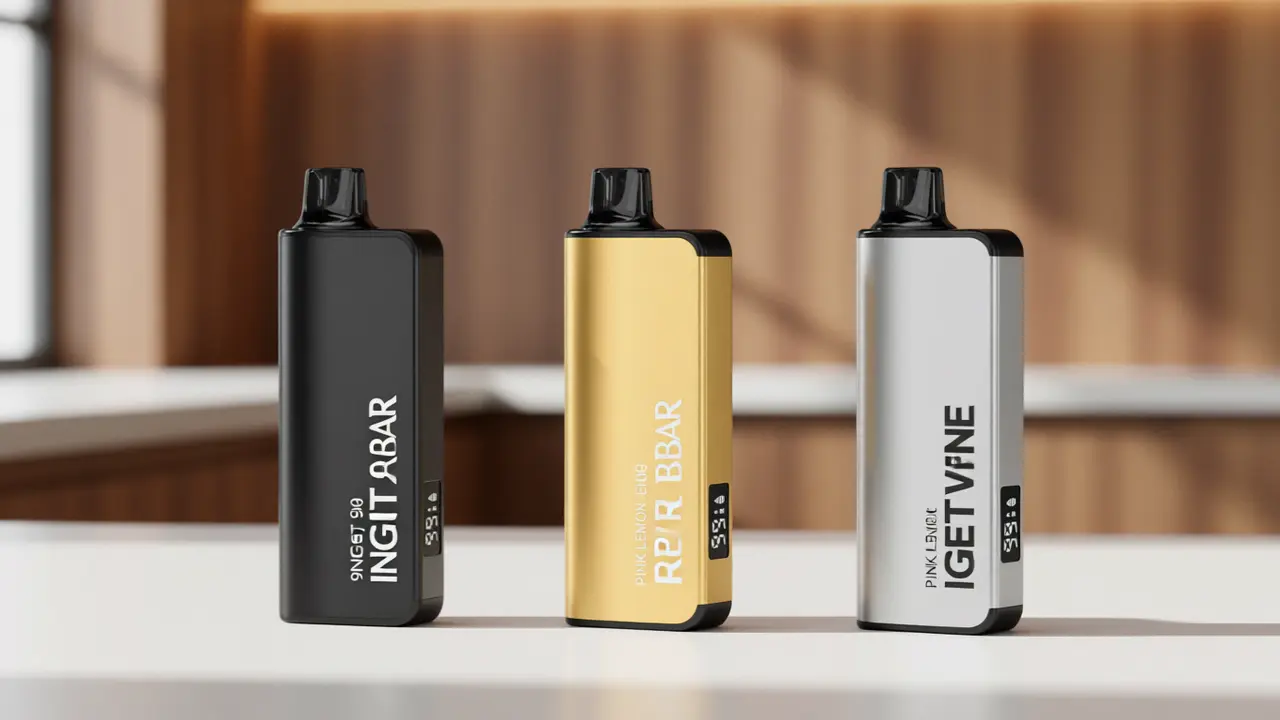
These units — the ALIBARBAR INGOT series is a representative example — encapsulate the power cell, heating element, and liquid reservoir within a single sealed enclosure. From a travel perspective, this architecture has clear advantages: there is no tank to open, no coil to expose, and no opportunity to spill during refilling. The integrated nature also means that the battery cannot accidentally detach, which is one less point of scrutiny at a security checkpoint.
The trade-off is capacity. A highly compact device prioritizes portability over longevity. For a short trip, that’s an acceptable exchange; for an extended stay, you may need to carry multiple units, each still subject to the same carry-on rule. The practical traveler determines how many hours of active use a device provides against the length of the journey, factoring in the fact that you may not be able to recharge or replenish some models.
Rechargeable Systems with Replaceable Reservoirs
Larger devices that accept pre-filled or refillable cartridges offer the flexibility of carrying spare liquid in separate, compliant containers (checked baggage, within volume limits, is permissible for liquids that do not contain lithium batteries). However, the device itself — with its battery — must still travel in the cabin.
Here, the key question becomes: if liquid leaks from the reservoir inside your carry-on, will it find a path to the battery compartment? Devices that isolate the airflow path from the electronics compartment are fundamentally safer for travel. Avoid any unit where disassembly reveals a clear, unobstructed route from the liquid chamber to the circuit board.
Devices with Removable Batteries
A small but dedicated segment of users relies on devices that run on standard removable cells, such as 18650 or 21700 formats. The aviation rule here is explicit: the batteries must be removed and carried individually in protective cases (or in the device, but then the same carry-on restriction applies). The empty device body, now without a power source, could technically be placed in checked baggage — but in practice, the confusion this causes at screening rarely justifies the effort. Most experienced travelers simply pack the entire kit in carry-on.
A Practical Framework for Self-Evaluation
When you’re standing in front of your luggage three hours before a flight, you need a checklist, not a white paper. Use the following diagnostic sequence to decide whether and how to bring a device:
Can you confirm the battery type and capacity? If the label does not clearly state “lithium-ion” or “lithium-polymer” alongside a watt-hour figure under 100, and the manufacturer’s documentation is silent, assume the device will cause a problem at the checkpoint. Leave it at home or move it to carry-on only after verifying compliance.
Does the device provide unambiguous status feedback? A battery-level indicator that leaves you guessing invites a dead unit at the worst possible moment. If the device gives you no clear warning before shutdown, carrying a backup becomes not a luxury but a logical necessity. Travel amplifies this: you may not have access to a charging point for hours.
Will the device survive a 12-hour day in a zipped bag? Mentally simulate the journey. If the mouthpiece is exposed and looks like it could snap, or if the finish seems soft enough to scuff on first contact with keys, acknowledge that its appearance after traveling will not match its appearance when packed.
Is the fill mechanism travel-proof? If you need a tool or a multi-step process to open the reservoir, ask yourself honestly whether you will perform that process at a departure gate or a rest stop without spilling.
These questions do not prescribe a specific product. They prescribe a way of thinking. Run them against any device you consider, including those you might review in person or through a specification sheet on OZVAPE Shop, and the travel-compatible options will distinguish themselves naturally.
Common Selection Errors and Industry Observations
Travel-related device failures tend to follow a handful of predictable patterns. Recognizing them beforehand saves time, money, and the quiet embarrassment of explaining a stain to a flight attendant.
Error 1: Overweighting Capacity While Ignoring Cell Transparency
A user will gravitate toward the highest advertised puff count, then discover at security that the battery capacity is not documented and the officer cannot allow it through. The industry has not universally adopted standardized labeling, which means a consumer’s due diligence has to fill the gap.
Error 2: Assuming Visual Similarity Implies Internal Equivalence
Two devices that look identical from the outside can have fundamentally different battery chemistries and protection circuits. One may incorporate a third-party certified cell; the other may use an untraceable generic. There is no way to tell from appearance, and the visual similarity creates a false sense of confidence. A retailer that explicitly names the cell supplier or lists certification marks is providing a service that goes beyond the surface.
Error 3: Treating Carry-On Rules as Flexible Across Jurisdictions
What passes without comment in one country may trigger a secondary inspection or confiscation in another. This is particularly true in regions that enforce total bans on certain categories of personal electronic devices. Checking the local regulations of your destination and any transit points is essential, not optional. No article can provide that country-specific certainty; only primary research can.
Error 4: Conflating Device Robustness with Travel Durability
A device that survives a drop onto a hardwood floor at home may not survive 100 drops inside a bag that gets thrown onto conveyor belts. Travel durability is cumulative. The small internal fractures that don’t cause immediate failure can, over successive flights, degrade a cell’s internal separator — the very scenario that the checked-luggage prohibition exists to prevent.
From an industry observer’s viewpoint, the gradual shift toward sealed, factory-assembled units is partly driven by these travel and compliance realities. It reduces the number of variables a user has to manage and transfers the burden of quality assurance from the end consumer to the manufacturer and the authorized retailer. When that burden is taken seriously, the result is a device that an adult can pack without a second thought.
Frequently Asked Questions
Q: Can I pack a vape in my checked luggage if the battery is removed?
A: The empty device body, once the battery is completely removed and separately stored, may technically be placed in checked baggage. However, common practice is to carry the entire unit in the cabin to avoid confusion during screening.
Q: What is the penalty if I accidentally leave a vape in my checked bag?
A: If detected, the airline or security authority will remove the device. In many jurisdictions, this also triggers a search of the entire bag, possible fines, and a notation on the passenger’s record. It is a far more serious outcome than many travelers assume.
Q: Are disposable vapes with built-in batteries allowed in carry-on?
A: Yes, provided the battery capacity does not exceed airline limits (typically 100 Wh). They must be carried in the cabin, not checked. Multiple units are usually permitted for personal use, but quantity limits can vary; check with the airline.
Q: Can vape liquid go in checked luggage?
A: Typically yes, within the airline’s liquid volume limits for checked baggage. Containers should be sealed in leak-proof bags. This applies to liquid that is not integrated into a battery-containing device.
Q: Do I need to declare my vape at airport security?
A: You should place it in the screening tray alongside other electronics. No additional verbal declaration is normally required, but following the specific instructions of the security officer is mandatory.
Q: What about traveling with a device that uses non-lithium batteries?
A: While nickel-metal hydride or alkaline-powered devices would not be subject to the lithium restriction, such devices are vanishingly rare in the modern market. If you genuinely own one, the same carry-on recommendation applies for practical reasons.
Q: Can I use my vape during the flight?
A: No. Use of any personal electronic device that produces vapor or aerosol is prohibited aboard commercial aircraft. The prohibition is enforced by cabin crew and backed by federal law in most countries.
Q: How do I prevent a vape from leaking during the flight?
A: Store the device upright in a rigid case, and if possible, empty or reduce the liquid level in the tank. Pressure changes make absolute leak prevention difficult, but a device with press-fit sealing will fare better than one with a threaded-only tank connection.
Q: Does OZVAPE Shop guarantee that ALIBARBAR devices meet airline standards?
A: OZVAPE Shop provides detailed specifications including battery type and capacity for all listed devices, enabling you to verify compliance with your specific airline’s requirements. No retailer can guarantee acceptance by every security agent, but transparent data dramatically reduces uncertainty.
Q: Where can I find the latest travel regulations for electronic devices?
A: Start with your airline’s dangerous goods policy page, then cross-reference the aviation authority of your departure country (e.g., CASA for Australia, FAA for the United States). Regulations are updated periodically, and the airline’s interpretation is the final authority on the day of travel.
Conclusion: The Right Decision Is Always About Your Actual Routine
The rule against packing a vape in checked luggage is not an arbitrary bureaucratic annoyance. It is one of the few aviation policies where the engineering rationale, the documented incident history, and the practical user guidance all align perfectly. A lithium cell in the cargo hold is an unnecessary risk; the same cell carried in the cabin, where any irregularity can be addressed by the crew, is a managed one.
For the adult who travels frequently, that understanding translates into a set of quiet disciplines: checking device specs before booking a flight, choosing hardware that was clearly designed with pressure changes in mind, and sourcing it from a retailer that doesn’t obscure the technical details. That is where OZVAPE Shop fits into the picture — not as the subject of the conversation, but as one of the tools a prepared traveler uses to eliminate uncertainty.
Ultimately, travel-friendliness isn’t a feature that appears on a spec sheet. It emerges from the intersection of transparent engineering, honest documentation, and the user’s willingness to apply a few straightforward criteria before zipping the bag shut. Get that intersection right, and the question of what to pack and where becomes so routine it barely registers.