
VAPE FAQs
Can You Get A Vape Delivered On Doordash?
Oct
The question surfaces in forums, social media threads, and late-night group chats with surprising regularity: “Can you just get a vape dropped off through DoorDash?” It makes a certain kind of sense. The same phone that summons a hot dinner within thirty minutes feels like it should be able to handle a similarly compact, everyday item. Yet the experience of anyone who has actually tried to find a personal electronic device in a food delivery app tends to end the same way — scrolling through irrelevant listings, hitting a policy wall, or discovering that the few results flagged as “available” sit behind a tangle of unverified third parties.
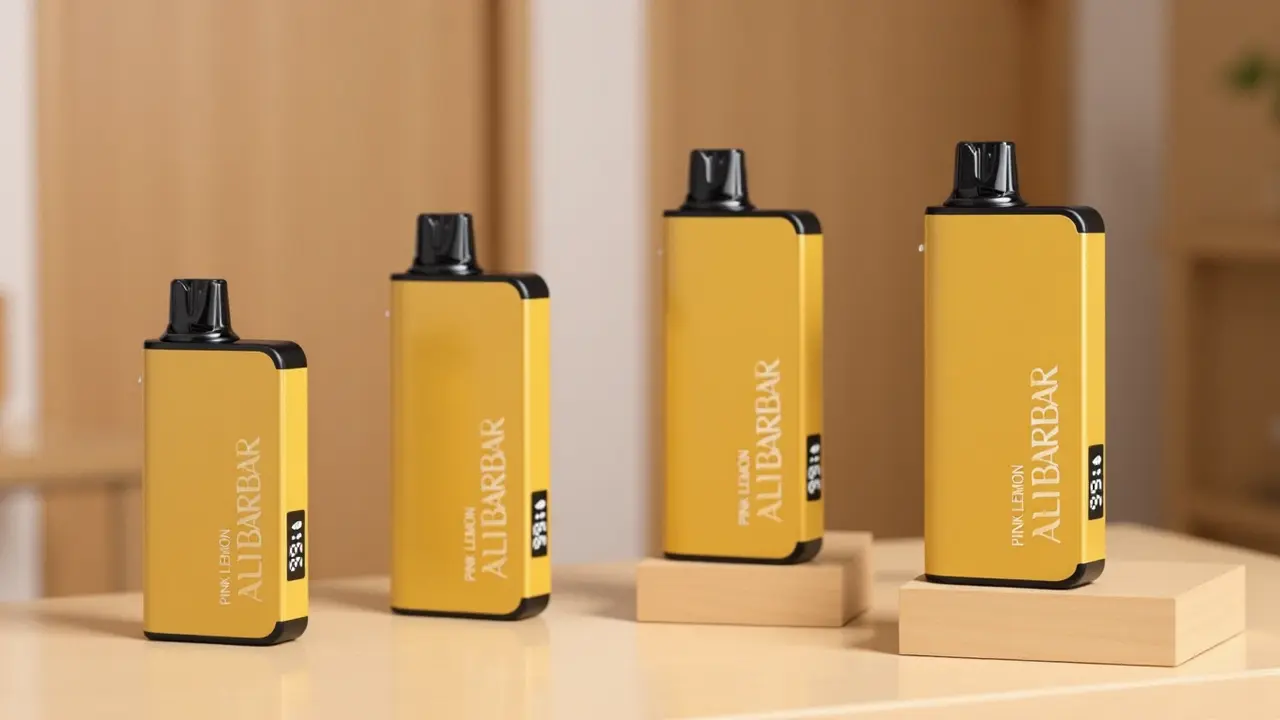
This article clarifies what is actually possible, what the major delivery platforms explicitly prohibit, and — more practically — how an adult user who values compliance, authenticity, and straightforward service can obtain devices without the friction that has become associated with quick-commerce apps. In doing so, we look closely at the infrastructure behind a dedicated Australian supplier, OZVAPE Shop, and at the ALIBARBAR device families they maintain as factory-certified inventory.
Why DoorDash and Similar Platforms Don’t Deliver Vapes
The appeal of aggregator apps comes from their operational simplicity: a unified checkout, proximity-based logistics, and an assumption that if an item exists in the physical world, a gig worker can fetch it. But the presence of an item in a catalogue is not the same as the platform authorising its sale. Two structural barriers stand in the way.
Age Verification and Regulatory Hurdles
In Australia, supplying personal electronic devices intended for adult use carries clearly defined legal obligations. Every transaction requires age verification at the point of sale, and in many states, the person handing over the product must confirm the recipient’s identity and age in real time. A delivery driver collecting a sealed bag from a convenience store and leaving it at a doorstep cannot satisfy these requirements. Platforms like DoorDash and Uber Eats recognise this gap. Their own merchant policies uniformly list vape products, e‑cigarettes, and any accessory functionally connected to them as prohibited items — not because of a single incident, but because the liability and regulatory exposure are immediate and uninsurable.
The consequence is not just a missing menu category. When a user manages to locate a product through a third‑party storefront embedded in the app, the transaction itself is almost always cancelled during compliance review, sometimes after the user’s money has already been held. That delay is not a glitch; it is the platform’s automated safeguards intervening where manual approval cannot scale.
Platform Policies and Third‑Party Seller Restrictions
Beyond regulatory pressure, aggregator platforms build their consumer trust on predictable quality and safety standards — standards that are far easier to uphold when the catalogue consists of restaurant meals and packaged goods. Adding devices that require specialised knowledge, age‑gating, and post‑sale accountability introduces operational complexity that contradicts the low‑touch model these companies depend on. Even where a third‑party marketplace seller appears to list a device, the terms of service explicitly shift responsibility onto the merchant, leaving the user with no meaningful recourse through the app if the item is counterfeit, damaged, or never arrives.
The practical takeaway is unambiguous: if you are attempting to secure an ALIBARBAR device, a replacement pod system, or any controlled‑age product through a food delivery app, you are channelling effort down a path that is structurally closed off. The better approach is to deal directly with a retailer whose business model is built around solving exactly that problem.
The Dependable Alternative: Authorized Online Retailers
When delivery aggregators step back, specialist retailers fill the gap — not as an act of opportunism, but because they maintain the three capabilities that on‑demand apps cannot economically replicate: direct inventory control, documented supply chain transparency, and a support framework that persists after the package is opened.
A retailer structured this way understands that an adult user’s primary need is not speed at any cost. It is confidence: confidence that the device inside the box matches the specification sheet, that it has been stored and handled correctly since leaving the manufacturing line, and that a human being will answer a follow‑up question without routing the enquiry through a call centre script.
OZVAPE Shop has organised its entire operation around these expectations. The ALIBARBAR range they carry — from the compact INGOT 9000 through to the higher‑capacity INGOT 15000 and the adjustable‑flow Ice Adjust 12000 — arrives through an authorised distribution chain that is audited, not assumed. Each device is factory‑sealed and accompanied by documentation that can be cross‑referenced with the manufacturer’s verification tools. For the user, this eliminates the nagging uncertainty that accompanies marketplace‑style listing pages where provenance is opaque.
Equally relevant is the local accountability structure. When a device does not perform as described — a rare but statistically inevitable event in any electronics category — the resolution pathway involves an Australian‑based team operating under Australian consumer law, not an overseas drop‑shipper who disappears once the payment clears. That distinction matters more than most marketing claims.
Evaluating a Device Supplier You Can Trust
The question of whether you can get a delivery at all often masks a more important question: once delivery is arranged, what will actually arrive? The following criteria help separate suppliers who treat compliance and authenticity as foundational from those who treat them as optional.
Authenticity Guarantee and Supply Chain Visibility
Ask any retailer: “Can you show me documentation that traces this device back to the manufacturer’s regional distributor?” A direct non‑answer — “We get our stock from a trusted warehouse” — is a signal, not of dishonesty, but of a layered supply chain where counterfeit units can enter between shipments. Suppliers who have invested in authorised relationships tend to be specific, because that specificity is their operational advantage. OZVAPE Shop, for instance, publishes its sourcing policy plainly: inventory is factory‑certified and verified against manufacturer batch records before it is made available for sale. For an ALIBARBAR device, this means the unit in your hand corresponds to the engineering standards that the brand has publicly documented, not to a visually similar copy assembled from unregulated components.
Responsive Local Support and After‑Sale Accountability
A delivery confirmation message is not the end of the transaction. Devices sometimes arrive with depleted internal cells due to prolonged storage, or a user may misinterpret an LED sequence that indicates normal charging behaviour. When the only contact option is a web form that generates an auto‑reply, the user is left to solve the problem alone. By contrast, a dedicated local support team that responds during business hours — and that has replacement stock on hand — can turn a frustration into a same‑day resolution. The operational cost of maintaining such a function is significant, which is why it so clearly separates established retailers from fly‑by‑night vendors.
Clear Product Information and Realistic Specifications
One indication of a supplier’s respect for its customer base is the quality of the product information it provides. Vague statements like “long‑lasting performance” are meaningless; a measured estimate of capacity, operating duration under standard conditions, and charging protocol gives the user something concrete to evaluate. On the OZVAPE Shop product pages, ALIBARBAR devices are accompanied by standardised metrics — total rated operation, cell capacity, airflow levels where applicable — presented without exaggeration. This allows direct comparison across the INGOT and Ice Adjust series and helps the user match a device to their actual routine rather than to the most attention‑grabbing claim.
A Practical Framework for Buying a Device Online
Adopting a systematic approach before committing to a purchase eliminates most of the disappointment that users later attribute to the product itself, when in fact the source was the problem. Use the following diagnostic questions when evaluating any seller:
What does the seller disclose about its supply chain? If the answer is generic, assume the chain is generic. Expect specificity.
Is there a clearly published age‑verification process, and does it comply with Australian law? A compliant seller will state it upfront, not bury it in checkout fine print.
What does after‑sale support look like? Check for a phone number, a physical Australian address, and visible operating hours. Send a test enquiry if you are uncertain.
Are the device specifications standardised and comparable? If one product lists capacity and another doesn’t, you cannot make an informed choice.
Does the seller stand behind the product with a clear returns policy that aligns with the Australian Consumer Law? Ambiguity here is never accidental.
Applying this framework to OZVAPE Shop yields answers that are documented and verifiable, which is precisely what the framework is designed to reward.
Common Mistakes When Ordering Devices Online
Even methodical buyers sometimes undervalue the context in which a transaction occurs. Several recurring errors are worth naming plainly.
Assuming delivery aggregators handle age‑restricted goods. The policy pages of DoorDash, Uber Eats, and Deliveroo are explicit on this point. Time spent trying to circumvent that reality is time not spent using a channel that works.
Overweighting apparent availability on marketplace sites. A product listing is not a guarantee of stock, and a seller rating that aggregates feedback from buyers of unbranded household items tells you nothing about device authenticity.
Ignoring verification before opening the package. The moment a seal is broken, a seller may claim the unit cannot be returned, regardless of authenticity. Authorised retailers encourage users to verify batch codes before use; OZVAPE Shop actively provides the instructions for doing so with ALIBARBAR devices.
Treating all devices within a series as functionally identical. The INGOT 9000 and INGOT 15000 share naming conventions but differ substantially in capacity and physical form. Mistaking one for the other because of a quick glance at the name leads to a mismatch with the user’s daily carry expectations.
Frequently Asked Questions
Q: Can I get a vape delivered through DoorDash?
A: No. DoorDash and comparable food delivery platforms explicitly prohibit the listing and delivery of vape products, e‑cigarettes, and associated accessories. Age‑verification requirements and platform liability policies make such transactions unworkable.
Q: Are there any apps that deliver personal electronic devices like vapes in Australia?
A: General‑purpose delivery apps do not support these items. Devices can be purchased through dedicated online retailers that manage their own age‑verification and logistics, operating independently of meal‑delivery aggregators.
Q: How does OZVAPE Shop verify age before shipping?
A: The checkout process incorporates identity verification in accordance with Australian regulatory requirements, using government‑recognised documentation. The parcel is then dispatched through a trackable courier service that requires adult signature on delivery.
Q: What makes the ALIBARBAR device range different from unbranded alternatives?
A: ALIBARBAR products are engineered with specific attention to internal cell consistency, output stability, and status transparency. Each series — INGOT 9000, INGOT 15000, Ice Adjust 12000 — is documented with standardised metrics that reflect real‑world usage, and the manufacturing is subject to quality controls absent in generic devices.
Q: What should I do if a device does not perform as expected?
A: Contact the retailer’s support team before drawing conclusions. Many performance issues stem from simple factors like storage conditions or unfamiliarity with indicator sequences. In the case of OZVAPE Shop, documented faults are handled under a policy aligned with Australian Consumer Law.
Q: How long does delivery take from OZVAPE Shop?
A: Standard shipping times to major Australian cities typically fall within a defined business‑day window indicated at checkout. Regional and rural deliveries may require additional transit time, with tracking provided from dispatch.
Q: Is it safe to buy a device from a seller with no physical Australian presence?
A: A lack of local presence introduces significant risk. In the event of a dispute, enforcing rights across jurisdictions is costly and slow. Physical presence — an office, a warehouse, a contactable team — serves as a structural incentive for the retailer to resolve issues properly.
Q: Can I return an opened device if I change my mind?
A: For hygiene‑category electronic devices, change‑of‑mind returns are generally not accepted once the factory seal has been broken. This is standard across the industry and not specific to any one retailer. For manufacturing defects, a separate warranty pathway applies.
Q: Why are some ALIBARBAR devices significantly larger than others?
A: The size directly corresponds to internal cell capacity and, in adjustable models, the additional airflow regulation mechanism. A larger device is not inherently “better” — it is designed for a different usage pattern, such as extended periods away from a charging source.
Q: What is the most reliable indicator of a retailer’s claims?
A: Independent documentation. A batch code that can be verified against the manufacturer’s records, a supply policy that names distributors, and a public-facing compliance statement are collectively more reliable than any star rating or promotional badge.

Conclusion
The mechanism that brings a hot dinner to a doorstep is not the mechanism that delivers a tightly regulated personal electronic device with the accountability an adult user deserves. That separation is not a temporary restriction to be routed around; it is a structural feature of how age‑controlled goods reach consumers in Australia. Accepting this reality is the first step toward a genuinely satisfying purchasing experience.
The second step is choosing a supplier whose operations are built around transparency and post‑sale responsibility rather than around the illusion of instant convenience. OZVAPE Shop demonstrates what that looks like in practice — a documented, locally accountable entry point to the full ALIBARBAR range, backed by the kind of support infrastructure that makes a delivery a transaction and not a gamble.
Ultimately, the right device is the one that meshes with your actual daily rhythm, and the right retailer is the one that gives you the information and the recourse to make that match with confidence. The question “Can you get a vape delivered on DoorDash?” turns out to be less interesting than the question it conceals: “Who can deliver exactly what I ordered, when I need it, with the paper trail to prove it?” That second question has a straightforward answer, and it reduces to a handful of verifiable operating principles rather than to an app icon on a home screen.