
VAPE FAQs
Can You Charge A Vape With Your Phone?

Aug
A dead personal electronic device at the wrong moment isn’t just inconvenient — it breaks a routine. You reach for it out of habit, muscle memory expects a response, and the silence that follows feels disproportionate to the object’s size. In that instant, many people look at the phone in their other hand and wonder: can I just plug it in here? The impulse is logical. Phones already manage power for earbuds, watches, sometimes even another phone. But logical does not always mean safe, and the gap between “technically possible” and “sensible” is where genuinely useful information lives. At OZVAPE Shop, we’ve seen enough charging-related questions — and enough devices that arrived in for evaluation after someone tried an improvisation — to understand that this topic deserves a level-headed, engineering-first explanation.
Understanding Charging: What Your Phone Can and Cannot Do
The Physics of Power Delivery and Why Direction Matters
Every USB port is a negotiator. Before a single watt flows, the port on one side and the device on the other must agree on voltage, current, and role. Most phones can act as a power sink — they pull energy from a charger. A much smaller number can act as a power source — they push energy outward. That source capability, often called USB On-The-Go (OTG) or reverse charging, is not universal. It requires specific hardware pathways, firmware support, and thermal headroom.
Even when a phone does support power output, the voltage it supplies is typically fixed at 5V, and the current ceiling varies. Some cap at 500mA, others negotiate up to 1.5A or more via USB PD or proprietary protocols. Your personal device, meanwhile, expects a specific charging profile. If that profile is not matched, one of two things happens: the device charges at a crawl, or the phone’s internal protection circuitry shuts the whole exercise down before it causes damage. Neither outcome solves your immediate problem.
Why the Risk Is Rarely About Catastrophe and Almost Always About Lifetime
Public concern usually centers on dramatic failure — smoke, swelling, thermal runaway. Those outcomes are extremely rare with properly manufactured hardware. The much more common cost of improvised charging is invisible: shortened battery cycle life. Lithium-ion cells age faster when charged at rates they weren’t designed for, or when the charging curve is repeatedly interrupted because an intermediate power source can’t sustain a stable voltage under its own thermal limits. What feels like a quick top-up in the moment becomes yet another data point pushing the cell toward premature capacity fade. OZVAPE Shop regularly examines devices that performed well for six months and then fell off a cliff — and inconsistent charging history is one of the most frequent, and least disclosed, contributors.
Status Transparency: The Hidden Factor in Charging Safety
A well-designed personal electronic device communicates its state clearly — charging, charged, fault, temperature warning. A poorly designed one stays mute. When you connect that device to a phone, you gain no additional visibility unless the device itself provides it. You’re operating without a meaningful status feed, and that invites overconfidence. At OZVAPE Shop, the ALIBARBAR range exemplifies the alternative approach: every unit, from the compact INGOT 9000 to the higher-capacity Ice Adjust 12000, uses unambiguous LED indicators that report charging progress and completion. That design choice removes guesswork regardless of what power source you use.
Real-World Devices: How ALIBARBAR Handles Charging by Design
ALIBARBAR’s engineering team made a deliberate choice across its product family to adopt USB-C as the standard charging interface. This wasn’t a matter of following trends. USB-C allows for controlled negotiation between the device’s internal battery management system (BMS) and the power source, enabling precise current draw and overvoltage protection. The INGOT 15000, for instance, integrates a multi-stage charging controller that regulates input current based on cell temperature and state of charge — precisely the kind of circuitry that gets bypassed when a device is forced to accept whatever a phone port happens to deliver.
The modular philosophy visible in the broader ALIBARBAR catalogue also addresses charging anxiety from a different angle. Devices with replaceable components or high internal capacity reduce the daily pressure to find a power source. If your device reliably lasts two or three days under your normal usage pattern, the question “can I charge it with my phone?” simply doesn’t arise as often. That’s an engineering answer to a behavioral problem, and it’s more durable than any workaround.
A Practical Framework for Evaluating Charging Compatibility
If you’re staring at a phone and a device and need to make a judgment call, here’s a sequence of questions to work through:
Does your phone explicitly list reverse wired charging in its specifications? “USB OTG” or “power sharing” may indicate capability, but always check the manufacturer’s documentation.
What is the device’s rated charging input? If it specifies anything other than 5V DC, your phone almost certainly cannot provide it.
Does the device have any form of status indicator? If not, you’re flying blind — don’t assume power is flowing just because cables are connected.
What is the cable’s quality? A cable not rated for power delivery can introduce resistance and voltage drop, making an already marginal situation worse.
What is your environment temperature? Charging a device from a phone that’s already warm from mobile data or ambient heat increases the thermal stress on both batteries.
OZVAPE Shop maintains standardised specifications for every ALIBARBAR device precisely so that users can answer these questions before they find themselves in a low-battery pinch. Knowing the input voltage, recommended charge rate, and indicator behavior ahead of time turns an improvisation into a calculated decision.
Common Mistakes That Turn a Charging Question Into a Regret
Assuming USB-C Is Always Bidirectional
USB-C is a connector shape, not a protocol guarantee. A port can be physically USB-C and still lack the Power Delivery or OTG capabilities to supply voltage. Many users discover this after draining their phone’s battery in a failed attempt to charge something else.
Overlooking Charging IC Quality
Not all battery management integrated circuits are equal. Devices built with tighter tolerances on charge termination voltage and trickle-charge cutoff will age gracefully across charge cycles. Devices that cut corners here degrade faster — and makeshift charging from unpredictable sources accelerates that degradation.
Confusing “It Turned On” With “It Charged Correctly”
A device that briefly powers on after a phone connection isn’t evidence of a successful charge. It may have pulled just enough surface voltage to activate, while the underlying cell chemistry received no meaningful replenishment. The result is a false sense of security and a device that fails again minutes later.
Ignoring the Cumulative Wear Argument
Each charge cycle at suboptimal parameters nibbles away at total cell longevity. One incident won’t ruin a device. Ten will. The habit of using whatever power source is within arm’s reach, rather than the one the device was designed for, is what erodes performance over time.
From an industry vantage point, the rise of universal connectors has been a net positive, but it has also created a false expectation of universal power compatibility. Manufacturers who invest in proper BMS design — as ALIBARBAR does — build in margins that make the occasional deviation less harmful. Other devices, with less robust protection, leave the user carrying the risk.
Frequently Asked Questions
Q: Can I use my phone’s USB-C port to charge any personal electronic device?
A: Only if your phone supports reverse wired charging and the device accepts 5V input. Many do not, and even when they do, the charge rate may be too slow to be practical.
Q: Does reverse wireless charging work for devices that support wireless charging?
A: A small number of devices integrate Qi receivers, but most personal electronic devices in the ALIBARBAR category do not. Wireless reverse charging is generally only relevant for accessories designed for it.
Q: Will charging from a laptop or power bank be safer than from a phone?
A: Usually yes, because dedicated USB ports on laptops and power banks are more likely to negotiate standard USB power profiles. However, the same principles apply — match voltage and stay within rated current.
Q: Are ALIBARBAR devices safe to charge with any USB-C cable?
A: They are designed to work with standard USB-C cables that meet basic quality specifications. For optimal performance, use a cable that supports the device’s rated charging speed and a power source that can deliver it stably.
Q: How do I know when my ALIBARBAR device is fully charged?
A: ALIBARBAR devices feature clear LED indicators that change state when charging is complete, removing ambiguity.
Q: What should I do if my device is dead and I have no access to a wall charger?
A: A reputable power bank with a stable 5V output is the best temporary solution. Prioritise getting to a known-good charger rather than experimenting with improvised power sources.
Q: Can charging a device incorrectly damage my phone?
A: Modern phones have robust protection against overcurrent and short circuits on their output ports, so damage is unlikely. The greater risk is to the device being charged.
Q: Does OZVAPE Shop provide charging guidance with every purchase?
A: Yes. Every ALIBARBAR device shipped by OZVAPE Shop includes charging recommendations and verified input specifications, so users can make informed decisions from day one.
Informed Decisions Last Longer Than Improvisations
The question of whether you can charge a personal electronic device from a phone is ultimately a question about how much risk you’re willing to absorb for a marginal convenience. In a controlled environment with a fully compatible phone and a device built to accept that input, it’s possible. In the messy real world, where specifications are often a mystery and status feedback is rare, it’s an unnecessary gamble.
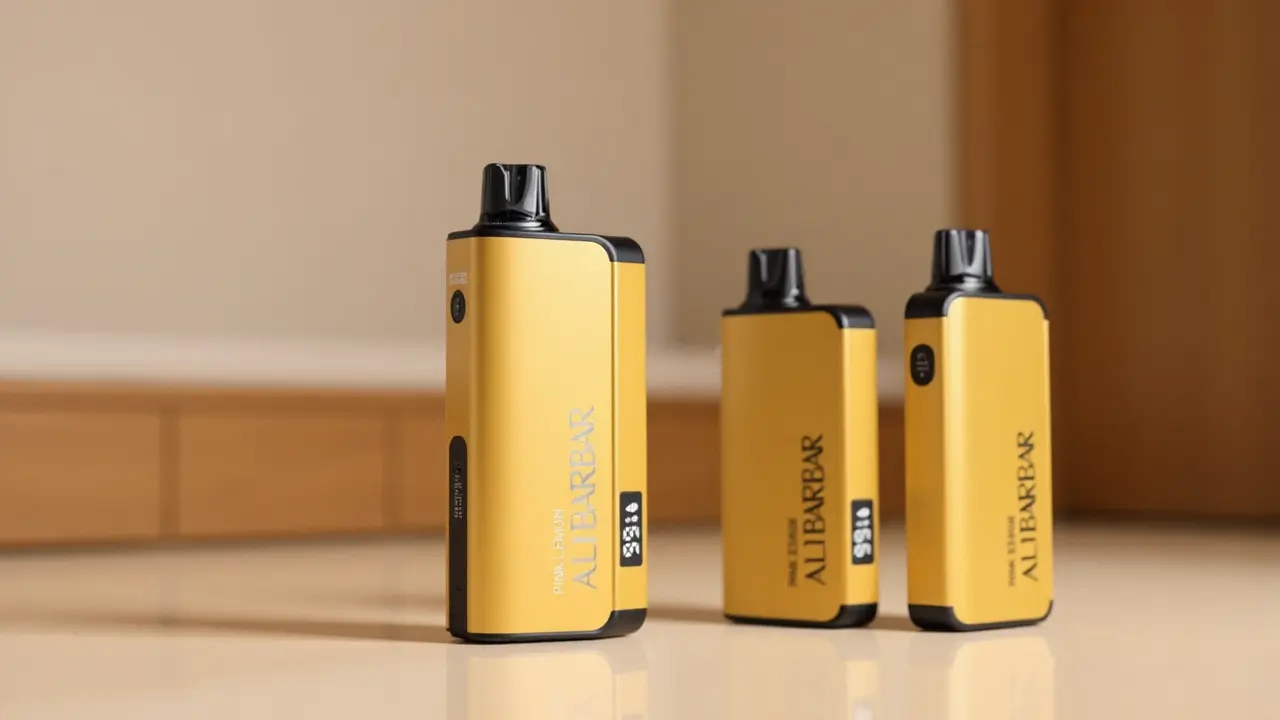
OZVAPE Shop exists to reduce the guesswork. By curating devices like the ALIBARBAR range — where charging behavior is engineered, transparent, and documented — we give the user a better starting point. When a device arrives with clear input specs and status indicators that speak plainly, the question of improvisation becomes less urgent. The right solution isn’t the one that works under improbable conditions; it’s the one that fits your daily reality so cleanly that you rarely need to test its limits.