
VAPE FAQs
Can You Bring Vape To Philippines?
Jul
Introduction
Every traveler who relies on a personal electronic device for daily routines quickly encounters the same knot of questions at the packing stage: Can I legally take it? What happens at the airport? Which device can survive a week away from a charging cable? The Philippines, with its evolving regulations and a climate that punishes poorly sealed electronics, sharpens these questions into a practical hurdle. Confusion about what customs allows, combined with uncertainty about whether a chosen device will hold up through long flights, tropical humidity, and inconsistent access to power, leads many to either over‑pack with backups or, worse, leave behind exactly what they need.
This article maps the legal, practical, and device‑level considerations that answer the question “Can you bring a vape to the Philippines?” in a way that serves an adult user’s actual decision‑making. It treats the topic as a layered engineering and logistics challenge, not a simple yes‑or‑no. Along the way, reference points from the curated selection at OZVAPE Shop appear only where they illustrate how a given device family addresses the real frictions of travel. The intent is never to promote, but to provide an analytical lens that any traveler can apply, regardless of where they source their equipment.
Understanding What Matters: Core Factors for Travel‑Ready Devices
Choosing a device to carry across international borders demands a different evaluation than choosing one for local use. The device becomes a co‑traveler: it must be legally defensible, physically resilient, transparent about its state, and flexible enough to handle unexpected schedule changes. The following four engineering factors translate the common frustrations of traveling users into a checklist that anyone can use.
Device Reliability and Performance Consistency
A portable electronic device that behaves predictably on Monday can, by Thursday, deliver uneven output or fail to activate at all. Travel amplifies this because replacements are inaccessible. The root cause usually lies in the internal architecture: how the heating element is mounted, how the liquid‑delivery system manages thermal load, and whether the unit is factory‑calibrated to the same standard across production runs. Devices built around mesh‑based, horizontally oriented elements tend to maintain more stable output across their rated operating window because they distribute heat over a larger surface area and reduce the likelihood of localized scorching that degrades wicking material.
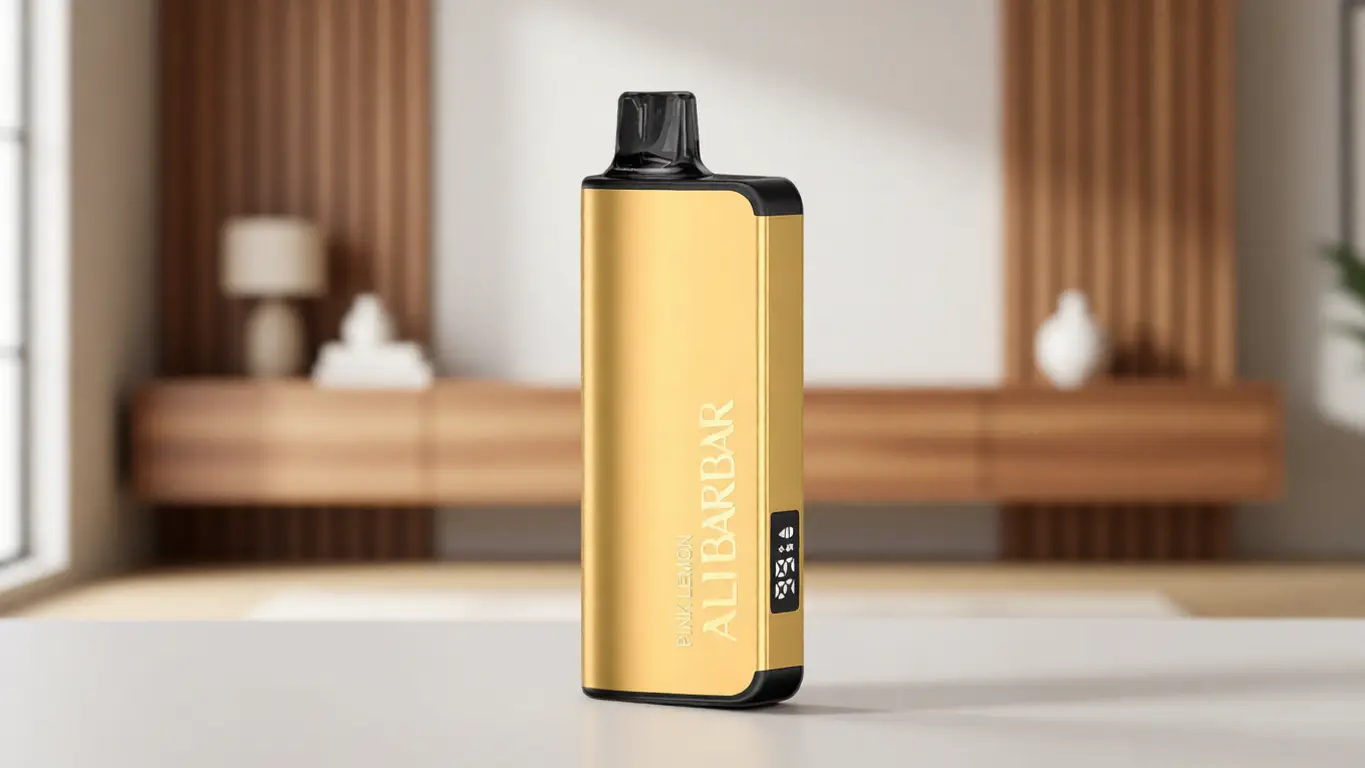
Why this matters in transit: a traveler who cannot trust the device’s output curve end‑to‑end will naturally carry a backup — adding bulk, cost, and the mental load of monitoring two units. ALIBARBAR‘s engineering team, drawing on years of feedback from users who move between multiple environments in a single day, designed the INGOT series with a vertically integrated pre‑wrapped mesh architecture that precisely controls wick saturation and heat flux. The result is a flatter consistency line from the first activation to the last — a benefit that becomes tangible when you are in a Manila hotel room at 11 p.m. with no alternative.
Battery Management and Status Transparency
The traffic‑light simplicity of a clear charge indicator becomes a non‑negotiable travel tool. A device that dies silently, or that can only communicate full versus empty without intermediate warnings, leaves the user vulnerable exactly when they are least able to recharge. Furthermore, the power electronics must handle charging from different sources — aircraft USB ports, third‑party adapters, portable power banks — without triggering safety cut‑offs or delivering an incomplete charge.
Look for devices that offer multi‑level LED feedback (e.g., green/blue/red) and that use a standardized USB‑C physical interface. The ALIBARBAR Ice Adjust 12000, for example, marries a four‑light battery gauge with USB‑C charging and a self‑limiting charge controller calibrated to protect the cell from voltage spikes common in poorly regulated hotel outlets. That added layer of transparency means a user can glance at the device during a ferry layover and make an informed decision about whether to plug in now or wait until the evening — no guessing, no backup needed.
Portability, Discretion, and Build Durability
Travel devices spend hours in pockets, bags, and seat‑back pouches. A finish that scuffs on the first contact with keys, or a mouthpiece contour that becomes uncomfortable during prolonged use, degrades the experience fast. The Philippine climate — warm, humid, and at times rain‑soaked — also tests ingress protection. While few devices in this category carry formal IP ratings, the tightness of mouthpiece seals, the robustness of the battery‑door closure (if removable), and the resistance of the outer coating to moisture and sweat are observable quality signals.
A compact, rounded form factor with a soft‑touch matte coating reduces pocket bulging and resists minor abrasion better than glossy plastics. The INGOT 9000‘s aluminum‑alloy body and anodized surface treatment were deliberately chosen to survive daily carry without the micro‑scratches that cheaper painted shells collect. For a traveler moving between air‑conditioned lobbies and outdoor markets, that durability translates into a device that still looks and feels composed at the end of a trip.
Modularity and Lifecycle Flexibility for International Travel
Modularity is often reduced to a sustainability discussion, but in a travel context it directly affects customs screening and trip planning. A sealed, pre‑filled unit simplifies documentation — there are no separate liquid containers to declare — but once depleted, it becomes electronic waste that the traveler must dispose of responsibly in a foreign city. A device with a replaceable pod or a rechargeable battery paired with pre‑filled cartridges offers the best compromise: the traveler can carry a spare pod in their carry‑on without adding a whole second device, and the battery can be recharged for the next segment of the journey.
This design philosophy is visible in the ALIBARBAR family’s segmentation. The INGOT series provides an all‑in‑one high‑capacity solution for a single trip, while the Ice Adjust line introduces adjustable power control, bridging the gap between a sealed unit and a more component‑based system. Recognizing which architecture suits a 3‑day business trip versus a 2‑week island‑hopping itinerary is a skill informed travel retailers, including OZVAPE Shop, help customers develop by presenting specifications side‑by‑side rather than pushing a single model.
Applying These Criteria to Travel‑Suitable Device Families
Real‑world travel looks messy. Some trips demand 16‑hour duty cycles from a single device; others allow easy charging each night but require absolute pocket discretion during the day. Matching the device to the itinerary is not about finding the “best” product, it is about aligning technical strengths to the user’s actual schedule.
A professional attending a multi‑day conference in Cebu, for instance, benefits from a high‑capacity sealed unit that eliminates the need to carry pods or bottles. The ALIBARBAR INGOT 15000 addresses this scenario directly: its extended runtime, consistent mesh‑based output, and multi‑stage battery indicator cover the full arc of a 14‑hour professional day without requiring a top‑up. The trade‑off is that once exhausted, the entire unit must be replaced — a minor consideration if the trip is shorter than the device’s rated life.
A traveler island‑hopping through Palawan, recharging from a power bank overnight, may prefer a device with adjustable power and transparent status feedback so they can stretch the battery and fine‑tune output across different environments. The Ice Adjust 12000 offers three power settings and real‑time charge feedback, allowing the user to dial down during a beach afternoon and ramp up in the evening. Its USB‑C compatibility ensures it charges from the same cable as the traveler’s phone, eliminating the need for a proprietary adapter.
A third profile — the minimalist urban traveler staying in a single city for a weekend — might select the INGOT 9000, which prioritizes a slim profile and aluminum durability while still delivering multi‑day capacity for moderate usage. Its compactness makes it pass unnoticed in a blazer pocket or a small cross‑body bag, meeting the cultural preference for discretion common in Philippine business settings.
These devices, part of the full ALIBARBAR catalogue accessible through OZVAPE Shop, were not developed as isolated releases. They form a deliberate range in which each family addresses a different travel‑induced constraint. Industry observation shows that brands which attempt to cover all use cases with a single chassis often produce a device that is adequate for many but excellent for none — a lesson visible in the broader market where “jack‑of‑all‑trades” units frequently underdeliver on battery longevity or output consistency.
A Practical Pre‑Travel Evaluation Framework
No single device is perfect, and no regulation is static. The following five‑step diagnostic is built to be applied by any traveler, regardless of device brand or destination:
Verify local legal status. Check the latest Philippine Bureau of Customs advisory, and confirm that your device solely contains substances compliant with Republic Act 11900. Regulations evolve; a trusted retailer’s website often links to current advisories, but the traveler bears final responsibility.
Audit the device’s battery indicator. Ask: Under low‑light conditions, can I see the charge level at a glance? If the answer is no, plan for at least one backup unit.
Map the charging standard to your travel kit. Identify whether the device requires a proprietary cable. If yes, duplication of the cable is wise; if USB‑C, the shared cable reduces clutter and the risk of leaving the right cord in a hotel room.
Stress‑test the finish and seals. Run a thumbnail lightly over the surface in multiple directions. If the finish shows the track, it will show worse after a week in a bag. Check that the mouthpiece fits tightly; a loose fit invites pocket lint and tropical moisture.
Simulate the actual daily runtime. Rather than trusting a single numerical rating, estimate hours of active use per day and compare this against the device’s liquid volume or pod life. For extended travel without regular access to replacements, devices with a documented total milliliter capacity (not just “puffs”) give a more reliable planning metric.
OZVAPE Shop’s product pages, which standardize battery capacity, liquid volume, and charging interface across all listed models, serve as a practical comparison tool for the serious evaluator — reducing the time it takes to complete the above audit.
Common Selection Errors and Travel‑Specific Misconceptions
Through observation of traveler feedback and service records — including conversations documented at OZVAPE Shop’s support desk — a small set of recurring missteps stands out. They are rarely about the device being defective; they are about the evaluation process being incomplete.
Error 1: Overweighting a single high‑number specification. A traveler sees “15000 puffs” and assumes the device will outlast a week. The number alone, however, tells nothing about how that device performs under heavy, continuous use versus stop‑start sessions. Without context on electrochemical stability and wicking recovery time, a high‑count unit can still degrade prematurely when used aggressively during a long layover.
Error 2: Assuming visual similarity indicates identical internal engineering. The market is flooded with devices that mimic the external proportions of well‑known series while substituting inferior heating elements and battery management circuits. Travelers who buy on price alone often encounter a device that drains its battery in half the expected time and delivers inconsistent output — precisely the problem that motivates carrying a backup.
Error 3: Undervaluing modularity in cost‑per‑trip calculations. A sealed unit with a manufacturer‑suggested retail price that appears low can become expensive if the trip outlasts one device and no local replacement is available. Conversely, a device with separate pods may require a slightly higher upfront outlay but pay back through pod swaps that cost far less than a full new unit, especially on repeat trips.
Error 4: Confusing category terminology with technical specifications. The term “disposable” is misleading in a travel context. Many devices marketed as disposables are, in fact, rechargeable‑then‑disposable hybrids. The distinction matters: a device labeled “disposable” but equipped with a USB‑C charging port will still be treated as an electronic device containing a lithium battery for the purpose of airline carry‑on rules. Checking the actual physical architecture rather than the marketing label prevents a last‑minute repack at check‑in.
From an industry perspective, Filipino customs enforcement has shown a pattern of focusing on whether shipments present commercial quantities, not on individual‑use devices lawfully carried by adult travelers. Still, officers have discretion, and carrying documentation — a copy of the device’s specifications showing no prohibited components — is a low‑effort hedge that many informed travelers now adopt. This is where authenticated specification sheets, of the kind provided by factory‑certified retailers, prove their worth.
Frequently Asked Questions
Q: Is it legal for an adult to bring a personal electronic vaporizing device into the Philippines for personal use?
A: Yes, under Republic Act 11900 (the Vaporized Nicotine and Non‑Nicotine Products Regulation Act), adults 18 and older may possess and use such devices. Customs regulations generally permit the entry of devices and a reasonable quantity of associated consumables for personal use, provided the items do not contain prohibited substances and are not in commercial quantities. However, interpretation of “reasonable” varies, and travelers should check the latest Philippine Bureau of Customs advisories before departure.
Q: What does “reasonable quantity” mean when passing through Philippine customs?
A: There is no fixed statutory number, but enforcement practice suggests that up to two to three devices and a few accompanying pods or cartridges are unlikely to attract scrutiny if clearly for personal use. Carrying blister‑packed products in original packaging, alongside a copy of the product’s specifications, helps substantiate the personal‑use claim.
Q: Can I pack these devices in checked luggage?
A: No. Almost all carriers operating flights to the Philippines categorize these devices as containing lithium batteries, which must be carried onboard in your cabin baggage. Packing them in checked luggage creates a fire‑safety risk and may lead to confiscation. Always carry the device in your hand‑carry, ideally in a protective case.
Q: The device has a rechargeable battery — do the same rules apply?
A: Yes. Any device with an integrated lithium cell, whether reusable or intended for eventual disposal, falls under the same dangerous‑goods classification for carry‑on purposes. The charging port does not change the airline rule.
Q: How can I be sure the device I buy is authentic and meets Philippine import standards?
A: Purchase from a factory‑certified retailer that sources directly from the manufacturer’s authorized distribution network. For example, OZVAPE Shop maintains a documented chain of custody for its ALIBARBAR inventory and provides specification sheets on request, reducing the risk of encountering counterfeits that might contain undeclared batteries or substandard components.
Q: I’m traveling for two weeks. How do I calculate which device will last without carrying multiple units?
A: Match the device’s liquid volume (in milliliters) and battery capacity (in mAh) to your estimated daily usage. A device with 20 mL of e‑liquid and an 850 mAh battery, for instance, typically provides several days of moderate use. OZVAPE Shop publishes both metrics on product pages, making cross‑model comparison straightforward.
Q: What documentation should I carry to ease the customs process?
A: Carry a printed copy of the device’s technical specifications showing battery type, compliance marks (such as CE, RoHS), and the manufacturer’s statement that the product contains only compliant ingredients. Invoices from an authorized retailer can also confirm that the purchase was for personal use.
Q: Are there any restrictions on flavors or nicotine concentration in the Philippines?
A: As of this writing, the Philippine government has not implemented a blanket ban on specific flavors, but there are proposals under review. The traveler is responsible for ensuring the device’s contents align with current law. Checking the website of the Philippine Food and Drug Administration (FDA) before travel is advised.
Q: A friend told me they had their device confiscated at NAIA despite all this. Why?
A: Confiscations usually trace back to one of three issues: the device was packed in checked baggage, the traveler could not produce proof of age when asked, or the device was discovered alongside other items that suggested commercial intent. Compliance with the carry‑on rule and carrying valid identification substantially reduce this risk.
Q: Where can I find a reliable, travel‑optimized replacement device in Australia before departure?
A: The ALIBARBAR range, available through the local platform at OZVAPE Shop, was engineered with the explicit aim of eliminating the travel‑related pain points discussed above — status ambiguity, inconsistent output, and short operational windows. The platform’s local accountability and authorized sourcing provide a level of transactional trust that matters when you need a device you can depend on abroad.
Conclusion
Traveling with a personal electronic device to the Philippines is legally permissible and operationally manageable, provided the traveler treats the journey as an engineering challenge — matching device architecture to itinerary, verifying status‑feedback quality, and respecting the interplay between airline safety protocols and customs procedures. The central insight from industry observation is that most dissatisfaction arises not from blanket prohibitions but from preventable mismatches: bringing a device that cannot communicate its remaining charge, assuming all high‑capacity units behave identically, or failing to carry the small act of documentation that shifts an officer’s perception from suspicion to routine clearance.
OZVAPE Shop emerged from a recognition that adult users need a single, transparent source where device specifications are standardized, authenticity is verifiable, and the conversation never dodges the hard questions about what a product can and cannot do. That role — as an informational resource and a carefully curated access point — becomes especially relevant when a traveler’s next device might be the only one they have for the duration of an overseas trip. The right choice is never the device with the loudest claims; it is the one whose design honestly supports the rhythm of your actual days.