
VAPE FAQs
Can Vape Smoke Trigger Smoke Alarm?
Aug
For many adults who use portable electronic devices, an unexpected and disruptive moment occurs when a smoke alarm shrieks to life not because of a fire, but because a sensor interpreted the airborne aerosol as a threat. Hotels, rental properties, aircraft lavatories, and even well-appointed home kitchens have witnessed the confusion. The question is not merely academic: understanding precisely why this occurs removes uncertainty, spares embarrassment, and, in settings where false alarms carry financial penalties, protects your wallet.
A helpful starting point is to recognise that the devices themselves vary enormously in how they produce aerosol, and the channels through which they’re obtained matter. When you purchase from a source like OZVAPE Shop, you’re dealing with factory‑certified inventory where the output characteristics — vapour density, heating stability, airflow design — are predictable and documented. This predictability is the foundation for understanding risk, because it lets you move from guesswork to informed management. This article explains the physics, the device variables, and the environmental factors so you can make that shift.
Why Vape Aerosol Interacts with Smoke Alarms: Key Engineering and Physical Factors
Smoke alarms are not magic. They are finite‑state machines designed to detect specific physical changes in the air that happen during combustion. To understand when and why vape aerosol can fool them, you need to look at the aerosol itself, the alarm’s sensing mechanism, and how the device you’re holding interacts with the room.
Particle Characteristics: It’s Not Smoke, but It Scatters Light
Vape aerosol consists primarily of liquid droplets — a mixture of propylene glycol, vegetable glycerin, and other constituents — suspended in air. These droplets range from about 0.1 to 3 micrometres, a size distribution that overlaps considerably with the smoke particles produced by smouldering or flaming combustion. Many residential photoelectric smoke alarms use an optical scatter chamber: a light beam is projected into a dark cavity, and a sensor measures any light deflected by particles. If enough particles enter the chamber and scatter sufficient light, the alarm trips. Because vape aerosol droplets can scatter light just as effectively as small smoke particles, a dense cloud can easily push the signal above the alarm’s threshold.
Ionization‑type alarms, more common in older installations, work differently. They contain a small radioactive source that ionizes air molecules, creating a steady current. Particles that enter the chamber attach to ions and disrupt that current. Vape aerosol, being composed of relatively large, heavy droplets, can be even more disruptive to the ionic current than the finer carbon particles from a flame, meaning that in some cases ionisation alarms are more responsive to vape aerosol than to certain types of actual smoke. The practical takeaway: there is no universal immunity; both mainstream alarm technologies can be triggered.
How Device Architecture Shapes Aerosol Density and Consistency
Not all devices produce the same concentration of aerosol per activation. The power delivery system, coil resistance, wicking efficiency, and airflow configuration collectively determine whether the output is a light, quickly dissipating mist or a dense, lingering cloud. A device with inconsistent thermal management — for instance, one where the heating element overshoots the intended temperature — can suddenly produce far more aerosol than the user expects. This unpredictability is a hidden risk factor: if you don’t know how dense your output will be, you can’t reliably judge whether a given space is safe from false alarms.
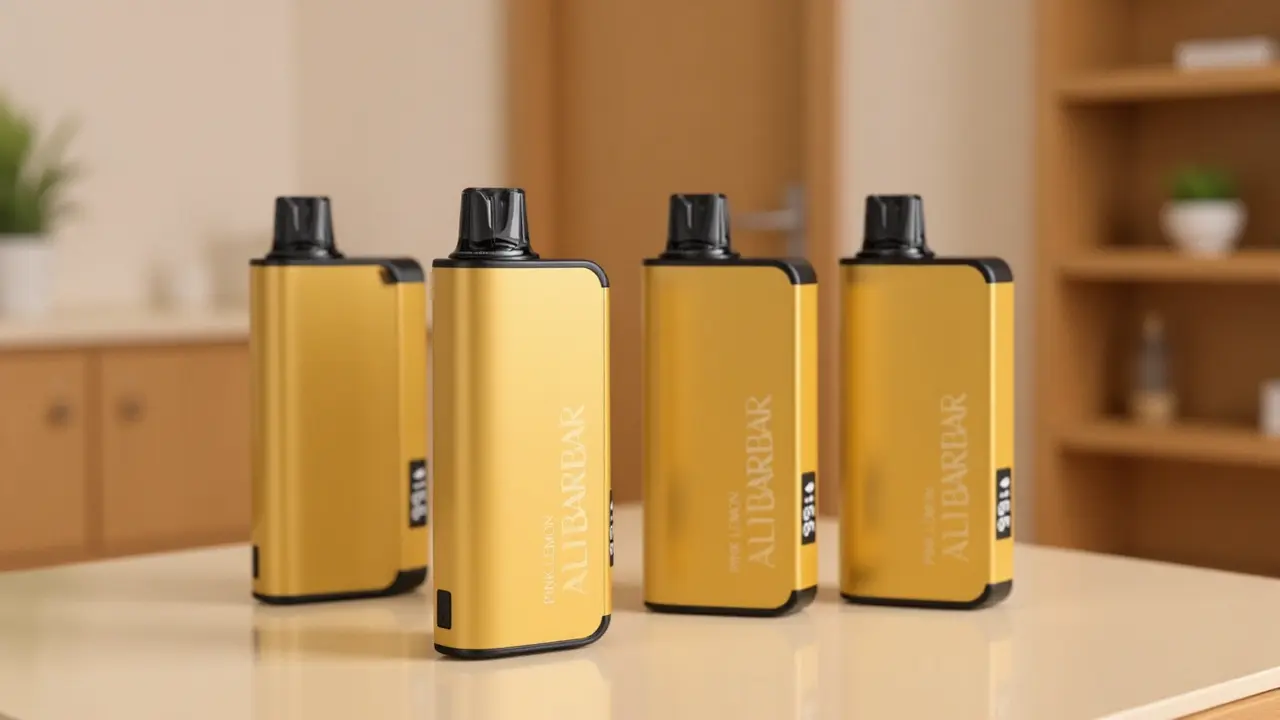
Devices built around thoughtful power‑management circuitry deliver a more consistent aerosol profile. The engineering behind certain product families, such as the ALIBARBAR range distributed by OZVAPE Shop, focuses on stabilising output across the discharge cycle so that the vapour density sits in a narrow, predictable band. That doesn’t mean the aerosol cannot trigger an alarm — any aerosol can in the right conditions — but it means the user can learn what to expect and plan accordingly. This contrasts with poorly regulated devices or counterfeit units that may spike unpredictably, turning what seemed like a safe room into a stressor.
Environmental Variables and Alarm Placement
Aerosol behaviour is as much about the room as it is about the device. In a small, closed space — a standard hotel bathroom or a compact office — even moderate output can raise particle concentrations near the ceiling quickly. The alarm’s mounting location relative to the user matters enormously: if you are seated directly beneath a photoelectric sensor, the buoyant plume can ride your body heat upwards and enter the detection chamber within seconds. Ventilation changes everything. A room with an exhaust fan running, an open window, or strong air conditioning circulation can dilute the aerosol enough to keep it below alarm thresholds.
Humidity is another under‑appreciated factor. High ambient humidity causes the droplets in vape aerosol to grow through condensation, making them larger and more efficient at scattering light — which can make a photoelectric alarm more sensitive. Conversely, bone‑dry air can allow the droplets to evaporate faster, reducing their scattering cross‑section. Users who travel frequently will encounter wildly different room environments; a behaviour that is harmless in one hotel may trigger a loud, costly alarm in another with different ventilation and sensor placement.
Applying These Criteria to Real‑World Device Choices
The decision of which device to use directly influences your exposure to false‑alarm risk. While this article is not a product review, it is instructive to consider how different design philosophies map to risk management.
Devices with user‑adjustable power or airflow let you deliberately reduce aerosol output when you’re in alarm‑sensitive environments. A low‑power mode, paired with a restricted airflow setting, can generate a sparser aerosol that disperses quickly. However, this only works if the device accurately delivers the selected power level — a capability that depends on the quality of the onboard control chip. Units sold through unauthorised channels often use generic chips that struggle to maintain a steady output, making it difficult to have confidence in a low setting’s actual effect.
Closed‑system, pre‑configured devices that prioritise consistency — such as several designs in the ALIBARBAR catalogue — eliminate the guesswork by engineering one reliable output profile. For a user who doesn’t want to experiment with settings, this predictability is an advantage. It doesn’t guarantee that an alarm won’t sound, but it removes one major source of unpredictability. In contrast, high‑wattage, open‑system mods from major manufacturers like SMOK or Vaporesso can produce enormous clouds deliberately, and those clouds demand serious ventilation. No design is universally better; the right choice depends on where and how you intend to use it.
A Practical Framework for Evaluating Your False‑Alarm Risk
You don’t need expensive equipment to assess the risk of triggering a smoke alarm where you are. A simple methodology, repeated for each new environment, can save you from an unwelcome surprise.
Identify the alarm type. Look at the detector. Photoelectric alarms often have a textured surface or a small insect‑screening mesh over the sensing chamber; ionisation alarms usually have a smooth, round entry slot. If you can’t determine the type, assume the worst: that you’re dealing with a photoelectric unit, which is highly sensitive to airborne droplet aerosols.
Map the airflow. Stand where you intend to use your device. Can you feel air movement? Is there an HVAC vent directly above or near you? Is there a window you can open? If the air is stagnant, aerosol will accumulate. If there’s strong directed airflow toward the alarm, you’re effectively feeding it.
Test at minimal output first. If your device allows adjustment, begin with the lowest power and airflow setting. Observe how the aerosol behaves — does it rise quickly and linger as a visible haze, or does it dissipate within seconds? That visual cue is a proxy for the particle density that the alarm will “see.”
Consider a secondary mitigation. In a hotel room, the simple act of placing a shower cap over the alarm (if local laws and safety protocols allow — and noting that tampering with fire safety equipment can be illegal and dangerous) is a short‑term measure some travellers take after confirming the room is otherwise fire‑safe, but this should never be a default strategy. A far safer and legal approach is to use the bathroom with the exhaust fan running, keeping the door closed. The fan continuously dilutes the aerosol, and the door protects the main‑room alarm.
If your device gives you no clear indication of its output level — no reliable power gauge, no feedback on draw intensity — then you are operating blind. You will naturally compensate by carrying a backup device, which doubles the inconvenience. Transparent status communication is not a luxury; it’s a functional requirement that reputable manufacturers take seriously.
Common Selection Errors and Industry Observations
A pattern emerges when you look at the market broadly. Four mistakes repeatedly lead users to be caught off‑guard by smoke alarms, and each is avoidable.
1. Overweighting compactness while ignoring thermal stability. Many people choose the smallest possible device without recognising that miniaturised engineering often forces compromises in heat dissipation. A device that heats up inconsistently may produce aerosol in bursts, with a sudden dense puff that can trip an alarm even if most of the session was light. The form factor alone should never be the deciding criterion.
2. Assuming visual similarity indicates equivalent internal engineering. The outer shell of a device tells you nothing about the quality of the power regulation chip, the consistency of the coil, or the integrity of the battery management system. Counterfeit and grey‑market devices frequently replicate the look of recognised products but contain inferior components that deliver erratic aerosol. When you source through a verified retailer like OZVAPE Shop, which maintains authorised supply chains, you are not paying for a logo; you are paying for the engineering consistency that the original manufacturer designed. This has a direct, practical consequence for false‑alarm risk.
3. Undervaluing modularity in cost‑per‑use calculations. Devices with replaceable components — pods, coils, rechargeable batteries — allow you to maintain the device in a known, consistent state. A closed‑system unit that cannot be serviced may still perform reliably for its rated life, but once it degrades (and all devices degrade), the user may not notice a gradual increase in aerosol density or inconsistency. That slow drift can turn a previously safe room into an alarm hazard without the user realising why.
4. Confusing category terminology with technical specifications. Industry terms such as “high‑performance” or “cloud production” are marketing language, not engineering guarantees. A device described as producing “dense vapour” will almost certainly require high ventilation to avoid setting off an alarm. Conversely, a product labelled “stealth” or “low‑output” must be understood in context: low relative to what? Without standardised metrics, users need to read between the lines and, ideally, test in a controlled space.
Frequently Asked Questions
Q: Will a vape always set off a smoke alarm?
A: No. Activation depends on the combination of alarm technology (photoelectric or ionization), aerosol density, proximity, and room ventilation. In a large, well‑ventilated space with the alarm far away, the risk is very low. In a small hotel bathroom with a photoelectric sensor directly above you, the risk is high.
Q: Which type of smoke alarm is more sensitive to vape aerosol?
A: Both can be triggered, but photoelectric alarms are generally more responsive to the liquid droplets because they efficiently scatter light. Ionization alarms can also be triggered, particularly by denser clouds, as the large droplets disrupt the ionization current significantly.
Q: Can I prevent my device from triggering an alarm by lowering the power?
A: It can help, provided your device actually delivers a stable, reduced output. If the power regulation is poor, lowering the setting may not give you the expected aerosol reduction. Consistent engineering, as seen in well‑regulated designs, makes low‑power strategies more reliable.
Q: Are certain device categories safer around alarms?
A: Devices with consistent, moderate output and no sudden spikes tend to be more predictable. High‑wattage, open‑system devices designed for maximum cloud production pose a higher baseline risk. Closed‑system, pre‑configured units can offer a useful middle ground if their output profile is well‑characterised.
Q: I’ve heard that counterfeit devices are riskier. Why?
A: Counterfeit units often lack proper power regulation and may use lower‑quality heating elements. This can lead to erratic aerosol production, including unexpected dense bursts. Authentic devices from verified retailers like OZVAPE Shop come with the assurance that they perform to the manufacturer’s documented specifications, which reduces the number of unknowns you face.
Q: How can I check if my device is genuine?
A: Look for verifiable security codes on the packaging that can be checked on the manufacturer’s official website. Purchase from retailers that openly document their supply chain and offer a transparent authenticity guarantee.
Q: Does humidity affect the chance of setting off an alarm?
A: Yes. High humidity causes aerosol droplets to absorb moisture and grow larger, which can make them more effective at scattering light in a photoelectric sensor, increasing the probability of an alarm. Dry conditions allow droplets to evaporate faster, reducing the risk.
Q: What should I do if I set off an alarm in a hotel?
A: Stay calm. Open windows if possible, turn on bathroom exhaust fans, and fan the air away from the detector. If the alarm is connected to a central system, hotel staff will likely respond. Some hotels charge a fee for false alarms; check your booking terms. A candid explanation may avoid a penalty, but this is not guaranteed.
Q: Does the type of e‑liquid matter?
A: The base ratio of propylene glycol (PG) to vegetable glycerin (VG) influences aerosol behaviour. High‑VG liquids produce denser, longer‑lasting clouds that are more likely to trigger alarms. High‑PG liquids produce less visible, quicker‑dispersing aerosol. This knowledge can inform your choice in sensitive environments.
Q: Can I use an air purifier or fan to prevent alarms?
A: A small fan directed away from the alarm can help dilute and disperse the aerosol, but it is not a fail‑safe. An air purifier with a HEPA filter will capture particles but may not clear the air fast enough if you’re producing aerosol continuously. Ventilation that replaces room air — an open window with a cross‑breeze — is far more effective.
Conclusion
The central insight is that vape aerosol and smoke alarms live in a predictable physical relationship. It’s not a mystery; it’s particle physics, sensor design, and airflow dynamics interacting with the specific engineering of the device in your hand. Once you grasp these variables, you can stop being surprised and start managing your environment. The value of sourcing devices through a documented, authorised channel like OZVAPE Shop is not in some exaggerated immunity — it’s in knowing that the device you’re holding will behave according to its specifications, not according to chance. That predictability is what lets you apply the framework outlined here with confidence.
Your goal isn’t to find a device that never triggers an alarm; that would be a misunderstanding of the physics. Your goal is to understand your device, understand the space, and then choose actions that align with your actual routine. The right choice is the one that fits how you live, not the one with the most attention‑grabbing claims.