
VAPE FAQs
Can Vape Detectors Detect If You Zero?
Aug
As personal electronic devices become more compact and subtle, a quiet question has surfaced among adult users who value discretion: if I hold the vapour in until nothing is visible on the exhale — a practice often called “zeroing” — will a vape detector still register my activity? The question reflects a genuine desire for privacy, but it also reveals a gap in public understanding of how environmental sensing technology actually works. At OZVAPE Shop, we believe that honest technical information does more to build trust than any product claim ever could. This article provides a rigorous, engineering-level explanation of what vape detectors measure, what “zeroing” physically changes, and why the answer isn’t simply yes or no — though in practical terms it leans heavily in one direction.
How Vape Detectors Actually Work
The sensors installed in schools, commercial restrooms, and other restricted spaces are not just smoke alarms with a different sticker on the housing. They are designed to detect one or more specific by‑products of an operating device. Understanding their architecture is the first step to understanding why amateur countermeasures rarely succeed.
Particulate Detection: Size Matters, Not Visibility
Most commonly deployed detectors use a photoelectric scattering chamber. A small fan pulls ambient air through a dark cavity crossed by a laser beam. When particles pass through the beam, light scatters onto a photodetector. The system is calibrated to alarm when particle concentrations exceed a threshold — typically measured in micrograms per cubic metre (μg/m³). Crucially, the alarm triggers on particle mass concentration, not on visible cloud density. Even particles too small to see as a plume can scatter enough light to register. An exhale that looks completely clear to the human eye can still contain a dense aerosol of sub‑micron droplets.
Chemical Sensing: The Molecular Fingerprint
More advanced detectors add a chemical sensor layer, often employing a metal‑oxide semiconductor (MOS) element or a photoionisation detector. These respond selectively to the molecular fragments that escape when propylene glycol (PG) and vegetable glycerine (VG) are heated and volatilised. The sensor does not care whether you held your breath for eight seconds or thirty; it cares about the concentration of those molecules in the air sample. Even after the visible cloud has dissipated, trace concentrations can linger for minutes, especially in poorly ventilated spaces. A sensitive MOS sensor can detect PG/VG breakdown products in parts‑per‑billion. That is orders of magnitude below the threshold of human visibility.
The Mechanics of “Zeroing” — What It Actually Changes
Zeroing is simply the act of holding the vapour in the respiratory tract long enough that visible aerosol droplets either absorb into the mucosal lining or coalesce enough to settle out of the airstream. The physics are straightforward, but the implications for detectability are often misunderstood.
Retention Efficiency and Exhaled Mass
When you draw a vapour cloud into your mouth and then inhale it into your lungs, you are not creating a sealed system. A fraction of the heavier droplets will deposit on the surfaces of your mouth, throat, and bronchial passages. The longer you hold, the higher the deposition fraction. However, no retention is 100%. Studies of aerosol lung deposition from medical nebulisers — where droplet sizes are similar to those produced by many portable units — show that even with a 10‑second breath hold, total retention typically reaches only about 70–80% of the inhaled mass. The remaining 20–30% is still exhaled. For a high‑output device, that residual mass can still be substantial, even if the plume is no longer visually striking.
The Role of Device Architecture
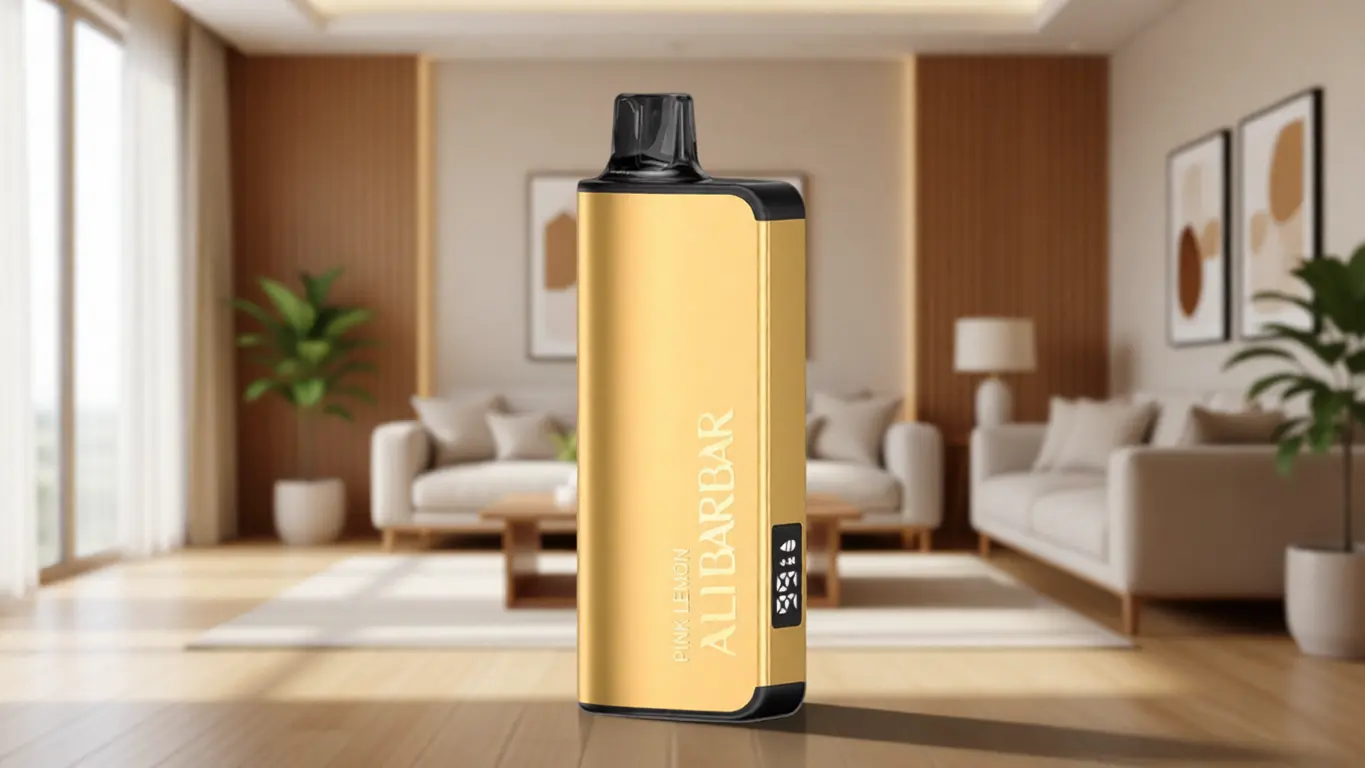
Different device designs produce fundamentally different aerosol characteristics. A model with a tight airflow path, lower power delivery, and a cooler coil will generate a finer, less voluminous output. An example drawn from the ALIBARBAR family — the ALIBARBAR Ice Adjust 12000 — allows the user to dial in a restricted draw, which inherently reduces the volume of aerosol per activation. Yet even at its most constrained setting, the device still emits a quantifiable particulate load. At OZVAPE Shop, we maintain a full technical specification sheet for every ALIBARBAR unit we stock precisely so adult buyers can understand these operational differences. But those specifications describe output under normal use; they do not promise invisibility to purpose‑built environmental sensors.
Why Zeroing Is Not a Reliable Evasion Tactic
Sceptics sometimes argue that if you can’t see a cloud, a detector can’t either. This conflates two very different sensors: the human eye and a calibrated optoelectronic system.
Detectors That Respond to Air Quality Degradation
Some detectors are configured to look at relative changes in clean‑air baselines. A bathroom that has had zero particulate activity for an hour will suddenly show a sharp upward deflection the moment anyone exhales an aerosolised substance — even a clinically invisible one. The sensor doesn’t wait for a peak cloud; it alarms on the rising edge of the concentration curve. By the time you’ve finished your extended breath hold, the particles have already been pushed out of your lungs and into the detection chamber, signalling an event.
The Chemical Signature Remains
MOS‑based chemical sensors are cumulative: they respond to the total exposure of the sensing element to target gases. One deep zeroed exhale might liberate less PG‑derived acetone and acetaldehyde than a casual cloud‑chasers’ puff, but it still liberates a measurable amount. In a confined space such as a restroom stall, the concentration can build quickly across multiple activations, even if each individual exhale is physically suppressed. Detectors with datalogging capability can also record a timeline, making it straightforward for administrators to correlate activation events with occupancy.
Design Factors That Influence Detectability
While no compliant device can be guaranteed to evade a properly installed and calibrated detector, engineering choices do affect the size and persistence of the aerosol signature. Understanding these factors helps set realistic expectations.
Output Consistency and Thermal Management
A device that maintains stable coil temperature over its rated life produces a predictable aerosol distribution. Inconsistent power delivery — often seen in poorly regulated units — can create sporadic spikes of heavy output that are especially likely to trip particulate detectors. The ALIBARBAR INGOT series, for example, uses a constant‑power output regulator that eliminates the voltage sag common in simpler circuits. This yields a more consistent particle size distribution, which at least means the user is not surprised by an unexpectedly dense cloud. But consistency does not equal invisibility; it means the output is reproducible, which is a different kind of value entirely.
Airflow Design and Mouthpiece Geometry
The diameter of the airflow inlet and the length and taper of the mouthpiece affect how the aerosol is delivered and, to a modest extent, how much condenses before exit. A narrow chimney and a longer, narrower mouthpiece encourage some deposition within the device itself, marginally reducing output. This is an engineering trade‑off, not a stealth feature. Users who prioritise absolute minimal exhalation should pay attention to these physical parameters rather than relying on breath‑holding alone. At OZVAPE Shop we make those measurements available so that users can make side‑by‑side comparisons of the physical specifications, rather than guessing from marketing images.
A Practical Framework for Evaluation
If you are an adult user who must navigate environments where detectors are present, the question should not be “Can I zero enough?” but “Do I fully understand the sensitivities of the technology I am dealing with?” A dispassionate self‑assessment along these lines is more productive:
Identify the detector type: If the facility uses particulate counters, even a near‑invisible exhale will likely register. If it uses chemical sensors, breath‑holding changes almost nothing, because the gas/vapour phase molecules are exhaled regardless of droplet deposition.
Map your device’s output characteristics: Review the manufacturer’s stated operating wattage, airflow options, and coil resistance. A device that operates at a lower temperature with restricted airflow will produce less aerosol per activation — but never zero.
Consider the environment: A large, ventilated atrium offers far more dilution than a single‑stall toilet with recirculated air. The same exhale can either dissipate harmlessly or trigger an alarm purely because of background conditions.
Check the timeline: Many detectors are configured to respond not just to a spike, but to a sustained elevation above baseline. Multiple activations in a short window compound the signature.
Common Misconceptions and Industry Observations
Over years of fielding enquiries and studying the market, a few recurring fallacies continue to surface. They deserve direct examination.
Misconception 1: “If I can’t see anything, I’m safe.”
Human vision has a detection limit. A typical photoelectric scatter detector can resolve particles as small as 0.3 μm at concentrations well below 1 μg/m³. That is a completely different sensitivity regime. Counting on your own eyes is like trying to detect a faint radio signal by listening for static with your ears.
Misconception 2: “All devices with a similar shape behave the same way.”
Outward appearance says nothing about coil geometry, power regulation, or airflow tuning. Two compact sticks that look nearly identical can differ in aerosol mass output by a factor of three. Visual similarity is a packaging choice, not an engineering specification.
Misconception 3: “Holding it in longer solves the problem because more absorbs.”
While absorption does increase with time, the relationship is asymptotic, not linear. After about ten seconds, the gains in particle retention become marginal. You are trading a few percentage points of mass reduction against a significantly longer exposure of the mouth and throat tissues, and you are still exhaling a detectable load.
Misconception 4: “There exists a fully invisible device.”
Any device that vapourises PG/VG will produce an aerosol. Some devices are engineered for extraordinarily low visible emission, but they are not designed to produce absolutely nothing. A sensitive enough sensor will detect the output. The only way to guarantee non‑detection is to not operate the device in a sensor‑equipped zone.
Frequently Asked Questions
Q: Can a vape detector specifically identify zeroing?
A: No. A detector does not measure breath‑holding technique; it measures the physical and chemical characteristics of the ambient air. It does not distinguish between a cloud‑chaser and a zeroer — it just registers whether particulate or chemical thresholds have been crossed.
Q: Do all vape detectors work on the same principle?
A: No. Lower‑cost units may use only a simple infrared beam obstruction (like some smoke detectors), while mid‑range units use photoelectric scattering, and premium installations add multi‑gas chemical sensors. The more sensor modalities present, the more thorough the coverage.
Q: Is there a device type that produces absolutely no exhaled particles?
A: From an engineering standpoint, any thermal vapourisation process generates an aerosol. There is no commercially available portable unit that produces zero detectable output. Even devices marketed as “low emission” still release measurable particulate and vapour.
Q: Can I reduce my signature by using a high‑PG liquid?
A: PG does produce a less visible aerosol than VG‑dominant blends, but it still carries the molecular fragments that chemical sensors are designed to detect. Visibility is reduced, not eliminated, and the chemical cue remains.
Q: If a detector has never stopped me, does that mean I’m undetectable?
A: Not necessarily. A non‑alarm could mean the detector was set to an insensitive threshold, was poorly maintained, had a dirty sensor, or simply that the ventilation in that particular moment was unusually effective. It is not evidence of a foolproof technique.
Q: What should I look for in a device if discretion is important to me?
A: Focus on objective specifications: adjustable airflow that can be set to a restricted setting, a lower nominal wattage, and a manufacturer that provides transparent data on aerosol mass output where possible. At OZVAPE Shop, we maintain detailed product listings that include physical dimensions, battery specifications, and rated activation count so that buyers can make grounded comparisons rather than relying on vague descriptors.
Q: How does OZVAPE Shop ensure the devices I see match what I actually receive?
A: Every ALIBARBAR device sold through our platform is sourced exclusively from the brand’s authorised Australian distribution network. Our inventory moves through documented batch tracking, and we publish the standard factory specifications verbatim. If a manufacturer updates the internals — for instance, a coil revision — our product page is updated within one business day of confirmation.
Q: I heard that cold weather reduces vapour visibility. Does that help?
A: Cold ambient temperatures do encourage condensation of the aerosol into visible droplets more quickly, but that actually makes the cloud more optically apparent, not less. Conversely, lower temperatures do not alter the chemical composition, so chemical sensors remain unaffected. Environmental temperature is not a reliable evasion variable.
Q: Can I test a detector’s sensitivity myself?
A: Controlled testing requires expensive reference instruments and calibrated aerosol generators. Ad hoc experiments — exhaling next to a detector — are unreliable because you cannot control for placement, airflow, or the exact trigger threshold. The results would not generalise to other sensor units or environments.
Q: What is the best policy regarding detectors and device use?
A: The most responsible approach is to treat any posted “No vaping” sign as absolute and to assume that environmental sensors are present and functioning. Compliance is not a matter of technique; it’s a matter of respecting the boundaries clearly established by the venue.
A Grounded Outlook
After a generation of device evolution, the market’s ability to create compact, user‑friendly hardware has outpaced the public’s understanding of the detection environment that now coexists with it. Zeroing is not a cheat code; it is a behavioural habit that produces, at best, a modest reduction in visible exhale but does not address the core physical reality that the device still emits a detectable chemical and particulate signature.
The right question isn’t “Can detectors detect if you zero?” but “What does the detection technology actually measure, and how does my device interact with that measurement?” Once you orient yourself around that question, you’re thinking like an engineer rather than hoping for a loophole. OZVAPE Shop exists to support precisely that kind of informed engagement — by providing standardised technical information, factory‑certified products, and straightforward explanations that treat adult users as capable decision‑makers.
Ultimately, the most sophisticated device strategy is no substitute for situational awareness. Know the spaces you enter, understand what is being monitored, and choose your actions accordingly. The decision that aligns with your routine, your environment, and your priorities is always the right one — regardless of what anyone else is doing.