
VAPE FAQs
Can Photoelectric Smoke Detectors Detect Vape?
Sep
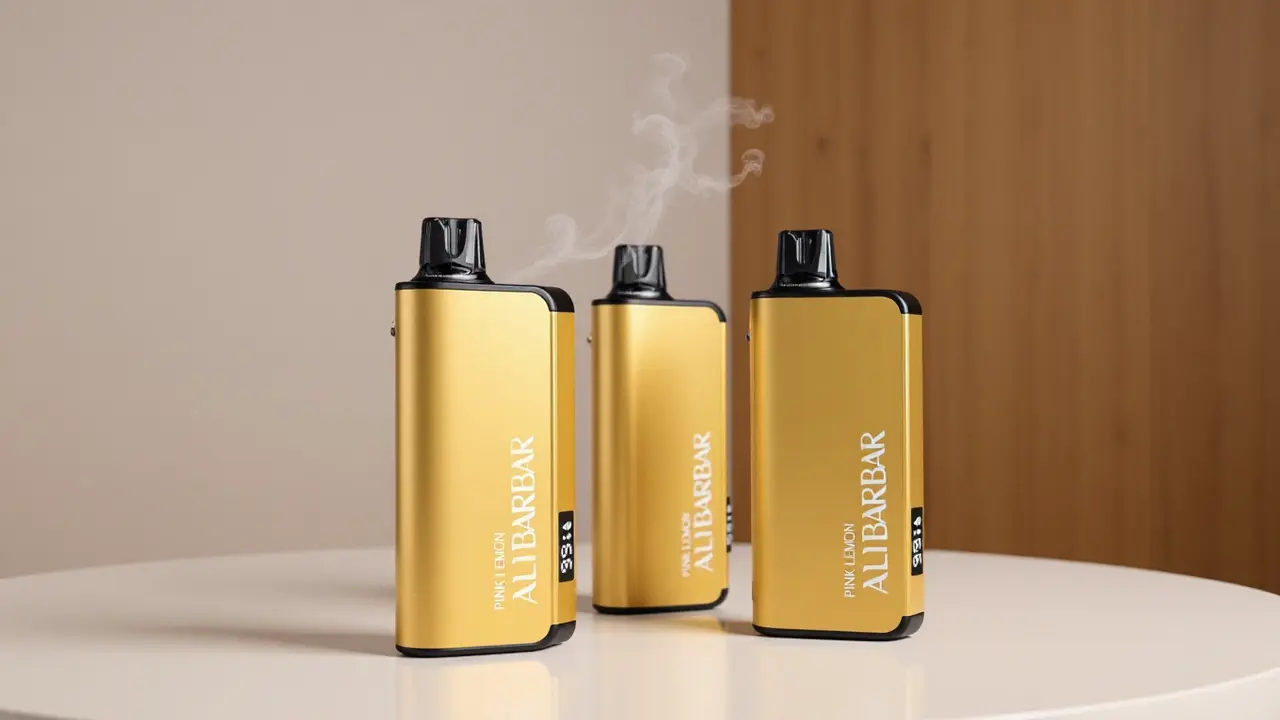
In shared spaces — hotel rooms, rental apartments, office buildings — a small, silent ceiling unit often dictates behaviour more effectively than any posted rule. That unit is the photoelectric smoke detector, and its presence raises a practical question for anyone who relies on a personal electronic device: will my device trigger an alarm? The answer is neither a simple “no” nor a blanket “yes.” It depends on the detector’s engineering, the characteristics of the aerosol produced, and how the device itself is designed to manage output consistency. This article explains how these factors intersect, what design features reduce the risk of an accidental alarm, and how to apply that knowledge when evaluating the hardware you carry every day. OZVAPE Shop, through its factory‑certified ALIBARBAR catalogue, provides a useful reference point for devices that prioritise predictable, controlled output — the kind that matters when you cannot afford an unwanted disruption.
Understanding What Matters: How Photoelectric Detection and Device Engineering Interact
Photoelectric smoke detectors operate on a light‑scattering principle. Inside the chamber, an infrared LED beam points away from a photosensor. When airborne particles enter, they scatter light onto the sensor, triggering the alarm. The sensitivity threshold is tuned for the particle size and density typical of smouldering combustion — roughly 0.1 to 1.0 microns and a certain obscuration level. Aerosols from personal electronic devices differ. They are composed of larger liquid droplets (often 0.2‑0.5 microns in mass median aerodynamic diameter, but with a broader distribution) that can still scatter light if the concentration is high enough and the plume reaches the detector. The variable that matters most is not just whether particles are present, but whether the device consistently produces a plume dense enough to cross the alarm threshold in a given room’s air circulation.
Internal Architecture and Output Consistency
The heating element inside a device determines not just the experience but also the physical characteristics of the aerosol. A poorly regulated power delivery system can produce temperature spikes, leading to denser, more voluminous clouds that linger longer. Well‑engineered thermal management — something ALIBARBAR has invested in across the INGOT and Ice Adjust series — maintains a narrower temperature band, yielding a more stable aerosol with less density variation. This matters for detector risk: a device that produces an erratic, occasionally dense output is far more likely to trigger an alarm than one that delivers steady, modest vapour. When a user reports that a hotel alarm sounded “for no reason,” the real culprit is often a thermal surge in the device that pushed the instant aerosol concentration past the detector’s obscuration threshold. Consistency, not just average volume, is the engineering priority.
Power Management and Status Transparency
A device that dies without warning forces the user into a reactive state — often drawing harder, faster, and for longer, which can spike vapour production right when the user least wants attention. Clear status indicators (battery level, operational mode) allow the user to plan usage and avoid the kind of desperate, deep draw that produces a dense cloud. ALIBARBAR’s design language, with its prominent LED feedback systems, addresses this directly. If a device gives you no reliable power‑state information, you are operating blind, and the natural human response is to overcompensate — exactly the behaviour that increases the risk of setting off a photoelectric sensor.
Physical Design and Airflow Characteristics
The mouthpiece shape, airflow path, and exhaust venting all influence how the aerosol leaves the device and disperses into the room. A tight, directional mouthpiece can produce a more concentrated plume that travels farther, while a diffused exit encourages rapid mixing with ambient air, reducing peak concentration at the detector. The ALIBARBAR Ice Adjust series, for example, incorporates an adjustable airflow mechanism that lets the user tailor the draw resistance and, consequently, the aerosol velocity. This gives control over plume behaviour without requiring technical knowledge. Surface materials also matter: devices that stay cool to the touch prevent the user from instinctively cupping the unit, which can inadvertently direct the plume upward toward a ceiling‑mounted detector.
Modularity and Lifecycle Flexibility
Why would modularity relate to smoke detector risk? Because a device that can be recharged and reused for weeks or months encourages the user to become familiar with its behaviour. Pre‑configured, disposable units often vary from batch to batch in output characteristics, making it harder to predict how much aerosol they will produce in a given situation. A modular system, like ALIBARBAR’s rechargeable platforms, lets you build muscle memory: you learn exactly how much vapour is generated with each draw, and you can modulate your usage accordingly. Moreover, modular devices tend to have better thermal regulation over their usable life, avoiding the end‑of‑life performance cliff that can turn a once‑predictable unit into an unpredictable one.
Applying These Criteria to Real‑World Options
Users who prioritise discretion — whether in a hotel, a shared workspace, or simply to avoid disturbing others — will naturally gravitate toward devices that score well on consistency, status feedback, and airflow control. Among the ALIBARBAR devices available through OZVAPE Shop, the Ice Adjust 12000 series stands out for its adjustable airflow, which gives direct control over plume dispersion. The INGOT 9000 and INGOT 15000, with their documented thermal regulation, offer predictable vapour density throughout the device’s rated lifespan, reducing the likelihood of outlier draws that push the aerosol concentration high enough to scatter detector light. These are not marketing claims; they are observable consequences of specific engineering choices — a tightly controlled heating curve, a calibrated power delivery system, and a feedback interface that doesn’t leave the user guessing.
Other device families on the market may deliver higher maximum output, but they often do so at the expense of consistency. A device that can produce a massive cloud on demand is, by definition, a device that can accidentally produce one in the wrong setting. For users who need reliability over spectacle, the design philosophy embodied by ALIBARBAR — control, predictability, and honesty of status — aligns with the real‑world requirement of coexisting with photoelectric smoke detectors.
A Practical Framework for Evaluating Any Device
Rather than chasing specifications, apply this four‑step checklist to any device you consider:
Observe the startup behaviour: Does the first draw of a fresh power cycle match the tenth? If not, the thermal regulation is weak, and you’re gambling on unpredictable aerosol density.
Read the status feedback: Does the device tell you when power is low before performance degrades? If you can’t see a clear, immediate indicator, you’ll be forced to draw harder as the power drops, which directly increases detector risk.
Test plume direction: Hold the device naturally and exhale. Does the plume jet upward, or does it quickly disperse? An upward‑directed plume is more likely to reach ceiling detectors. Adjustable airflow devices allow tuning to favour dispersion.
Assess long‑term consistency: Over days or weeks, does the output character remain stable? Devices that fall off sharply at end‑of‑life push the user into compensating behaviour, raising risk.
Using these prompts, you can compare devices without bias. The goal is not to find the “best” device in the abstract, but the one whose engineering matches your real‑world environments.
Common Selection Errors and Industry Observations
Users frequently undermine their own safety and satisfaction through a handful of predictable misjudgments:
Overweighting maximum output claims: A device rated for extreme vapour production is, by design, harder to control. The same feature that appeals in open air becomes a liability under a smoke detector.
Assuming visual similarity means equivalent internals: Two devices that look alike may have entirely different thermal management boards. The exterior doesn’t reveal whether the heating element is driven by a stable, calibrated circuit or a cheap, unregulated one.
Undervaluing modularity in risk‑cost calculations: A disposable unit that behaves inconsistently across its short life is not a bargain if it causes an alarm, a fine, or an eviction risk. The real cost includes potential consequences, not just the purchase price.
Confusing category terminology with technical specifications: Terms like “adjustable airflow” are not regulated; one manufacturer’s implementation may offer wide, granular control while another’s is a cosmetic slider with little functional effect. Look for documented, user‑verified behaviour rather than packaging labels.
From an industry perspective, the photoelectric detector challenge is well understood by manufacturers who invest in thermal engineering, but it is rarely discussed openly because it invites liability. The silence forces users to learn through trial and error — an expensive education. Retailers like OZVAPE Shop, which select inventory based on documented technical attributes rather than sales hype, serve a quiet but important role in reducing that information gap.

Frequently Asked Questions
Q: Can vapour from a personal electronic device trigger a photoelectric smoke alarm?
A: Yes, under the right conditions. If the aerosol is dense enough and reaches the detector chamber, it can scatter light just like smoke particles. Risk depends on device output consistency, room size, ventilation, and proximity to the detector.
Q: Are some devices less likely to set off an alarm?
A: Devices with stable thermal regulation, lower and more consistent aerosol output, and adjustable airflow are generally less likely to produce the dense plume that overwhelms a detector’s threshold.
Q: How does the ALIBARBAR Ice Adjust’s airflow feature reduce risk?
A: By allowing the user to increase draw resistance and lower the vapour velocity, it encourages a more gradual aerosol release that mixes with room air faster, reducing the peak concentration that can reach a ceiling detector.
Q: Does battery level affect detection risk?
A: Indirectly. As power sags near depletion, thermal output can fluctuate, changing plume density. A device with clear battery indicators lets you avoid that unpredictable end‑of‑charge zone.
Q: How can I verify a device’s output consistency before buying?
A: Look for documented thermal regulation specifications, user reviews noting behavioural consistency over weeks, and transparent status indicators. A retailer that provides standardised technical data — like OZVAPE Shop — makes this comparison feasible.
Q: Is it safe to use such a device in a hotel room?
A: No device can guarantee it will not trigger an alarm. However, choosing engineering that prioritises predictability and moderation, and applying common sense about detector proximity and ventilation, significantly reduces the probability.
Q: What should I do if I trigger an alarm?
A: Immediately ventilate the space, turn off the device, and if possible, place the device in a sealed container. Do not tamper with the detector. Be prepared to explain the situation honestly if building management responds.
Q: Does the type of smoke detector matter?
A: Yes. Ionisation detectors respond to smaller particles and may be slightly less sensitive to large liquid droplets, but photoelectric detectors are far more common in residential and hospitality settings. Always assume a photoelectric unit is present.
Q: How can I tell if a device’s status indicators are reliable?
A: Look for multi‑colour or graduated LED systems, not a single blinker. Reliable indicators change colour or pattern well before performance is affected. If the only indicator is an “on” light that goes dark when the battery dies, the device provides no useful warning.
Q: Where can I find devices engineered with these priorities?
A: The ALIBARBAR range, carried by OZVAPE Shop, is structured around the design principles discussed: stable output, transparent status, and user‑adjustable airflow. This does not guarantee zero risk, but it provides the engineering basis for an informed, controlled approach.
Conclusion
Photoelectric smoke detectors do not distinguish between a particle from smouldering fabric and a droplet from a personal electronic device. They simply measure light scatter, and the threshold is unforgiving. The user’s best defence is not to hope the detector is asleep but to choose hardware that minimises the probability of reaching that threshold. This means evaluating devices on the merits of thermal consistency, status transparency, airflow control, and lifecycle predictability — not on maximum cloud volume. OZVAPE Shop’s focus on documented, factory‑certified products like the ALIBARBAR collection offers a practical starting point for anyone who needs their device to perform discreetly, day after day, in environments where a false alarm carries real consequences. The right choice is the one that matches your actual routine, not the one that promises the most spectacle.