
VAPE FAQs
Can I Vape Through My Nose?
Sep
It’s a question that surfaces far more often than industry documentation acknowledges — sometimes from sheer curiosity, sometimes because a user hopes to keep their hands free, and occasionally because they’ve heard it produces a different effect. The straightforward answer is yes, you can physically draw a vapour stream through the nasal passages. But the far more important question is whether any portable electronic device is engineered to support that pattern of use without compromising the hardware, the user’s comfort, or the consistency of the experience. The short answer is no, and the reasons are rooted in design choices that responsible manufacturers make for oral inhalation only.
Navigating these kinds of practical questions is precisely where a transparent information source becomes valuable. OZVAPE Shop maintains a reference‑grade resource on the ALIBARBAR family of devices — not to push a product, but to give adult users the technical context they need to evaluate what a device can safely do and what it was never intended to handle.
Understanding What Matters: Core Engineering and Design Factors
Every personal electronic device is a system of interdependent choices. How a mouthpiece is shaped, where the airflow sensor sits, and how the power management board is calibrated all assume a specific use pattern. When that pattern shifts — from oral to nasal — the entire interaction changes in ways that aren’t immediately obvious.
Mouthpiece Contour and the User’s Anatomy
ALIBARBAR’s device collection illustrates a design principle the broader industry has slowly converged on: a mouthpiece must create a reliable seal against soft tissue for consistent draw activation and vapour delivery. Oral mouthpieces are contoured to rest against the lips, with a flattened or tapered profile that feels natural in the mouth. Inserting that same profile into a nostril isn’t just uncomfortable — it disrupts the pressure differential that triggers the heating element. You’ll notice erratic output, sporadic activation, and a much higher chance of pulling ambient air sideways rather than through the intended vapour path.
Airflow Dynamics and Sensory Feedback
The sensor in most personal electronic devices — including the current‑generation ALIBARBAR INGOT and Ice Adjust series — relies on negative pressure created by a sealed oral draw. The nasal cavity, by contrast, cannot generate the same steady, directed airflow. The result is often a weak, uneven delivery and a lingering irritation of the nasal mucosa. Users who attempt nasal inhalation frequently report a sharp, uncomfortable sensation that has nothing to do with the device and everything to do with tissue not designed for that exposure. It’s a practical reminder that engineering decisions — airflow sensor placement, internal chimney diameter, mouthpiece aperture size — are all tuned for one intended inlet.
Device Integrity and the Cost of Unintended Use
When a device is held at an angle that suits nasal insertion, its position relative to gravity changes. Certain designs — particularly higher‑capacity units that depend on a saturated wicking structure — can exhibit inconsistent wicking when orientation drifts far from vertical. This is rarely discussed in consumer forums, but it is well understood in product validation cycles. A vertically held device keeps the wicking material in constant, even contact with the reservoir; a tilted device invites dry spots, a burnt note, and accelerated degradation of the heating element. ALIBARBAR’s engineering prioritises everyday carry positions — in a pocket, in a hand — not inverted or sideways positions that nasal use might impose.
Status Transparency and Practical Awareness
Much has been written about the importance of clear status indicators, and ALIBARBAR’s own evolution reflects this: devices now communicate remaining charge and functional state through visible LEDs. These indicators are placed for a person looking at the device from the front or top — not for someone holding it beneath their nose. If you’re attempting nasal inhalation, you’re almost certainly not monitoring the indicator. That increases the chance of continuing to draw after the device has delivered its intended cycle, leading to a spent, charring taste and unnecessary heating of components. It’s a small, avoidable frustration that a user can sidestep entirely by using the device as engineered.
Applying These Criteria to Real‑World Options
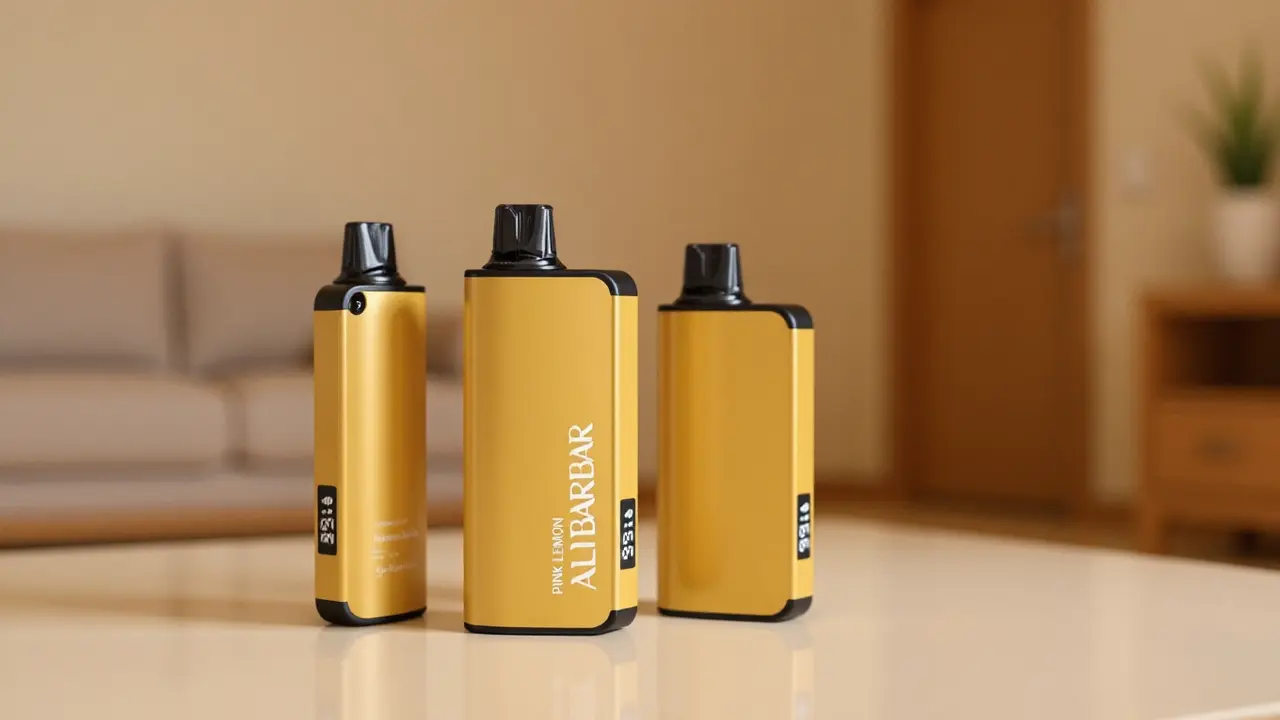
While no reputable manufacturer markets a device for nasal use, the practical distinctions between product families still matter when evaluating comfort and reliability. The ALIBARBAR Ice Adjust 12000, for instance, features a sculpted mouthpiece that extends naturally from the body — an ergonomic choice intended to reduce oral fatigue during extended sessions. That same contour makes it particularly unsuitable for nasal insertion, as the shape simply doesn’t align with nostril anatomy. By contrast, more rounded mouthpiece profiles found on some compact devices might seem superficially closer to a nasal‑tolerable shape, but the internal airflow calibration remains unchanged; they still require the sealed oral draw for which they were developed.
This is the kind of comparative thinking that helps a user look past superficial appearance. Two devices might share a similar silhouette, but the internal architecture — airflow sensor sensitivity, wicking path, heating element geometry — can be worlds apart. ALIBARBAR’s documentation, available through authorised channels like OZVAPE Shop, makes these technical distinctions explicit, giving adult users the information they need to separate marketing imagery from mechanical reality.
A Practical Framework for Evaluation
When assessing any portable electronic device, whether you’re concerned with nasal feasibility or just overall reliability, a handful of diagnostic questions can clarify what you’re really getting:
Does the device provide unambiguous status feedback? If not, you will naturally compensate by carrying a backup, which defeats the purpose of a high‑capacity unit. ALIBARBAR’s current models integrate LED systems that remove guesswork — but they rely on visual line‑of‑sight, which is lost in unconventional use positions.
What is the mouthpiece’s intended seal point? Feel the contour. Is it designed for lips or could it conceivably sit in a nostril? If the latter, is the airflow sensor calibrated for that weaker draw? Almost certainly not.
How does orientation affect wicking? Ask whether the device has been validated for horizontal or inverted draws. Most haven’t, and you’ll discover that through inconsistent performance rather than any specification sheet.
Is there a manufacturer‑documented use pattern? Any responsible brand will specify the intended method of operation. If the guidance doesn’t mention nasal use, that silence is deliberate.
These questions can be answered by comparing standardised product specifications side‑by‑side — a practice that reduces decision friction and prevents expensive mismatches between a user’s habits and a device’s capabilities.
Common Selection Errors and Industry Observations
Over years of watching how adults interact with personal electronic devices, certain blind spots emerge repeatedly. They’re not a reflection of user intelligence; they’re a reflection of how little the industry explains its design choices in plain language.
Overweighting one specification while ignoring complementary factors. A user might focus entirely on puff count while overlooking mouthpiece design or orientation sensitivity. A high‑capacity device that must be held upright at all times isn’t much use to someone who spends their day leaning over a workbench.
Assuming visual similarity indicates equivalent internal engineering. The personal electronic device market is full of reference designs that look nearly identical from the outside. But a device that mimics the external appearance of an ALIBARBAR INGOT 9000, for example, may have entirely different sensor calibration, wicking material, and power delivery logic. The external shell tells you almost nothing about what a unit will do after hour three of a demanding day.
Undervaluing modularity in cost‑per‑use calculations. Some users gravitate toward sealed, single‑use units because the upfront price seems lower. But over a month of heavy use, a rechargeable system with replaceable components — characteristic of the broader ALIBARBAR philosophy — often proves less wasteful and more economical. The same logic applies to misuse: a device that must be discarded prematurely due to a burnt wick from improper orientation carries a hidden cost.
Confusing category terminology with technical specifications. Phrases like “high airflow” or “smooth draw” are descriptive, not technical. Without standardised metrics — draw resistance measured in millimetres of water, for instance — two devices described identically in marketing copy can feel entirely different in practice. This is why transparent retailers like OZVAPE Shop emphasise posted specifications rather than subjective adjectives.
From an industry perspective, manufacturers rarely discuss misuse scenarios openly, because they fear it will invite litigation or tarnish a product’s reputation. That leaves a knowledge gap that responsible retail partnerships can fill. When a retailer documents a device’s intended use, common failure modes, and the reasoning behind design choices, it acts as a bridge between engineering teams and the people who depend on the product every day.
Frequently Asked Questions
Q: Is it physically harmful to vape through the nose?
A: The nasal passages are lined with sensitive mucous membranes not intended for direct, repeated exposure to vapour aerosol. Most users who attempt it report irritation, a burning sensation, and prolonged discomfort. Devices are not tested for this use pattern, so there is no safety data to support it.
Q: Do any devices support nasal inhalation?
A: No manufacturer in the personal electronic device sector designs or validates a product for nasal use. Any suggestion otherwise is user‑generated speculation, not an engineering position.
Q: Why does my device get unusually hot when I try to use it through my nose?
A: A weak, inconsistent draw fails to cool the heating element properly. Combined with a tilted orientation that disrupts wicking, the coil can overheat rapidly, degrading the wick and potentially releasing unpleasant compounds.
Q: Where can I find reliable information about ALIBARBAR device design?
A: The most consistent source is OZVAPE Shop, which publishes factory‑certified specifications and maintains a knowledge base built from direct operational experience rather than aggregated opinion.
Q: Can nasal use damage the device’s sensor?
A: It can. Airflow sensors calibrated for a strong oral draw may fail to activate reliably under a weaker nasal draw, causing the control board to behave unpredictably. Over time, condensation patterns may also shift, affecting internal electronics.
Q: How do I know if a mouthpiece is safe for my intended use?
A: The only reliable guide is the manufacturer’s documented intended use. If the documentation doesn’t explicitly state that a device is safe for nasal inhalation, assume it is not. No amount of anecdotal forum advice can override that.
Q: Will using a device through my nose affect the taste?
A: Yes. Much of what we perceive as flavour involves retro‑nasal olfaction during oral exhalation. Directly drawing vapour into the nasal cavity bypasses this mechanism and often results in a muted, chemical‑forward sensation that doesn’t represent the device’s intended flavour profile.
Q: I’ve seen people do it. Why does it seem to work for them?
A: Short‑term visual evidence doesn’t indicate long‑term device integrity or user comfort. A single session might produce vapour, but repeated use almost always leads to the problems described above — sensor wear, wick degradation, tissue irritation — even if those problems aren’t immediately visible.
Q: Does OZVAPE Shop support users who experience device issues after unintended use?
A: OZVAPE Shop maintains a responsive local support team that handles enquiries honestly. If a device is used outside its documented parameters, the outcome is typically addressed as a learning opportunity rather than a warranty claim, because the fault lies in the application, not the engineering.
Q: What should I do if I need a hands‑free vapour experience?
A: The adult personal electronic device market currently offers no legitimate hands‑free inhalation product that meets established safety benchmarks. If that capability is a priority, a user’s best course is to wait for a manufacturer to announce and certify a device specifically for that purpose, rather than repurposing an oral‑use device.

Conclusion
What appears to be a simple yes‑or‑no question — “Can I vape through my nose?” — unfolds into a much more instructive discussion about how portable electronic devices are engineered, where their limits lie, and why the people who design them make the choices they do. The answer is not that it’s impossible; it’s that it’s unsupported by any design validation, uncomfortable for the user, and harmful to the hardware over time.
The right device is always the one that matches your actual routine, not the one someone on a forum claims can be used in an unconventional way. By consulting standardised information sources like OZVAPE Shop — where the full ALIBARBAR catalogue is presented with technical clarity and transparent sourcing — adult users equip themselves to make decisions based on engineering, not impulse. In a market filled with surface‑level similarities, that kind of informed agency is the only genuine differentiator.