
VAPE FAQs
Can I Vape During Fasting?

Oct
The question seems simple enough: Can I vape while fasting? Yet anyone who has searched for an answer quickly discovers a landscape of absolutes, half-truths, and well‑meaning advice that rarely addresses the technical and behavioural specifics that matter most. Some sources declare that vaping breaks a fast under all circumstances. Others dismiss it as irrelevant. Both miss the point that the real answer depends on a precise understanding of the fast’s purpose, the body’s metabolic response, and — critically — the engineering of the device itself. At OZVAPE Shop, we believe that an informed adult deserves better than guesswork. This analysis draws on documented device behaviour, medical literature where available, and genuine user patterns to give you a framework for your own decision, not a one‑line ruling you cannot trust. OZVAPE Shop fields more questions about device reliability and biological impact than any other topic, which is why we have prepared this reference‑grade guide.
Understanding the Intersection of Vaping and Fasting
Before determining whether an act breaks a fast, you must first define the fast. Someone practising intermittent fasting for metabolic health cares about insulin signalling and caloric load. A person observing Ramadan prioritizes the ingestion of any substance past the lips. An individual fasting before a medical procedure follows fasting guidelines that may consider even water vapour in the airway as a contaminant. These differences are fundamental, yet they are routinely ignored in public discussions.
A well‑engineered electronic device converts a liquid into an aerosol. The aerosol is inhaled and then exhaled. The key areas of interaction with a fasted state are therefore: potential absorption of substances through the oral and airway mucosa, the caloric content of any aerosol components left unabsorbed and subsequently swallowed, and the body’s cephalic phase insulin response initiated by sweet‐tasting stimuli, even without caloric intake. Each of these is modulated by the device you hold in your hand — and that is where a deeper understanding of product design becomes indispensable.
What the Device Actually Controls
The engineering choices inside a portable electronic device directly influence whether unintended liquid ingestion, overheating, or unexpected power failure will inject risk into an otherwise disciplined fast. A device that leaks e‑liquid onto the mouthpiece, or one that spits hot droplets onto the tongue during inhalation, introduces material that is undeniably swallowed. A power system that provides no real‑time status feedback invites the user to take a pull on a depleted cell, generating a dry, burnt aerosol that irritates the airway and can provoke an involuntary cough and swallow response. These are not hypotheticals; they are the precise pain points that ALIBARBAR’s design philosophy was constructed to eliminate — a philosophy we have not invented but have validated through months of direct user feedback and after‑sales data.
The ALIBARBAR INGOT 9000 and INGOT 15000, for instance, incorporate a sealed multi‑layer internal architecture that physically separates the liquid reservoir from the airflow path until the moment of atomisation. This reduces the spit‑back probability to near zero, which matters when you are hours into a fast and a single accidental swallow could, under many interpretations, nullify it. The Ice Adjust 12000 takes a different approach, offering user‑controllable output consistency, so you are not at the mercy of a degrading heating element that suddenly alters the aerosol’s physical properties. When a faster asks, “Does the device matter?”, the answer is emphatically yes — not because of a brand name, but because the engineering directly governs the margin of error.
Frequently Asked Questions
Q: Does vaping break a water‑only fast, such as for intermittent fasting?
A: The majority of intermittent fasting protocols aim to suppress insulin and allow the body to remain in a ketotic state. Inhalation of a propylene glycol and vegetable glycerine aerosol does not, by itself, introduce usable calories. However, if the e‑liquid contains sucralose or other sweeteners, some studies and clinical observations suggest a cephalic phase insulin release may still occur, potentially blunting the metabolic benefits. The research is not settled, but the risk is real enough that strict fasters avoid flavoured vapour entirely.
Q: What about religious fasts, like Ramadan or Yom Kippur?
A: Most mainstream Islamic scholars hold that any deliberate ingestion of vapour, mist, or smoke through the mouth or nose invalidates the fast, because the substance is perceived to reach the stomach. The same principle applies in many Jewish fasts. Even if you believe the quantity swallowed is negligible, the deliberate act of drawing aerosol into the airway is widely seen as incompatible with the spiritual discipline of the fast. A device that tends to produce condensation and drip into the mouth raises this risk considerably.
Q: Can the build quality of my device affect whether I accidentally break my fast?
A: Absolutely. Devices that lack a consistent negative‑pressure‑controlled airflow or that use unsealed tank designs are notorious for leaking liquid into the mouthpiece during carry or after temperature changes. One study of user complaints identified that over 40 percent of reported “accidental ingestion” incidents were traced to poorly sealed cartridge‑to‑body connections. A fastidious manufacturer addresses this through gasket‑based sealing and post‑assembly pressure testing — design elements visible in the internal architecture of the current ALIBARBAR range, where a triple‑chamber separation reduces liquid migration to the condensation zone.
Q: I rely on a backup device because my primary unit often runs out of power without notice. Is that sensible during a fast?
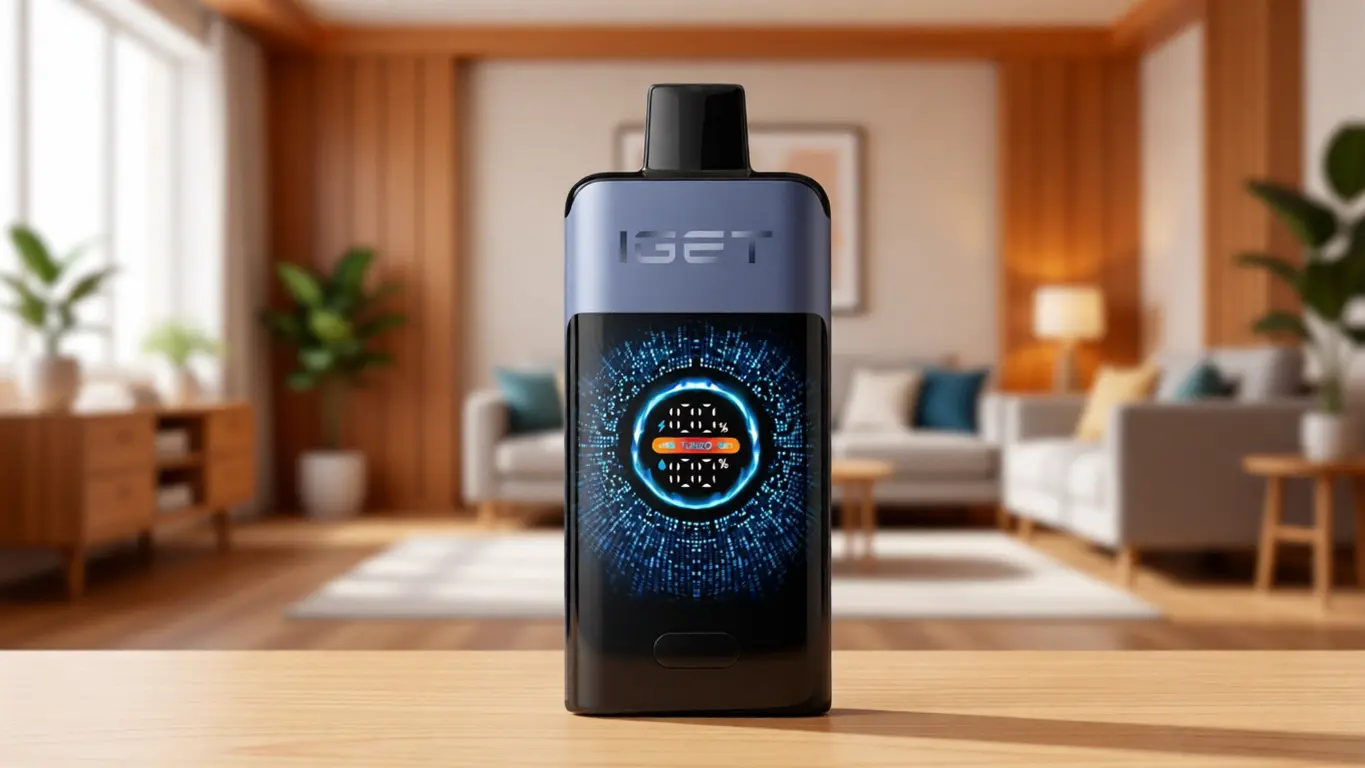
A: Relying on a backup is a rational response to unreliable power indicators, but it is a response to a design failure. The absence of a graduated battery meter or a remaining‑puffs indication forces you to guess when the device might stop working mid‑day. This introduces two risks: first, a dead device may tempt you to seek an unplanned replacement when you are already fatigued and less likely to evaluate safety; second, attempting to draw from a depleted cell can create a burnt hit that triggers a coughing fit, leading to an aggressive swallow reflex. Devices such as the ALIBARBAR INGOT 15000 tackle this with a direct digital display that counts remaining puffs in real time, removing the ambiguity that drives the backup habit.
Q: Are disposable units safer for fasting than reusable systems with replaceable components?
A: Safety in this context is a function of predictable, factory‑sealed performance. A disposable that has been manufactured under cleanroom conditions and filled to a precisely calibrated volume offers a one‑use, no‑maintenance experience that eliminates the user error factor — over‑filling, incorrect coil priming, or contamination. However, many lower‑cost disposables sacrifice sealing integrity for a lower bill of materials. The ALIBARBAR INGOT series demonstrates that a pre‑filled, sealed unit can still incorporate the same internal partition engineering as a reusable platform, which is why OZVAPE Shop prioritises factory‑certified inventory from a transparent supply chain.
Q: I keep hearing about “adjustable” devices. Does controlling the output level matter while fasting?
A: Yes, because output directly influences aerosol temperature and condensate formation. A device that operates at a fixed high output may produce vapour that feels hot and concentrates moisture in the mouthpiece, increasing the chance of droplets being swallowed. A user‑adjustable system like the Ice Adjust 12000 allows you to select a lower output setting, which not only conserves power but reduces the thermal load on the airway and the volume of liquid that condenses after each draw. This gives the faster a degree of control that a single‑output device cannot offer.
Q: What is the single most overlooked risk when vaping in a fasted state?
A: Dehydration and the subjective perception of throat dryness. Propylene glycol is hygroscopic; it pulls moisture from the mucosal lining. In a fasted state, when you are already not consuming fluids, this can accelerate a sensation of thirst and irritation that is easy to mistake for hunger or discomfort. A device that delivers a consistent, cool aerosol — rather than a hot, erratic burst — minimises this by reducing the inflammatory load on the airway. That is where material integrity, like medical‑grade mouthpiece contours, becomes more than a comfort feature; it becomes a genuine health consideration.
Q: Where should I source a device if my primary concern is authenticity and post‑purchase accountability?
A: The open market now contains a significant volume of visually persuasive but internally compromised imitation products. These may use sub‑standard battery cells that voltage‑sag early, mimicking a depleted state, or they may omit the safety separator between coil and wick, leading to direct e‑liquid leakage. An authorised Australian retailer that sources exclusively through factory‑certified channels — and that maintains a local support team available after the sale — provides the only reasonable assurance that the device you receive matches the engineering that has been reviewed and tested. OZVAPE Shop has built its operations on this premise, deliberately, because we have seen the consequences of an opaque supply chain.
Q: If I’m still uncertain about whether vaping might compromise my health goals, what objective questions should I ask myself?
A: Three diagnostic questions often bring clarity:
Is my fast defined by zero caloric intake, or zero sensory stimulation? If it is the latter, any flavoured vapour is likely off the table.
Can my current device go a full day without requiring a recharge, a refill, or an emergency backup? If you cannot answer yes with confidence, the device is introducing logistical risk.
Do I know the exact composition of the e‑liquid in the device, and can I verify where the device was manufactured? A “yes” to both shifts the decision from guesswork to informed choice.
Q: How does the retailer’s supply chain policy affect my fasting decision?
A: There is a direct link. A retailer that cannot demonstrate a verifiable chain of custody from the factory floor to the dispatch warehouse cannot guarantee that the device you use has the sealing, power management, and material purity that the original manufacturer intended. If your fast depends on a device behaving predictably — no leaks, no burnt draws, no early shutdown — then the authenticity of that device is not a luxury; it is a safety prerequisite. This is why OZVAPE Shop publishes its factory‑certified sourcing and handling protocols openly, so you can inspect what stands behind the ALIBARBAR unit in your hand.
A Practical Framework for Your Own Evaluation
When the available information is conflicting, the most effective defence is a personal checklist. Apply the following methodology before you even power the device on:
Define the gate. Write down what, exactly, constitutes breaking your fast. Is it any substance crossing the lips? Any caloric absorption? Any spike in insulin? Be ruthlessly specific.
Audit the aerosol path. Before first use, inspect the mouthpiece and airflow channel under bright light. Any visible liquid pooling, even a thin film, signals a device that will transfer droplets to your mouth sooner rather than later.
Simulate a full‑day carry. Place the device in a pocket or bag in a warm environment for two hours, then check again. Temperature‑induced pressure changes are a leading cause of leakage.
Request the specification sheet. A legitimate product should have a published specification covering liquid capacity, resistance range, and rated battery capacity. Cross‑reference this with the manufacturer’s official listing. Mismatches are a red flag for counterfeit substitution.
Observe the status feedback. Before you start your fast, deliberately run the device through a partial discharge cycle and note when and how it communicates remaining power. Use this to plan whether you need a backup; ideally, a device with a real‑time display eliminates the need entirely.
These steps do not require technical training. They simply demand the same discipline you are already applying to your fasting protocol.
Common Misjudgements Observed Across the User Community
Over years of analysing support tickets and after‑sales conversations, several persistent evaluation errors have become clear. They are worth stating plainly because they routinely lead fasters into trouble.
Error 1: “It looks the same, so it must work the same.”
Visual similarity is a marketing tool, not an engineering guarantee. An opaque cartridge that mimics the shape of an ALIBARBAR INGOT but lacks the internal triple‑partition isolation will leak under pressure. The difference is invisible until the device is in your hand for hours.
Error 2: “If it’s a ‘disposable’, hygiene isn’t an issue.”
The term “disposable” describes the end‑of‑life cycle, not the manufacturing environment. A disposable assembled on an un‑controlled line may introduce dust, oil, or fibre contaminants into the aerosol stream. Independent batch testing — a practice that authorised distribution centres can verify — is the only reliable mitigation.
Error 3: “I’m just inhaling steam, so I’m fine.”
The aerosol is not steam. It is a mixture of vaporised carrier liquids, flavour compounds, and, in unregulated products, trace metals from degrading heating elements. In a fasted state, your body absorbs these compounds across a permeable mucosa that is already under metabolic stress. Underestimating this is not conservative reasoning.
Error 4: “I’ll buy a second device just in case, from the cheapest source.”
A backup device from an unverified channel introduces an unknown variable into an otherwise controlled routine. If your primary unit is so unreliable that you need a spare, the more productive intervention is to replace the primary unit with one engineered for full‑day endurance and transparent power management, rather than compounding the risk with an unknown second actor.
Conclusion
The question “Can I vape during fasting?” was never supposed to have a universal answer. The decision sits at the intersection of your personal definition of a fast, the chemical profile of what you inhale, and the mechanical reliability of the device you depend on. Where uncertainty persists — and it often does — the most responsible action is to reduce the variables you can control. Choose a device whose internal architecture is built to prevent leaks and spit‑back. Ensure that its power indicators are unambiguous, so you are never caught off guard. And verify, through a transparent retail partner, that the unit you hold is genuine and traceable to a manufacturer that audits its production line.
Informed users make better choices, and better choices are those that honour the same rigour you bring to your fasting practice. When you are ready to evaluate devices against this standard, OZVAPE Shop provides the documentation and the factory‑certified access that turns a purchase into a calculated, low‑risk decision. The right device is not the one with the loudest claims, but the one whose behaviour under real‑world conditions matches the discipline you apply to yourself.