
VAPE FAQs
Can I Use Vape While Charging?

Aug
The ritual is familiar to many adult users: you reach for your device only to discover the power cell is nearly exhausted, yet the moment demands continuity. The charging cable is within reach, and the question presents itself — can you simply keep using it while it draws current from the wall? The answer is not a simple yes or no. It depends entirely on the engineering discipline that went into the device in your hand. At OZVAPE Shop, we have observed that a thoughtful answer opens up a more useful conversation about power management, thermal design, and the small design choices that separate equipment you can depend on from equipment that consistently lets you down. When users approach us with this question, we treat it as an opportunity to explain what lies beneath the casing rather than offering a one-word reassurance.
Understanding What Matters: Why Pass-Through Behaviour Is an Engineering Question
Most consumer electronic devices include a protection circuit that determines what happens when a charging current and a discharge load are presented simultaneously. The outcome is not a standard feature; it is a design decision shaped by battery chemistry, thermal budget, and the manufacturer’s tolerance for field returns. Understanding why one device handles the situation gracefully while another becomes a reliability risk gives you a framework for evaluation that extends well beyond this single scenario.
Internal Architecture and Charging Circuitry
A portable electronic device typically routes power through a charge management IC that negotiates between the USB input and the lithium‑ion cell. In many designs, plugging in a charger effectively disconnects the output stage — the device enters a charge‑only mode and the activation switch becomes unresponsive. Other designs implement true pass‑through, where the power management IC supplies the load directly from the USB rail while trickle‑charging the battery at a reduced rate, or the system draws from the cell while topping it up continuously.
Why this matters: continuous cycling of charge and discharge currents generates internal heat that the cell’s chemistry does not recover from indefinitely. Devices built with aggressive thermal throttling or undersized current paths may allow the behaviour but silently degrade the anode over weeks. The ALIBARBAR product range, for instance, was engineered from the outset with a power path management IC that isolates the cell from the load when an external supply is detected. The design decision was deliberate: prioritise long‑term cell integrity over momentary convenience. This does not make the device feature‑compromised; it makes it predictable across its rated operational life.
Power Management and Status Transparency
A device that offers no clear feedback when it is charging, discharging, or idling leaves the user operating blind. The practical consequence is that an adult carrying a device with ambiguous status indicators will inevitably carry a backup — not because they need extra capacity, but because they cannot trust what the primary unit is telling them. This hidden cost shows up as unnecessary purchases, dead units at the bottom of bags, and a general erosion of confidence in the product category.
Well‑engineered devices communicate their condition without demanding attention. The ALIBARBAR INGOT series, for example, uses a binary LED‑based status protocol: steady illumination during active operation, a slow pulse when charging, and a rapid blink only when the cell depletes below a usable threshold. The simplicity is intentional. When users can read the device at a glance, they are far less likely to find themselves fishing for a charging cable mid‑session — and far less tempted to attempt the simultaneous charge‑and‑draw scenario that leads to avoidable wear. At OZVAPE Shop, we encourage users to prioritise status transparency as heavily as they prioritise raw capacity, because the two are inseparable in daily use.
Physical Design and Heat Dissipation
Even when a device technically allows pass‑through operation, the user’s experience is heavily shaped by how the chassis handles the additional thermal load. Devices with polymer‑dominant bodies and minimal internal air gaps tend to concentrate heat around the power management section, which sits directly adjacent to the activation switch on many compact layouts. The result is a device that becomes uncomfortable to hold within minutes, and one that may accelerate electrolyte decomposition in the cell.
ALIBARBAR’s designers addressed this through material selection rather than marketing claims. The current‑generation devices use a combination of zinc‑alloy framing and polycarbonate panels, with the metallic substructure serving as a passive thermal spreader. The engineering intent is not to enable pass‑through use — the power path isolation already prevents that — but to ensure that even under standard high‑drain conditions, the exterior temperature stays within a band that does not alarm the user or stress the internal components. When you evaluate any device, the relevant question is not “Does it get warm?” but “Where does the warmth go, and what does that tell me about the design priorities?”
Modularity and Lifecycle Flexibility
The question of using a device while it charges also intersects with how the product is built to age. Sealed, non‑serviceable units treat the battery as a fixed‑life component; every charge cycle, and especially every thermally stressful event, inches the device closer to its end of service. A rechargeable‑battery system with a replaceable pod or cartridge separates the heating element from the power architecture, but still concentrates wear on the internal cell if pass‑through is attempted routinely. Truly modular systems — those with removable, externally charged cells — eliminate the scenario entirely, but sacrifice the compactness that many users prioritise.
ALIBARBAR sits in the middle ground: the devices are sealed to maintain manufacturing tolerances and prevent contamination, but the internal cell sizing and charge‑rate algorithms are calibrated so that users rarely encounter a “must charge now” moment during an active day. The INGOT 9000 and 15000 variants, for example, are engineered for multi‑day use under representative usage patterns. When you remove the urgency, you remove the temptation to push a device beyond its operational envelope. That is a design philosophy worth noting, because it solves the problem at the source rather than accommodating risky workarounds.
Applying These Criteria to Real-World Options
The portable electronic device market now spans everything from credit‑card‑thin units that prioritise disposability to substantial high‑capacity tools built for endurance. Where a product sits on that spectrum largely determines whether the question of pass‑through use arises at all — and what the consequences are when a user tries.
Compact, single‑use devices with integrated USB‑C charging ports sometimes permit operation while plugged in, but only because the manufacturer has decided that customer returns due to a dead‑on‑arrival unit after attempting pass‑through are statistically acceptable. The activation sensor and the charge controller share the same microcontroller pin on these cost‑optimised layouts, and the device does exactly what the firmware tells it to do: it attempts to satisfy both demands until the thermal cutoff engages or the charge IC fails.
Devices like the ALIBARBAR Ice Adjust 12000 take a different route. The power architecture is partitioned, and the firmware explicitly blocks activation when the charge state is detected. This is not a limitation for most users; it is a predictable behaviour that preserves the rated operational lifespan. The trade‑off is that you cannot use it while it draws power, but the device is also far less likely to develop a battery fault within the first ninety days — a failure pattern that is well documented across the broader category. At OZVAPE Shop, we have consistently observed that users who understand this trade‑off upfront express higher long‑term satisfaction than those who make the purchase based on a single specification.
A Practical Framework for Evaluation
If you hold a device and wonder whether using it while charging is advisable, step back from the urge for a moment and run through a short diagnostic sequence:
Check the manufacturer’s documentation. If the user manual explicitly states that the device should not be used while charging, the prohibition is almost certainly backed by a protection circuit that enforces it. Attempting to override it with aftermarket cables or workarounds introduces risks the manufacturer has not accepted.
Observe the indicator behaviour during charging. A well‑designed device changes its LED pattern when a charger is connected. If the device allows activation while showing a charge indicator, the power management IC is operating in a shared rail mode — proceed with awareness that battery degradation will accelerate.
Assess the thermal profile. After five minutes on the charger, hold the device in your palm. If the body temperature rises noticeably above ambient before you even activate it, the thermal margin for simultaneous use is thin or nonexistent. That warmth represents energy being dissipated as heat rather than stored efficiently.
Ask whether the scenario is truly necessary. In many cases, the anxiety that drives pass‑through use can be eliminated by choosing a device with honest capacity ratings and unambiguous low‑battery warnings. If your current device fails to give you adequate notice, the engineering gap is in the status communication, not in the need to vape while tethered to a cord.
Standardised specification comparison, of the kind OZVAPE Shop provides across the ALIBARBAR catalogue, makes this diagnostic far easier. When you can see power‑path behaviour, battery ratings, and charge‑indicator protocols documented consistently, you are less likely to rely on guesswork or forum anecdotes.
Common Selection Errors and Industry Observations
Years of observing how adult users interact with personal electronic devices reveal several recurring errors, none of which reflect a lack of intelligence but rather a lack of accessible technical framing.
Overweighting the presence of USB‑C while ignoring power‑path design. A USB‑C port signals a certain modernity, but it says nothing about whether the device implements a dedicated charge controller, uses a linear regulator, or shares a bus with the activation circuit. Users who assume that USB‑C equals pass‑through capability are often disappointed, and occasionally left with a unit that stops holding a charge altogether after repeated attempts.
Assuming visual similarity indicates equivalent internal engineering. Many devices on the market share external form factors because they descend from a common mould. The internal PCB layout, the quality of the MOSFETs, and the firmware logic, however, can be entirely different. Two devices that look identical from the outside can exhibit opposite behaviour when plugged in and activated simultaneously. The only reliable way to know is through documented specifications, not visual inspection.
Undervaluing modularity in cost‑per‑use calculations. A user who constantly runs a sealed device to empty and then charges it while actively drawing current is effectively doubling the thermal cycles on the battery each session. The device that seemed economical at purchase becomes expensive on a per‑week basis because it must be replaced months earlier than a unit with proper power‑path isolation. The industry has been slow to articulate this, but it is a straightforward cost‑per‑cycle equation once you isolate the variables.
Confusing category terminology with technical specifications. Terms like “fast charge” or “smart chipset” are marketing language, not engineering documentation. A fast charge capability, for instance, describes the rate at which the charger delivers current; it does not indicate that the device is safe to use while charging. In fact, a high charge rate combined with a discharge load is precisely the condition that produces the most rapid internal heating. Users who treat marketing bullet points as technical specifications make decisions on incomplete information.
From an industry perspective, the move toward better power management ICs is unmistakable. The cost differential between a basic linear charge controller and a proper power‑path IC with thermal regulation is now measured in cents at the component level. Manufacturers that choose the latter — and ALIBARBAR is among the companies that have made this choice visible — are effectively signalling a decision to prioritise reliability over the lowest possible bill of materials. That signal is worth far more than any single feature claim.
Frequently Asked Questions
Q: Is it safe to use any vape device while it is charging?
A: Not universally. Safety depends on the power management architecture of the specific device. Some devices are designed to block activation during charging to protect the cell; others allow it but risk accelerated battery degradation. Consult the manufacturer’s documentation, not crowd‑sourced opinion.
Q: Will using a vape while charging immediately damage the battery?
A: In most cases, occasional use will not cause instantaneous failure, but it will increase internal temperature and accelerate the chemical aging of the lithium‑ion cell. The damage is cumulative and typically shows up as reduced capacity over weeks, not hours.
Q: Does the ALIBARBAR INGOT 9000 allow pass‑through vaping?
A: No. The power management firmware in the INGOT series isolates the cell from the load when a charger is connected. The device is engineered to charge without permitting simultaneous activation — a design choice made in favour of battery longevity and predictable performance across the device’s rated lifespan.
Q: What do the indicator lights on an ALIBARBAR device mean during charging?
A: A slow, rhythmic pulse indicates the device is charging normally. If the device is fully charged, the indicator extinguishes or shows a steady state depending on the model. A rapid blink signals a depleted cell. No light pattern indicates that activation is permitted while a charge current is present.
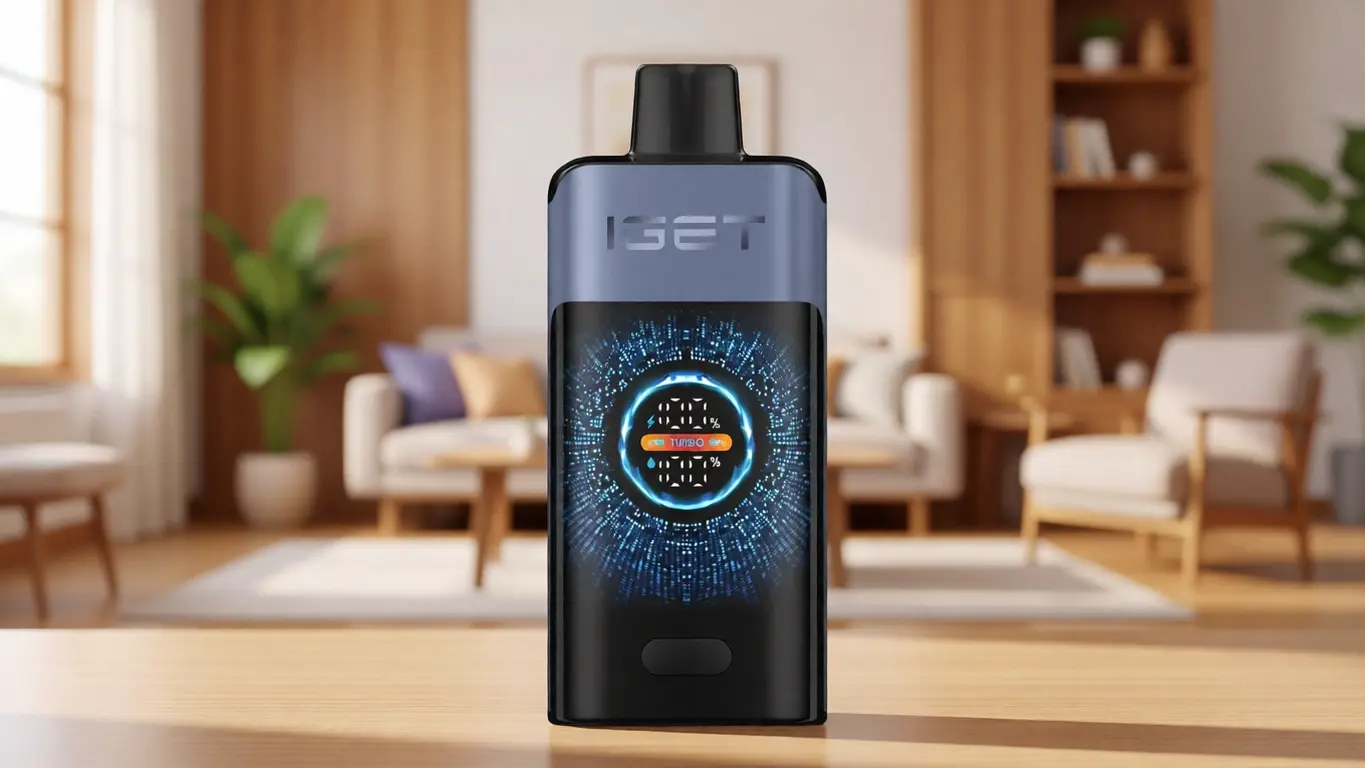
Q: Why do some manufacturers allow vaping while charging, and others do not?
A: It is a design trade‑off. Manufacturers that prioritise upfront feature flexibility may permit pass‑through operation, but this places additional stress on the power IC and battery. Manufacturers that prioritise long‑term reliability often block the behaviour to minimise warranty claims and uphold the device’s rated cycle count.
Q: How can I verify whether a device I already own supports pass‑through?
A: Connect the device to a charger and attempt activation. Observe the indicator behaviour: if the device remains unresponsive or the LED indicates a charge state only, pass‑through is blocked. If it activates but becomes noticeably warm within minutes, the design allows it but may not manage it well.
Q: Is it better to buy a device with a removable battery if I want to avoid charging interruptions?
A: Devices with user‑replaceable cells eliminate the pass‑through question entirely, because you can swap a depleted cell for a charged one. However, they tend to be larger and often lack the sealed, pocket‑friendly form factor of integrated‑battery designs. The right choice depends on whether you prioritise uninterrupted usage or compactness.
Q: What should I do if my device overheats while charging?
A: Disconnect it immediately and allow it to cool to room temperature in a safe, non‑flammable environment. A device that cannot complete a standard charge cycle without becoming uncomfortably warm likely has a compromised cell or a failing charge controller. Cease use and consult the retailer or manufacturer.
Q: Can I leave my vape device plugged in overnight?
A: Most modern devices include overcharge protection that stops the current once the cell reaches full capacity. That said, prolonged trickle charging at 100% can still stress the cell over time, and any failure in the protection circuit during an unattended period presents a risk. A conservative approach is to charge devices while you are present and attentive, and to disconnect them once the charge cycle completes.
Q: Where can I find accurate, manufacturer‑verified specifications for ALIBARBAR devices?
A: Authorised retailers that source directly from factory‑certified distribution networks should provide a standardised specification sheet for each device in the catalogue. This sheet documents the power path behaviour, rated charge cycles, and indicator protocols, enabling you to make an informed decision without relying on second‑hand information.
Conclusion
The question of whether you can use a device while it charges is not a quirk of user behaviour; it is a real‑world test of how thoughtfully the device was engineered. When the underlying design prioritises transparent status communication, disciplined power path management, and honest capacity ratings, the charged‑while‑using scenario rarely presents itself as an urgent need — because the device gives you ample warning to plan ahead, and because it does not leave you guessing about what it can safely tolerate.
That understanding, more than any single answer, is what we hope adult users take from this analysis. A device is not simply a collection of specifications; it is a set of engineering decisions that you live with daily. When you choose a product like those in the ALIBARBAR catalogue, you are choosing a particular philosophy about how those decisions should be made — one that values predictability over novelty, and long‑term reliability over momentary flexibility. At OZVAPE Shop, our role is to make those decisions transparent so that you can match the device to your actual routine, not to the most attention‑grabbing claim. The right choice is always the one that aligns with how you actually live, not the one that promises to do everything without consequence.