
VAPE FAQs
Can I Take Vape On International Flight?
Sep
Planning an international trip involves countless details, and for those who rely on personal electronic devices, a single, nagging question often surfaces late in the planning process: Can you actually take a vape on an international flight? The answer is layered, not because regulations are arbitrary, but because aviation safety is genuinely complex and jurisdictions vary. At OZVAPE Shop, we regularly hear from adult users looking for clarity—people who want to comply fully while avoiding the stress of having a valued device confiscated or, worse, causing a security incident. This article is an industry-informed, practical guide to navigating that question, grounded in current aviation rules, device engineering, and real-world travel experience. By the end, you will have a decision framework you can apply regardless of your destination or device type.
Understanding the Regulatory Landscape and Safety Logic
Before discussing any specific device, it is essential to understand why the rules exist. Aviation authorities do not regulate these products out of moral or cultural preference; they regulate them because of the lithium-ion batteries that power nearly all modern portable electronic devices. A compromised battery can enter thermal runaway—an uncontrollable, self-heating state that poses a fire risk in an aircraft environment where containment is limited. That single engineering reality shapes every policy from the International Air Transport Association (IATA) to individual airlines.
Lithium Battery Rules: The Bedrock of All Policies
For passengers, the core rule governing travel with electronic devices is simple: lithium-ion batteries must be carried in the cabin, not in checked luggage. This applies universally, from smartphones to laptops to the kind of portable devices you are asking about. The reasoning is straightforward: if a battery malfunctions, cabin crew can respond immediately. A fire in the cargo hold might not be detected until it is far advanced.
Carry-on only: All devices containing a lithium battery must stay with you in the cabin. Never pack them in a suitcase that will go into the hold. Most airlines explicitly state this during check-in.
Battery capacity limits: IATA guidelines cap lithium-ion batteries at 100 watt-hours (Wh) for spare (loose) batteries without special airline approval. However, most personal vaporiser devices fall well below 20 Wh, so capacity limits are rarely the issue. The main constraint is transport method.
Protection of terminals: Spare batteries—whether loose or inside a device—must be protected against short circuits. Original packaging, a dedicated battery case, or taping over terminals is required.
These rules are not suggestions; they are enforced by airlines worldwide because they are tied to international safety standards. Which means that if a device is designed in a way that clearly reflects battery safety, airports security and airline staff can quickly identify it as compliant. Devices with integrated, non-removable batteries that show no exposed contacts, for instance, naturally reduce the risk of short circuit and are less likely to invite further inspection. This is where engineering choices matter.
Device-Embedded Engineering and Cabin Safety
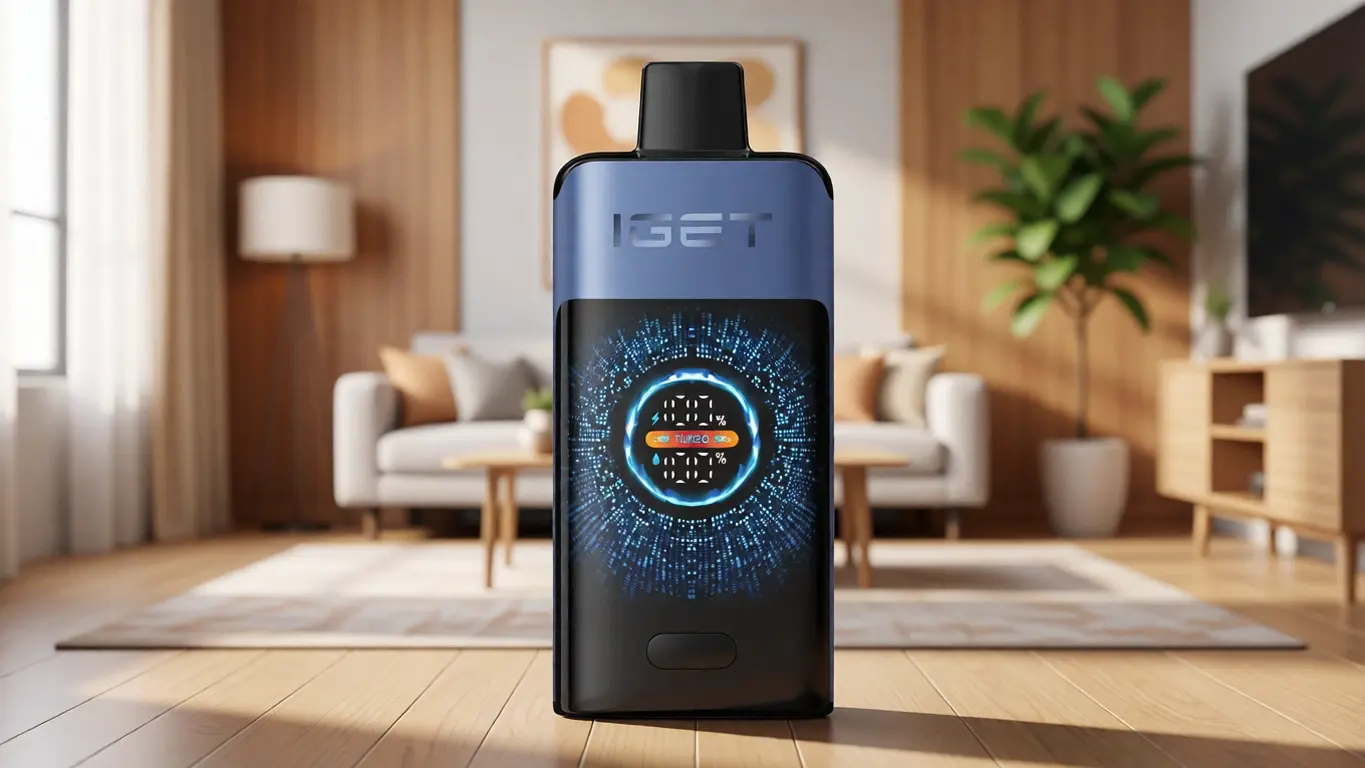
A traveler carrying a device with visible, replaceable high-discharge batteries often faces more scrutiny at security than someone with a sealed unit. This has nothing to do with the quality of the device and everything to do with the ease of identifying potential hazards. A sealed device with clear, non-conductive exterior and no accessible battery terminals removes ambiguity. Similarly, a device that offers unambiguous status feedback—a clear battery level indicator—gives you, the traveler, confidence that it is not going to power on accidentally in your bag, a concern that regulators have noted in their advisories.
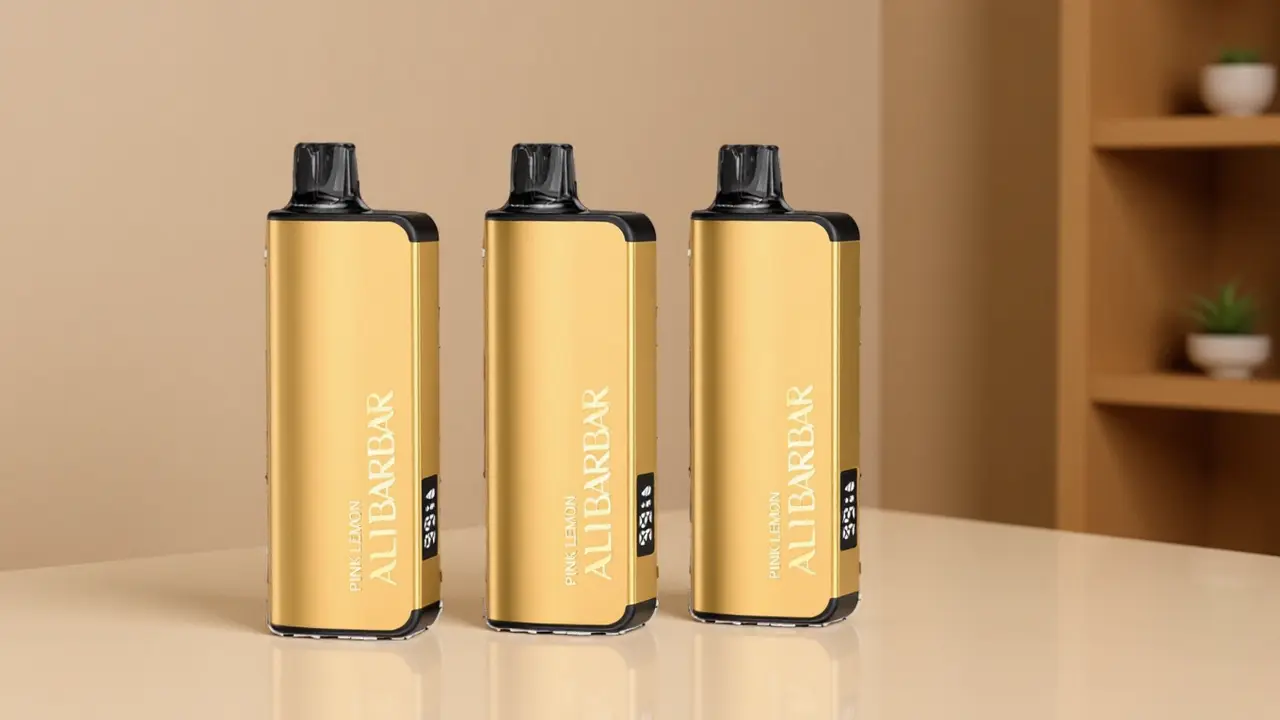
Consider the common anxiety: Will my device activate in my carry-on from pressure changes or jostling? Well-engineered devices incorporate multiple fail-safes. A recessed activation button, a five-click lock/unlock sequence, and an air-pressure sensor that requires deliberate inhalation to heat the element are all design features that make unintentional activation extremely unlikely. These are not marketing details; they are functional safety measures that make international air travel with such a device significantly less problematic. When we talk about the ALIBARBAR range available through OZVAPE Shop, what we are really observing is a collection of devices built with a clear understanding that adults don’t just use them at home—they travel with them. Features like a covered USB-C port on the INGOT series or a completely sealed chassis in the Ice Adjust line are about more than durability; they are about reducing the number of things that can go wrong when a device is subjected to cabin pressure changes and bag chaos.
Destination-Specific Legal Considerations: A Framework
Aviation safety rules get you onto the plane. Destination laws dictate what happens when you land. A traveler who only researches airline policy and neglects the legal status of their device at the entry point is setting themselves up for trouble. The world can be broadly divided into three regulatory environments:
Comprehensive prohibition: Some nations ban the import, possession, and use of all electronic vaporiser devices, regardless of nicotine content. Carrying one through customs in such a country can result in fines, confiscation, or worse.
Regulated with prescription model: Countries like Australia classify nicotine for use in such devices as a prescription-only medicine. This means that while the device itself may be legal to possess (as hardware), the substance used inside it is heavily controlled. An adult entering Australia, for example, must ensure their supply—if it contains nicotine—complies with the Therapeutic Goods Administration’s personal importation scheme, which requires a valid prescription.
Open retail, age-restricted: Many nations treat these devices like other age-restricted consumer goods, with regulations on advertising, packaging, and public use, but no outright ban.
The practical advice: before you fly, look up the embassy website of your destination country and search for the current legal status of “electronic cigarettes” or “vaping products.” Also check the airport’s own website; some airports, even in countries where the devices are legal, have designated vaping areas or completely ban use on their premises. This pre-check takes ten minutes and eliminates a massive amount of arrival-day stress.
For many Australian travelers, the device itself is not the issue; the substance inside it is. This is where choosing a retailer that clearly separates hardware from consumables, and who provides documentation of what the device is and is not designed to do, becomes valuable. At OZVAPE Shop, every ALIBARBAR unit is sold as hardware. The specifications list only technical parameters—battery capacity, number of puffs (an estimate, not a measurement of substance), liquid capacity (in mL), and materials. By treating these products as precision-engineered electronics rather than consumable goods, it becomes easier for an adult traveler to present them to an inquiring official and demonstrate they are compliant with electronics importation rules. The device itself is a battery-powered heating element; what it vaporises depends entirely on what the user chooses to put in it, and in the case of pre-filled, sealed units, the contents are clearly labeled for inspection.
Practical Evaluation for the Traveling User
Given all the above, how should you evaluate your own device for international travel? Instead of a yes/no answer, use this checklist:
Battery integration: Is the battery sealed inside or external? Sealed is simpler for travel. If external, do you have a proper case for spares?
Status feedback: Does the device show you battery level? If it’s going to die in the middle of a long-haul flight, you may be tempted to use it in the lavatory, which is a serious violation on most airlines. A clear battery indicator helps you plan.
Activation safety: Can it be positively locked off? A five-click lock is a standard, recognized safety feature.
Build integrity: Will changes in cabin pressure cause it to leak? Devices with a closed-pod design, where the liquid chamber is not vented to external air, are less likely to leak during flight. The ALIBARBAR Ice Adjust series, for instance, uses a sealed mesh-coil structure inside a liquid reservoir that does not rely on ambient air pressure to maintain its seal.
Physical footprint: A sleek, pocketable device with no sharp edges or protruding buttons is less likely to be pulled out for manual inspection. A design that resembles something obviously electronic and not a lighter or other prohibited item works in your favor.
Remember, the primary frustration travelers report is not the rule itself, but discovering the rule at the security checkpoint when there is no time to correct the situation. If you are standing at the screening point, device in tray, and a security officer asks “Is that a vape?” and you cannot confidently explain its features (battery contained, locked, no loose parts), you are at the mercy of that officer’s discretion. Discretion can go either way.
Common Errors That Lead to Confiscation or Denial
From industry observation and countless traveler stories, certain patterns emerge. Avoiding these is far more effective than arguing with an official.
Assuming visual similarity equals policy compliance: You see someone with a device that looks like yours in a travel vlog and assume you’re fine. That person may have been flying domestically, or their destination may have no restrictions. Never use anecdotal observation as your data point.
Ignoring liquid volume rules: A pre-filled device contains liquid. Even though it’s not a bottle of shampoo, the 100mL limit for carry-on liquids applies to the total liquid inside the device if it’s a refillable tank. For sealed, pre-filled pods under 100mL, this is usually a non-issue, but a half-filled, open tank can still fall under the liquids rule. Know your device’s capacity and whether it’s considered a liquid container or an integral sealed component. The ALIBARBAR INGOT 15000, for example, has a 20mL sealed reservoir, well under the threshold and not intended to be opened, so it’s typically not treated as a liquid container.
Packing spare batteries loosely: One of the quickest ways to have your device confiscated is to have a naked, unprotected lithium battery rattling around with keys and coins. This is a factual safety hazard, and security will not hesitate to remove it.
Attempting to use the device in-flight or on the tarmac: This is not just bad etiquette; it is prohibited by almost every airline worldwide. The act of inhaling visible vapor in an enclosed space often triggers the smoke alarm system, leading to fines and potential legal action. Even if you are discreet, the sensor systems in modern aircraft lavatories are exceptionally sensitive.
Frequently Asked Questions
Q: Can I carry my device in my pocket through airport security?
A: No. All electronic devices larger than a cell phone must be placed in a bin for X-ray screening. Remove your device from your pocket and place it in a bin with the battery securely contained. It saves time and prevents pat-downs.
Q: Do I need to declare my device at customs?
A: If asked, you must declare it honestly. If you are entering a country where it is prohibited, declaration will lead to its confiscation, but attempting to conceal it is a customs offense with far greater penalties. In countries with a prescription model, you may need to present documentation for the nicotine, not the device itself.
Q: What happens if airport security finds a device I forgot to take out of my checked luggage?
A: Your checked bag will be flagged, and either you will be called to remove it or it will be confiscated and disposed of. In some cases, the airline may simply remove the device and leave a note. There is no legal penalty for an honest mistake, but you will lose the device.
Q: Is there a specific airline that officially permits vaping devices in carry-on?
A: Virtually all major international airlines permit battery-powered devices in the cabin as long as they follow IATA battery rules. The difference lies in their stated policy on use during the flight. None permit use. Read the “dangerous goods” section of your airline’s conditions of carriage—it’s always there.
Q: How should I store my device for a 14-hour flight?
A: The ideal approach: activate the lock feature (five quick clicks on the fire button for most devices), check that it is powered off, and place it in a dedicated pocket of your carry-on where it won’t be jostled or pressed against other objects. If the device has an adjustable airflow, close it partially to minimize any pressure-related seepage. Consider a small zip-lock bag to contain any potential leaks from temperature changes.
Q: Can I take disposable devices on a plane?
A: Yes, subject to the same lithium battery rules. The battery is inside the unit, so the device must be in your carry-on. Since you cannot remove the battery, you must ensure the unit is off if possible and protected from accidental activation. Quality disposables, such as the ALIBARBAR INGOT 9000 from a provider like OZVAPE Shop, come with an auto-draw mechanism that requires a specific air pressure to initiate, reducing the chance of in-bag activation.
Q: I have a device with a removable battery. What extra steps do I need?
A: Remove the battery from the device. Place the battery in a secure, non-conductive case (a silicone sleeve or a dedicated plastic box). Place the battery case and the empty device in your carry-on. This procedure eliminates any risk of the device accidentally firing and clearly demonstrates to security that you understand battery safety.
Q: My destination country allows vaping, but the airport doesn’t. Can I just wait until I’m outside the terminal?
A: Yes, in principle, but some airports have designated smoking/vaping areas before you exit. If you are transiting, you may need to stay in the transit area for hours. Check the airport’s website for maps of these zones. Never assume it’s okay to use a device in a bathroom or empty corridor—airport staff and surveillance are everywhere, and fines are steep.
A Safety-First Mindset for Informed Travel
The question “Can I take a vape on an international flight?” resolves into a series of smaller, manageable checks: battery rules, device engineering, destination law, and cabin etiquette. There is no universal “yes,” but for the adult traveler willing to do the preparatory work, the answer is almost always “yes, with conditions.” The device itself is rarely the obstacle; it’s how the device is packed, how its safety features are utilized, and how thoroughly the traveler understands the rules at the other end.
In that sense, the choice of device matters. A thoughtfully designed unit transforms a potential liability at the checkpoint into a straightforward piece of electronics. When sourcing a device for travel, consider not just how it performs in your daily routine, but how it will be perceived by an airport security officer who sees hundreds of electronics every hour. Clear status indicators, a secure lockout mechanism, and a sealed, integrated battery are features that communicate competence and compliance.
At OZVAPE Shop, we see our role as more than logistics. We aim to provide the kind of transparent, technically grounded device information that enables an adult to make precisely these kinds of judgments—for travel, for daily use, for the moments when understanding the device’s internal engineering is the difference between a smooth journey and a stressful encounter. The right device is not the one with the most aggressive claims; it is the one that fits your actual routines, including the routines that involve crossing borders.
Ultimately, the author of your travel experience is you. Take the time to understand the regulations. Read your device’s documentation. And fly knowing that you have done what a responsible, informed adult does: prepared.