
VAPE FAQs
Can I Put Vanilla Extract In My Vape?
Aug
It’s an ordinary Tuesday night. You’re standing in the kitchen, the cap of a vanilla extract bottle resting in your palm, and a thought surfaces — quiet, plausible, and momentarily persuasive: It’s a food-safe liquid. It smells incredible. Could I put this in my device? The curiosity is understandable. What the thought misses, and what online anecdotes rarely spell out with enough clinical precision, is that the pathway from a kitchen pantry to a personal vaporiser is paved with chemical hazards, mechanical damage, and a near-total absence of regulatory oversight for inhalation. This article does what a quick search rarely does: it walks through the engineering, chemistry, and device-design realities that make the answer unambiguous. Along the way, it provides a framework for evaluating any personal electronic device so that future decisions are grounded in how the hardware actually works. As a retailer that maintains a catalogue of factory‑certified devices, OZVAPE Shop operates on the principle that safety begins with accurate information — and that information is precisely what follows.
Why Food‑Grade Flavourings and Vapour Devices Don’t Mix
The immediate answer to the title’s question is no. But the more important part is understanding why — not as a slogan, but as a series of engineering and physiological facts that, once seen, make the idea immediately recognisable as unsafe. This section breaks down the overlooked composition of vanilla extract and what happens when it meets the thermal, electrical, and material realities of a device designed for specifically formulated e‑liquids.
The Solvent You’re Not Accounting For
Vanilla extract is not a single compound; it is vanilla bean constituents dissolved in a minimum of 35% ethyl alcohol, as defined by food standards. Alcohol is a potent solvent and, when heated to the temperatures common in vapour devices (often 180–220°C at the coil), it volatilises into an aerosol that lung tissue has no evolutionary adaptation to handle. Short‑term exposure can cause airway irritation, bronchial constriction, and coughing. Chronic low‑dose exposure to inhaled alcohol vapour is poorly studied because there is no legitimate scenario in which a regulatory body would permit its deliberate inhalation. What data exists — from occupational exposure limits — indicates that airborne ethanol concentrations above a modest threshold are a recognised respiratory irritant. The plastic pods, silicone seals, and o‑rings inside consumer devices are not validated for prolonged contact with high‑percentage alcohol; the solvent can leach additives and structurally degrade components over weeks of use.
Sugars, Solids, and the Coil‑Killing Residue
Authentic vanilla extract frequently contains sugar or corn syrup by‑products that remain even in “pure” extracts. When the liquid is drawn across a hot coil, those sugars do not vaporise cleanly. They caramelise, then carbonise. The residue glazes over the heating element, creating an insulating crust that forces the coil to work harder to reach set temperatures. Two things happen in parallel: the already‑degraded vapour tastes increasingly burnt, and the user draws longer or applies more power, overheating the remaining liquid and producing thermal breakdown compounds that were never present in the original flavour. In a properly engineered closed‑system device, every liquid is formulated without sugars precisely to prevent this chain reaction. Put a tablespoon of vanilla extract into a refillable pod, and you are essentially guaranteeing coil failure within hours, followed by inhalation of pyrolysis by‑products that no sensible ingredient list would ever describe.
Absence of Inhalation Toxicology Screening
Food‑safe is not lung‑safe. The flavour industry maintains distinct divisions: one for ingestion, one for inhalation. Compounds that present negligible risk when swallowed — because first‑pass metabolism and the gut lining act as barriers — can be direct irritants, sensitisers, or tissue‑reactive agents when delivered in micron‑sized droplets to the alveolar surface. Vanilla extract is not tested for thermal degradation, for aerosol particle size distribution, or for long‑term pulmonary effects. Not because someone forgot; because it was never designed to be heated and inhaled. When a commercial e‑liquid carries a vanilla note, that note is constructed using individual aroma molecules screened for inhalation safety at the concentrations present. The difference is the same as between a cotton T‑shirt and a medical‑grade suture: both are cellulose, but the regulatory path that qualifies one for contact with living tissue separates it entirely from the other.
What Makes a Vapour Device Safe and Predictable: Core Engineering Factors
The vanilla extract question is, at heart, a misunderstanding of what a vapour device is — not a universal aerosoliser for any liquid you find appetising, but a precision delivery instrument whose safety envelope depends on tight coupling between hardware design and fluid chemistry. In choosing or understanding any device, adult users benefit from evaluating it through the same lens an engineer would apply. The following four factors form a reusable mental checklist, separate from branding or aesthetics, that directly addresses the most common real‑world frustrations.
Internal Architecture and Output Consistency
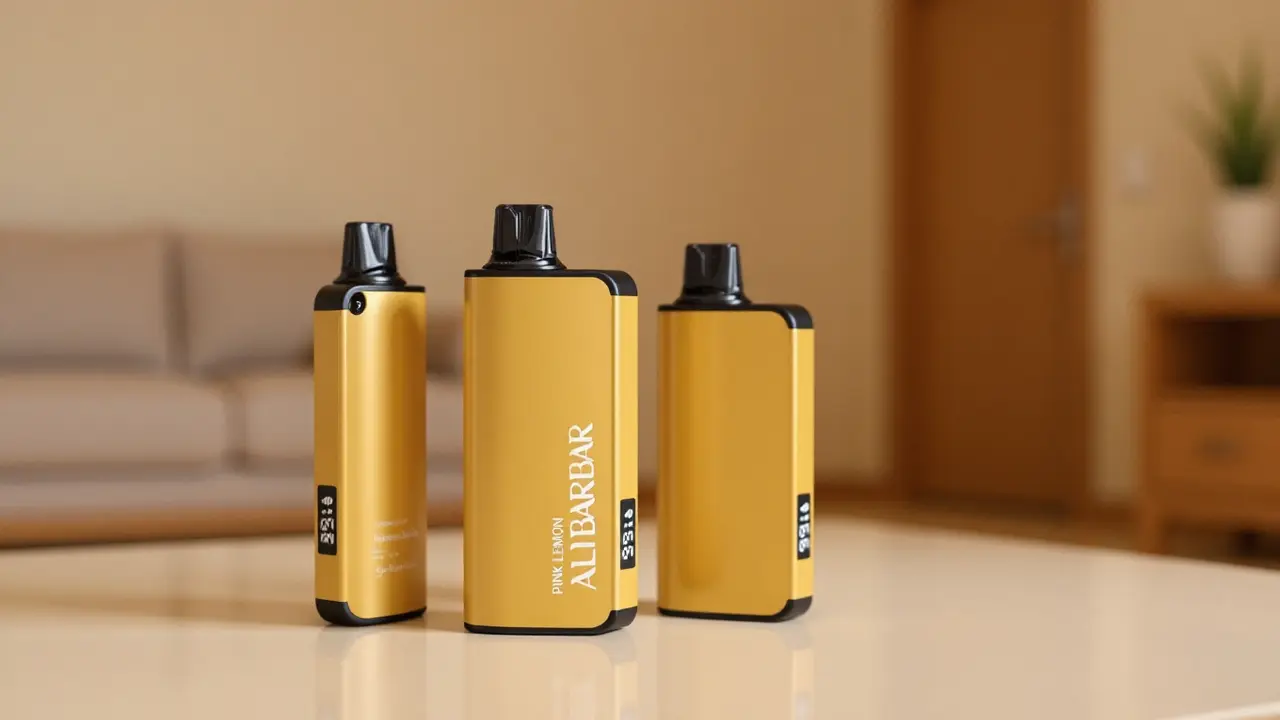
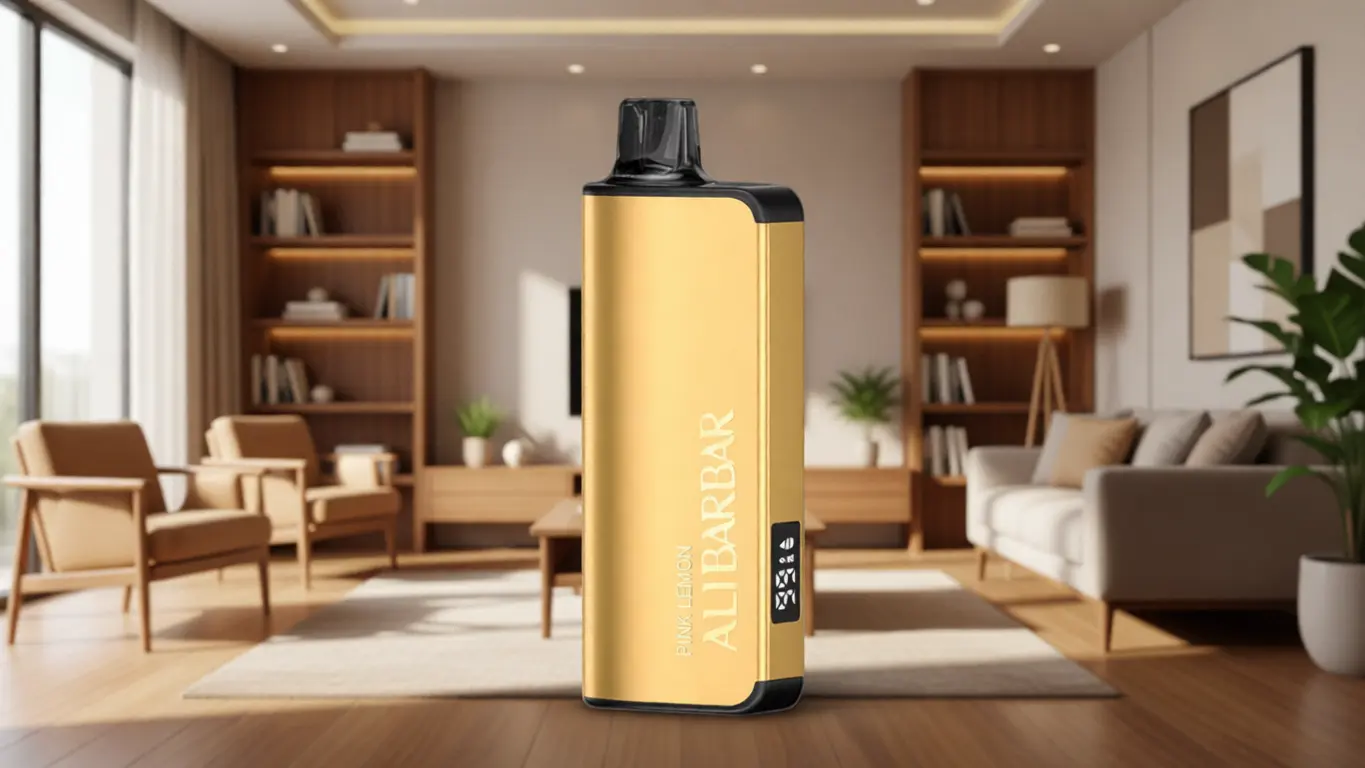
The heating chamber of a well‑designed device is not an afterthought. It is a spatially contained, thermally modelled environment where air‑inlet geometry, coil surface area, and wicking porosity are balanced to maintain a narrow temperature band. Devices that fail to do this — especially open systems where the user can introduce arbitrary fluids — show output drift over a single charge cycle: too cool at first, then hot, then suddenly dry. A sealed pod system, such as the architecture found in the ALIBARBAR INGOT series, factory‑matches the coil resistance and liquid viscosity so that the thermal curve is predetermined. The practical benefit is that the user does not have to adjust their draw to compensate for a system that is slowly cooking itself. When you evaluate any device, ask whether the vapour consistency holds from the first draw after charging to the last draw before the battery indicator triggers. Inconsistent output is not a minor inconvenience; it is an engineering signal that the heating element is operating outside its design parameters.
Power Management and Honest Status Communication
A device that powers itself off without warning is a device that will force a user to guess its remaining capacity, leading to anxiety and the habit of carrying a backup. Sophisticated power management delivers three things: a calibrated battery‑level indicator, a puff‑by‑puff cut‑off timer that prevents overheating with an abnormally long draw, and low‑voltage shutdown that leaves enough reserve to protect the cell’s long‑term integrity. Transparent status cues — whether a simple LED traffic‑light system or a four‑bar display — remove the guesswork. In the context of the vanilla extract scenario, an uncalibrated power system would be particularly dangerous: the user would not know the device was drawing elevated current to fight through coil residue until the point of thermal runaway or battery stress. A device that gives you real‑time feedback is a device that lets you retire it from service before it misbehaves.
Physical Design and Material Durability Under Daily Carry
Lip‑contact surfaces matter. The mouthpiece of a device designed with user welfare in mind uses medical‑grade or food‑compatible thermoplastics that resist degradation from repeated exposure to warm vapour condensate and minor mechanical abrasion. Cheap acrylics can craze, absorb residual flavours, and — critically — release micro‑particles over time. The external finish also tells a story: a device that shows edge wear within a week reveals the manufacturer’s assumption that it would rarely leave a desk. ALIBARBAR’s metallic chassis treatments, for example, undergo salt‑spray and rub‑testing that is more typical of consumer electronics than of disposable goods. This matters because a device carried daily in a pocket or bag experiences micro‑abrasion, fluctuating humidity, and occasional drops. Design that treats the device as an appliance, not a consumable, extends the period during which it performs as intended.
Modularity and Lifecycle Flexibility
The most overlooked factor in long‑term satisfaction is whether a device can be maintained or replaced in sections. Permanently sealed units force the user to discard an entire piece of precision engineering — battery, casing, electronics — the moment the liquid reservoir is depleted or the coil performance degrades. A modular system, by contrast, allows replacement of the pod or the coil head while the battery host remains in service for hundreds of cycles. This reduces cost per effective use and generates less waste. It also closes the door on ill‑advised experimentation: when a replacement pod is available and affordable, the temptation to “hack” a dead pod by filling it with vanilla extract or another improvised fluid essentially disappears. Good design anticipates and eliminates those moments of poor user judgment.
Applying These Criteria to Real‑World Devices
When the above factors become an evaluation template, devices separate into clear categories. The ALIBARBAR INGOT 15000, for instance, demonstrates an architecture where the liquid reservoir, coil, and air‑flow path are factory‑sealed and thermally mapped together. The power management uses MEMS‑based air‑flow sensors that activate the heating element only during a genuine draw, preventing idle heating that could degrade the liquid. The battery indicator offers four distinct levels, which in practice translates to no abrupt shutdowns during an evening out. Compared to open “sky‑refill” systems that accept user‑introduced fluids, the sealed approach may feel less flexible, but it closes off an entire category of risks — from microbial contamination to unintended chemistry.
There are other device families in the market, such as those from well‑known Japanese and European manufacturers of heated‑tobacco systems, that similarly enforce a closed‑loop consumable. They share the conviction that the fluid or substrate must be engineered as a complete unit with the device, not as an afterthought. The difference lies in the nuance of thermal delivery and the specific priority given to portability versus session duration. Recognising these distinctions helps users match a device to their actual daily pattern rather than to the most prominent advertising claim.
A Practical Framework for Evaluating Any Device
No single product is optimal for everyone, but a disciplined selection process increases the odds of satisfaction and reduces the chance of inadvertently unsafe use. The following steps are field‑tested and require no specialist tools:
Check the source of the consumable: If the device requires you to introduce your own liquid, you assume full responsibility for chemical compatibility. If it uses pre‑filled, tamper‑evident pods, ask whether the manufacturer discloses the laboratory standards used for inhalation screening.
Verify status feedback: Turn the device on. Watch the indicator sequence. If no clear battery level or fault warning is shown, assume you will be caught without warning at a critical moment.
Inspect the mouthpiece material: Run a fingernail lightly across it. Is it glass‑smooth and free of mould lines? Does the surface feel like it will absorb hand oils? These are small tells of the polymer grade.
Ask about the thermal cut‑off mechanism: Any device worth carrying will have an over‑time draw limit and a short‑circuit protection protocol. If the documentation doesn’t mention these, the device is relying on luck rather than engineering.
Simulate a full day: Visualise your routine. Does the claimed operational life match the length and frequency of your typical sessions? If not, are replacement consumables easy to obtain from a supplier that offers batch‑tracked inventory?
This framework roots the decision in observable hardware characteristics rather than subjective flavour descriptions. It works for any device type and any brand, and it is especially valuable when comparing products online, where physical inspection isn’t possible.
Common Errors That Undermine User Satisfaction
Experience across the market reveals patterns of decision‑making that reliably lead to disappointment, safety incidents, or both. They are worth naming explicitly.
1. Over‑indexing on a single specification. A device marketed solely on “capacity” or “battery life” tells the user nothing about output consistency, material quality, or status feedback. A device with a huge battery but poor thermal regulation will deliver inconsistent sessions and eventually degrade its own consumable faster than a lower‑capacity, better‑regulated competitor.
2. Assuming visual similarity indicates equivalent engineering. The outer shell of a device can be copied in a matter of weeks. The internal architecture — the air‑flow channel, the heating element’s metallurgy, the wicking material — is invisible. Counterfeit products often duplicate external appearance while omitting every internal safety feature. Purchasing through an authorised channel that provides batch verification is a practical safeguard, not an upsell.
3. Equating food‑safe with lung‑safe. This is the error that prompts someone to pour vanilla extract into a pod. The ingestion safety of a substance provides zero information about its aerosol toxicology, thermal breakdown products, or interaction with device materials. The gap is biological, not bureaucratic.
4. Underestimating the value of modularity in cost‑per‑use. A low upfront price for a sealed disposable seems economical until the user calculates how much actual usage time is extracted before the entire unit becomes waste. A device with replaceable pods or coils may cost more initially but deliver a significantly lower per‑day cost over two months of consistent use — and generates fewer disposal events.
Frequently Asked Questions
Q: Can I use any liquid in a vape device if it is labelled as food‑grade?
A: No. Food‑grade labelling pertains to ingestion, not inhalation. The airway tissue responds differently to aerosolised substances, and food‑grade liquids often contain sugars, alcohol, or oils that are harmful when heated and inhaled.
Q: What exactly happens to vanilla extract when it hits a heated coil?
A: The alcohol base flashes into a harsh vapour, sugars caramelise and carbonise on the coil surface, and the remaining organic compounds thermally degrade into by‑products not tested for pulmonary safety. The coil’s performance rapidly deteriorates, producing a burnt taste and potentially hazardous aerosol.
Q: I’ve already used vanilla extract in my device once. What should I do?
A: Discontinue use immediately. Replace the pod or coil entirely, as residual carbonised sugars and absorbed alcohol can affect future sessions even if the device appears clean. Monitor for any unusual respiratory sensations, and consult a medical professional if irritation persists.
Q: How do I know if a commercial e‑liquid or pod is genuinely safe for inhalation?
A: Look for manufacturers that explicitly state compliance with ISO or GMP standards relevant to inhalation products, provide batch‑level quality‑control data, and use tamper‑evident packaging. Absence of these indicators does not automatically signal danger, but their presence is a strong trust signal.
Q: Why do some devices still allow users to put their own liquid inside?
A: Open‑system devices originally gained popularity among hobbyists willing to handle the technical responsibility of coil building, wicking, and liquid mixing. However, an open system puts the safety burden entirely on the user; it is not a design flaw, but it is a design choice that requires rigorous user education that most retail channels do not provide.
Q: Are all pre‑filled pod systems equally safe?
A: Not necessarily. Safety depends on the materials used in the pod (especially the coil metal and wicking), the manufacturing hygiene, and the liquid’s formulation. Third‑party lab reports and transparent supply‑chain documentation distinguish systems built with an engineering‑first mindset from those assembled commoditised components.
Q: What should I do if a device I bought from an unofficial seller malfunctions?
A: Stop using it. A malfunction — swelling, overheating, failure to power on, erratic indicators — is often the result of a counterfeit battery or lack of protection circuitry. Returning it to the point of purchase is the first step, but if the seller cannot provide verification of authenticity, the safest course is to replace it through an authorised retail channel.
Q: How can I verify that a retailer is selling factory‑certified stock?
A: Authorised retailers typically display supplier verification badges, offer batch‑tracking upon request, and maintain direct communication lines with the manufacturer’s local distribution team. They do not rely on third‑party marketplaces without documented chain of custody.
Q: Does a higher‑capacity device always last longer in real‑world use?
A: Not always. Capacity is only one factor. The heating efficiency, power regulation, and air‑flow tuning all influence how much consumable is actually used per session. A well‑tuned mid‑capacity device can often satisfy a full day’s use more predictably than a high‑capacity device that wastes liquid through imprecise heating.
Conclusion
The impulse to experiment with a familiar kitchen ingredient reveals something deeper than a simple misunderstanding: it exposes the gap between how vapour devices are often perceived — as multipurpose aerosol generators — and what they actually are, which is chemically specific, thermally calibrated instruments. When you put vanilla extract into one, you are not innovating. You are overriding a safety architecture that took teams of engineers years to refine. The knowledge that protects you is not esoteric; it is the ability to recognise that a device’s internal architecture and the fluid it was designed for are a single, inseparable system.
Fortunately, the same analytical habits that prevent unsafe improvisation also lead to better everyday choices. Applying a consistent evaluation framework — one that rewards honest status feedback, clean materials, and modular design — moves the decision from impulse to inspection. With factory‑certified options readily available through channels that document their supply chain, such as OZVAPE Shop, the practical next step is not to guess, but to match a device to your actual routine using the criteria that matter. Safety is not about abstinence from curiosity; it is about knowing the boundaries of an engineered system and respecting them — because the people who built the system certainly did.