
VAPE FAQs
Can I Put A Vape In Checked Luggage?

Sep
Your question cuts straight to one of the most persistent and consequential travel dilemmas facing adult users of portable electronic devices. It is also a question where the difference between a confident “yes” and a carefully qualified “it depends” carries significant legal and safety weight. By the time you finish reading, you will understand not only the regulatory answer but the engineering and risk-management reasoning behind it — knowledge that immediately makes you a more capable traveller, regardless of which device you carry.
At OZVAPE Shop, we field hundreds of pre-travel enquiries every year. The pattern is always the same: a customer has invested in a reliable device, trusts its daily performance, and wants to know if it can accompany them on a flight without creating complications at security screening or, worse, a dangerous situation in the cargo hold. The answer, while straightforward once you grasp the underlying principles, requires a level of technical context that most generic travel advice omits. This article supplies that context.
Why This Question Matters More Than Most People Realise
The aviation industry’s stance on portable electronic devices is not arbitrary. It is built on a sober understanding of what happens when a lithium-ion power cell enters thermal runaway at 35,000 feet — and on the recognition that checked luggage, once loaded, sits in a pressurised but unmonitored environment where a small incident can escalate without immediate human intervention. This is not theoretical. Aviation safety bodies around the world have traced multiple cargo-hold smoke events to spare batteries and devices that were incorrectly packed.
For the individual traveller, the consequences of getting this wrong range from having a device confiscated at the security checkpoint to facing fines, airline bans, or, in jurisdictions that treat the carriage of undeclared lithium cells as a dangerous-goods violation, far more serious penalties. So yes, this question matters. And it deserves a thorough answer.
Understanding the Core Safety and Regulatory Architecture
To navigate this topic properly, you need to think like an airline safety officer, not like a passenger trying to guess what the rule might be. Every relevant regulation stems from two simple concerns: the presence of a lithium-ion battery and the distinction between the cabin and the cargo hold.
Lithium-Ion Cells: The Non-Negotiable Constraint
Every modern portable vaporiser — whether a compact sealed unit like the ALIBARBAR INGOT 9000 or a modular, rechargeable system — contains a lithium-ion power source. The chemistry of these cells makes them extraordinarily energy-dense, which is why they power everything from smartphones to electric vehicles. That same density, however, means that a short circuit, physical puncture, or manufacturing defect can trigger a rapid, self-sustaining exothermic reaction. Inside a suitcase surrounded by clothing, the heat has nowhere to dissipate quickly.
International civil aviation authorities (ICAO, IATA, and their national counterparts like CASA in Australia) have responded with a clear, globally harmonised principle: lithium-ion batteries must never be placed in checked baggage unless they are installed in a device and the device is completely powered off and protected from accidental activation. Even then, many airlines and countries impose stricter rules — particularly for devices that contain batteries above a certain watt-hour rating, which can include high-capacity personal vaporisers.
The critical distinction is between installed batteries and spare batteries. Spare lithium-ion cells are categorically forbidden in checked luggage. They must travel in your carry-on baggage, where cabin crew can respond to an incident. Installed batteries, theoretically, may be permitted in checked luggage if the device is fully deactivated and protected — but as you will see, the practical reality is far more restrictive.
Cabin vs. Cargo Hold: Why Separation Saves Lives
The cabin is a monitored, pressurised space with trained personnel, fire suppression equipment, and containment bags on board. The cargo hold, while pressurised and temperature-controlled on modern aircraft, lacks real-time human monitoring. A battery incident in the hold may not be detected until smoke alarms trigger, at which point the flight crew’s options are limited. This fundamental asymmetry is why the regulatory framework pushes every lithium-powered device toward the cabin.
For a device like the ALIBARBAR INGOT 15000 — a high-capacity sealed unit with an integrated battery — the engineering is optimised for consistent output, not for the mechanical stresses of a cargo hold. Conveyor belts, stacking pressure, and temperature fluctuations all present risks that are absent in a carry-on bag under the seat in front of you. The safest place for any device containing a lithium-ion cell is in the cabin, under your direct supervision.
Applying Global and Australian Regulations to Your Device
Let’s move from first principles to practical application. What follows is the most current regulatory synthesis available, but you must always verify with your specific airline — some carriers impose total bans on all vaporiser devices in both checked and carry-on luggage, particularly on routes to or through countries with strict nicotine-delivery laws.
The IATA Dangerous Goods Regulations (65th Edition)
The International Air Transport Association’s Dangerous Goods Regulations are the de facto global standard. Under Table 2.3.A, portable electronic devices containing lithium batteries may be carried in checked baggage only if the device is completely switched off, protected from damage, and the battery does not exceed the airline’s watt-hour limit. For most consumer vaporisers, the watt-hour rating is well under 100 Wh, so that threshold is not the primary obstacle. The obstacles are practical:
“Completely switched off”: Many modern sealed vaporisers, including several ALIBARBAR devices, are draw-activated and lack a physical master switch. An airline safety auditor may reasonably conclude that the device cannot be guaranteed to remain inert. This ambiguity alone leads many airlines to prohibit all vaporisers from checked luggage regardless of official IATA language.
Protection from accidental activation: Even if you could switch the device off, the jostling of a checked suitcase can depress a fire button or activate a draw sensor. Unless the device is placed in a rigid case, the risk is real.
Lithium content reporting: Some airlines require passengers to declare any battery-powered device at check-in. Failure to do so may be interpreted as a deliberate concealment of dangerous goods.
Australian Domestic and International Travel (CASA & Airline Policies)
The Civil Aviation Safety Authority (CASA) defers to the airlines’ own dangerous goods policies, which are in turn based on IATA standards. In practice, Qantas, Virgin Australia, and Jetstar all issue unequivocal guidance: vapes, e-cigarettes, and personal vaporisers must not be placed in checked baggage. They must travel in carry-on luggage only. Some airlines add the further requirement that the device be removed from the carry-on bag at the screening point and presented separately, the same as a laptop.
International carriers operating to and from Australia generally mirror this stance. Singapore Airlines, Emirates, and Qatar Airways all prohibit vaporisers in checked luggage without exception. The consensus across the industry is strong enough that any traveller who attempts to check through a vaporiser is taking an unnecessary gamble with their device and their itinerary.
A Practical Framework for Travelling with Your Device
The safest, most regulation-compliant approach is disarmingly simple and can be reduced to five steps. This framework works whether you are carrying an ALIBARBAR Ice Adjust 12000, a modular refillable system, or any other battery-powered portable tool.
Step 1: Treat Every Device as Carry-On Only
Assume, as your default operating rule, that no vaporiser ever travels in checked luggage. This removes ambiguity and eliminates the single greatest source of airport confiscations.
Step 2: Power Down and Secure
For devices with a physical lock or click-five-times off mechanism, activate that lock and verify the device does not fire. For draw-activated sealed units without a master switch, place the device in a protective case that covers the mouthpiece and prevents airflow from triggering the sensor. Many travellers repurpose a hard-shell glasses case; it works perfectly.
Step 3: Separate Spare Batteries (If Applicable)
If your modular device uses replaceable 18650, 21700, or similar cells, remove them and place each cell in an individual battery case or cover the terminals with electrical tape. These spare cells go in your carry-on bag. They may not, under any circumstances, be checked.
Step 4: Fill Tanks to Half or Less (If Using a Refillable)
Pressure changes in the cabin can force liquid out of a full tank. Emptying the reservoir below the halfway mark significantly reduces this risk. Place the tank in a sealed, absorbent pouch. This is not a regulatory requirement but an equipment-protection best practice that spares you a sticky mess on arrival.
Step 5: Declare When Required
At the security screening point, follow the protocol of the airport and airline. In Australian domestic terminals, you are generally not required to remove a sealed personal vaporiser from your bag, but if asked, present it without hesitation. Overseas, follow the local instruction. A calm, cooperative attitude is your strongest tool.
Common Selection Errors That Compound Travel Risk
Travellers frequently undermine their own peace of mind by making predictable mistakes long before they reach the airport. Recognising these in advance can save you a device.
Error 1: Assuming a Sealed Device Is “Off” Because It Is Not Being Used
Draw-activated devices are designed for responsiveness. A pressure change in the cargo hold or the vibration of a baggage belt can mimic a draw and activate the heating element. The device may not appear to be “on” in any conventional sense, but its sensor is constantly live. This is the engineering reality that renders many airline bans on checked vaporisers entirely rational.
Error 2: Regarding “Prohibited” as Merely Advisory
When an airline’s dangerous goods declaration states “vapes and e-cigarettes are forbidden in checked luggage,” that language carries the force of your contract of carriage. Breaching it can result in denied boarding, loss of the device, and notification of civil aviation security authorities. The consequences scale far beyond inconvenience.
Error 3: Overlooking Destination Country Regulations
Some countries — including Thailand, Singapore, and several Middle Eastern states — prohibit vaporiser possession outright, regardless of how you carry it. In those jurisdictions, having the device in your carry-on can trigger confiscation, fines, or detention upon arrival. Your travel planning must account for destination legality, not just airline policy. No device, however well-engineered, can circumvent sovereign law.
Error 4: Equating “Checked Luggage” with “Carry-On” for Device Safety
A common user fallacy holds that if a device is in a protected case, the checked/carry-on distinction no longer matters. This conflates physical protection with fire safety. A rigid case prevents mechanical damage but does nothing to suppress a lithium-ion event, and the cargo hold still lacks human intervention capability. The location of the device is inseparable from the risk profile.
Frequently Asked Questions
Q: Can I pack a disposable vape in checked luggage if it is still in its original sealed packaging?
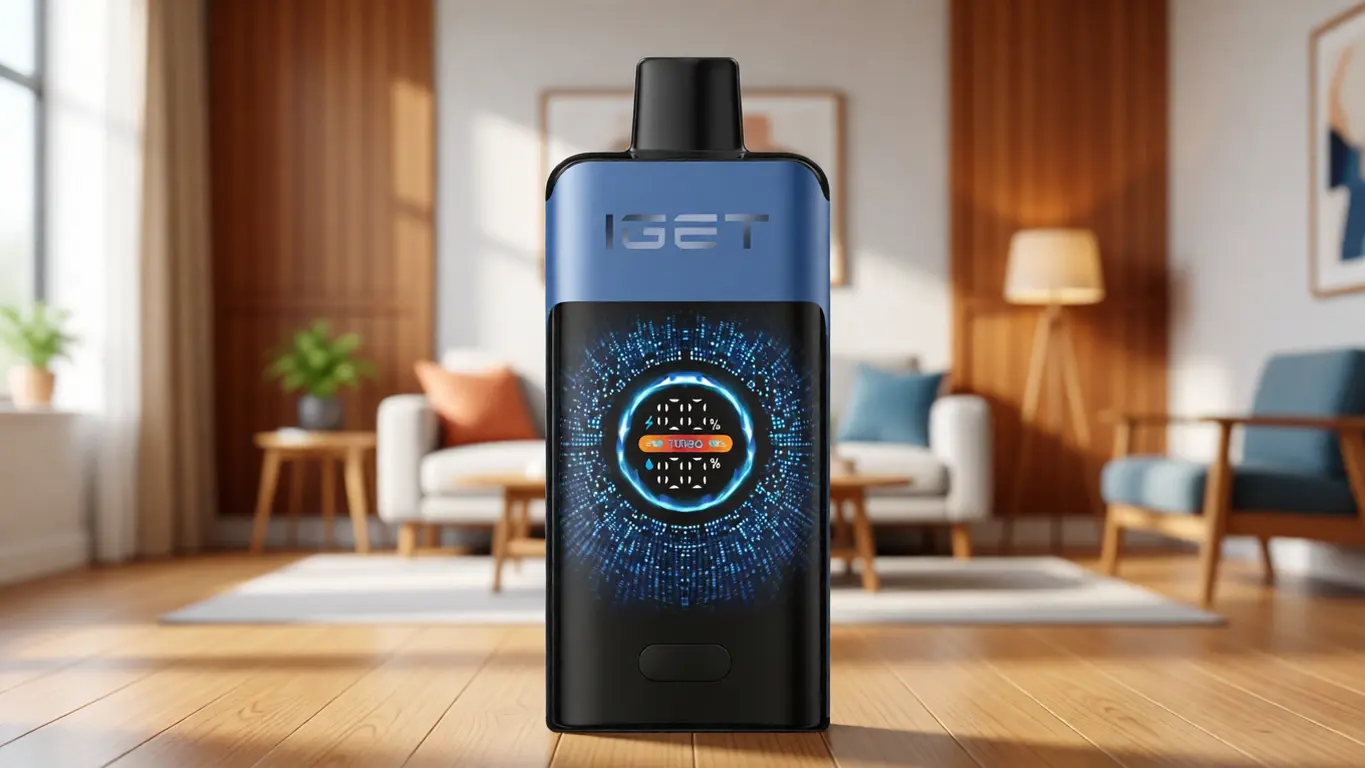
A: No. The packaging is irrelevant to the aviation safety risk. The lithium cell inside remains subject to the same prohibition. Sealed packaging does not constitute a “switched-off” state, and airlines do not recognise it as a safety mitigation. The device must travel in your carry-on.
Q: What happens if a security scanner finds a vape in my checked bag?
A: Your bag will be held, opened, and inspected, either in your presence or without it, depending on the screening protocol. The device will be removed and either confiscated or returned to you to place in your carry-on, but you may miss your flight while this occurs. In some airports, a positive scan for undeclared lithium batteries triggers a formal dangerous goods report.
Q: Does the answer change if the device is a “disposable” that cannot be recharged?
A: No. Whether rechargeable or sealed, the lithium-ion cell presents the same thermal-runaway risk. The aviation safety framework makes no distinction based on the device’s recharge capability — only on the presence, chemistry, and status of the battery.
Q: Are there any ALIBARBAR devices specifically designed to be travel-safe?
A: No device is designed to circumvent aviation regulations, but certain engineering characteristics reduce practical friction at security: a transparent tank window so inspectors can see the contents, a clearly marked battery indicator, and a robust locking mechanism. The ALIBARBAR Ice Adjust 12000, for example, features an airflow control switch that usefully restricts accidental activation during transit. However, its lithium cell still mandates carry-on carriage.
Q: Can I take a vape on a domestic Australian flight without any issues?
A: Yes, provided you carry it in your cabin baggage, ensure it is protected from activation, and follow the airline’s specific instructions. Australian domestic carriers are generally accommodating, but the device must not be used onboard, and it cannot be connected to any in-seat USB port for charging.
Q: What about travelling with a high-capacity device like the ALIBARBAR INGOT 15000 — is there a battery limit?
A: The INGOT 15000 contains a battery rated well below the 100 Wh threshold that triggers additional IATA restrictions, so from a regulatory perspective it sits in the same category as a smartphone. The practical concern is not the watt-hour rating but the lack of a physical master switch; a protective case is strongly recommended.
Q: Can I charge my vape device using the aircraft USB port?
A: Almost all airlines prohibit passengers from connecting personal vaporiser devices to aircraft power systems. This restriction is separate from the stowage rules and may appear in the airline’s conditions of carriage. Do not assume a USB port is available for this purpose.
Q: If I am travelling to a country where vapes are illegal, can I at least carry the device in my checked bag and hope it goes unnoticed?
A: This is highly inadvisable on two independent grounds: it violates the airline’s dangerous goods policy, and it exposes you to criminal liability under the destination country’s laws. The fact that some travellers “get away with it” does not constitute a valid risk assessment. The consequences of detection in a country with harsh anti-vaping laws can include detention and prosecution.
Q: How should I store e-liquid bottles in checked luggage to meet pressure-change requirements?
A: E-liquid bottles (without integrated batteries) can travel in checked luggage, but they must comply with liquid restrictions if carried in cabin baggage. For checked bags, place each bottle in a sealed zip-top bag with absorbent material, and consider slightly under-filling to allow expansion. Taping the cap closed adds a layer of security.
Q: Where can I verify the latest airline-specific regulations before I fly?
A: Every airline publishes a “dangerous goods” or “restricted items” page on its website. Search for the exact phrase “battery-powered devices” or “e-cigarettes” on the carrier’s site no more than 72 hours before departure, as policies can shift. Additionally, the Civil Aviation Safety Authority (CASA) provides a Can I pack that? online tool that covers domestic Australian rules.
The Calm Traveller’s Conclusion
The answer to “Can I put a vape in checked luggage?” is, across the overwhelming majority of the world’s airlines and aviation authorities, an unambiguous no. This is not a discretionary recommendation. It is a safety regulation built on decades of incident data and a clear understanding of lithium-ion failure modes. The device belongs in your carry-on, protected from accidental activation, and treated with the same thoughtful care you would apply to any battery-powered personal item.
For adult users who rely on devices like those stocked by OZVAPE Shop — equipment selected for its consistency and engineering integrity — the most responsible travel practice is to know the rules, pack accordingly, and avoid pushing boundaries that exist for perfectly defensible reasons. An authorized, factory‑certified device like those in the ALIBARBAR range is designed to perform reliably across thousands of draws; it deserves a travel strategy that aligns with that same standard of care. For the most current selection of devices that pair high‑capacity architecture with travel‑friendly sealed designs, you can explore the full catalogue at OZVAPE Shop.
Ultimately, informed travellers make better decisions. The right device choice is the one that matches your actual routine — including the part of that routine where you sit in an aluminium tube at altitude, subject to rules that nobody gets to negotiate. Plan around that reality, and your device will still be in your hand at your destination, ready for the day ahead.