
VAPE FAQs
Can I Pack My Vape In Checked Luggage?
Sep
You’re standing at the airport check-in counter, holding your packed bag, and that one question suddenly feels urgent: where does your electronic device with a lithium battery actually belong? The rule seems simple enough—most airlines say “no batteries in checked luggage”—yet every week, travellers make the wrong call. Some learn the hard way when security pulls their bag aside. Others simply lose a device they hoped to use on arrival.
The confusion is understandable. Device designs vary widely. Some have sealed power cells; others use replaceable 18650s. Packaging instructions from manufacturers rarely mention aviation compliance. Airlines themselves use slightly different language, and the official guidance from regulatory bodies like the International Civil Aviation Organization (ICAO) or Australia’s Civil Aviation Safety Authority (CASA) is thorough but not exactly written for the casual traveller.
This article cuts through that ambiguity. It explains the engineering reasons behind the rules, the practical considerations for different device architectures, and—most importantly—how to pack safely so your device arrives with you and remains operational. At OZVAPE Shop, we see these questions daily from adult users across Australia, and the recurring pattern is clear: a little structured knowledge eliminates most travel-related device drama.
Understanding What Matters: Core Engineering and Safety Factors
Internal Architecture and Battery Containment
The rule that lithium batteries must not travel in checked luggage is not arbitrary. It stems from the fire risk associated with lithium-ion cells when subjected to physical stress, short circuits, or temperature extremes. The cargo hold of an aircraft is unpressurised in many older models, experiences significant temperature swings, and holds luggage that may be roughly handled.
A well-engineered device includes multiple layers of protection: a protection circuit module (PCM) that prevents over-discharge and short-circuiting, a robust enclosure that isolates the cell from external pressure, and—in better designs—a physical lock or switch that cuts power when the device is not in use.
If a device provides no visible indication of its battery containment method, the user is operating blind. Some sealed units have the battery permanently integrated; others use soldered connections that cannot be safely removed. In either case, the entire device must stay in your carry-on. No exceptions.
Power Management and Status Transparency
A less discussed but equally important factor is how the device communicates its state. Imagine arriving at security and being asked to power on your device. If the battery is depleted or the status indicator is ambiguous, you may face unnecessary delays.
Devices with clear, colour-coded status displays or simple LED patterns allow you to confirm charge level instantly. That matters because you need to know, before you travel, whether your device can survive a long flight and still have enough capacity for the first few hours after landing. Status ambiguity forces travellers to carry backup devices — and that multiplies the risk of forgetting one in checked baggage.
Physical Design and Pressure Tolerance
The cabin—and especially the cargo hold—experiences significant pressure changes during climb and descent. A sealed device with improper venting may develop internal pressure that forces e-liquid past seals, resulting in leakage inside your luggage.
Better designs incorporate pressure-equalisation features or, at minimum, a gasket that can withstand a 0.7-atmosphere delta without weeping. If you have ever opened your bag after a flight to find a sticky mess around your device, you have experienced the consequence of ignoring this factor.
Modularity and Travel Flexibility
Not all devices are created equal when it comes to travel readiness. A modular device—one where you can remove the battery or separate the tank from the power section—offers distinct advantages. You can pack the non-battery components in checked luggage (if airline policy allows) and carry only the power cell in your personal item.
This matters for extended trips: you can bring spare batteries legally in a dedicated carry case, comply with the 20 Wh (or 100 Wh with airline approval) limit for carry-on, and never have to guess whether your single device’s charge will last through a long travel day.
Applying These Criteria to Real-World Device Options
Let’s consider how these factors play out across common device families found in the Australian market.
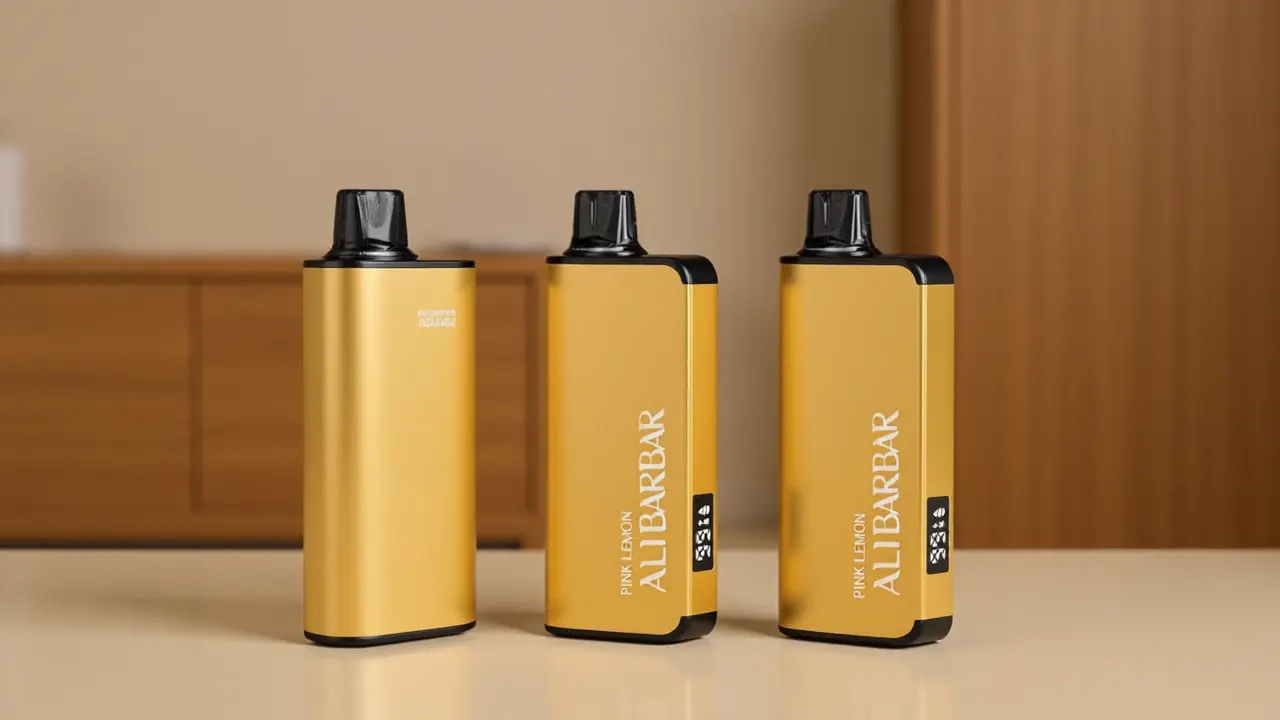
The ALIBARBAR series—including the INGOT 9000, INGOT 15000, and Ice Adjust 12000—represents a design philosophy that prioritises status transparency and internal protection. All current ALIBARBAR units feature a clearly visible battery indicator, a sealed but pressure-tolerant enclosure, and a power-lock function that prevents accidental activation during transit. This makes them straightforward for travel: you can verify charge at a glance, lock the device, and place it in your carry-on bag with confidence that it will not seep or short-circuit.
By contrast, many older or cheaper designs omit the lock mechanism altogether. Some use a simple press-button interface that can be activated inside a bag, leading to wasted charge or—in rare cases—a thermal event if the button is pressed against soft fabric for hours.
Other brands in this space, such as Vaporesso with their GEN series or SMOK with the Nord line, offer removable-battery configurations. These demand more attention from the traveller: the batteries must be removed, stored in a plastic case, and placed in your carry-on. The device body (without batteries) may be placed in checked luggage if the airline permits—but always confirm with your carrier first.
The key takeaway: a device is only as safe as the weakest link in its thermal management. Sealed, well-indicated units like the ALIBARBAR line reduce the mental overhead of travel. Modular units offer flexibility but require discipline. Know your device architecture before you pack.
A Practical Framework for Evaluation
Here is a step-by-step methodology you can apply before your next flight:
Identify your battery type. Is it sealed (non-removable) or replaceable? If replaceable, note the cell model and its watt-hour rating.
Check your device’s indicator. Can you see the battery percentage without guesswork? If not, consider charging it fully before travel so you know it’s at 100%.
Activate any travel lock. If your device has one, use it. If not, consider a manual lock by disconnecting the atomiser or removing the pod.
Wrap the device in a cloth or place it in a padded case to prevent accidental button presses and physical shocks.
Place the device in your carry-on bag — never in checked luggage. Keep it in a pocket you can access quickly if security asks to inspect it.
For spare batteries: Place them individually in a non-conductive case, with terminals covered. Carry no more than two spare sets unless you have prior airline approval.
This checklist works for any device. It removes ambiguity and aligns with CASA and IATA recommendations.
Common Selection Errors and Industry Observations
Error 1: Assuming device size or shape indicates battery content.
Many travellers look at a small, sleek device and assume it must contain a tiny battery. In fact, some compact sealed units pack 650 mAh or more. Size is not safety. Always treat any lithium-ion device as a carry-on item.
Error 2: Overweighting one specification while ignoring complementary factors.
A device advertised as “1000 puffs” might catch attention, but if it has no pressure vent and an unpredictable battery indicator, it becomes a liability during travel. Look at the whole system, not just the headline number.
Error 3: Undervaluing modularity in cost-per-use calculations.
Modular devices cost more upfront but can adapt to travel needs: remove the battery, pack the rest, and comply with regulations without losing your whole investment. Many travellers recoup the cost in avoided replacement devices.
Error 4: Confusing “disposable” with “safe for cargo.”
The term “disposable” in the market often describes a single-use design, but most of these still contain a fixed lithium battery—and they still cannot go in checked luggage. The label does not override the regulation.
An industry-level observation: the most common complaint we see in retail support is “my device leaked in my bag during a flight.” More often than not, the device was not locked, was placed in a checked bag, or was overfilled before travel. The engineering reality is that seals degrade under pressure differentials. No device is immune, but better designs—like those with a vacuum-sealed reservoir—fare far better.
Frequently Asked Questions
Q: Can I put my vape in checked luggage if it’s completely empty?
A: No. The regulation focuses on the battery, not the liquid content. A lithium battery in a device, even if fully discharged, still presents a potential short-circuit risk. It must remain in your carry-on.
Q: What does CASA (Australia) specifically say about vapes?
A: CASA follows ICAO standards: any electronic device containing a lithium battery must be in carry-on baggage. Spare batteries must be in original packaging or a non-conductive case. The device itself should be protected from accidental activation.
Q: How do I know if my device has a travel lock?
A: Check the user manual or product description on the manufacturer’s site. ALIBARBAR devices, for example, include a visible lock icon and require a sequence of button presses to engage. Many modern sealed units offer this feature.
Q: Are there any device types that can go in checked luggage?
A: Very few. Devices with non-rechargeable disposable batteries (e.g., AA-powered) that are not lithium-based may be permitted, but these are rare in the vape category. The safest approach is to assume all devices containing batteries must be carried on.
Q: What happens if I accidentally pack a vape in checked luggage?
A: Security screening may detect the battery density. The bag will be flagged, opened, and the device removed. You may be questioned. In some cases, the device is confiscated if it’s deemed a hazard. Always avoid the trouble by packing it correctly.
Q: Can I bring a refillable bottle of e-liquid in my carry-on?
A: Yes, provided it conforms to the liquid restriction (100 ml per container in Australia, placed in a clear zip-lock bag). Larger quantities must go in checked luggage if your airline allows, but be aware of pressure changes that may cause leakage.
Q: Do airlines in Australia treat vapes differently than international airlines?
A: Generally no, because ICAO rules are adopted globally. However, individual airlines may impose additional restrictions, such as banning the use of any device during flight or requiring a specific carrying case. Always check your airline’s policy.
Q: How should I prepare an ALIBARBAR device for travel?
A: Fully charge or at least verify the charge level. Lock the device using the manual lock sequence. Remove if possible any pod or cartridge to prevent leakage. Place it in a protective sleeve or padded pocket in your carry-on bag. That’s all you need.
Q: Is there a limit on how many devices I can carry?
A: For lithium batteries in carry-on, the aggregate watt-hour rating typically should not exceed 100 Wh per device, and you may carry “reasonable numbers” for personal use—usually up to two to three devices. Check with your airline if you travel with more.
Q: What recourse do I have if a device is damaged during security screening?
A: Report it immediately to the airline and security personnel. Document the condition. If the device was purchased from a trusted source like OZVAPE Shop, the standard return or replacement policy applies, provided the damage is verifiable and accidental.
Conclusion
The central insight is simple: the engineering choices that make a device portable—its battery, its seals, its power management—are the same factors that determine how it behaves under the stresses of air travel. Understanding those factors transforms a confusing regulation into a straightforward packing decision.
An informed traveller never asks “can I pack it in checked luggage?” and instead automatically reaches for the carry-on bag. They know the device belongs where they can see it, control it, and produce it if asked.
At OZVAPE Shop, we maintain detailed product specifications so you know exactly what you’re carrying—and how to carry it legally. Our conversations with returning customers confirm that those who take the time to understand their device’s design are the ones who arrive without incidents, with a fully functional device, and with no unpleasant surprises from security.
The right travel choice is not the one that fits neatly into a larger suitcase. It is the one that respects the physics of lithium cells and the rules designed around them. Make that choice before you pack, and you remove the only real source of stress.