
VAPE FAQs
Can I Carry A Vape On A Plane?

Aug
Traveling with personal electronic devices raises predictable but important questions—none more common than whether a vape can legally and practically be carried onto an aircraft. The short answer is yes, with strict conditions. The more useful answer, the one that prevents last‑minute disposal at security or uncomfortable conversations at the gate, requires understanding why those conditions exist and how they map onto the device you actually own.
For adult users who rely on these devices as part of their daily routine, the confusion is understandable. Rules vary by airline, by jurisdiction, and sometimes by the device’s internal architecture. Much of the anxiety comes from conflicting advice, outdated forum threads, and the fact that aviation authorities update their guidance more often than most travellers realise. This article unpacks the regulatory logic, the engineering considerations, and the practical steps that determine whether your device flies with you or gets left behind. Drawing on documented policies and real‑world travel patterns, OZVAPE Shop has compiled this reference to help you make informed decisions without guesswork.
Understanding What Matters: Safety, Regulations, and Device Design for Air Travel
Planes are unforgiving environments. Cabin pressure changes, vibration, and the universal prohibition on lithium‑battery fires mean every electronic item you carry is evaluated against two non‑negotiable priorities: preventing accidental activation and managing battery risk. Vapes, with their heating elements and often substantial lithium‑ion cells, sit squarely in the crosshairs of that evaluation.
Battery Safety and Aviation Regulations
Lithium‑ion batteries are the primary concern. When a battery short‑circuits or suffers thermal runaway, the resulting fire is extremely difficult to extinguish at altitude. For this reason, the International Civil Aviation Organization (ICAO) and the International Air Transport Association (IATA) have near‑universal rules: lithium‑ion batteries rated up to 100 watt‑hours (Wh) may be carried in hand luggage without special approval, but spare (uninstalled) batteries must be individually protected against short circuits—usually by placing them in original packaging, insulating tape over terminals, or dedicated battery cases. Batteries exceeding 100 Wh require airline approval and are generally prohibited for consumer‑grade vaping devices.
Most modern vaping devices fall well within the 100 Wh limit. A single high‑capacity 18650 cell, for example, is typically around 3.7 V and 3000 mAh, yielding roughly 11 Wh. Even dual‑battery mods rarely exceed 40 Wh. The real danger arises when loose batteries are tossed unprotected into a bag with keys or coins. Understanding this, carriers almost universally forbid vapes and spare batteries in checked luggage. The hold lacks the immediate human intervention that might suppress a fire, and the risk profile is simply too high.
Carry‑On vs. Checked Luggage: The Non‑Negotiable Rule
Vaping devices and their batteries belong in your carry‑on, never in checked baggage. This is not a suggestion but a global regulatory baseline. If you accidentally pack a device in a checked bag, security screening will likely detect it, leading to delays, confiscation, or even fines in some jurisdictions. The rationale is twofold: first, cabin crew can respond to a battery incident far more quickly than anyone in the cargo hold; second, depressurisation in the hold does not alter the risk, but the lack of monitoring does.
Some travellers mistakenly believe that devices without removable batteries are exempt. They are not. A sealed‑unit disposable vape or a pod system with an internal battery still contains lithium‑ion chemistry and must travel in the cabin. The only exception is devices that are entirely free of batteries—a condition virtually no modern vaping product meets.
Device Architecture and Leak Prevention
Beyond electrical safety lies a mechanical reality: changes in cabin pressure cause e‑liquid reservoirs to leak. When the aircraft climbs, the air in the tank expands, pushing liquid through the atomizer structure and out of the airflow ports. This doesn’t happen with all devices equally.
Bottom‑airflow atomizers with large liquid chambers are particularly vulnerable. In contrast, devices with top‑airflow designs, pressurised pods, or sealed cartridge systems often survive flights with minimal leakage. A practical approach is to store your device upside‑down during the climb phase; keeping the wicking ports above the liquid level prevents gravity‑assisted seepage. Travelling with a partially filled tank rather than a topped‑off one also helps, as the air pocket can compress without forcing liquid out.
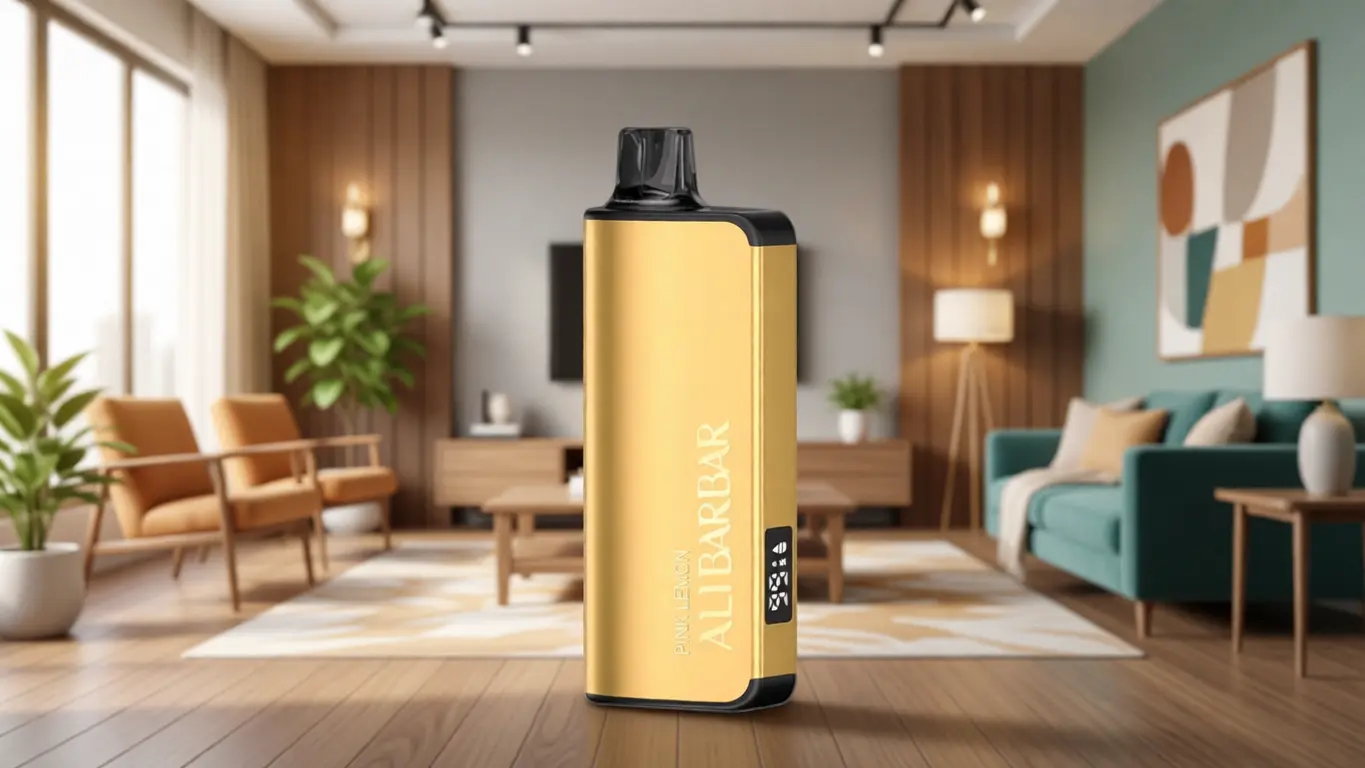
For those who prefer a maintenance‑free journey, devices designed with leak‑resistant architecture—such as the ALIBARBAR INGOT series with its fully enclosed pod system—tend to fare better under pressure differentials. The engineering lesson is straightforward: if your device leaks at ground level with slight temperature changes, it will almost certainly leak at 30,000 feet.
International and Domestic Rule Variations
While IATA provides a global framework, individual countries and airlines layer on additional restrictions. Australia’s Civil Aviation Safety Authority (CASA) aligns closely with ICAO/IATA standards, permitting devices and spare batteries in carry‑on, with batteries under 100 Wh. However, some Middle Eastern and Asian carriers prohibit electronic cigarettes entirely, regardless of battery status, under broader anti‑tobacco or controlled‑substance laws. In such cases, the device may be confiscated even if you never intended to use it during the flight. Always check the specific airline’s dangerous goods policy, not just the general aviation authority rules.
Liquid limits also interact. Most security checkpoints enforce the 100 mL per container rule for all liquids, including e‑liquid bottles carried separately. A 60 mL bottle of e‑liquid passes without issue; a 120 mL shortfill does not, unless you decant it into compliant containers. Pods and cartridges pre‑filled with liquid are typically treated as integral parts of the device and not counted against your liquids allowance, but this varies. When in doubt, pack e‑liquid in your transparent 1‑litre bag alongside toiletries.
Applying These Criteria to Real‑World Device Choices
The traveller’s ideal device is not necessarily the one with the most power or the largest capacity. It is the one that clears security without friction, endures pressure changes without leaking, and does not force you to manage loose batteries in a cramped seat. When you evaluate devices through this travel‑specific lens, several distinctions become clear.
Sealed‑unit or closed‑pod systems, such as many offerings in the ALIBARBAR range available through OZVAPE Shop, simplify air travel considerably. There are no removable batteries to protect, no open fill ports to leak, and the entire device is treated as a single, self‑contained unit. The INGOT 15000, for example, integrates a high‑capacity internal cell with a sealed liquid reservoir, meeting the under‑100 Wh requirement effortlessly while minimising the chance of pressure‑induced leaks. For someone who travels frequently, such a device removes most of the pre‑flight ritual of disassembly, tape, and plastic bags.
Devices with removable 18650, 20700, or 21700 batteries demand greater diligence. You must remove the cells, insulate the terminals, carry them in a protective case, and ensure the mod itself cannot accidentally fire. These are not insurmountable steps, but they add friction. If you do travel with such a device, a hard‑shell battery case is non‑negotiable; the thin plastic sleeves on individual cells tear easily and expose the conductive can, creating a short‑circuit risk.
Another travel‑critical factor is activation safety. Button‑activated mods with locking functions are preferable to those without. A mod that fires in your bag at 0.15 ohms will drain the battery rapidly and potentially generate enough heat to trigger a safety incident. Devices with a master on/off switch, a five‑click lock, or a draw‑activation mechanism with an orientation sensor reduce this risk significantly. The Ice Adjust 12000 from ALIBARBAR, for instance, uses draw‑activation exclusively, eliminating accidental button presses entirely.
If you carry spare e‑liquid, choose bottles with child‑resistant caps and avoid glass in favour of PET or LDPE. Glass bottles can break under baggage handling pressure, and even in carry‑on, a shattered bottle is a mess you don’t want at cruising altitude. Shortfills that require you to add nicotine boosters on arrival may also trigger liquid restrictions if the total volume exceeds 100 mL; split them into compliant containers beforehand.
A Practical Framework for Evaluation: Air Travel Readiness Checklist
Use this checklist before packing any vaping device for a flight. It applies regardless of brand or device category and can be completed in under two minutes.
Battery type and capacity: Is the internal or removable battery under 100 Wh? (Almost all consumer vapes are.) If removable, do you have a dedicated case for each cell?
Carry‑on only: Are all devices and batteries in your carry‑on bag, not checked?
Liquid compliance: Are spare e‑liquid bottles 100 mL or smaller, and do they fit in your clear bag? Are pre‑filled pods treated leniently in your departure country? (Check locally.)
Leak mitigation: If the device has an open tank, will you store it upside‑down or mostly empty? If it’s a sealed pod, is the pod fully clicked in and the airflow sealed?
Activation lock: Can the device be definitively locked (five clicks, master switch, or draw‑only)? If not, can you physically separate the tank from the mod or remove the pod to prevent coil firing?
Airline‑specific policy: Have you read the dangerous goods section of your airline’s terms? Some carriers impose outright bans regardless of international norms.
Destination legality: Is the device legal at your destination? Countries like Thailand, Singapore, and India enforce heavy penalties for possession. A device that flies with you legally may still be confiscated upon arrival if prohibited locally.
Common Selection Errors and Industry Observations
Even experienced travellers fall into patterns that undermine their own satisfaction. These errors are so common that they have become observable industry patterns, not random missteps.
Overweighting capacity while ignoring leak architecture. A 5 mL sub‑ohm tank on a dual‑battery mod looks formidable on a spec sheet. In a window seat at row 28, it’s a leaking liability. Travellers frequently prioritise the capacity they won’t actually need (a full 5 mL tank lasts hours of chain use, far beyond any flight duration) while ignoring the very real pressure problem that will empty that tank into their bag during climb.
Assuming visual similarity indicates equivalent travel compatibility. Two pod systems may look nearly identical, but one may use a press‑fit pod with a silicone seal rated for pressure differentials, while the other relies on a simple friction fit. The latter will weep. The fact that they both charge via USB‑C and are shaped like a pebble means nothing. This is where understanding device architecture—something detailed product pages from retailers like OZVAPE Shop can clarify—makes the difference between a dry pocket and a sticky one.
Treating all liquids limits as universal. Some travellers believe that because e‑liquid is not intended for drinking, it falls outside liquid restrictions. Security screeners do not share this interpretation. The 100 mL rule applies to all liquids, gels, and aerosols. A 120 mL bottle of vegetable glycerin is just as restricted as a 120 mL bottle of shampoo. Decanting into smaller bottles is the only reliable workaround, yet many still arrive at security with oversized bottles and are forced to surrender them.
Confusing category terminology with technical specifications. “TSA‑approved” is a meaningless phrase. The TSA does not approve individual consumer products; it enforces the FAA’s dangerous goods regulations. When a manufacturer prints “TSA‑approved” on packaging, it is marketing, not certification. The only approval that matters is compliance with the specific airline’s policy and international lithium‑battery thresholds. Understanding this distinction protects you from relying on hollow claims.
Frequently Asked Questions
Q: Can I put a disposable vape in my checked luggage?
A: No. All lithium‑battery‑powered devices, including sealed disposables, must travel in your carry‑on. Checked luggage is universally prohibited for such items.
Q: What happens if security finds a vape in my checked bag?
A: The bag will typically be pulled aside, inspected, and the device or batteries removed. You may be called to the gate to resolve it, potentially missing your flight. In some jurisdictions, you may face a fine.
Q: Can I use my vape on the plane or in the airport?
A: Using any electronic cigarette on an aircraft is prohibited by law in virtually all jurisdictions. In airports, vaping is restricted to designated smoking areas where available; otherwise, it is not permitted inside terminals.
Q: Do I need to empty my tank before flying?
A: Not strictly required, but strongly advisable. A mostly empty tank or a sealed pod reduces leakage dramatically. If you keep liquid in, invert the device during climb and keep it in a resealable bag.
Q: How should I carry spare 18650 batteries?
A: In a rigid plastic or silicone battery case that fully encloses each cell, preventing terminal contact with metal objects. Never carry loose batteries in a pocket or bag.
Q: Is there a limit on how many vape devices I can bring?
A: Generally, no hard numeric limit exists, but all devices and spare batteries must total under a combined lithium‑ion weight that triggers dangerous goods declarations (typically net lithium weight). For personal‑use quantities, this is rarely an issue, but carrying multiple high‑capacity mods may raise questions.
Q: Can I bring a vape into a country where it’s illegal?
A: Bringing a prohibited device into a destination country can result in confiscation, fines, or legal action. Research your destination’s laws before departure. Some countries classify vaping devices as medical or tobacco‑cessation products requiring a prescription.
Q: What if my device has an internal battery I can’t remove?
A: It still travels in carry‑on. Ensure it is fully powered off (not just locked) and protected from accidental activation. A hard‑shell electronics case adds mechanical protection.
Q: Are vape chargers or cables restricted?
A: USB cables and charging adapters are not governed by the same restrictions. However, lithium‑ion power banks (portable chargers) fall under the same battery rules and must be in carry‑on, under 100 Wh.
Q: Can airport security confiscate my vape even if I follow all rules?
A: In principle, yes, if a security official deems it a risk under broad discretionary powers. This is rare but more common with rebuildable atomizers that resemble suspicious objects on X‑ray. Coil tools, wire cutters, and other sharp objects should be packed in checked luggage or left at home.
Making Informed Choices for the Journey Ahead
The question “Can I carry a vape on a plane?” resolves into a set of concrete, knowable conditions. The device must travel in the cabin, not the hold. Its battery must be under 100 Wh and, if removable, protected from shorts. Its liquid must comply with the 100 mL rule, and its mechanical design should account for pressure‑induced leaks. The rest—airline‑specific policies, destination legality, and the small rituals that prevent an in‑flight spill—is within your control once you understand the logic behind the rules.
For those who want a device that simplifies this entire equation, the market offers well‑engineered options purpose‑built to travel. The ALIBARBAR collection, available through OZVAPE Shop{target=”_blank”}, exemplifies the kind of design thinking that makes air travel uneventful: sealed reservoirs, draw‑activation, and integrated battery management systems that keep the device firmly in the compliant category. But the brand is not the point; the point is that the right tool for the journey is the one that fits your actual routine, not the one with the most impressive wattage figure.
Return to the checklist. Run through it before every trip, even if you’ve flown the same route before. Regulations evolve, devices age, and the small effort of verifying compliance pays back in uninterrupted travel. The best decision is never the one that requires the most technical knowledge; it’s the one that, once made, you forget about entirely because nothing went wrong.