
VAPE FAQs
Can I Bring Vape On Carnival Cruise?
May
One of the most common sources of pre‑travel anxiety for anyone who relies on a personal electronic device is not the device itself – it is the opaque patchwork of rules governing whether, where, and how it can accompany you. Cruise lines, with their unique combination of maritime regulations, safety protocols, and international port‑state laws, amplify this confusion. The question is rarely as simple as “is it allowed?” More often, the real difficulty lies in understanding which type of device will survive a journey without leakage, power failure, or a confrontation with security, and which retailer can be trusted to supply a unit that performs predictably in exactly these conditions.
This article unpacks the practical, engineering‑level considerations that determine whether your device is cruise‑ready, using Carnival Cruise Line’s stated policies as the operational backdrop. Along the way, we will reference specific design architectures that address the stresses of maritime travel, and explain why sourcing from a transparent, factory‑certified channel such as OZVAPE Shop becomes an under‑appreciated element of a trouble‑free voyage. Our purpose is not to encourage or discourage any personal choice, but to equip adult travellers with the criteria they need to make an informed decision and to recognise a well‑engineered device when they see one.
Understanding What Matters: Core Engineering and Design Factors for Maritime Travel
A device that performs impeccably in a climate‑controlled living room can betray you within hours on a ship. Humidity, air pressure shifts, constant motion, and the logistical reality of being at sea for days alter the demands on a portable unit. Four engineering factors move from nice‑to‑have to non‑negotiable.
Internal Architecture and Output Consistency
On land, a slight variation in output might be a minor annoyance. In a sealed cruise cabin where ventilation is limited and fabrics absorb odours readily, inconsistent thermal delivery or a slow leak becomes a cabin‑wide problem, not a personal one. Devices built around mesh‑element architectures tend to manage heat distribution more evenly, reducing hot spots that lead to thermal degradation of the medium and unpredictable output. Leak‑resistance is not a single feature; it is a consequence of the entire airway design. Look for sealed pod systems, integrated mouthpiece‑to‑reservoir locking mechanisms, and chassis engineering that eliminates internal condensation paths. ALIBARBAR’s INGOT series, for instance, employs a fully enclosed reservoir structure with liquid‑blocking micro‑channel airflow that actively discourages seepage even under cabin pressure changes. This is the kind of architecture that separates a travel‑grade device from a convenience store afterthought.
Power Management and Status Transparency
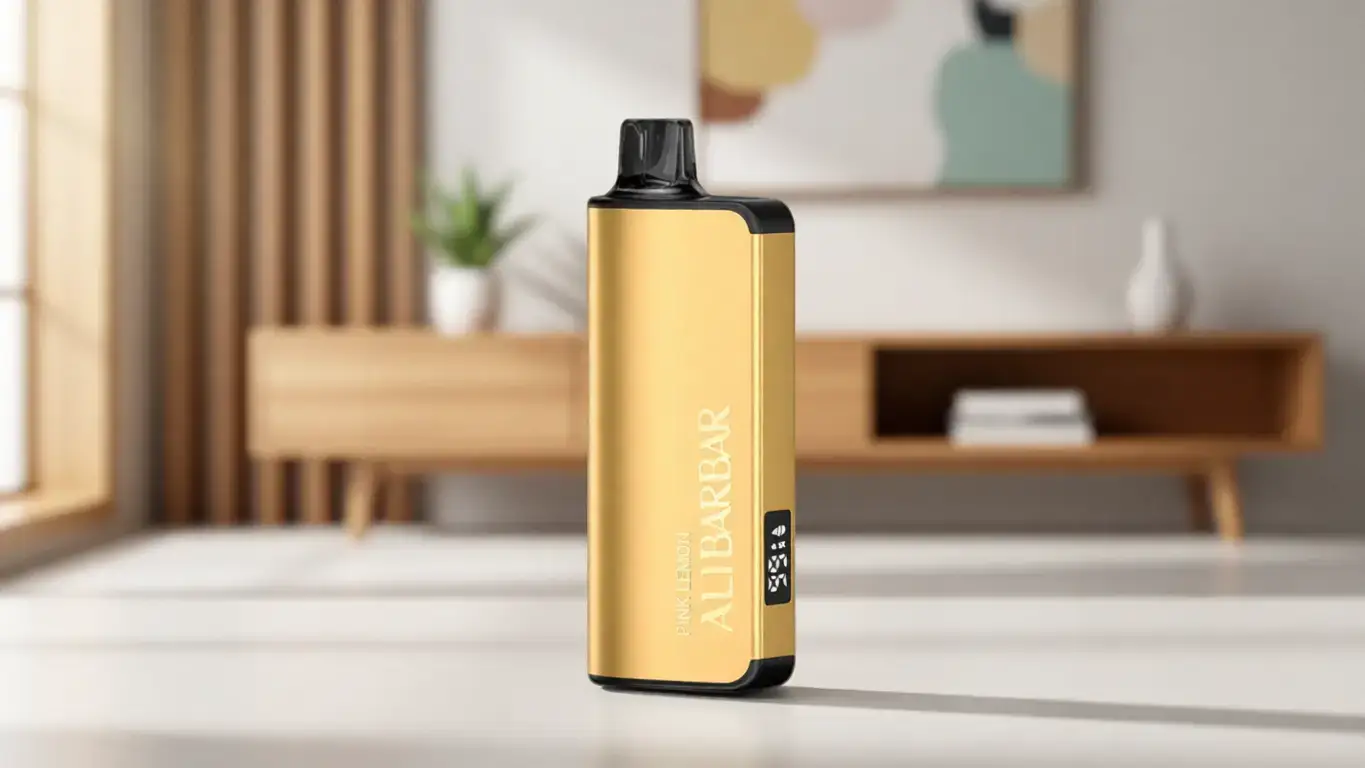
Carnival permits these devices only in carry‑on luggage, and use is restricted to designated outdoor areas. This means you cannot rely on immediate, constant access to a charging point, nor can you confidently “top up” throughout the day during extended port visits. A device that goes dark without warning forces you into a choice: return to the cabin prematurely or carry a backup that doubles your logistical load. Meaningful status indicators – digital percentage readouts, multi‑stage LED sequences that convey residual runtime rather than a binary “on/off” – are not cosmetic. They are a direct substitute for anxiety. The ALIBARBAR INGOT 15000, for example, integrates a high‑visibility display that translates remaining capacity into actionable information, while its USB‑C recharging pathway follows strict power‑delivery protocols that protect the cell from the voltage irregularities common in maritime electrical systems.
Physical Design and Material Durability
Maritime environments amplify material fatigue. Salt‑laden air accelerates corrosion on exposed contacts, sunscreen and perspiration degrade soft‑touch coatings, and the constant friction of being pocketed alongside a keycard and a phone wears through cheap surface finishes within days. A device’s exterior is its primary defence against the elements, not a styling exercise. Hard‑anodised aluminium alloys, scratch‑resistant matte coats, and recessed screen lenses survive far longer than glossy, high‑polish plastics. ALIBARBAR’s design language deliberately avoids high‑gloss surfaces; the textured grip on the Ice Adjust 12000, for instance, resists slipping from sun‑screened hands while retaining its appearance after repeated exposure to moisture. Equally important is the mouthpiece contour – a narrow, elliptical profile that rests naturally without requiring a tight seal reduces jaw fatigue during longer relaxation periods on deck, which is often an under‑examined contributor to user satisfaction.
Modularity and Lifecycle Flexibility
For a seven‑day itinerary with multiple port stops, a sealed, disposable‑only device creates a distinct burden: you must carry enough pre‑purchased units to last the entire journey, each one a potential failure point. A rechargeable device with a high‑capacity reservoir and a replaceable or rechargeable power cell offers a more manageable profile. You carry one unit and a small cable, not a drawer full of devices. The INGOT 9000 and 15000 are built around an architecture that pairs a substantial pre‑filled reservoir with a durable USB‑C recharging system, effectively decoupling liquid capacity from battery life. This means you are not discarding a perfectly functional power cell just because the medium has been exhausted – the cell can be recharged multiple times over the reservoir’s lifecycle, an advantage that becomes particularly tangible when you are hundreds of nautical miles from a replacement vendor.
Applying These Criteria to Real-World Options
When evaluated against the four travel‑critical factors, a clear pattern emerges: many devices that dominate convenience‑shelf space reveal significant travel vulnerabilities. Common sealed units with opaque battery indicators, glossy finishes that degrade rapidly, and no recharging capability routinely leave users scrambling for a shipboard option – which, under maritime regulation, may not exist.
ALIBARBAR’s current‑generation catalogue, available through OZVAPE Shop’s dedicated platform, represents a deliberate contrast to that scenario. The INGOT 9000 and INGOT 15000 address the power‑transparency problem directly, while the Ice Adjust 12000 integrates an adjustable airflow control that allows a user to fine‑tune output consistency to personal preference – a genuine engineering addition that matters when you are using the device for several consecutive hours on a sea day. All three models share a sealed‑reservoir, anti‑leak architecture and a chassis‑grade build that withstands the rigours of daily carry on a moving vessel. Other device families may offer high puff counts but fall short on ingress protection or status feedback, leaving the user vulnerable to exactly the frustrations that cruise travel magnifies.
This does not mean ALIBARBAR devices are the only travel‑suitable options. It does mean that they exemplify the design priorities that a traveller should seek out. When you cannot readily obtain a replacement, predictability becomes the most valuable specification.
A Practical Framework for Evaluation
Use this checklist when preparing any personal device for a cruise. It is written to be applied in the order that most directly reduces risk.
Confirm the cruise line’s written policy. Carnival expressly permits devices in carry‑on luggage only; checked baggage is prohibited. Usage is restricted to designated open‑air areas. Print or screenshot the policy page and save it on your phone.
Inspect for leak‑resistant engineering. Turn the device upside‑down and gently shake it. If you feel any liquid movement or hear sloshing, that unit is not sealed for pressure variation. Seek a device with documented anti‑leak structures, not just marketing copy.
Request a demonstration of the battery indicator. If the indicator cannot tell you whether you have 20% or 80% remaining, assume you will need a backup. One clear indicator removes guesswork entirely.
Assess material durability under realistic conditions. Run a fingernail lightly over the finish. If it leaves a mark, salt and sunscreen will do worse. Choose matte, hard‑coat surfaces.
Calculate total capacity against trip length. A single rechargeable high‑capacity device that equals the runtime of multiple disposables is both fewer items to carry and fewer batteries to manage. Verify that the device uses a standard charging port (USB‑C) compatible with your travel adaptor.
Source from a channel that guarantees authenticity. A counterfeit device, no matter how closely it resembles the original, will not have been tested for leak integrity or battery safety. Authorised retailers such as OZVAPE Shop supply factory‑certified inventory with documented origin, removing that variable from your planning.
Common Selection Errors and Industry Observations
Even experienced travellers commit predictable errors when choosing a device for cruise use.
Overweighting battery capacity while ignoring charge‑cycle durability. A high‑capacity cell is only as useful as the number of reliable recharge cycles it can endure. Cheap cells degrade rapidly under partial‑state charging, which is exactly the pattern you will follow on a ship. Devices built with battery management systems that regulate input voltage and prevent deep discharge extend the usable life of the investment significantly. ALIBARBAR’s integrated power management microcontrollers are a quiet insurance policy against early cell failure.
Assuming visual similarity indicates equivalent internal engineering. Two products that share a general form factor can differ entirely in airway labyrinth design, wicking material quality, and seal integrity. This is an industry‑wide phenomenon; factories that produce visually appealing enclosures do not always invest in the fluid‑dynamics modelling that prevents cabin‑soiling accidents. A retailer that publishes standardised specifications and source‑of‑origin information gives you the data to look past the surface.
Ignoring the cumulative effect of humidity on electrical contacts. Even a device that performs perfectly in a dry climate can develop erratic behaviour on a ship if the USB‑C receptacle is exposed to persistent moisture. Look for recessed port designs that minimise condensation ingress. The INGOT series’ bottom‑located but deeply recessed charging port is a subtle but significant defence against this exact degradation pathway.
Failing to distinguish between “allowed on board” and “functional on board.” Carnival’s policy clearance does not address whether a device will actually survive the voyage without incident. Responsibility for that assessment lies entirely with the user. The industry would benefit from a more widely adopted grading system that rates devices for travel‑readiness, but until that exists, the systematic framework outlined here remains the most reliable substitute.
Frequently Asked Questions
Q: Can I bring a personal vaporizer on a Carnival cruise?
A: Yes. Carnival permits personal vaporizing devices to be brought aboard only in carry‑on luggage. They must not be packed in checked bags. Use is restricted to designated outdoor smoking areas. Confiscation and fines apply if found in cabins or on balconies.
Q: Are there battery size or lithium‑content restrictions?
A: Carnival follows general maritime lithium battery safety guidelines. Devices with rechargeable lithium‑ion cells should be protected against short circuits (terminal caps, dedicated cases). Spare batteries must be in carry‑on luggage. Devices without removable batteries must not exceed standard consumer electronics thresholds; the INGOT series, for example, uses cells well within safe‑travel limits.
Q: Should I pack more than one device?
A: If your primary device lacks a clear battery indicator or has a low‑capacity reservoir, carrying a backup is prudent. However, a single high‑capacity, rechargeable unit with transparent status feedback eliminates the need for multiple devices and reduces the daily carry load significantly.
Q: Can I charge my device in the cruise cabin?
A: Yes, using a standard USB‑C adaptor. It is advisable to charge while present and avoid overnight unattended charging. Ships’ electrical systems can experience minor voltage fluctuations; devices with onboard power management, as found in ALIBARBAR models, tolerate these variations without incident.
Q: What happens if my device leaks during the voyage?
A: Report it to housekeeping immediately. A leak can damage cabin surfaces and may result in cleaning fees. This underscores the importance of selecting a device with proven anti‑leak architecture before departure.
Q: Are there restrictions at ports of call?
A: Always. Laws vary dramatically by country. In some ports, personal vaporizing devices are subject to the same restrictions as other consumer electronics; in others, they may be confiscated upon debarkation. Research each port’s regulations ahead of time, and when in doubt, leave the device in the cabin safe.
Q: Can I buy a replacement device on the ship?
A: Carnival does not sell personal vaporizing devices onboard. If your device fails, you will have no replacement option until you reach a port with an authorised retailer. Planning with this fact in mind is essential.
Q: Does OZVAPE Shop offer any device specifically labelled “cruise‑suitable”?
A: OZVAPE Shop does not apply unofficial labels, but its standardised product pages detail battery life, leak‑resistance engineering, and charging protocols. The ALIBARBAR INGOT 15000 and Ice Adjust 12000 are frequently selected by repeat travellers due to their long runtime, display‑based status feedback, and sealed‑pod architecture, all of which address the four travel‑critical factors discussed in this article.
Q: How can I verify that an ALIBARBAR device is genuine before travel?
A: Purchase through an authorised channel with documented supply chain provenance. OZVAPE Shop sources inventory exclusively from authorised ALIBARBAR distribution networks and provides a verification pathway for every unit.
Q: Can I use the device on the balcony if the door is open?
A: No. Carnival’s policy prohibits use in any indoor space, including stateroom balconies. Sensors detect this, and violations lead to penalties. Stick to designated outdoor areas only.
Conclusion
Bringing a personal electronic device on a Carnival cruise is permitted, but doing so without incident demands more than a quick scan of the cruise line’s FAQ page. It requires an honest assessment of whether the device in your hand is engineered to withstand humidity, pressure shifts, continuous motion, and the unavailability of a backup. The four factors examined – internal sealing, transparent power feedback, material resilience, and lifecycle flexibility – form a logic that applies to any device, from any brand, on any ship.
The decisions you make before boarding are the ones that protect your trip. Selecting a platform that documents its inventory with the same rigour you apply to your planning is a quiet but powerful way to reduce that risk. OZVAPE Shop takes no position on whether you should bring a device; it simply ensures that when you do, the specification sheet you read is the one that arrives. The right choice is not the device with the most visible marketing, but the one that aligns with the realities of your itinerary – and that choice belongs entirely to you.