
VAPE FAQs
Can I Bring Vape On Airplane?

Sep
Can I Bring Vape On Airplane? A Guide for Adult Travellers
The question surfaces in the mind of almost every adult who relies on a personal electronic device and faces an upcoming flight. It is not a trivial concern. Airline and aviation authority rules are absolute, inconsistently communicated, and enforced with zero tolerance. A device confiscated at security is an expense and an irritation. Worse, a lithium battery packed incorrectly can lead to a fine, a denied boarding, or in the worst case a safety incident that affects everyone on board. The uncertainty is understandable: regulations change, vary by carrier and country, and are rarely explained with the clarity a tired traveller needs at 5 a.m. in a security queue.
This article provides a factual, structured explanation of what is actually permitted, why the rules exist, and how device design influences compliance. It is grounded in current Australian and international aviation standards, and it draws on observable engineering principles rather than speculation. Where relevant, the discussion references products available through channels such as OZVAPE Shop, not as recommendations but as concrete examples of how certain design choices align with or complicate air travel.
The Regulatory Landscape: What the Rules Actually State
International Frameworks: ICAO and IATA
The baseline for almost all commercial air travel is set by the International Civil Aviation Organization (ICAO) and interpreted into operational practice by the International Air Transport Association (IATA). Both bodies classify portable electronic devices containing lithium batteries as dangerous goods. The core prohibition is absolute: spare lithium batteries, and devices containing them, must never be placed in checked baggage. This is not an airline preference. It is a risk‑management rule grounded in the fact that a lithium battery undergoing thermal runaway in a cargo hold, where no crew can intervene, creates an unacceptable fire hazard.
Carry‑on baggage is the only permitted location. Devices that are carried on one’s person or in the cabin must be protected against accidental activation and short‑circuit. Loose batteries require terminals to be taped or placed in individual protective pouches. These requirements are universal across IATA member airlines, which covers virtually every Australian flag carrier and international airline operating to and from Australia.
Australian Domestic and International Operations
The Civil Aviation Safety Authority (CASA) enforces ICAO standards and adds domestic specifics. For devices that heat a substance or contain a liquid reservoir, CASA applies the same dangerous goods classification. The key practical points are:
Devices are permitted in carry‑on luggage only.
Liquid volume restrictions for carry‑on (typically 100 ml per container, total fit within a single 1‑litre resealable bag) apply to any liquid‑containing device. Even if the reservoir is internal and non‑removable, the security screening process treats it as a liquid.
Devices must be prevented from accidental activation. Many modern units have locking mechanisms or require a specific sequence; these are essential when passing through security.
It is also worth noting that individual airlines may impose stricter rules. Qantas, Virgin Australia, and Jetstar each publish their own dangerous goods policies, and while they mirror CASA’s requirements, some explicitly name “electronic cigarettes” and require they remain in the passenger’s possession at all times. Charging a device from an aircraft USB port is uniformly prohibited.
Carry‑On vs. Checked: The Only Safe Assumption
Any adult travelling with a personal electronic device should internalise one rule: checked luggage equals confiscation or, at a minimum, a security‑triggered bag search and item removal. The device will be treated as prohibited. The passenger may face additional screening. These outcomes are not hypothetical; they are reported weekly at major Australian airports. Carry‑on is the only legally compliant and practically safe method.
Device Design Factors That Directly Affect Air Travel
The ability to travel with a device without anxiety is not solely a matter of knowing the regulations. Certain engineering choices make a profound difference in how smoothly a device passes through security and how safely it behaves in the cabin pressure environment.
Battery Architecture and Thermal Stability
Lithium‑ion cells are not all equal. The internal construction — electrode material, separator quality, protective circuit integration — determines how a cell responds to pressure changes, vibration, and potential physical impact. Well‑engineered devices, such as those in the ALIBARBAR range, incorporate multiple layers of battery management: over‑charge protection, over‑discharge protection, short‑circuit protection, and temperature monitoring. This is not marketing language; it is visible in the specification sheet and, more importantly, in the device’s behaviour over months of use.
Why this matters for air travel: a cell with robust protection circuitry is vastly less likely to enter thermal runaway if it is accidentally activated inside a carry‑on bag or subjected to the pressure differential of a cargo hold (even though it must never be in checked luggage, accidental placement happens). A device that communicates its charge status clearly — via an LED colour change or haptic feedback rather than a single ambiguous light — reduces the chance that a user will leave it in an uncertain state.
The ALIBARBAR approach, from the compact INGOT series to the Ice Adjust 12000, demonstrates an emphasis on transparent power management. Each unit is engineered so that a quick glance confirms whether the device is active, dormant, or depleted. This design philosophy directly addresses a common traveller’s frustration: the need to remove a device from a bag and squint at a tiny indicator under airport lighting.
Liquid Containment and Leak Prevention in Pressurised Cabins
Pressurised aircraft cabins are typically maintained at an equivalent altitude of 6,000–8,000 feet. This pressure differential, combined with temperature fluctuations in the overhead bin, is sufficient to cause poorly sealed reservoirs to leak. A device that deposits its liquid contents inside a bag during a flight is not just an inconvenience; it can damage other electronics and raise security questions.
Devices that use sealed, factory‑filled capsules or robust press‑fit mouthpiece assemblies are inherently more travel‑ready. The ALIBARBAR product family was designed with precisely this scenario in mind. The cartridge architectures minimise potential leakage points, and the structural integrity of the mouthpiece‑to‑body connection has been validated against reasonable pressure variation during transport. Travellers who have experienced the alternative — a device that arrives at the destination empty and sticky — will immediately recognise the value of this engineering.
Physical Locking and Status Indication Mechanisms
Security screening officers are trained to detect any item that could accidentally activate and produce heat. A device that lacks a definitive “off” state, or that can be triggered by pressure in a crowded bag, invites additional scrutiny. Several ALIBARBAR units employ a deliberate actuation sequence or a physical lock feature that makes unintended operation extremely improbable. When presented at a screening checkpoint, these design traits communicate to the officer that the device is in a safe, inert condition. That alone can mean the difference between a five‑second visual check and a ten‑minute bag search.
Applying These Criteria to Real‑World Options
Understanding the regulations and the engineering factors allows an adult to evaluate any device through a travel lens. While this article does not endorse any single product, the ALIBARBAR collection, available through authorised channels such as OZVAPE Shop, illustrates how considered design can eliminate many of the frictions that normally accompany air travel with a personal electronic device.
Consider the ALIBARBAR INGOT 9000. Its compact, sealed form factor eliminates liquid handling entirely; the reservoir is internally contained and not user‑accessible. This design means it automatically complies with liquid volume restrictions because no refilling is possible. The battery is pre‑installed and protected, and the device’s activation method is deliberate enough that accidental triggering in a bag is highly unlikely.
The ALIBARBAR Ice Adjust 12000 introduces adjustable output but retains a self‑contained architecture. Its power status is communicated through clear, unambiguous illumination. For a traveller, this matters because the security officer can see at a glance that the unit is in standby. The mouthpiece and body are engineered as a single, leak‑resistant assembly, reducing the chance of a pressure‑related spill.
For those who prefer a device that can accompany them over several days without requiring a replacement, rechargeable options such as the INGOT 15000 offer a larger battery within the Watt‑hour limits still permitted under IATA guidelines (typically below 100 Wh). However, the traveller must remember: this device, like all others, must never be checked, and its USB‑C charging port should not be connected to any aircraft power source.
These examples are not about marketing claims. They are cases where the intersection of design, materials, and quality control produces a more predictable outcome in the specific, high‑scrutiny environment of air travel.
A Practical Pre‑Flight Preparation Framework
Beyond selecting a travel‑appropriate device, the traveller can follow a straightforward, repeatable sequence that dramatically lowers the risk of problems.
Confirm the airline’s specific policy — visit the carrier’s website and search for “dangerous goods” and “electronic cigarettes.” Print or screenshot the page. This is your evidence if challenged.
Audit your device’s battery state — ensure the device is either fully powered down or in a demonstrably locked‑off mode. If it has a removable cartridge or pod, disconnect it.
Pack all liquid‑containing components separately — even if integrated, if the device has a reservoir, place it inside your one‑litre transparent liquids bag. This pre‑empts the security officer’s concerns.
Use protective terminal caps or cases — any spare batteries must have their terminals insulated. If your device uses removable 18650 cells, each cell must be in a dedicated plastic case.
Carry documentation — a copy of the device’s technical specifications showing the battery type and capacity (in Wh or mAh) can resolve questions quickly. Many manufacturers, including ALIBARBAR, provide this data on packaging or online.
Never attempt to charge on board — even if the device appears compliant, plugging into an aircraft USB port violates the operating conditions of most airlines and the device’s own thermal management design.
Common Mistakes and Industry Observations
Observing how travellers actually behave reveals a handful of recurring errors that turn a routine flight into a stressful encounter.
Assuming all airline staff interpret rules identically. Ground crew, cabin crew, and security officers may each have different briefing materials. A device that passes check‑in might still be questioned at the gate. The only reliable safeguard is the device’s documentation and its demonstrably inert state.
Relying on a single form of status indication. If a device’s only feedback is an LED that blinks once when activated, a traveller has no way to confirm its state in a noisy, distracted environment. Devices with persistent status displays or mechanical locks remove this ambiguity.
Overlooking liquid volume limits. Even a sealed, non‑refillable device contains liquid. Australian security scanners detect it as such. Failure to place the device in the liquids bag can result in it being confiscated, even though it complies in spirit. The rules are applied literally.
Purchasing travel devices from unauthorised sources. A device that appears identical to a reputable brand but comes from an unverified supply chain may lack the battery protection circuits that make air travel safe. The result might be a cell that overheats under pressure differentials — a real, documented risk. Authorised retail channels like OZVAPE Shop provide factory‑certified inventory, which is the traveller’s best guarantee that the device’s safety features match its documentation.
On a broader industry level, it is worth noting that aviation authorities continue to tighten regulations because the number of lithium‑battery‑related incidents increases each year. The trend is toward stricter enforcement, not leniency. Travellers who take the time to understand the engineering and regulatory landscape now will be well ahead of the curve as requirements inevitably become more detailed.
Frequently Asked Questions
Q: Can I put my device in checked luggage if I remove the battery?
A: No. Even a battery‑less device may be perceived as a dangerous goods risk if it contains residual liquid. All parts must be carried in the cabin. The battery, if removable, must be in carry‑on.
Q: What happens if security finds a device in my checked bag?
A: Your bag will be opened and the item removed. You may be called back to the check‑in area, causing significant delays. In some cases, the device is confiscated and not returned.
Q: Does a sealed disposable device count toward my liquid allowance?
A: Yes. Any liquid‑containing component must fit within the 100 ml containers rule and the one‑litre clear bag. If the device is one sealed unit, place the entire device in the liquids bag.
Q: Can I use my device in the airport terminal?
A: This is determined by the airport’s own policy and state legislation. Most Australian terminals prohibit use indoors. Check local signage. Using it in the aircraft cabin is a federal offence.
Q: Are there any airlines that allow devices in checked baggage?
A: No. The ICAO prohibition is universal. Any airline claim to the contrary would violate international safety regulations.
Q: I am travelling with a device that has a built‑in, non‑removable battery. Is that permitted?
A: Yes, provided it is in carry‑on and the battery capacity is under 100 Wh (which covers all standard portable electronic devices). You must prevent accidental activation.
Q: How do I prove my device’s battery capacity if questioned?
A: Keep the original packaging or a digital copy of the spec sheet. A clear photo of the device’s label showing mAh and voltage is usually sufficient.
Q: Can I bring a charging case for my device?
A: A charging case containing a lithium battery must follow the same rules as spare batteries: carry‑on only, terminals protected. The case’s combined capacity must not exceed the 100 Wh threshold.
Q: What if I am transiting through multiple countries?
A: The strictest set of rules applies. Research each leg’s local regulations. Some countries, such as Thailand and Singapore, have outright bans on certain personal electronic devices, regardless of airline policy.
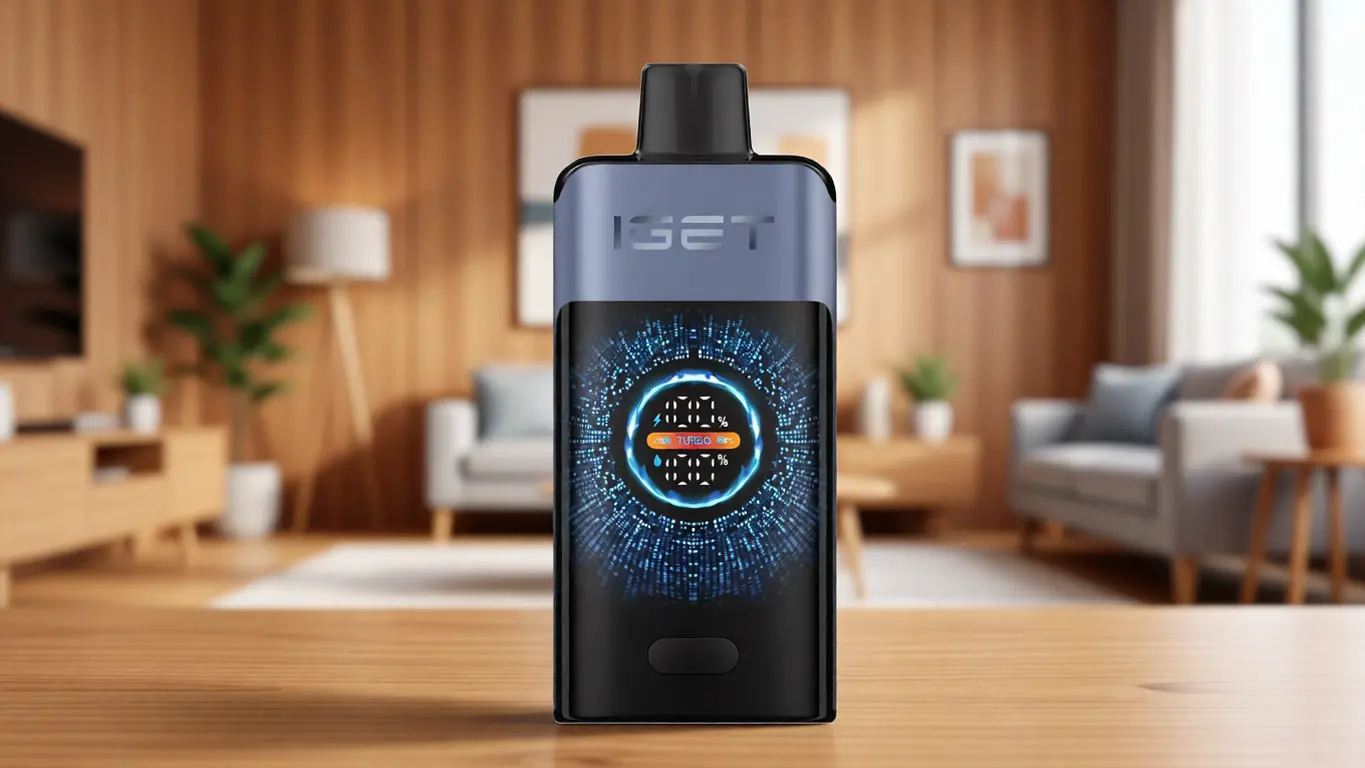
Q: Does OZVAPE Shop provide documentation that helps with travel compliance?
A: Yes. The product listings on the platform include detailed specifications, including battery type and capacity, which can be printed or saved for screening purposes.
The Bottom Line
Travelling with a personal electronic device does not need to be a source of anxiety, but it does require a shift in mindset: treat the device as what it is under aviation law — a lithium‑battery‑powered item subject to dangerous goods regulations. The rules are not arbitrary; they are rooted in thermal and electrical safety considerations that are well understood by engineers who design devices for real‑world use.
The difference between a smooth journey and a confiscation at the gate often comes down to the predictability of the device itself. A unit that fails to communicate its status, leaks under pressure, or activates when jostled is a liability. A unit built with thoughtful power management, robust sealing, and clear status indication — the very qualities that distinguish collections such as ALIBARBAR — dramatically reduces the traveller’s risk.
For adults seeking reliable information and factory‑certified devices that align with current aviation standards, OZVAPE Shop serves as a transparent resource. But the ultimate responsibility rests with the individual. Read the policies. Prepare your bag methodically. Choose devices whose design reflects an understanding of the environments in which they will be used. The right choice is the one that keeps you compliant, safe, and undistracted by avoidable airport friction.