
VAPE FAQs
Can I Bring Disposable Vape To Korea?
Oct
Introduction
The question is deceptively simple—”Can I bring a disposable vape to Korea?”—yet the answer sits at the intersection of aviation safety protocols, international customs law, rapidly shifting public health policy, and the physical design of the device you are holding. For over a decade, travellers have learned that what works in one country will be confiscated at the border in another, and that well‑meaning online forum advice is often outdated within months. The result is a quiet, persistent anxiety: you pack a device that has become part of your daily routine, but you cannot be certain you will be allowed to carry it past immigration.
Part of the problem is that a disposable vape is not a single, uniform object. It is a lithium‑ion battery, a heating element, and a reservoir of liquid whose classification—tobacco product, consumer electronic, or something else—varies by jurisdiction. Understanding whether you can legally and practically bring one into the Republic of Korea demands that you look at both the regulations governing the country’s entry and the specific engineering characteristics of the device you own. At OZVAPE Shop{:target=”_blank”}, we have always held that a responsible relationship with an adult device begins with honest, technically grounded information. This article provides a framework for making that travel decision with clarity, not guesswork.
Understanding What Matters: Travel Regulations and Device Characteristics
To answer the border question reliably, you need to examine two independent sets of criteria: the rules enforced by airlines and customs authorities, and the design attributes of the device that either satisfy or fall short of those rules. Neither can be sacrificed for the other.
Aviation Battery Safety Rules
Every disposable vape contains a non‑removable lithium‑ion cell. Under International Air Transport Association (IATA) Dangerous Goods Regulations, portable electronic devices powered by lithium‑ion batteries are not permitted in checked baggage. They must be carried in the cabin, and many airlines impose a limit on the total number of spare batteries. Even though a disposable vape is a single sealed unit, its battery is not immune from the fundamental restriction: if it ends up in the cargo hold and suffers thermal runaway, there is no crew available to respond.
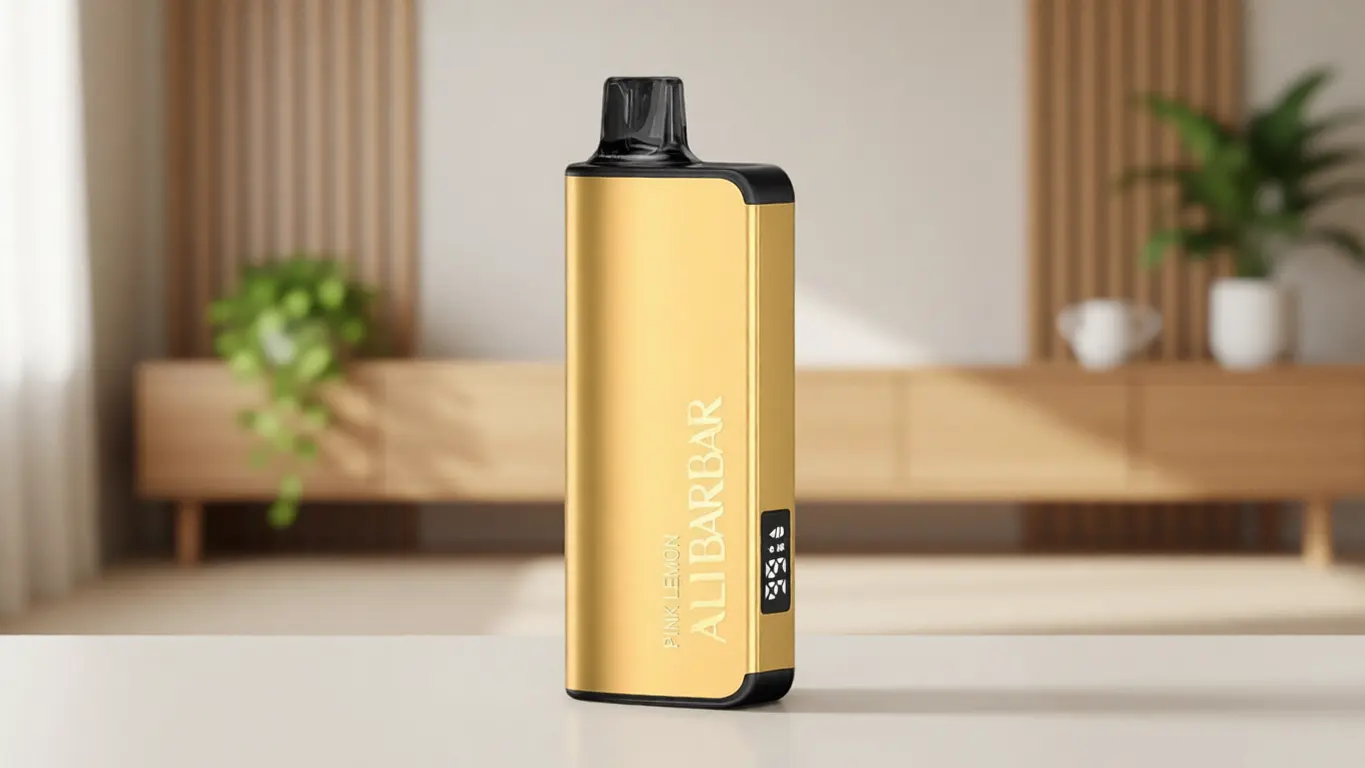
When you travel with a device like the ALIBARBAR INGOT 9000—engineered with a compact, fully enclosed cell that stays well under the 100‑watt‑hour threshold—you are already compliant with the universal carry‑on requirement. However, a device with no visible battery rating or with a non‑standard cell size can draw scrutiny at security screening. The practical takeaway is that a travel‑ready disposable should have its battery capacity clearly documented either on the device or in accompanying packaging, so you can demonstrate compliance without an extended conversation at the checkpoint.
Customs Import Regulations for Korea
South Korea’s approach to personal electronic vaporising devices is layered. At the time of writing, authorities classify nicotine‑containing liquids as tobacco products under the Tobacco Business Act, which means they attract customs duties and may be subject to special excise tax. A traveller carrying a small number of devices for personal use is generally not penalised if the quantity is consistent with individual consumption, but there is no publicly stated minimum exemption that guarantees duty‑free entry. The Korea Customs Service advises that all tobacco products—including e‑cigarettes containing nicotine—must be declared upon arrival. Failure to declare can lead to confiscation and a fine.
The ambiguity becomes acute with disposables. A device that contains nicotine but does not state the concentration on the label leaves the customs officer with no way to verify what they are handling. That uncertainty tends to work against the traveller. This is why the most practical travel accessories are not accessories at all—they are documentation and transparent labelling. When a manufacturer goes to the effort of specifying liquid volume, nicotine strength, and battery rating on the device body, as is the case across the ALIBARBAR range, you reduce the friction at the point of declaration. The device becomes a known, quantifiable object, not a grey‑area mystery.
Physical Design and Travel Durability
Border regulations capture the legal dimension, but the physical journey itself introduces a separate set of demands. A device tossed into a carry‑on bag will be subjected to pressure changes, vibration, and hours of jostling. Mouthpieces can crack, poorly sealed reservoirs can weep liquid onto clothing or electronics, and exposed air‑flow sensors can be compromised by lint or debris. In a hotel room at the other end, you may discover that a device that worked perfectly at departure is now unresponsive.
Design choices that seem aesthetic at first glance become functional during travel. Recessed mouthpieces, such as the one featured on the ALIBARBAR Ice Adjust 12000, minimise the risk of accidental activation or damage in a packed bag. A chassis machined from materials that resist surface abrasion and do not rely on a thin plating that peels under friction will survive the trip without looking worn. These are not luxury features; they are deliberate engineering decisions that extend the usable life of the device across the very conditions travel imposes.
Documentation and Proof of Authenticity
When a customs officer questions a device, the burden of proof falls on the traveller. You are being asked, implicitly, to demonstrate that the object you carry is what you claim it is—a standard, factory‑produced consumer good, not a counterfeit or an unregulated product. Having a purchase record that ties the serial number to an authorised source changes the equilibrium of that exchange. It signals that the device entered the retail chain through legitimate channels and is backed by a verifiable entity.
This is one area where the sourcing practices of a retailer matter directly to the end user. An authorised distributor that provides clear invoices, batch codes, and specification sheets gives you a paper trail that can be accessed from a phone at immigration. It is not a guarantee of entry, but it is the difference between presenting an anonymous object and presenting a properly documented product.
Applying These Criteria to Real‑World Options
While travel regulations are universal, devices vary enormously in how gracefully they meet them. The ALIBARBAR family has been built around the principle that a user should never have to compromise visibility of status and durability for portability. Each of the current‑generation models—the INGOT 9000, INGOT 15000, and Ice Adjust 12000—approaches the travel challenge from a slightly different angle, but they share common DNA that makes them worth examining against the framework above.
The INGOT 9000 is the series at its most compact and inconspicuous. It fits into the small pocket of a bag without creating a visible bulge, and its battery capacity—documented and well below the hazardous‑goods threshold—makes it a low‑friction companion through security. For a traveller who wants a device that demands virtually no attention, this is a sensible point of reference.
The INGOT 15000 stretches the concept toward longer duration. Its higher liquid capacity means fewer occasions to wonder whether the device will last through a full business trip without the need to pack a spare. The engineering challenge here was to increase the reservoir without making the housing bulky or fragile—something achieved through internal partitioning that keeps the weight distribution balanced and the external profile slender. For a traveller whose schedule is unpredictable, that capacity translates directly into one fewer variable to manage.
The Ice Adjust 12000 adds a layer of user control that is rare in a disposable form factor. An adjustment dial on the bottom allows the user to fine‑tune the air‑flow resistance, which is less about personal preference and more about adapting to the environment. A device that draws too loosely might be uncomfortable in the dry, pressurised air of an aircraft cabin or in the humidity of a Korean summer. Having the ability to make a tactile adjustment without resorting to menus or companion apps is an example of a design that respects the user’s context.
None of these devices can rewrite Korea’s customs regulations. They can, however, remove ambiguity from the traveller’s side of the equation. A device with clear labelling, known battery parameters, a durable housing, and a traceable purchase history does not guarantee entry—but it systematically eliminates the avoidable sources of trouble.
A Practical Framework for Evaluation
When we advise travellers on device selection, we walk them through a series of diagnostic questions that they can apply to any product in their possession. This methodology does not rely on brand knowledge or inside information; it uses only publicly available specifications and common‑sense observation.
Battery identification: Can you locate the watt‑hour rating on the device or its original packaging? If the answer is no, assume it will be questioned at security. A device that hides this information is not travel‑ready.
Liquid composition clarity: Does the labelling state whether the liquid contains nicotine and at what concentration? Without this, a customs officer cannot classify the product, and the default position is usually confiscation.
Carry‑on suitability: Is the device small enough to fit into a standard liquids bag if required? Even if it is not a liquid, a device that looks like a large container may draw secondary inspection.
Physical integrity under stress: Press the mouthpiece firmly with your thumb—does it flex or click? A device that deforms under pressure is unlikely to survive a transcontinental flight intact.
Documentation availability: Do you have a digital receipt that includes a batch number or serial? Screenshot it and save it to a cloud‑accessible folder before you leave.
A device that passes all five of these checks is not magically exempt from Korea’s regulatory apparatus, but it has been reduced to its simplest, most transparent version. And in an environment where officials must make fast decisions based on incomplete information, simplicity is the traveller’s strongest asset.
Common Selection Errors and Industry Observations
In years of observing how adults interact with the portable electronics market, we have identified a small set of systematic errors that routinely lead to disappointment at borders. They are worth naming directly.
The first is assuming visual uniformity implies internal equivalence. Two matte‑black cylindrical devices may look nearly identical, but one might contain a battery rated at 0.5 Wh while the other holds a cell rated at 15 Wh. If the airline security agent cannot see the rating, both devices are treated as equally suspect. Design alone, without accompanying data, is a weak argument at a checkpoint.
The second is overweighting capacity while ignoring status transparency. A traveller excited by a product advertised as containing 10,000 puffs may not realise that the device gives no indication of remaining battery life or liquid level. Arriving in Seoul with no warning that the device will stop functioning within the next four hours is a self‑inflicted frustration.
The third error is undervaluing the role of the retailer in the documentation chain. A device purchased from an anonymous source with no invoice or provenance strips the traveller of the ability to prove legitimate ownership. When we talk about trust in the supply chain, we are really talking about whether or not you can produce evidence that the product you are carrying is a standard retail item from a known manufacturer.
An industry‑level observation worth noting is that the rapid proliferation of disposable devices across global markets has triggered a regulatory response that is still settling. South Korea is not alone in tightening border controls and demanding clearer labelling. The trend is unmistakable: the era of the anonymous, unlabelled disposable crossing borders without comment is coming to a close. Travellers who prepare for this shift now will encounter far less friction than those who wait until enforcement becomes uniform.
Frequently Asked Questions
Q: Can I bring a disposable vape into Korea in my carry‑on luggage?
A: Yes, lithium‑ion‑powered devices must be carried in the cabin, not in checked baggage. This applies to all disposable vapes, regardless of brand.
Q: Do I have to declare my disposable vape at Korean customs?
A: If the device contains nicotine, it is classified as a tobacco product under Korean law and must be declared. Even if you are unsure, declaring eliminates the risk of a fine for non‑declaration.
Q: How many disposable vapes can I bring into Korea for personal use?
A: There is no fixed number published by the Korea Customs Service, but quantities must be consistent with personal use. Carrying more than a handful may be interpreted as intent to distribute, which triggers additional scrutiny.
Q: Are ALIBARBAR devices compliant with Korean import requirements?
A: ALIBARBAR devices carry clear labelling of liquid volume, nicotine concentration, and battery specifications, which simplifies customs declaration. Compliance is ultimately determined by the officer, but the devices are designed to reduce ambiguity.
Q: Can I vape indoors in Korea?
A: No. Korea has strict smoking bans covering most indoor public spaces, and e‑cigarettes are included. Use is limited to designated smoking areas and private premises.
Q: What happens if my device is confiscated at the airport?
A: You will typically not receive compensation, and the device will be destroyed. It is not retrievable, so the cost of the device should be weighed against the risk of non‑compliance.
Q: Do I need to pack my disposable vape in a clear bag at security?
A: While not universally required, placing the device in a clear resealable bag alongside other small electronics can reduce handling and questioning at screening.
Q: Is there an age restriction for bringing vape products into Korea?
A: Yes. The legal age for purchasing and possessing tobacco products in Korea is 19. Customs may verify age if quantities suggest more than incidental personal use.
Q: Can I bring replacement pods or cartridges separately?
A: For disposable devices, there are no separate pods. If you carry multiple complete devices, the same rules apply. Any liquid reservoir, even sealed, should be treated as a potential customs item.
Q: Where can I find the latest Korean customs regulations on e‑cigarettes?
A: The official Korea Customs Service website provides updates, but the information may be in Korean. Alternatively, your local embassy can often provide a summary of current entry requirements.
Conclusion
The central insight of this article is that the question “Can I bring a disposable vape to Korea?” is not answered by a simple yes or no. It is answered by the quality of your preparation. An informed traveller who understands the battery safety rules, the customs declaration process, and the specific characteristics of the device they carry can navigate the border with predictable, low‑stress outcomes. The unknown—poor labelling, missing documentation, ambiguous device status—is what introduces risk.
This is why we return, finally, to the role of the retailer. A trustworthy source does not merely ship a product; it equips you with the documentation and specification clarity that turn a potential border problem into a routine declaration. For those who value that level of preparation, OZVAPE Shop{:target=”_blank”} has structured its entire operation—from authorised supply chains to standardised product data—to reduce the friction that travels with an under‑documented device. In the end, the right device for the journey is the one that leaves you with nothing to explain and nothing to hide.