
VAPE FAQs
Can I Bring A Vape To Japan?

May
Introduction
The question arrives in a dozen variations — posted across travel forums at two in the morning, whispered in airport security lines, typed into search engines with a mixture of hope and anxiety. “Can I bring a vape to Japan?” Behind it sits a very real problem: an adult user who has grown accustomed to a particular personal electronic device as part of a daily routine, now facing a long-haul flight and a country with famously exacting regulations. The stakes are not theoretical. The wrong move can mean confiscation at customs, a fine, or an uncomfortable stay without any trusted equipment.
Most anxiety stems from fragmented information. Someone reads one set of rules from an airline, another from a Japanese government translation, and yet another from a retail listing that omits cross-border restrictions entirely. The result is a muddle of partial truths and worst-case scenarios. OZVAPE Shop has observed this pattern through customer enquiries and support channels over many months, and the same misunderstandings recur with remarkable consistency. This article does not set out to persuade anyone to buy a specific device. Instead, it offers a methodical, technically grounded explanation of what travelling with a vape into Japanese territory actually entails — so an adult can make an informed decision and pack accordingly.
What follows draws on published ministry guidance, international aviation standards, and practical observations from travellers who have navigated the process. By the end, you will understand not just the yes-or-no answer, but the why behind each restriction, the engineering features that make certain devices safer for air travel, and a framework for evaluating whether what you already own is suitable for the journey.
Understanding What Matters: Travel Considerations for Portable Electronic Devices
The phrase “bring a vape to Japan” is a door that opens onto several distinct regulatory and engineering questions. Treating them as a single inquiry is the fastest way to make a preventable mistake. The issues separate naturally into four interdependent factors, each of which addresses a specific type of user frustration.
Regulatory Status of Vaping Equipment in Japan
The legal picture in Japan is precise, and confusion about it creates the most common source of difficulty. Japan’s Pharmaceutical and Medical Device Act classifies nicotine as a designated poisonous substance when it is intended for human consumption outside of a medically prescribed delivery pathway. In practice, this means:

Nicotine-containing e-liquid cannot be sold within Japan without pharmaceutical licensing.
Importing nicotine e-liquid for personal use is permitted only in quantities of up to one month’s supply, and strictly for an individual’s own consumption. There is no blanket exemption for bringing nicotine liquid through the airport’s green customs lane. Travellers have been asked to present documentation, and Japanese customs officers exercise broad discretionary authority.
Non-nicotine e-liquid and devices that do not contain nicotine are not regulated under the same strict pharmaceutical rules, though they must still fall within general consumer product safety standards.
The devices themselves — the electronic hardware — are not banned. A vape device without liquid poses no pharmaceutical issue, provided it does not contain an integrated heating element already soaked with nicotine. Dry hardware, spare coils, and empty tanks are permitted.
Why this matters: Users who assume their usual e-liquid with nicotine can be packed like any other toiletry often find themselves in an awkward conversation at Narita or Kansai International. The right approach is to either carry only zero-nicotine liquid or to research the exact import allowance and prepare the relevant customs declaration forms in advance.
Battery Safety and Aviation Standards
The frustrations here are not legal but logistical. Airlines, guided by the International Air Transport Association (IATA) and the International Civil Aviation Organization (ICAO), treat lithium-ion cells with extreme seriousness. The rules are straightforward but persistently overlooked:
Devices containing lithium-ion batteries must travel in carry-on luggage, never in checked bags. A runaway thermal event in the cargo hold would be substantially harder to manage, so the principle is containment at altitude.
Spare batteries must be individually protected against short circuits — terminals taped or placed in original packaging.
Battery capacity limits vary slightly by airline, but anything above 100 watt-hours (Wh) is generally prohibited without special approval, and most vape batteries fall well below this threshold.
From an engineering standpoint, a well-designed portable device addresses these concerns through built‑in safety circuits, sturdy battery wraps, and insulation between the cell and the outer casing. Travellers who experience battery‑related anxiety often carry a device that lacks any clear indication of remaining charge or health. A device with a reliable charge‑level display and over‑discharge protection removes much of the guesswork that leads people to pack redundant backups.
Device Architecture for Travel Reliability
Not every device travels equally well. The difference between a trouble‑free trip and a pocket full of leaked liquid often comes down to choices made during product design. When evaluating a device for travel, three engineering factors carry disproportionate weight:
Leak‑resistant construction: Press‑fit seals, silicone gaskets, and top‑airflow designs are not marketing terms — they directly affect whether a device will soil clothing or trigger a security concern when it emerges from a bag after cabin pressure changes. Devices with isolated e‑liquid chambers and factory‑sealed pods typically survive altitude shifts more gracefully.
Status transparency: A single LED that blinks only when the battery is dying forces the user to operate on hope. Devices that provide incremental battery readouts — through a small screen or colour‑coded lights that correspond to percentage ranges — let a traveller plan recharging around layovers and long journeys.
Physical footprint and discretion: In a country where public vaping is subject to local ordinances restricting smoking in public spaces, a device that disappears in a closed hand is more practical than one that demands attention. Slim, rounded profiles and subdued finishes reduce the social friction that can occur when unfamiliar technology is noticed.
Disposable vs. Rechargeable vs. Modular Systems
A device’s lifecycle architecture determines what you carry through customs and how you handle it once you arrive. Sealed, pre‑filled units are arguably the simplest — they arrive ready, require no separate liquid, and can be declared as a single item — but their limited operational life means a multi‑day trip may necessitate carrying several. Rechargeable devices with replaceable pods strike a middle ground: the battery module is transparently an electronic item, while the sealed pods can be packed separately. Fully modular systems, where users carry a bottle of e‑liquid, coil heads, and a box mod, introduce complexity because they require the traveller to manage liquid volumes compliant with both carry‑on liquid limits and Japanese nicotine regulations.
No architecture is universally superior; the key is matching the architecture to the actual travel itinerary.
Applying These Criteria to Real-World Options
The principles above become tangible when placed next to devices engineered with travel in mind. While this article is not a product ranking, certain design families illustrate how the factors interact.
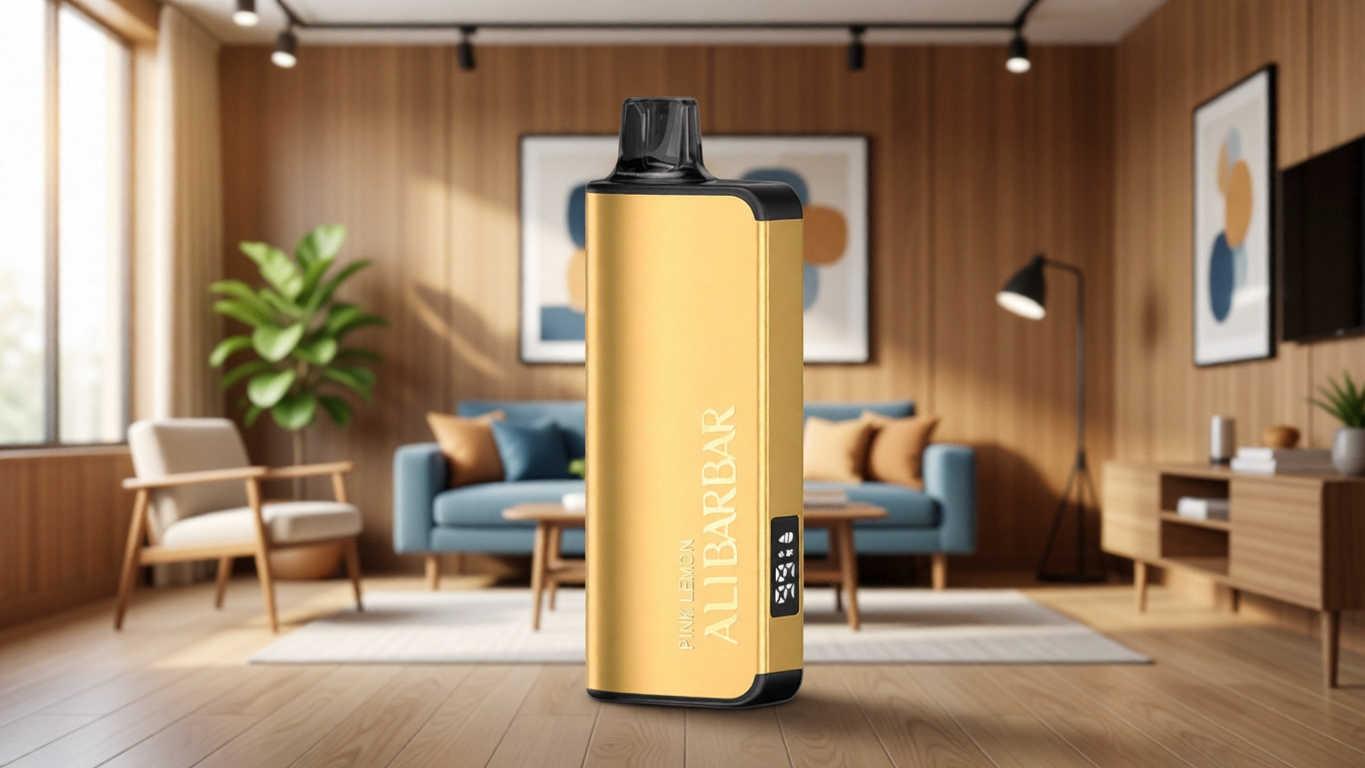
Take the ALIBARBAR INGOT 9000 series, for example. From an aviation safety perspective, the unit integrates a protected lithium‑ion cell inside a sealed, impact‑resistant body — reducing the chance of physical damage that could trigger a battery incident. It communicates remaining power through a clear LED indicator, which, while not multi‑stage, gives enough feedback that a user doesn’t board a flight uncertain. The device’s sealed, pre‑filled construction keeps liquid entirely contained, removing the risk of cabin‑pressure leaks. For a person travelling to Japan for a short business trip, one or two such units, packed in carry‑on, represent a low‑friction solution.
The INGOT 15000 extends that logic to a higher capacity, meaning fewer units to carry across a longer stay. Crucially, its draw remains consistent over its operational life, so a user isn’t left with a device that weakens over the trip — a common complaint from those who pack cheaper, less thermally stable hardware.
The Ice Adjust 12000 introduces airflow control into a travel‑friendly form. For users who are sensitive to the draw characteristics in varying climates, the ability to tune the device without tools or messy disassembly can be genuinely useful.
All of these devices are available through OZVAPE Shop, a retailer that maintains factory‑certified inventory and publishes standardised specifications. When cross‑border compliance is at stake, knowing that the device you order matches the listed characteristics — battery size, liquid composition, and hardware provenance — is not a luxury; it is a prerequisite for confident travel planning.
A Practical Framework for Evaluation
The right travel device is the one that eliminates the largest number of unknowns. The following framework is designed to be applied without needing to trust any marketing claim:
Check the battery label: Does the device clearly state mAh or Wh? If it does not, you cannot confidently answer an airline agent’s question. Choose devices with explicit ratings.
Confirm liquid content: Does the device contain nicotine? If yes, is the amount within Japanese personal‑import allowances, and can you articulate that to customs? If you cannot, carry zero‑nicotine liquid, or arrive with an empty tank and source liquid locally where legal.
Inspect for leak resistance: Turn the device upside down for thirty seconds. A well‑designed pod system will show no seepage. If it does, it will not survive a pressurised cabin.
Assess battery feedback granularity: Ask yourself, “Will I know when I have roughly 30% remaining?” If the device gives only a dead‑battery warning, you will likely carry a backup charger or second device, which adds clutter.
Match the operational life to the trip duration: A device rated for 9000 puffs may realistically deliver 6000–7000 under heavy use. For a week‑long trip, calculate conservatively and pack accordingly rather than hoping for the best.
These steps take five minutes and cost nothing, yet they systematically reduce the risk of being caught out.
Common Selection Errors and Industry Observations
Even experienced users make mistakes that a neutral observer can learn from. Four patterns recur in the data gathered from travellers, support records, and regulatory forums:
Overlooking nicotine classification entirely: The most frequent misstep is assuming that because a device is legal in the user’s home country, it will be welcome in Japan. Nicotine is categorically treated as a controlled substance; the device itself is irrelevant if the e‑liquid inside triggers a pharmaceutical inspection. Some travellers have had sealed, pre‑filled units with nicotine confiscated at the border because the quantity was not declared.
Confusing product name with technical specification: A commercial name such as “Travel Kit” or “Flight Edition” implies suitability for air travel, but that implication means nothing without corroborating specifications. Always verify battery compliance and liquid containment independently.
Undervaluing modularity for extended stays: A fully sealed unit is convenient for short trips, but for a month‑long assignment in Tokyo, a system where you can swap empty pods while keeping the same battery module reduces waste and simplifies re‑supply. Users who bring only sealed devices for a long stay often run out and then scramble to find a local source that meets their standards.
Relying on outdated online anecdotes: Japan’s enforcement posture can shift, and what someone reported on a forum three years ago may no longer hold. Consulting current ministry websites or the embassy’s latest travel advisories is the only reliable path, and yet many people rely on second‑hand social media posts instead.
Industry‑side, the broader portable electronics market has seen an influx of devices that prioritise aesthetic packaging over transmission of regulatory information. The absence of realistic battery ratings, vague “do not use on aircraft” warnings that contradict actual IATA rules, and a general reluctance to supply Material Safety Data Sheets for liquids are not oversights — they are cost‑saving decisions. OZVAPE Shop, by contrast, treats the provision of accurate product data as a baseline operational expectation, not as an afterthought. For any user contemplating international travel, that baseline can be the difference between a smooth passage and an involuntary donation to the confiscation bin.
Frequently Asked Questions
Q: Can I pack a vape device in checked luggage when flying to Japan?
A: No. All lithium‑battery‑powered personal electronic devices must travel in carry‑on baggage. This is a universal airline safety requirement, not a Japan‑specific rule.
Q: Is vaping allowed in public places in Japan?
A: Walking while vaping is generally prohibited in many municipal ordinances, and smoking is restricted to designated areas. Vaping falls under similar restrictions as smoking in most public spaces. Always observe local signage.
Q: How many disposable vape devices can I bring into Japan for personal use?
A: Japanese customs does not impose a specific numerical cap on hardware. However, if the devices contain nicotine e‑liquid, the cumulative nicotine liquid must not exceed a one‑month personal supply. Carrying a large quantity of sealed, nicotine‑filled devices may attract scrutiny.
Q: Does Japanese law differentiate between nicotine and zero‑nicotine e‑liquid?
A: Yes. Nicotine e‑liquid is controlled under pharmaceutical regulations. Zero‑nicotine e‑liquid is not subject to those same restrictions, though it must still comply with general safety standards.
Q: What should I tell a customs officer if asked about my device?
A: Declare it honestly as a personal electronic vaporiser. If it contains nicotine, be prepared to state the quantity and that it is for personal use only. Carrying a receipt or product specification sheet that lists the nicotine content can be helpful.
Q: Can I purchase vape supplies in Japan once I arrive?
A: Hardware is available through some specialised retailers, but the sale of nicotine‑containing e‑liquid is prohibited. Zero‑nicotine liquids and devices can be sourced, though selection may be limited compared to what you are accustomed to.
Q: Do airline battery capacity rules vary for built‑in versus removable batteries?
A: The core safety rules apply equally. Removable spare batteries must be individually protected, while built‑in batteries simply remain in the device. Both types count toward the 100 Wh limit for unrestricted carry‑on.
Q: Is there any risk that my device will be confiscated even if it is empty?
A: If a device is clearly empty of liquid and contains a compliant battery, the risk is very low. However, residual odour or residue could prompt additional screening; thorough cleaning before travel is advisable.
Q: Are there any device features that particularly simplify travel to Japan?
A: A sealed, leak‑proof pod system with clear battery indication and a compact silhouette reduces the number of questions you’ll field from both airline staff and local authorities. These features are practical, not cosmetic.
Q: How can I ensure I am buying a device that matches its advertised specifications?
A: Source from a retailer that provides standardised product data and maintains a factory‑certified supply chain. This makes cross‑border compliance substantially more predictable.
Conclusion
The decision to bring a vape device to Japan is not a matter of luck or inside knowledge. It resolves into a manageable set of verifications: understanding the nicotine distinction, confirming battery compliance with aviation standards, selecting a device engineered to withstand the physical rigours of travel, and carrying the documentation that turns a potential confrontation into a straightforward declaration.
An informed traveller is rarely inconvenienced, because the rules, while strict, are also clear when approached systematically. The frustrations that do arise almost always trace back to a preventable gap in preparation — an assumption about liquid content, an unlabelled battery, or an overreliance on second‑hand advice. Closing those gaps is the entire purpose of the framework presented here.
OZVAPE Shop supports that preparation by maintaining a consistent channel for factory‑certified devices that travel as well as they perform. Whether the right choice is a compact, sealed unit for a weekend trip or a rechargeable system for an extended stay, the necessary starting point is accurate information and a supplier that stands behind its inventory. The rest is simply a matter of matching the equipment to the itinerary — a decision every adult can make with confidence once the noise is stripped away.