
VAPE FAQs
Can Hotel Smoke Detectors Detect Vape?
Oct
Hotel smoke detectors are a source of quiet anxiety for many travellers. The moment you check in, there is an unspoken calculation: will the device in my bag, used with everyday regularity, suddenly become the reason a fire alarm blares across an entire floor? The uncertainty is understandable. Detectors are designed to react to airborne particles, and the aerosol from an electronic device is, by definition, a cloud of particles. Yet the relationship is not binary. Whether an alarm sounds depends on a precise interplay between the detector’s internal mechanism, the physical properties of the aerosol, and the behaviour of the person using the device. At OZVAPE Shop, we regularly field questions that reveal how little reliable information exists on this topic — so this article offers a plain‑language engineering explanation, not a workaround guide. The goal is to replace vague worry with a working mental model you can apply anywhere.
Understanding the Detection Mechanism: How the Ceiling Sensor Sees the Room
The two detector technologies found in nearly every hotel have fundamentally different sensitivities to vapour. Knowing which one sits above your head removes a great deal of the guesswork.
Ionisation Detectors: Small‑Particle, Combustion‑Biased Sensors
Inside an ionisation chamber, a tiny radioactive source continuously ionises air molecules, creating a steady electrical current. Smoke particles from combustion are relatively small (typically 0.01–0.3 microns) and electrically conductive; when they enter the chamber, they attach to ions, disrupt the current, and trigger the alarm. The aerosol from a personal electronic device, however, consists mostly of condensed liquid droplets that are larger — usually between 0.3 and 2.0 microns — and far less conductive. In a clean, well‑ventilated room, an ionisation detector will often ignore vapour simply because the particles don’t behave like combustion by‑products. The engineering threshold was never tuned for glycerin‑based droplets.
Photoelectric Detectors: Optical Scatter and the Density Problem
Photoelectric units work on an entirely different principle. A light source beams inside a dark optical chamber, positioned so that its beam normally misses the photocell. When particles enter, light scatters onto the sensor. These detectors are exquisitely sensitive to larger, visible aerosols — exactly the sort produced by high‑output devices. Even modest vapour that looks translucent to the human eye can contain enough sub‑visible liquid droplets to scatter light and push the alarm threshold. Most modern hotels have shifted toward photoelectric detectors because they respond faster to smouldering fires, which makes them less forgiving when vapour is dense or proximity is close.
The critical variable is not “smoke versus vapour” but optical density. A brief exhalation near an open window might register as background noise. The same exhalation directed toward a photoelectric detector’s inlet slots two metres away can trip the alarm in under ten seconds.
The Air Movement Factor
Hotel rooms are not static environments. Air conditioning systems pull particles upward toward intake vents, often located near detectors. Steam from a shower changes ambient humidity, which can temporarily increase the sensor’s baseline noise level and make it more susceptible to false triggers. Ceiling fans and open windows create turbulence that can carry a concentrated plume directly into the sensing chamber. The lesson is straightforward: the room itself is an active participant in detection events.
Device Design and Output: What Engineering Tells You About Risk
Not all personal electronic devices present the same interaction profile. The way a unit is built — its heating element, power delivery, and airflow path — shapes the volume, temperature, and buoyancy of the aerosol it generates. Understanding these features helps you evaluate, rather than guess, how a device might behave in a sensor‑equipped space.
Heating Architecture and Aerosol Density
Devices built around mesh or flat‑plate heating surfaces tend to produce cooler, finer aerosol than those using traditional wire coils. Cooler aerosol condensate droplets are larger, fall out of suspension faster, and travel shorter distances before dissipating. That means they are less likely to reach a ceiling‑mounted detector in sufficient concentration to scatter light. In contrast, high‑wattage devices with extended firing times can generate a plume that remains optically dense for several metres. The engineering trade‑off — the same one that produces a more “satisfying” output — is that the plume interacts with environmental sensors more aggressively.
Adjustable Airflow and Exhale Control
Units that allow the user to tighten the draw resistance also reduce the volume of aerosol produced per activation. While this is primarily a taste and feel adjustment, it has a secondary effect on exhaled cloud volume. A mouth‑to‑lung device operated at restricted airflow can produce an exhalation so faint that it would be difficult to distinguish from warm breath, which no detector is designed to flag. The user has not circumvented the system; they are simply operating below the optical noise floor.
Status Transparency and Behavioural Feedback
One often‑overlooked design element is the device’s own feedback. A unit that communicates its activation status clearly — through a haptic indicator, a subtle LED, or a consistent draw‑completion signal — reduces the tendency to “chase” a denser output. When users are uncertain whether a device fired correctly, they may take longer draws or multiple rapid activations, which increases local aerosol concentration. A well‑designed device therefore contributes to predictable, consistent behaviour, which in turn lowers the chance of an unintentional plume near a sensor.
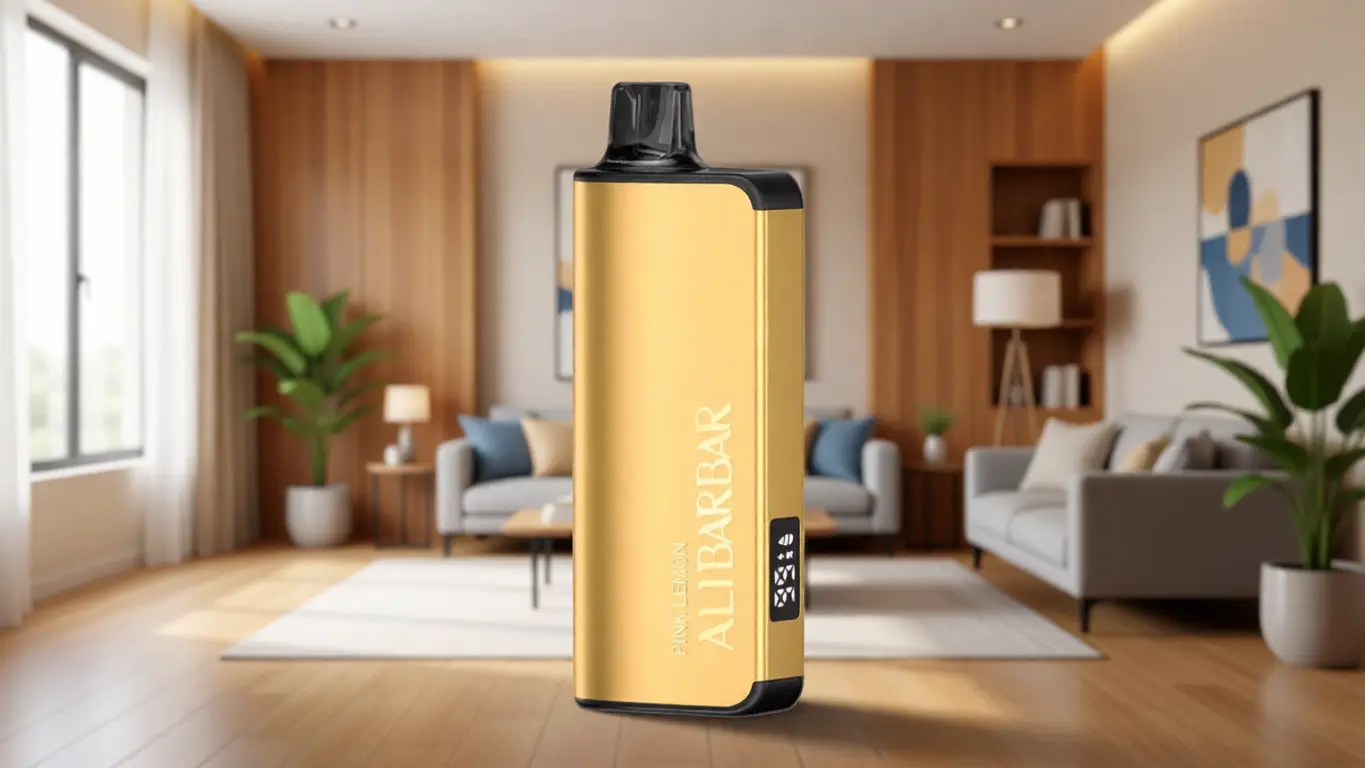
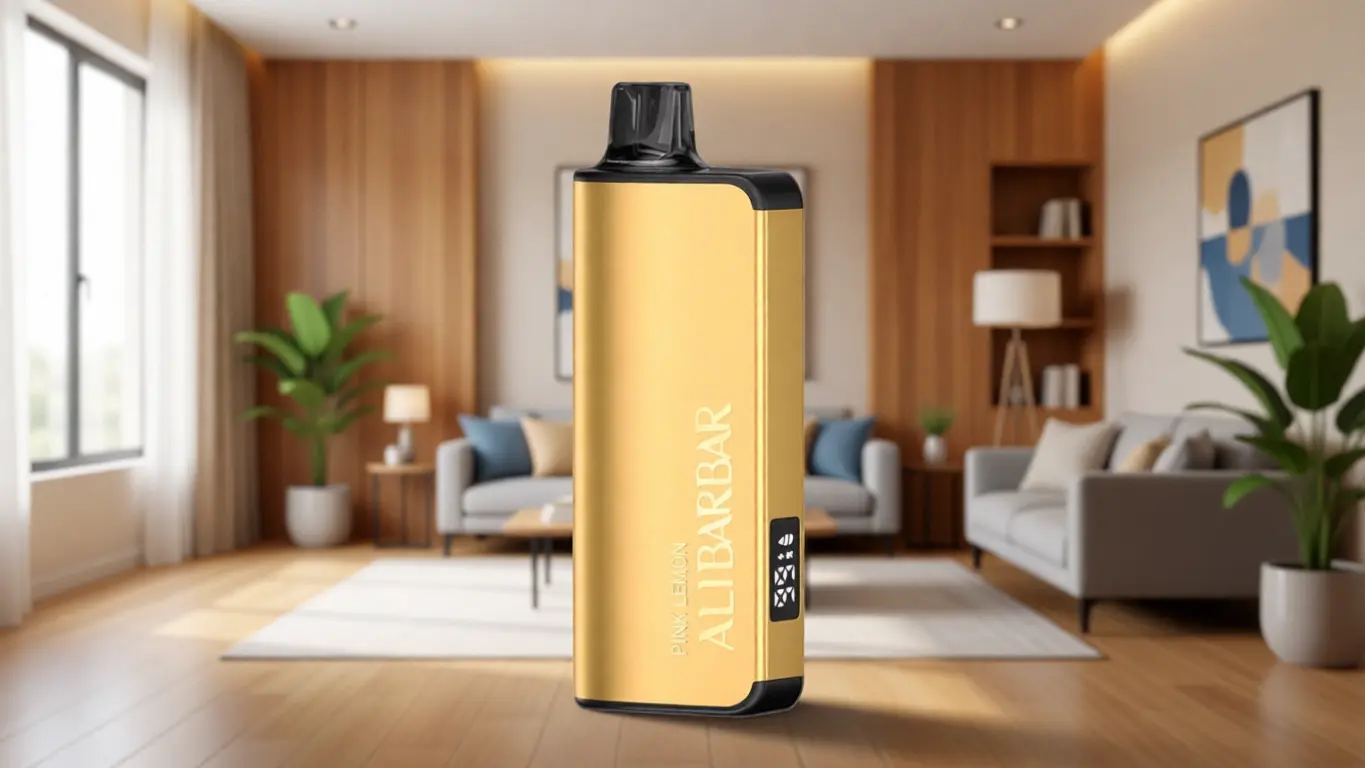
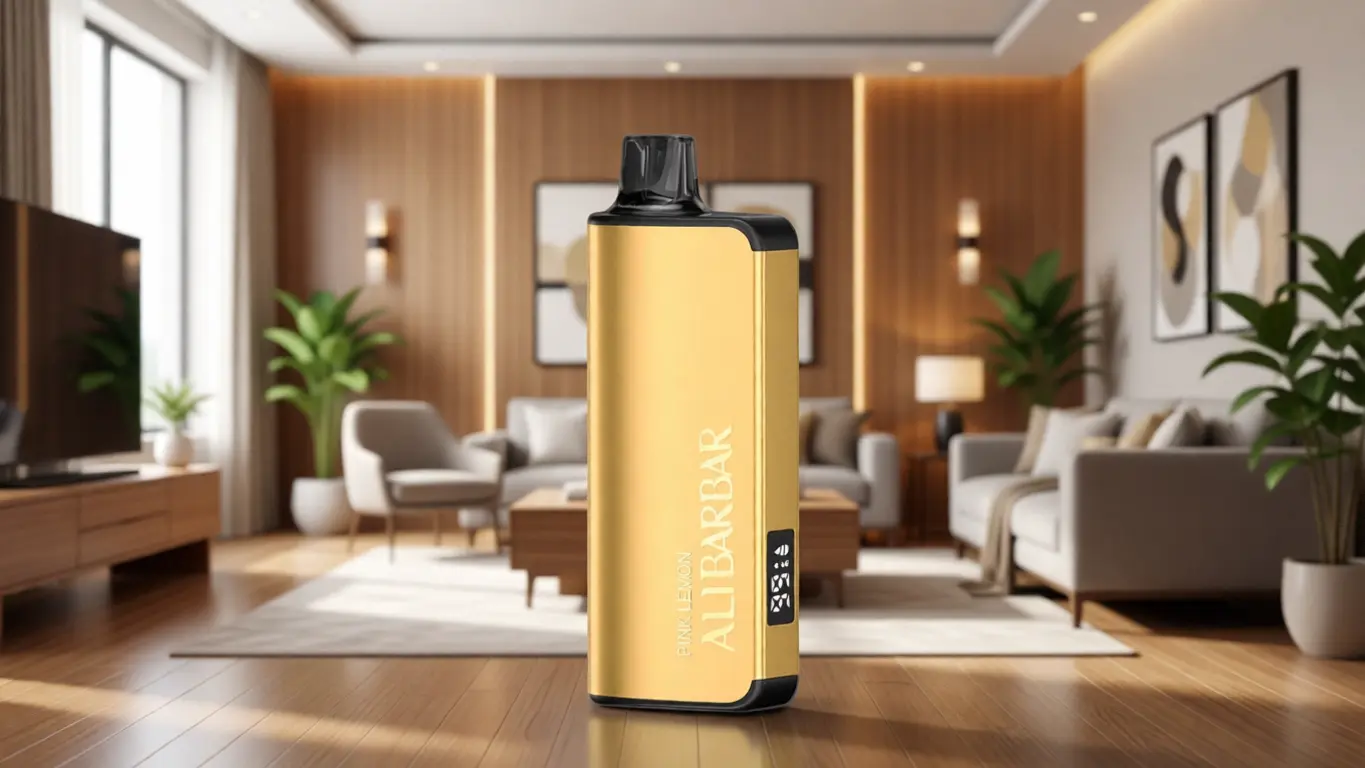
At OZVAPE Shop, the product families we offer — including the ALIBARBAR range — are built with clearly defined heating architectures and, in many cases, adjustable airflow paths. This isn’t marketed as an anti‑detection feature, because no responsible manufacturer would make such a claim. It is simply good engineering that gives the user finer control over the device’s output signature, which has practical implications for shared environments.
A Practical Evaluation Framework for Any Indoor Space
You don’t need to read sensor datasheets to make an informed decision. A short, structured assessment — performed before you use a device in an unfamiliar room — can identify most risk factors.
Identify the detector type. Look at the unit on the ceiling. If you see a small “I” or radiation symbol, it’s ionisation. If you see a “P” or a round optical chamber visible through the casing, it’s photoelectric. Photoelectric requires much more caution.
Map the airflow path. Stand where you intend to operate the device. Turn on the air conditioner or open the window slightly. Use a strip of tissue paper to trace how air moves from your position upward. If the air drifts directly toward the detector, risk is elevated.
Assess your device’s output class. Low‑power, mouth‑to‑lung devices with cool aerosol present a fundamentally different risk profile than high‑wattage, direct‑lung devices. Be honest about which category you hold.
Consider the exhaust strategy. Exhaling toward an open window, into an exhaust fan, or into a damp towel folded loosely around the hand can reduce particle suspension dramatically. The goal is not to hide anything; it is to prevent a dense cloud from forming in the room’s detection zone.
Check the hotel’s published policy. Many properties now explicitly state whether the use of personal electronic devices is permitted in rooms. Some newer hotels install multi‑sensor systems that combine particle detection with acoustic or thermal monitoring, making any tampering both detectable and subject to significant penalties.
This framework doesn’t guarantee that an alarm will never sound. It simply replaces impulsive behaviour with a repeatable, calm decision process. Users who follow it report far fewer unexpected incidents — not because they are gaming the system, but because they understand the underlying physics.
Common Errors in Thinking About Vapour and Detectors
Assuming “It’s Not Smoke” Grants Immunity
The single most dangerous assumption is that because a detector is labelled “smoke detector,” it cannot react to anything else. Photoelectric detectors respond to any suspended particulate that reaches the optical density threshold. Burnt toast, steam, and construction dust have all triggered hotel alarms. The device does not chemically analyse particles; it only measures light scatter.
Overrelying on a Single Data Point
Someone who has used a device in ten hotel rooms without incident may develop a false sense of security. Room geometry, detector age, sensitivity calibration drift, and even the cleaning state of the optical chamber all vary. Probabilistic safety is not the same as deterministic immunity.
Ignoring the After‑Effect of Consecutive Activations
A single activation in a large room may dissipate below the threshold. Three activations in five minutes can build cumulative particle concentration, especially if ventilation is poor. Sensors often have a slow decay in particle count, so a gradual buildup can cross the alarm threshold minutes after the last exhalation.
Confusing Device Odour with Detectability
Many users worry about the characteristic aroma that some aerosolised liquids carry. Hotel smoke detectors are not olfactory sensors; they do not react to scent molecules. However, staff and other guests do. A device that produces a strong and lingering aroma may attract human attention even if the mechanical sensors ignore it. This human‑factor risk is separate and should be evaluated on its own terms.
Frequently Asked Questions
Q: Can I use my device in a hotel bathroom with the door closed?
A: Bathroom exhaust fans can help clear aerosol, but many hotel bathrooms share a ceiling void with the main room. If the detector is in the main room and the door is not fully sealed, the aerosol can still migrate. Furthermore, steam from a shower can increase the detector’s sensitivity. This is not a reliable isolation strategy.
Q: Do vape detectors exist in hotel rooms?
A: Some newer properties install specialised multi‑sensor units that can detect a wider range of chemical signatures and particles, sometimes marketed as “vape detectors.” These are still uncommon in standard hotel rooms but are increasingly found in conference centres, cruise ships, and premium business hotels. Always check the hotel’s stated policy, which will often disclose if such systems are in place.
Q: If the alarm sounds, what should I say?
A: Evacuate if required. When speaking with hotel staff, be truthful. Falsely claiming a cooking accident or steam trigger can lead to additional investigation and, in some jurisdictions, heavier penalties. Many hotels treat a first‑time, accidental trigger with a warning, especially if you are cooperative and acknowledge the event.
Q: Does a lower‑power device guarantee no alarm?
A: No. Proximity and airflow can compensate for lower aerosol output. A small plume directed straight into a photoelectric sensor can still trigger it. Lower‑power devices reduce the probability but do not eliminate it.
Q: Can I cover or tamper with the detector?
A: Tampering with fire‑safety equipment is illegal in virtually all jurisdictions and carries severe fines. Beyond the legal risk, it also puts yourself and other guests in real danger. No responsible person should ever obstruct or disable a smoke detector.
Q: Are there devices specifically designed not to trigger alarms?
A: No legitimate manufacturer designs devices to defeat safety equipment, and any claim to the contrary should be viewed with extreme scepticism. Responsible product design focuses on user control and output consistency, not on circumventing legally mandated sensors.
Q: How do I know if my device’s output is below the typical optical threshold?
A: You cannot know with certainty without access to a calibrated optical chamber. However, if the exhaled aerosol is barely visible under normal room lighting and dissipates within two seconds, it is operating at the lower end of the particle density range. The user can still be identified by scent, but the risk of optical triggering is reduced.
Q: Do hotels have policies for damage claims related to false alarms?
A: Yes. Many properties include clauses in booking agreements that allow them to recover costs for unnecessary evacuations. The fire brigade may also levy a call‑out charge, for which the guest can be held responsible. The financial consequence can exceed AUD 1,500 in some regions.
Conclusion
The question “Can hotel smoke detectors detect vape?” has no universal yes or no. The answer lives in the intersection of detector type, room dynamics, device engineering, and user behaviour. Photoelectric detectors — the standard in most modern hotels — are designed to see particles. Vapour consists of particles. The gap between no‑alarm and full‑building‑evacuation can be as thin as the distance between a careless exhale and a ceiling sensor.
Informed users make smarter decisions. That doesn’t mean finding ways to break rules; it means understanding enough about the technology in the room and the device in your hand to act with prudence and respect. At OZVAPE Shop, we believe that providing clear, technically grounded information is the most durable way to build trust. Whether you are evaluating the output profile of your current device or comparing options for environments where discretion matters, knowing the engineering behind the detection system — and behind your own device — is not just interesting. It’s genuinely useful.