VAPE FAQs
Can Diabetics Vape?

Oct
For millions of adults managing diabetes, routine is a silent but critical companion. Meals are measured, activity is tracked, and every decision—however small—is unconsciously weighed against its potential to destabilise a carefully maintained equilibrium. When a person with diabetes considers introducing a new personal electronic device into their daily life, the question is rarely asked aloud, yet it persists: Can I do this without inviting consequences I haven’t fully anticipated?
This article does not offer universal permission or prohibition. Instead, it provides the analytical framework that an informed adult with diabetes can use to evaluate the intersection between modern personal vaporiser design and metabolic health. It identifies the engineering and formulation factors that genuinely matter, corrects some persistent industry misunderstandings, and suggests a methodical approach to decision-making that respects both personal autonomy and physiological reality. Along the way, we reference information aggregated by platforms such as OZVAPE Shop, where standardised product specifications allow for the kind of precise comparison that informed health choices demand.
Understanding What Matters for a Diabetic Considering Vaping
Evaluating whether to use a personal vaporiser is not a single yes-or-no proposition. It is an exercise in isolating the specific variables that interact with diabetes management and then examining how real-world devices handle those variables. The following factors are the ones that, from both engineering and endocrinological perspectives, carry the greatest weight.
E‑Liquid Composition and the Metabolic Response
The most immediate concern for a diabetic is rarely the device itself; it is what the device delivers. E‑liquid formulations vary dramatically, and the metabolic response depends on far more than the absence of traditional sugars.
Many commercial e‑liquids use sweeteners such as sucralose, ethyl maltol, or steviol glycosides. While these are not classified as carbohydrates, emerging research indicates that certain non‑nutritive sweeteners may still trigger an insulin response through cephalic phase reflexes or alter the gut microbiome in ways that affect glucose tolerance over time. For a diabetic, this introduces a layer of uncertainty that cannot be dismissed. Equally, the base components—propylene glycol and vegetable glycerin—are metabolised through pathways that can, in sensitive individuals, contribute to modest gluconeogenesis. The effect is typically marginal, but marginal effects compound when blood glucose monitoring demands tight control.
A user who cannot definitively trace what is in their e‑liquid is effectively operating without a full dataset. This is where supply chain transparency becomes a practical health tool, not a marketing abstraction.
Nicotine Delivery Consistency and Blood Sugar Variability
Nicotine itself is not metabolically inert. It stimulates catecholamine release, which can increase hepatic glucose output and transiently raise blood glucose levels. Concurrently, it can blunt insulin sensitivity, making it harder for cells to utilise available glucose efficiently. For a diabetic, the critical variable is not whether nicotine has an effect—it does—but whether the effect is predictable enough to be managed.
This is fundamentally an engineering question. Devices that deliver nicotine inconsistently—where one activation produces a different dose than the next—introduce uncontrollable pharmacodynamic variation. A diabetic cannot adjust their insulin or dietary intake for a stimulus that fluctuates randomly. Conversely, a device with tightly calibrated power management and consistent wicking dynamics reduces the range of uncertainty. Predictability does not eliminate risk; it makes risk calculable, and that distinction is the dividing line between manageable and unmanageable exposure.
Device Hygiene and Infection Susceptibility
Diabetes often compromises immune function and wound healing, making infection prevention a higher-stakes consideration. A vaporiser mouthpiece that accumulates biofilm, or a device that cannot be effectively cleaned, introduces a vector for opportunistic pathogens. This is not hypothetical: studies of shared and poorly maintained personal electronics have isolated Staphylococcus aureus, Candida species, and respiratory pathogens on contact surfaces.
The engineering response is found in material choice and disassembly logic. Smooth, non‑porous mouthpieces (such as those machined from high‑grade polyetheretherketone or medical‑grade stainless steel) resist microbial adhesion more effectively than textured or absorbent alternatives. Devices designed for complete disassembly allow for periodic sterilisation, while sealed units that cannot be opened become, over time, a hygiene liability. For a diabetic user, this factor should weigh at least as heavily as battery life or form factor.
Personalisation to Manage Cravings Without Compromising Health
Diabetes management imposes limits that can feel restrictive. For some adults, the ritual of using a personal vaporiser serves as a substitute for behaviours that carry their own health consequences. The key is matching the device architecture to the intended role, so that the tool supports rather than undermines metabolic control.
High‑capacity, fixed‑output disposables offer simplicity but zero adjustability. If the nicotine concentration proves too high for a specific time of day—leading to unwanted sympathetic stimulation and blood sugar spikes—the user has no means to moderate. Refillable pod systems and modular devices allow the user to select different nicotine strengths for different contexts, reducing the likelihood of over‑exposure during periods of low activity or fasting. For a diabetic, this flexibility is not a luxury; it is a harm‑reduction mechanism built into product design.
Real‑World Device Options and Their Implications for Diabetic Users
The engineering principles outlined above become concrete when applied to the devices that adults actually encounter. Not all product architectures carry equal implications for a diabetic, and understanding the trade‑offs embedded in each design family prevents the mistake of assuming that visual similarity indicates equivalent internal behaviour.
The ALIBARBAR collection, consistently documented through OZVAPE Shop, exemplifies a design language that prioritises output stability and material integrity. Devices like the INGOT 9000 and Ice Adjust 12000 incorporate calibrated power delivery circuits that maintain a near‑constant wattage across the entire discharge cycle of the cell. For a diabetic, this means the nicotine dose per activation is more reproducible than in devices that rely on unregulated voltage sag. However, even this consistency is bounded: as the e‑liquid volume depletes, wicking efficiency can change subtly, and no portable device perfectly compensates for all variables. The user still bears responsibility for monitoring their own response.
Comparatively, open‑system mods from established manufacturers such as Vaporesso and GeekVape offer far greater user control, including variable wattage curves and temperature limiting. This control can be beneficial if the user is prepared to invest time in understanding the relationship between power settings, coil resistance, and e‑liquid delivery. For a diabetic, temperature control mode can prevent the thermal degradation of e‑liquid components that might otherwise produce irritant aldehydes, reducing one source of physiological stress. The trade‑off is complexity: a misconfigured device may deliver unpredictable outputs, and the learning curve is not trivial.
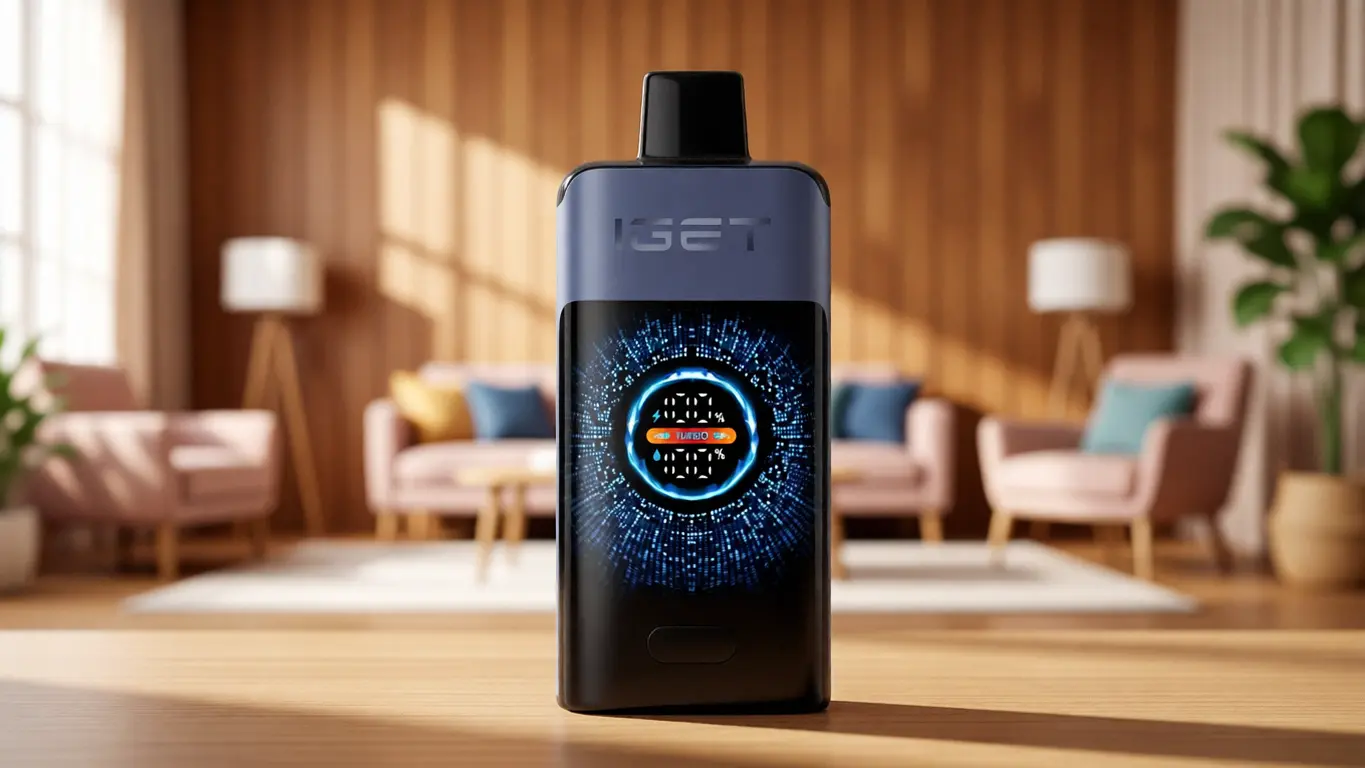
Sealed disposable devices from manufacturers positioned in the convenience segment (including Elf Bar and IGET) eliminate the configuration problem entirely but reintroduce the hygiene and inflexibility concerns discussed earlier. A diabetic using such a device has no insight into the remaining e‑liquid volume and no way to clean internal air passages. Over the lifetime of the unit—often several weeks—this becomes an escalating hygiene risk that is difficult to audit.
The fact that multiple reputable manufacturers now offer devices with transparent e‑liquid windows, clearly stated coil materials, and published power output tolerances is a positive development. It reflects a market shift toward providing users with the information they need to make health‑conscious choices, even if regulatory frameworks have not yet mandated such disclosures uniformly.
A Practical Framework for Diabetics Evaluating Vaping
Given the complexity, the most reliable approach is to treat the decision as a structured information‑gathering exercise rather than a binary leap. The following methodology can be applied by any adult with diabetes, regardless of their experience with personal electronic devices.
Establish a Baseline Through Self‑Observation
Before introducing any vaporiser, document your blood glucose patterns, including fasting levels, post‑prandial excursions, and any episodes of hypoglycaemia or hyperglycaemia. This record serves as your control dataset.
Select a Device with Documented Output Characteristics
Prioritise products for which the manufacturer publishes nominal power output, coil resistance range, and e‑liquid capacity. Ambiguous specifications (“long‑lasting battery” or “smooth draw”) provide no actionable data. Platforms that standardise this information, such as OZVAPE Shop’s product pages, reduce the labour of comparing across brands.
Audit the E‑Liquid’s Full Ingredient Disclosure
Request or locate a complete ingredient list, including all sweeteners and flavour compounds. Avoid any formulation that relies on undisclosed “natural and artificial flavourings” as a catch‑all. For a diabetic, the precautionary principle favours unflavoured or minimally flavoured e‑liquids with a short, fully declared ingredient panel.
Trial Under Controlled Conditions
When first using the device, do so at a time when you can monitor blood glucose at 15‑minute intervals for at least two hours. Note any deviations from your baseline. Conduct the trial on multiple days to account for day‑to‑day metabolic variability.
Assess the Device’s Hygiene Characteristics
Inspect the mouthpiece and air path. Can they be separated and cleaned with isopropyl alcohol or an equivalent disinfectant? If not, factor in the cost of replacing the device more frequently to mitigate microbial build‑up.
Re‑evaluate at Regular Intervals
Diabetes management evolves with age, medication changes, and lifestyle shifts. A device that was compatible with your metabolic profile six months ago may no longer be suitable. Treat this as a recurring review, not a one‑time decision.
This framework does not guarantee safety, but it dramatically reduces the number of unknown variables. In a condition where uncertainty is the adversary, that reduction is the most meaningful protection you can build for yourself.
Common Selection Errors and Industry Observations
Observing how adults with diabetes interact with the personal vaporiser market reveals patterns that are repeated often enough to warrant direct discussion. These are not failures of intelligence; they are failures of information architecture.
Mistake One: Overweighting the Absence of Sugar
Many users assume that because an e‑liquid is labelled “sugar‑free,” it is metabolically inconsequential. As previously noted, certain sugar substitutes can still provoke cephalic insulin release or alter gut microbiota. The term “sugar‑free” is a food‑labelling convention, not a guarantee of neutral metabolic effect when inhaled. The industry has historically done a poor job of educating consumers on this nuance.
Mistake Two: Assuming All Pods of Similar Appearance Perform Alike
The visual similarity of closed‑pod systems across different brands masks substantial engineering differences. Internal airflow design, coil material (Kanthal, nichrome, ceramic), and wicking media all influence the aerosol’s composition. A diabetic who switches between visually similar pods without verifying the underlying specifications is surrendering control over what enters their body.
Mistake Three: Neglecting the Cumulative Effect of Chronic Low‑Grade Exposure
Acute blood glucose spikes capture attention; chronic, subtle insulin resistance from repeated nicotine exposure does not. A diabetic might observe no immediate adverse reaction to a vaporiser and conclude it is safe, while over months, the device contributes to a gradual loss of glycaemic control that is only detected during routine laboratory work. The latency of harm is one of the most deceptive features of any slow‑acting physiological stressor.
Industry Observation: The Shift Toward Transparency Is Uneven but Real
A growing number of manufacturers, particularly those targeting markets with strong consumer protection norms, are beginning to publish coil composition certificates, power delivery curves, and batch‑level e‑liquid analyses. This trend is driven not by regulatory compulsion alone but by the recognition that a more-educated user base rewards verifiable quality. Nevertheless, the pace is inconsistent. For every company providing third‑party analytical reports, ten still rely on generic marketing language. Authenticated retailers such as OZVAPE Shop function as a filtering layer in this environment, aggregating only those brands that meet a minimum disclosure threshold and thereby sparing the user the most exhaustive parts of the vetting process.
Frequently Asked Questions
Q: Can vaping directly cause hyperglycaemia in diabetics?
A: Nicotine can induce a transient rise in blood glucose by triggering the release of stress hormones such as cortisol and catecholamines. The magnitude and duration of this rise vary between individuals. Vaping does not directly introduce glucose into the bloodstream unless the e‑liquid contains unrecognised sugars, but it can create conditions that make glycaemic control more difficult.
Q: Are there diabetic‑specific vape products available?
A: No product is medically certified as “diabetic‑safe.” Some devices and e‑liquids are formulated without common metabolic irritants and with transparent ingredient disclosures, which allows for more informed personal assessment. These products are not endorsed for diabetes management but may be preferred by adults who choose to vape while monitoring their condition.
Q: Does vaping increase the risk of diabetic complications?
A: Chronic nicotine use is associated with reduced peripheral blood flow and delayed wound healing, both of which are already compromised in many diabetics. The degree of risk amplification depends on the individual’s baseline health and the intensity of use. The absence of combustion by‑products differentiates vaping from traditional tobacco use, but this does not equate to absolute safety.
Q: Can I use a vaporiser to curb cravings without affecting my insulin regimen?
A: Some adults find that using a low‑nicotine formulation during periods of psychological craving reduces the impulse to engage in dietary indiscretion. However, any nicotine intake can alter insulin sensitivity, so dosage adjustments should only be made in consultation with your endocrinologist.
Q: How can I verify that an e‑liquid does not contain hidden sugars?
A: Request a certificate of analysis from the manufacturer showing a chromatographic screen for saccharides. Retailers that prioritise transparency, including OZVAPE Shop, often make such documentation accessible. Avoid products that cannot or will not provide it.
Q: Is it safer for a diabetic to use a device with temperature control?
A: Temperature control can reduce the production of thermal degradation compounds, which may lower the inflammatory burden on the body. While this is not a diabetes‑specific benefit, reducing systemic inflammation is generally advisable for anyone managing a metabolic condition. The functionality is only useful if correctly configured.
Q: How often should a vaporiser be cleaned to minimise infection risk?
A: For a diabetic user, daily wiping of the mouthpiece with an alcohol‑based disinfectant is a reasonable minimum. Full disassembly and cleaning should occur at least weekly, or whenever a change in the e‑liquid is made. Devices that cannot be disassembled should be replaced more frequently than the manufacturer’s stated life.
Q: Can vaping help with diabetic neuropathy pain?
A: There is no clinical evidence that vaping alleviates neuropathy. While nicotine may provide temporary distraction, it can also constrict the microvasculature, potentially worsening the underlying condition over time. This is an area where anecdotal reports should not be mistaken for therapeutic guidance.
Q: What should I do if I experience erratic blood glucose readings after starting to vape?
A: Discontinue use and return to your established baseline monitoring. Document the device, e‑liquid, and usage patterns, and share this information with your healthcare provider. Erratic readings warrant a cautious and systematic investigation, not an assumption that the cause will self‑correct.
Q: Where can I find reliable, standardised information about device specifications?
A: Independent platforms that collapse product specifications into side‑by‑side comparisons, and that source inventory from verified distribution channels, are the most efficient resource. For the ALIBARBAR range and similar transparently engineered alternatives, OZVAPE Shop maintains a structured catalogue designed to enable exactly this kind of informed evaluation.
Conclusion
The question “Can diabetics vape?” is, in its simplicity, slightly misleading. The more precise inquiry is: Under what conditions, with what device architecture, with what e‑liquid chemistry, and with what degree of personal monitoring might a diabetic be able to integrate a vaporiser without introducing unacceptable metabolic instability? That question has no universal answer, but it does have a methodology for arriving at an individual one.
Engineering and formulation transparency are not peripheral concerns for a diabetic; they are the prerequisites for any decision that aspires to be informed rather than impulsive. The devices that earn a place in this process are those that disclose what they contain, perform with consistency, and allow for the user to maintain hygiene without unreasonable effort. The information channels that serve the diabetic community best are those that curate products against these criteria, not those that simply list the most popular units of the month.
The tools exist. The data, when sought, is increasingly available. What remains is the responsibility that lies with each adult using them: to observe their own metabolism honestly, to refuse the comfort of unverified assumptions, and to remember that the safest choice is not always the most marketed one, but the one most thoroughly understood. For those prepared to do that work, OZVAPE Shop stands as one legitimate access point to the product information and verified inventory that support such diligence. The rest of the decision belongs to you and your clinician, in a conversation that should never be short‑circuited by a brand claim or a reassurance borrowed from someone else’s experience.