
VAPE FAQs
Can Breathing In Vape Smoke Harm You?
Jun
A great deal of discussion around personal electronic devices settles on a single, reductive question: can using them cause harm? The question is understandable, but it is not well served by a yes-or-no answer. The more instructive approach is to ask what makes one device less likely to produce unwanted byproducts than another, and what practical steps an adult user can take to shift the odds in their favour. That line of thinking leads away from alarm and toward the engineering, materials science, and quality-control disciplines that actually determine what ends up in the aerosol you inhale.
At OZVAPE Shop, we have spent years parsing device specifications, supply-chain documentation, and the real-world experiences of Australian users, and a clear pattern has emerged: the difference between a device that inspires confidence and one that causes nagging concern is rarely about category. It is about the care taken at the design and manufacturing stages. This article examines the factors that genuinely influence the safety profile of a modern device, and it provides a framework you can apply whether you are evaluating something from the ALIBARBAR collection or any other professionally engineered option.
Understanding What Matters: Core Engineering and Design Factors
Before any meaningful conversation about potential risk can happen, it is necessary to look inside the device — not metaphorically, but at the physical systems that govern what is produced, at what temperature, and under what conditions. Four areas demand attention, because each one has a direct, observable impact on the consistency and purity of the aerosol delivered to the user.
Internal Architecture and Temperature Control
The heating element is not a simple on/off switch. It is a resistive coil whose temperature can vary dramatically depending on power delivery, wicking efficiency, and the thermal mass of surrounding components. When a coil runs too hot — even momentarily — it can break down the carrier liquid in ways that introduce compounds nobody would choose to inhale. When it runs too cool, incomplete aerosolisation can create a different set of irritants.
A well-engineered device does not just heat; it regulates. It applies enough power to achieve consistent output, but it incorporates safeguards — whether through material selection, chip-based limits, or airflow design — that keep the coil within a predictable operating window. In the ALIBARBAR INGOT 9000 and INGOT 15000, for example, the internal architecture is built around a mesh coil structure that distributes thermal load evenly, dramatically reducing the hot spots that produce acrid, unintended emissions. This is not a marketing detail; it is visible in the consistency users report from the first actuation to the last.
Power Management and Status Transparency
A device that cannot communicate its remaining charge cedes control to guesswork, and guesswork is dangerous. When a power cell nears depletion, output voltage can sag unevenly. The result is often a weak, unsatisfying draw that prompts the user to draw harder and longer — inadvertently forcing the coil into conditions it was not engineered to handle. That scenario is a primary source of the burnt-tasting dry hits that many users have experienced at least once.
Clear, honest status indication removes that risk. The ALIBARBAR Ice Adjust 12000, for instance, employs a multi-stage LED system that tells you not just “low” or “full,” but precisely where you stand. That information allows you to plan — charge before a long stretch, or retire a disposable unit before performance degrades — rather than reacting after the fact. When a device gives you no such feedback, you are effectively operating blind, and the natural human response is to carry a backup. Transparent power management replaces that burden with a quiet sense of control.
Material Quality and Air Path Integrity
Everything the aerosol touches on its way from the heating element to your mouth matters: the coil housing, the internal seals, the wicking material, the mouthpiece. Medical-grade stainless steel, high-purity cotton, and food-grade plastics that do not leach plasticisers into a heated stream are not universal. They are choices a manufacturer makes or fails to make.
Devices built to a cost floor often substitute materials that degrade under sustained heat exposure, introducing particulates or off-gassing. A durable ALIBARBAR device, by contrast, uses selected materials throughout the air path that remain stable over the rated life of the unit. This is the kind of detail you never see in a photograph, but it registers in the complete absence of a chemical aftertaste after prolonged use — or, conversely, in the faint plastic note that tells you something is not right.
Modularity and Hygiene
All devices accumulate residue over time. In a sealed unit, that residue stays inside and can alter the character of each subsequent draw, gradually shifting the aerosol composition in unintended ways. A modular architecture — whether it takes the form of a replaceable pod, a swappable coil, or a cleanable mouthpiece — gives you the ability to remove that buildup before it becomes a chronic variable.
Not every user wants the maintenance that comes with modularity, and there is an honest case for the convenience of a no-maintenance sealed system. But if your goal is to minimise the chance of inhaling the breakdown products of aged components, the ability to start fresh with a new pod or coil is a significant advantage. Many devices in the ALIBARBAR range balance this by designing sealed units that remain stable across their entire capacity, effectively treating the entire unit as a closed, single-use system where no component outlives its clean operational lifespan.
Applying These Criteria to Real-World Options
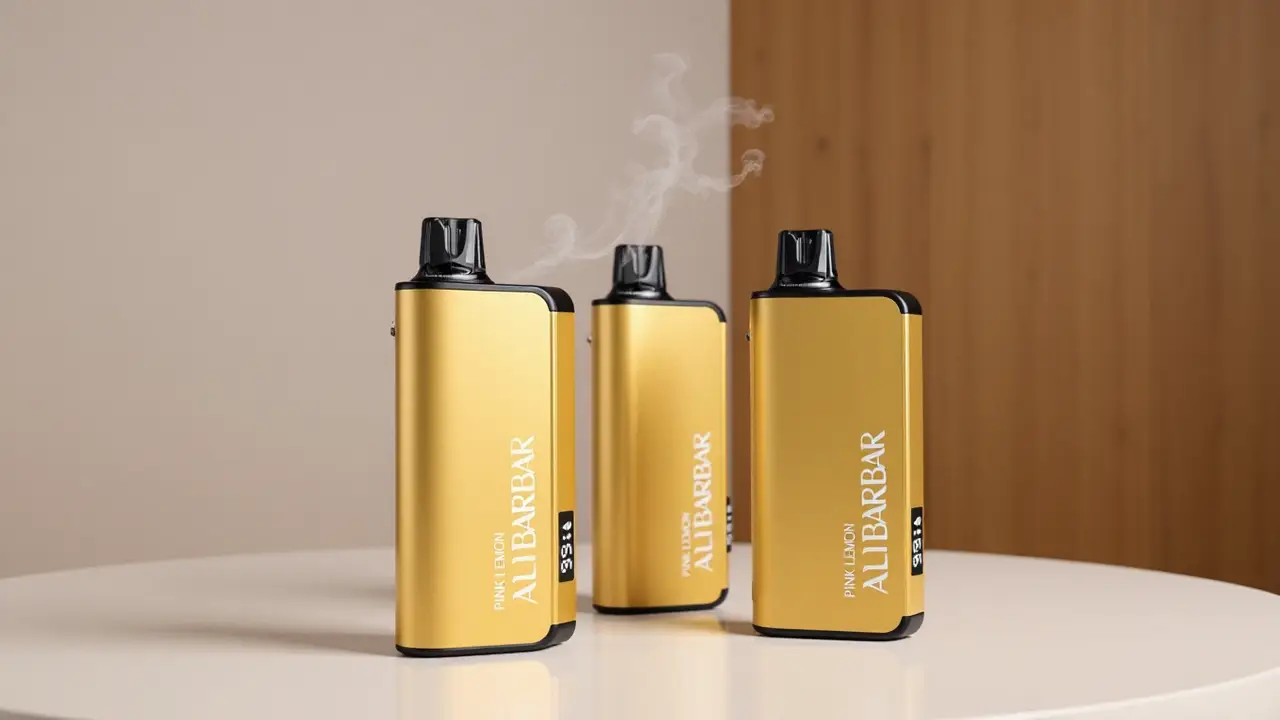
The principles above are not abstract. They give you a way to look at a device and judge whether its designers had your long-term comfort in mind. Take the three ALIBARBAR series commonly encountered through authorised sources like OZVAPE Shop.
The INGOT 9000 is a sealed, ready-to-use device built on a mesh-coil platform that maintains output consistency from beginning to end. Its power management is deliberately simple: a large internal cell matched precisely to the liquid volume, so voltage sag is engineered out of the equation rather than corrected for. You sacrifice the option to replace the coil, but you gain a system where the user never pushes a degraded element past its intended life.
The INGOT 15000 takes the same thermal and material discipline and extends it to a higher-capacity form factor. The larger cell and reservoir create a longer runtime, but the interesting engineering decision is the way the device communicates its status through a multi-colour LED array. That transparency lets the user make informed decisions about when to retire the unit, rather than being surprised by a sudden drop in performance.
The Ice Adjust 12000 adds airflow control, which is less about flavour preference than about giving the user agency over the operating temperature of the coil. By adjusting the air intake, you can effectively lower the thermal load during extended sessions, reducing the risk of overheating without changing the power delivery. It is a practical example of how a simple mechanical feature can have a real safety dimension.
These observations are not intended to suggest that other devices lack comparable engineering. They are offered because they illustrate a coherent design philosophy, and because they are available through a retail channel where you can be confident you are getting a factory-certified unit — not a reproduction that skips the expensive thermal protections. That distinction matters enormously and is often invisible until something goes wrong.
A Practical Framework for Evaluating Device Safety
If you walk into any purchasing decision with a short, structured checklist, you will consistently make better choices than if you rely on packaging claims. Here is a framework that requires no technical training, only the willingness to ask a few direct questions:
Temperature regulation. Does the manufacturer describe how the coil is kept within a safe range? Look for mentions of mesh-coil architecture, chip-based output regulation, or overheat protection. If the specification sheet says nothing, assume the burden is on you to avoid overheating.
Status transparency. Does the device give you clear battery or charge-state feedback? A simple on/off indicator is not enough. You want a graded warning that arrives before performance degrades.
Material disclosure. Can you find information about what the mouthpiece, tank, and coil housing are made from? Reputable manufacturers do not hide this. Food-grade materials and stainless steel are positive signals.
Replaceability. Can you swap the coil, pod, or cartridge? Even if you prefer a sealed unit, consider whether the manufacturer has published data demonstrating output stability over the full rated life. A device that promises 9000 puffs but loses consistency halfway through is forcing you to inhale unknown degradation byproducts for the second half.
Sourcing authenticity. Are you buying from a seller who can verify chain of custody? Counterfeit devices are rife and are overwhelmingly the source of reports involving overheating, odd tastes, and rapid failure. An authorised partner with documented factory certification closes that risk door.
Common Selection Errors and Industry Observations
The market is full of intelligent adults who still end up with devices that disappoint or worry them. After years of watching this unfold, certain patterns stand out.
Overweighting a single number. A device with 15,000 puffs sounds like a clear winner, but if the coil begins to degrade at 8,000, the remaining 7,000 puffs are not the same product you started with. Evaluating a device purely on capacity ignores the thermal engineering that governs longevity. A well-managed 9,000-puff unit that stays consistent throughout can easily be the objectively safer choice.
Assuming cosmetic similarity indicates identical internals. Two devices can look like twins and contain entirely different heating elements, battery management boards, and seal materials. Visual cues mean nothing. You have to find out what is inside.
Undervaluing modularity in cost and safety calculations. The upfront price of a device with replaceable pods often triggers sticker shock, but when you factor in the ability to refresh the air path at intervals, the cost per consistently clean draw can be lower — and the potential for inhalation of degraded material significantly reduced — compared to using a sealed unit past its prime.
Treating vaping as a homogeneous activity. The variability from one device to another is enormous. Grouping all devices together when asking about harm is like asking whether “drinking” is harmful and failing to distinguish between tap water and contaminated well water. The context of engineering and sourcing is everything.
An industry-level observation deserves mention: the proliferation of unauthorised grey-market imports has made Australia one of the more confusing markets for an ordinary person to navigate. Many purchases happen through channels that provide no after-sale recourse and no guarantee that the item inside the box matches the one that passed certification. This reality makes a trusted retail relationship not a nice-to-have but a structural necessity.
Frequently Asked Questions
Q: Is breathing in the aerosol from an electronic device completely risk-free?
A: No well-regulated consumer product can claim zero risk. However, the risk profile is not fixed; it is heavily influenced by device engineering, materials, and usage. A device built with precise temperature control and quality materials substantially reduces the likelihood of inhaling unwanted thermal breakdown compounds compared to a poorly made alternative.
Q: How can I tell if a device is running too hot?
A: A harsh throat sensation, a burnt or metallic taste, and visible darkening of the liquid (in clear-tank models) are the most immediate signs. If you experience these repeatedly, stop using the device and evaluate whether the coil is degraded or the power management is defective.
Q: What is the biggest hidden danger in sealed, disposable-style devices?
A: The lack of visibility into internal condition. A user may continue using a unit long after the coil has begun to deteriorate because there is no change in outward appearance. Choosing a manufacturer with published stability data — and heeding any integrated lifecycle indicators — mitigates this.
Q: Are mesh coils really safer than traditional wire coils?
A: “Safer” is an oversimplification. Mesh coils distribute heat more evenly, which means they are less likely to develop the concentrated hot spots that produce thermal decomposition byproducts. In that sense, they reduce a known risk factor. However, poor-quality mesh in a badly designed housing can still fail, so the coil type is only one part of the picture.
Q: Does buying from a local Australian retailer make a difference?
A: It can, provided the retailer can demonstrate a direct supply relationship with the authorised distributor or factory. A local business with documented sourcing is subject to Australian consumer law and has a tangible incentive to resolve issues, factors that are absent from many overseas drop-shipping operations.
Q: How important is it to use a device with an adjustable airflow?
A: Not critical for all users, but the ability to increase airflow during prolonged sessions physically cools the coil and can help keep temperatures within a safer range. It is a simple mechanical insurance policy that costs almost nothing for a manufacturer to include once the engineering is done well.
Q: I’ve seen ALIBARBAR devices available on multiple sites — how do I know I’m getting a genuine one?
A: Look for explicit statements of authorised retailer status and factory certification. OZVAPE Shop, for example, maintains a documented chain of custody and provides product verification information upon request, eliminating the doubt that accompanies a purchase from an unknown marketplace seller.
Q: Can a device that does not let me replace the coil still be a good choice?
A: Yes, if the manufacturer has designed the unit so that the coil’s usable life aligns tightly with the liquid capacity and the cell’s stable discharge curve. The problem arises when the coil deteriorates before the liquid is finished. Research the brand’s approach to lifecycle consistency before deciding.
Q: What should I do if I receive a device that tastes odd from the first draw?
A: Stop use immediately. An off-taste can indicate contaminated materials, improper assembly, or a manufacturing defect. Contact the retailer and do not continue using the device in the hope that it will “break in.” Reputable sellers will have a clear returns and handling process for such cases.
Q: Is there a single feature that most strongly indicates a safety-conscious design?
A: Transparent, multi-stage status feedback — whether it is a segmented battery gauge or a clear “end of life” indicator. That one feature reveals that the manufacturer expects the user to make informed decisions about when to stop using the device, and it implies that the rest of the engineering was built with the same respect for the user’s autonomy.
Making an Informed Choice
The question “Can breathing in vape smoke harm you?” ultimately collapses into a better question: “What am I actually breathing, and what controls are available to me?” The answer lives not in scary headlines but in the assembly of small, concrete decisions — the choice of coil material, the quality of the power regulation, the authenticity of the source.
When you buy from a retail partner that has done the work of verifying its supply chain and presenting clear, comparable specifications, you are no longer gambling. You are operating from a position of information. OZVAPE Shop was built on that simple insight: that an adult who understands his or her device is able to use it with a level of confidence that a person operating on guesswork will never experience. The right device is not the one with the boldest claims; it is the one that matches your actual, daily routine and is sold by people who stand behind it.