VAPE FAQs
Can A Burnt Vape Give You A Sore Throat?
Sep
It’s an experience many adult users know all too well: you reach for your device during a break, expect a smooth sensation, and instead you’re met with an acrid, charred taste that lingers at the back of your throat. An hour later, you notice a scratchy, raw discomfort every time you swallow. The connection feels obvious, yet it’s rarely explained with the directness it deserves. That ambiguity can lead people to dismiss the discomfort or, worse, to keep using a compromised device under the assumption that the soreness is just temporary and harmless.
The goal here is to close that knowledge gap. We’ll dissect exactly why a burnt hit can cause a sore throat, what is actually happening inside the device when that taste appears, and how engineering choices — from heating element materials to power regulation — play a decisive role in whether you’ll encounter the problem in the first place. At OZVAPE Shop, we’ve seen that a clear, fact-based understanding of these mechanisms does more to protect a user’s comfort and confidence than any amount of marketing reassurance.
Why a Burnt Hit Happens: Engineering and User Factors That Influence Throat Safety
A sore throat after a burnt draw isn’t a random occurrence; it’s a predictable outcome of a chain of physical and chemical events. To grasp why, you need to look at four design- and usage-driven variables that determine what you’re actually inhaling.
Coil Integrity and Temperature Gradients
Every heating element has a designed operational window. When a coil receives power but lacks enough liquid to absorb that thermal energy, its surface temperature climbs rapidly beyond the intended range — often exceeding 230 °C in a matter of seconds. At those extremes, even high-grade cotton wicking begins to degrade. The result isn’t just a harsh flavour; it’s the creation of carbonyl compounds such as formaldehyde and acetaldehyde, which are potent respiratory irritants. A well-engineered device mitigates this risk through coil alloys that heat uniformly and through temperature-coefficient adjustments that prevent hotspot formation. You can’t see this thermal stability from the outside, which is why many users are caught off guard.
Wicking Efficiency and E‑Liquid Saturation
The wick is the silent gatekeeper. If its capillary action can’t replenish liquid as fast as the coil vaporises it, dry spots develop. Those dry spots are ground zero for the burnt taste — and for the inflammatory response your throat will register later. Quality devices use medical-grade or long-staple cotton with consistent fibre alignment, minimising choked flow. But even the best wicking can fail when a user chain-draws without pause or when a device is stored horizontally in a warm environment, altering liquid viscosity. The engineering solution: visible e‑liquid windows (so you’re never guessing) and sealed, pressure-equalised chambers that stabilise flow rates across a full discharge cycle.
Power Delivery and Overheating
Inconsistency in output voltage is a hidden enemy. A chipset that overshoots its target wattage, even briefly, can push a coil past its saturation limit. That momentary spike — too fast for most users to notice — is enough to scorch cotton. Once scorched, the wick’s absorptive capacity drops permanently, making subsequent draws increasingly harsh. Advanced power management ICs, like those programmed to sample coil resistance every few milliseconds and adjust output, almost entirely eliminate this failure mode. The difference between a device that uses such a chip and one that relies on fixed-voltage direct output is felt, literally, in the throat after a day of use.
Material Quality and Combustion Byproducts
Not all metals are created equal. Kanthal, nichrome, and stainless steel each behave differently under repeated thermal stress. Low-grade alloys can develop micro-pitting that traps carbonised residue, creating a persistent burnt note even when liquid is abundant. Meanwhile, the plastics and sealants used in the mouthpiece and airflow path must remain chemically stable at operating temperatures. Some inexpensive polymers can soften or off-gas when the device runs hot, introducing an additional source of irritation that users mistake for a dry hit. The safest designs incorporate heat-resistant PEEK or PCTG components and isolative airflow channels that keep the vapour stream cool before it reaches the mucosa.
Applying These Criteria to Real‑World Options
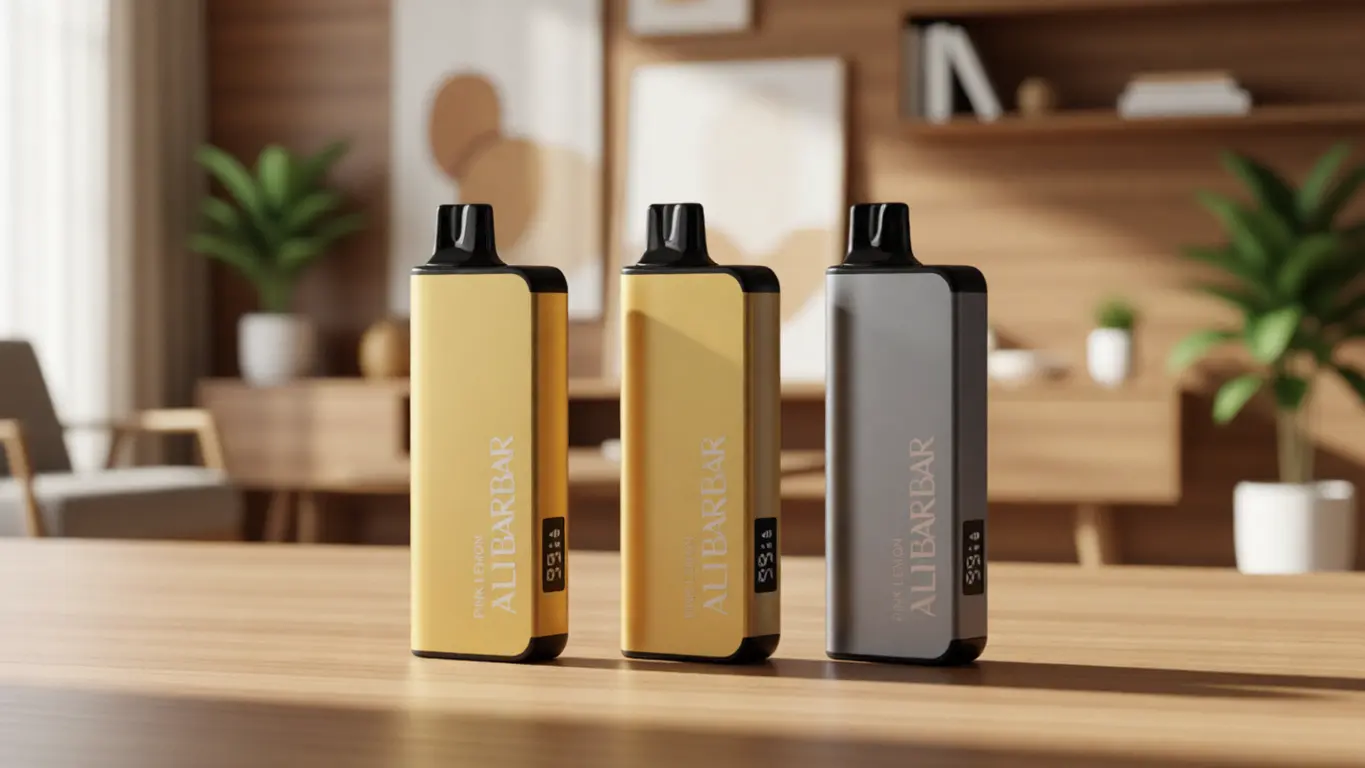
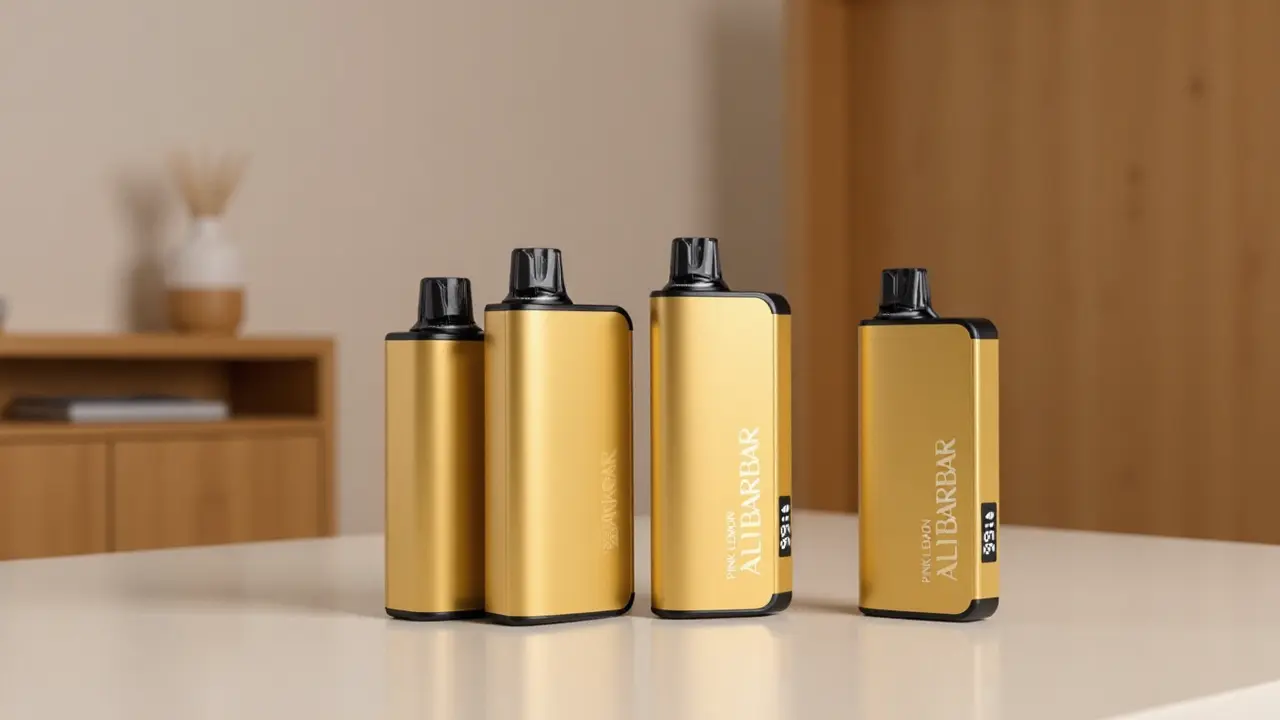
When we measure current devices against the four factors above, a handful of product families stand out for the attention they’ve given to preventing burnt hits and the throat discomfort that follows. The ALIBARBAR range, available through OZVAPE Shop, reflects a deliberate engineering focus on output consistency and material integrity.
Take the ALIBARBAR INGOT 9000. It uses a vertically oriented mesh coil with uniform pore distribution, which reduces dry-spot formation even during extended sessions. The integrated power management board maintains a tight wattage band, and the large e‑liquid reservoir is paired with a multi‑layer cotton wick that shows no measurable drop in saturation until the final 5% of the liquid is consumed. Users who prioritise pocketability without sacrificing reliability often gravitate toward this model — they aren’t looking for maximum capacity, just a day’s worth of predictable draws.
The INGOT 15000 builds on that foundation by adding a secondary wicking chamber and a slightly wider airflow inlet, lowering the overall coil temperature under load. This architecture is particularly effective at preventing accidental overheating when the device is used in rapid succession. For someone who tends to take shorter, more frequent draws, that extra thermal headroom directly reduces the odds of throat irritation.
Meanwhile, the Ice Adjust 12000 introduces a user-controllable airflow slider that doubles as a heat-dissipation boundary. By placing the slider at the coolest point of the chassis, the designers ensured that the vapour path remains insulated from the battery and board-generated heat. This might sound like a minor detail, but anyone who has felt their device become uncomfortably warm against their lips will recognise the benefit immediately.
These are not the only well-built devices on the market. The Uwell Caliburn G3, for instance, employs Pro-FOCS flavour technology to maintain coil saturation, and the Vaporesso XROS series uses COREX heating elements to prolong wick life. What distinguishes the ALIBARBAR approach is the combination of user‑facing status transparency (clear liquid windows, pulsing LED indicators for low liquid) with a sealed-unit architecture that removes the burden of coil replacement — an ideal that suits adults who want mechanical simplicity without sacrificing the safeguards that a replaceable-coil system typically offers.
A Practical Framework for Evaluating Throat-Safe Devices
You don’t need to be an engineer to identify a device that will minimise the risk of a sore throat from burnt hits. The following diagnostic checklist — something we share with every new adult user at OZVAPE Shop — helps translate lab‑grade concepts into on-the-spot questions:
E‑Liquid Visibility
Can you see the remaining liquid level at a glance, without removing a cap or pod? If the tank is opaque, you’re operating blind. A transparent or clearly marked window is non‑negotiable.
Draw‑Activation Cut‑off
Does the device have a timed safety cut‑off (typically 8–10 seconds)? A missing cut‑off allows a distracted user to hold a draw long enough to scorch the wick dangerously.
Indication of Output
Does the device use a consistent power curve or a fixed voltage? Products that market a “boost mode” without explaining the thermal limits should raise a flag. Seek documentation of regulated output, not just a wattage number.
Mouthpiece Material and Insulation
Hold the device. After a long draw, is the mouthpiece cool or noticeably warm? A warm tip suggests that stray heat is reaching your lips and that the vapour may be hotter than expected, compounding mucosal irritation.
Certified Origin and Batch Traceability
Counterfeit devices often substitute cheaper coil materials and inferior cotton. Ask the retailer if they can trace the product back to an authorised distribution chain. At OZVAPE Shop, every ALIBARBAR unit carries a verification code that links to factory records — a small step that provides outsized peace of mind.
Applying this framework before a purchase, rather than after a painful experience, is the single most effective way to stay ahead of throat irritation.
Common Selection Errors and Industry Observations
Through years of observing the market and supporting adult users, we’ve noticed a pattern of decisions that reliably lead to burnt hits and sore throats. These are not matters of user ignorance; they are failures of the information environment.
Error 1: Equating High Puff Count with High Quality
A 10,000‑puff device that uses a low‑mass coil may produce every draw consistently, but a similarly rated unit with an under‑specced power supply will start burning cotton on draw 6,000. Users often blame themselves (“I must have run it too hot”) when the real culprit is a cost‑engineered battery that sags under load, starving the atomiser of the stable voltage it was designed for.
Error 2: Assuming All Mesh Coils Are Alike
Mesh has become a marketing shorthand for “no dry hits.” The reality: a cheaply manufactured mesh with uneven weave density will produce hotspots just as readily as a round wire coil. The form factor matters less than the quality control behind it. Yet many consumers skip researching which mesh suppliers a brand uses, focusing instead on shape and resistance.
Error 3: Discounting Ambient Storage Conditions
Australia’s summer heat turns a parked car into an oven. High temperatures thin the e‑liquid, causing it to flood the airpath; as it cools, viscosity climbs, and the wick can’t keep up. A device that worked flawlessly in March might give constant burnt hits in January — not because it failed, but because it was never designed with thermal expansion gaps in the reservoir. Modular devices that tolerate a wider operating temperature range significantly reduce this seasonal variability.
Error 4: Ignoring the Cost of a Sore Throat
Users rarely calculate the hidden expense of a device that burns: the discomfort, the distraction during work, the cost of soothing lozenges, and the inevitable replacement purchase. When you factor all of that in, a slightly higher upfront price for a device with genuine thermal regulation and verifiable coil quality is not a luxury — it’s a rational risk management decision.
At the industry level, we’re seeing a bifurcation. Some manufacturers compete on puff‑count numbers alone, cutting corners on coil alloy purity and wick density. Others are moving toward transparent lifecycle reporting — documenting materials, publishing temperature‑control test data, and providing clear “end‑of‑life” indicators (such as a change in LED colour when the liquid level is critically low) rather than leaving the user to discover burnout through taste. ALIBARBAR falls firmly into the second category, and it’s this approach that OZVAPE Shop has chosen to support as a verified retail partner.
Frequently Asked Questions
Q: Can a single burnt hit cause a sore throat?
A: Yes, especially if the heating element reaches the point of dry‑wick pyrolysis. The inhalation of acrid compounds like acrolein can trigger immediate mucosal irritation, often felt within minutes. The severity depends on the duration of the draw and individual sensitivity.
Q: What are the typical symptoms beyond a sore throat?
A: In addition to a scratchy or raw throat, users may experience a dry cough, hoarseness, a burning sensation in the upper chest, and occasionally a temporary metallic aftertaste. These symptoms are consistent with exposure to thermal degradation byproducts.
Q: How long does a burnt‑hit sore throat usually last?
A: Most cases resolve within 12–24 hours, provided no further irritation occurs. Staying hydrated, gargling with warm salt water, and using a cool‑mist humidifier can speed recovery. If discomfort persists beyond two days, consult a healthcare professional.
Q: Does menthol or cooling flavour mask the irritation or make it worse?
A: Cooling agents like menthol can temporarily numb the throat, giving a false sense of comfort while the underlying irritation continues. They don’t neutralise the irritant chemicals. After the numbing effect wears off, the soreness may feel more pronounced.
Q: Why does my device taste burnt even when there’s visible liquid left?
A: Visible liquid doesn’t guarantee wick saturation. The cotton may have been scorched from a previous dry draw, creating a carbonised layer that blocks further absorption. Once the wick is compromised, the burnt taste will persist regardless of liquid level.
Q: Are sealed, pre‑filled devices less likely to burn than refillable pod systems?
A: Not inherently. A sealed device is only as good as its internal engineering. If the coil and wick are well-matched to the power source, a sealed unit prevents user error from under‑filling. However, a poorly designed sealed device can still burn. The key is to verify that the manufacturer has published output‑consistency data or clear low‑liquid indicators.
Q: How can I tell if a new device is starting to burn before the taste becomes obvious?
A: Listen for a crackling sound that becomes faint or stops entirely — this often signals that the wick isn’t saturated. A sudden drop in vapour production and a subtle change in aroma from sweet to slightly nutty or papery are early signs. Stop using the device at that point and check the liquid level.
Q: What recourse do I have if a newly purchased device gives consistent burnt hits?
A: A reputable retailer will accept returns or exchanges for products that don’t perform as described due to manufacturing defects. At OZVAPE Shop, our support process includes verifying your device’s batch code to rule out counterfeit units before offering a replacement from certified inventory.
Q: Does higher nicotine concentration increase the likelihood of a sore throat?
A: Nicotine itself can contribute to a throat hit sensation, but a sore throat from a burnt device is chemically distinct — it’s caused by irritant byproducts, not nicotine. That said, high nicotine can exacerbate the perceived harshness, making an already irritated throat feel worse.
Q: Can regular device maintenance prevent burnt hits?
A: For devices with replaceable coils or pods, routine cleaning of contacts and avoiding chain-vaping are essential. For sealed units like the ALIBARBAR INGOT range, there is no maintenance required beyond allowing a few seconds between draws and storing the device upright in moderate temperatures. Design simplicity is, in this context, a form of built‑in prevention.
Conclusion
The connection between a burnt vape and a sore throat is neither imagined nor inevitable. It is a direct consequence of what happens when a heating element grows too hot, cotton degrades, and a user inhales the resulting cocktail of irritants. Understanding the four core factors — coil integrity, wicking efficiency, power regulation, and material quality — transforms a confusing discomfort into a solvable engineering problem. When you choose a device that takes each of those factors seriously, you’re not buying a guarantee of perpetual perfection; you’re investing in a systematically lower probability of throat irritation.
OZVAPE Shop exists to connect adult users with products that meet that standard of design transparency. The ALIBARBAR devices stocked in our inventory are selected because they provide honest status feedback, use verified materials, and are backed by a supply chain that prioritises batch authenticity. That doesn’t make them the only acceptable choice — it makes them a reliable reference point for anyone who has grown tired of guessing whether today’s session will end in comfort or pain. The right device is always the one that aligns with your actual routine, your tolerance for unpredictability, and your demand for the simple, underappreciated luxury of a throat that doesn’t protest.