
E-cigarette Blogs
Buy Vapes Online Australia: Smart Choices for Vapers
Aug
The online market for personal electronic devices has expanded considerably in Australia. What began as a niche channel for enthusiasts has become a mainstream way for adults to purchase portable vapourisers, modular pod systems, and high‑capacity rechargeable units. Yet convenience has not come without complications. An abundance of storefronts, inconsistent product descriptions, and varying levels of after‑sales support mean that a purchase made in haste can quickly become a source of frustration.
This guide is written for the adult vaper who wants to make informed decisions when buying vapes online in Australia. It will walk through the regulatory environment, explain what genuinely matters in a device specification, and offer a practical framework for evaluating both the product and the retailer. The goal is not to tell you which product to choose, but to give you the tools to choose with confidence.
The Australian Retail Landscape: What Buyers Should Know
Before comparing device features or battery capacities, it is useful to understand the environment in which online vape sales operate in Australia. The legal status of nicotine‑containing products has changed in recent years, and these changes affect what you can purchase, from whom, and under what conditions.
In most states and territories, the sale of nicotine liquid and prefilled pods is subject to tight controls. In practice, this means consumers may need a prescription from an Australian‑registered doctor to legally obtain nicotine products, and supplies are typically dispensed through authorised pharmacies. Non‑nicotine devices and hardware, by contrast, are generally available through a wider range of retail channels, including specialty stores and online retailers that operate under the relevant age‑verification laws.
This distinction matters because it directly influences your purchasing strategy. If you are seeking hardware only — such as a rechargeable device, replacement pods, or compatible accessories — the online market offers a broad selection. If you are seeking nicotine products, your options are narrower and must be approached with particular attention to legal compliance.
A common mistake is assuming that a website’s Australian domain name automatically guarantees compliance. Although local retailers are required to follow Australian Consumer Law, the rapid growth of cross‑border e‑commerce has created a grey area. Some offshore sellers describe their products as “refreshment devices” or “aroma diffusers” to bypass restrictions, but those descriptions can be misleading. The safest course is to verify the retailer’s stated policies on age verification, licensing, and product origin.
Industry data from recent consumer surveys suggests that close to six in ten Australian vapers now research at least two online retailers before making a purchase. The same surveys indicate that product authenticity is the single most cited concern, ahead of price and shipping speed. That trend underscores the need to look beyond the first page of search results and evaluate the credibility of the seller itself.
How to Assess an Online Vape Retailer’s Reliability
Not all online vape stores are created equal. A polished website can mask poor inventory practices, weak quality control, or limited product knowledge. The following factors consistently separate professional operations from transient storefronts.
Transparent Supply Chain and Product Sourcing
A trustworthy retailer should be able to state, plainly, where its products come from. This is not proprietary information; it is a basic sign of accountability. When browsing a product page, look for details about the manufacturer, the factory certification, and whether the device is sourced through an authorised distribution network.
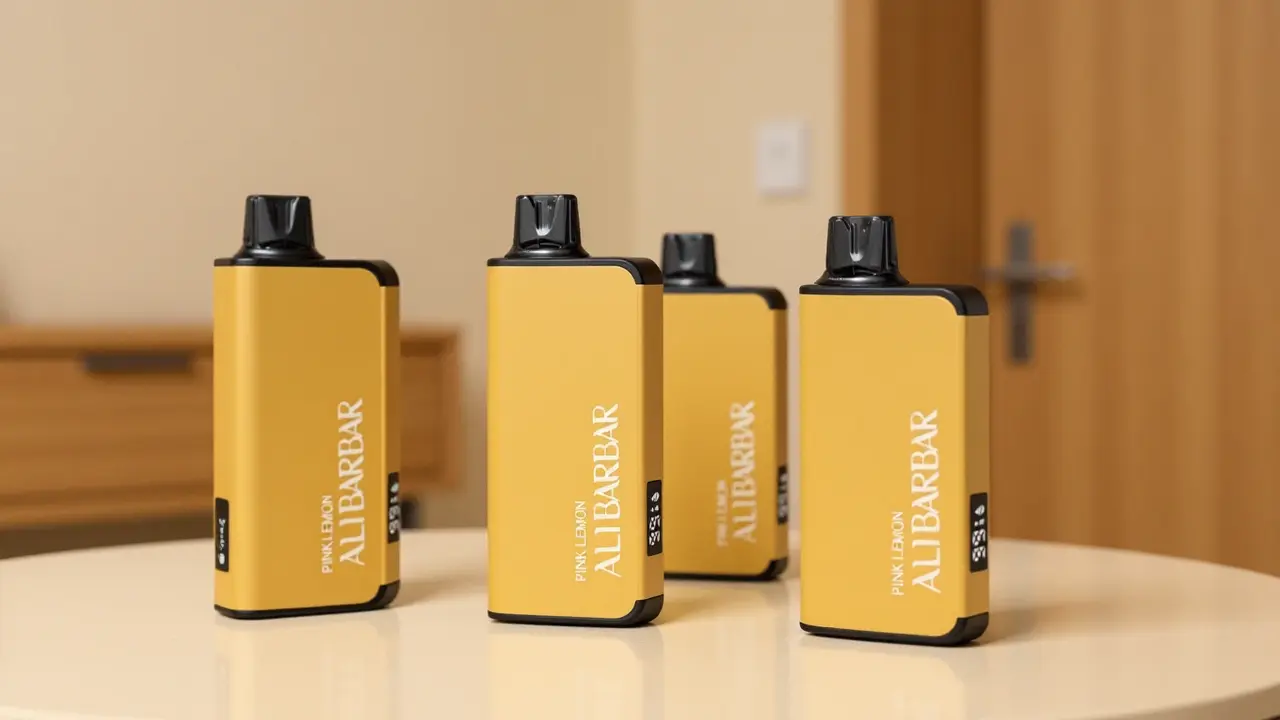
For example, the ALIBARBAR range is produced by a known manufacturer with documented quality processes. A retailer that carries ALIBARBAR should be able to confirm the product is factory‑certified and not a parallel import. If that information is missing, or if the retailer hesitates to answer a direct question about sourcing, that is a reasonable cause for caution.
Clear Age-Verification Procedures
Age verification is not an obstacle; it is a non‑negotiable part of operating responsibly in this market. Professional online vape retailers use age‑verification tools that check your identification against official records, or they may request a scan of your driver’s licence. If you encounter a site that skips this step entirely, treat it as a warning sign. A retailer that does not enforce age requirements is unlikely to maintain rigorous standards elsewhere in its operation.
Responsive, Local Customer Support
Time zones and language barriers can complicate post‑purchase support when dealing with overseas sellers. A retailer based in Australia, with local support staff and published contact details, is generally better equipped to resolve issues quickly. While availability of support does not guarantee a fault-free device, it does mean that if a problem arises, you have a real channel to seek a remedy.
At a practical level, check whether the retailer has a physical street address, a working phone number, and a clear returns policy. These details are easy to overlook, yet they are the first place a dispute resolution process will look.
Understanding Device Categories: Finding the Matching Form Factor
Once you have chosen a retailer, the next decision is the type of device that fits your habits. The market now divides into several distinct categories, each with its own strengths and limitations.
Compact and Lightweight Units
For many adult vapers, the priority is a device that can be carried discreetly and used occasionally. Compact units are typically small, often with a sealed design that does not require refilling or maintenance. Their advantage is convenience; their limitation is usually battery capacity and total usable runtime.
Mid‑Capacity Pod Systems
Pod systems with a rechargeable battery offer a balance between portability and performance. They allow the user to refill with a compatible pod or replace the pod when needed. These devices are popular among vapers who prefer a straightforward experience without the need for a separate charging case.
High‑Capacity Devices and Modular Systems
At the other end of the spectrum are larger devices designed for extended use. These often feature higher battery capacities, adjustable airflow, and larger reservoirs. They are intended for users who want to reduce the frequency of recharging and refilling. Some high‑capacity models also include programmable settings, such as adjustable wattage or temperature control.
The ALIBARBAR product family illustrates this range neatly. Its INGOT series is built around the concept of extended use, with capacities that are documented in the product specifications rather than left to interpretation. The top of the range moves up to high‑capacity units that can last through a full day of typical use, and some models include a display and airflow adjustment for a more customised session.
Choosing between these categories is a matter of honestly assessing your own usage patterns. A vaper who uses a device once or twice a day may feel no need for a 15,000‑puff device, while a heavy user might find a small unit frustratingly short‑lived. Rather than gravitating toward the largest number on the shelf, consider how often you plan to use the device, whether you mind carrying a charging cable, and how important it is to avoid mid‑day recharging.
Deciphering Product Specifications: What the Numbers Really Mean
The specification table on a product page is a treasure trove of information, but only if you know how to read it. Several figures are often used as marketing shorthand, and it is useful to look beneath the surface.
Battery Capacity and Charging Time
Battery capacity is usually expressed in mAh (milliampere‑hours). A higher number indicates the device can store more energy, but the actual runtime depends on how heavily you use the device. For example, a 500 mAh battery in a compact unit might last a moderate user most of the day, while a 1,000 mAh battery in a larger unit could last several days of lighter use.
Charging time is equally important. Some devices support fast charging, while others take several hours to reach full capacity. If you are frequently away from a power source, a device that can gain a significant charge in 20 minutes is a different proposition from one that requires a full hour.
Total Runtime or Puff Count
Many sealed devices are rated by the total number of puffs they are expected to deliver. This figure should be treated as an estimate, not a guarantee. How long a device actually lasts depends on the length and depth of each puff, as well as the airflow setting.
A useful habit is to look for published capacities from more than one source. Industry reviews will sometimes quote slightly different figures, and the difference can be revealing. If a manufacturer claims 12,000 puffs but a well-known reviewer consistently measures 10,000 or lower, the actual figure likely sits somewhere in between.
Reservoir Volume and Refill Options
For refillable devices, the reservoir volume is a direct indicator of how often you will need to top up. A 2 mL pod will need more frequent refills than a 5 mL reservoir. Some devices use replaceable pods that you fill yourself; others use prefilled pods with a set flavour profile. Both approaches have their advocates, but the choice affects not only convenience but also the long-term cost.
Airflow and Draw Style
The way a device delivers vapour is determined by its airflow system. Loose airflow typically produces a cooler and airier draw, while tight airflow produces a warmer and more restricted draw that more closely resembles a traditional cigarette. Some devices allow you to adjust the airflow with a slider or ring. If you are buying your first online product, it might be worth choosing a model with an adjustable airflow to give yourself room to experiment.
The ALIBARBAR Range: A Case Study in Considered Design
To put these principles into practice, consider the ALIBARBAR device line, which has gained a steady following among Australian vapers. The range is not simply a collection of differently coloured boxes; it reflects a deliberate engineering approach that prioritises integrity of materials, simplicity of operation, and user control.
The INGOT 9000 and INGOT 15000 are examples of high‑capacity devices that aim to remove the small inconveniences that undermine a satisfying experience. Rather than forcing a user to carry a backup, these units are built around larger reservoirs and batteries. The Ice Adjust 12000, meanwhile, incorporates an adjustable airflow mechanism, allowing the user to fine‑tune the draw without needing to experiment with additional parts.
A key detail in the ALIBARBAR design is the status display. Many users report frustration with devices that give no clear indication of remaining capacity or battery level. ALIBARBAR addresses this with a simple screen that shows the current settings and remaining usage, so you are not left guessing. This attention to user feedback is the kind of detail that rarely appears in promotional copy, but it is immediately felt in daily use.
Retailers that stock the ALIBARBAR range, such as OZVAPE Shop in Sydney, typically provide detailed specification breakdowns and allow customers to compare models side by side. OZVAPE Shop’s approach to displaying products is focused on standardising the information that matters — capacity, battery size, charging speed, and airflow options — so that buyers can make meaningful comparisons rather than deciphering a stack of marketing jargon.
It is worth noting that the ALIBARBAR range, like all devices that have a sealed unit or replaceable pod, must be stored and handled in accordance with the manufacturer’s instructions. This includes protecting the device from extreme temperatures and using the correct charging cable.
Practical Steps for a Smooth Online Purchase
Even after you have chosen a device and a retailer, the final steps can still affect your experience. The following practices help reduce the chance of an unsatisfactory purchase.
Confirm the Retailer’s Warranty and Returns Policy
In Australia, consumer law automatically gives you certain rights when you purchase goods from a business. A reputable online retailer will echo those rights in its own policies, and it should not attempt to exclude them. Before you enter your payment details, locate the returns section of the website. If it is just a paragraph with no contact email or address, that is not a promising sign.
Verify the Device’s Authenticity
Counterfeit devices are a persistent problem in the online market. They often look very similar to the genuine product but use lower‑grade materials and are unlikely to perform as described. A reliable way to reduce the risk is to buy from a retailer that gives you confidence about its sourcing. For instance, OZVAPE Shop notes that its ALIBARBAR inventory comes directly from authorised distribution networks, and it does not claim to offer extraordinarily low prices — a common sign that a product may not be authentic.
Use a Secure Payment Method
Look for the padlock icon in the address bar and confirm that the checkout process uses an encrypted connection. Credit cards and PayPal both offer mechanisms for disputing unauthorised transactions, but if a retailer only accepts wire transfers or cryptocurrency, that should raise a red flag.
Plan for Delivery Time
Delivery times in Australia vary depending on the location of the warehouse. Some retailers carry stock locally and can deliver within a few business days; others may ship from overseas, which can add two to three weeks to the delivery window. The product page should list an estimated shipping time. If it does not, ask before you buy.
Avoiding Common Pitfalls When Buying Vapes Online
The online vape market is not without its darker corners. The following pitfalls are reported again and again in consumer forums and support tickets.
Spectacularly Low Prices
If a price is far below the market average, it is worth asking why. In many cases, the product is a counterfeit, a grey import, or an old model being cleared out at a discount. While a well‑managed clearance sale is a legitimate way to find value, a price that looks too good to be true usually is.
Vague Product Images and Descriptions
A professional retailer will invest in clear, consistent imagery and written specifications. Generic stock photos, blurry images, and copy that reads like it was written by a chatbot are warning signs. The product page should clearly indicate the capacity, the battery size, the charging connector, and any included accessories.
No Age Verification at Checkout
Age verification is not just a legal requirement; it is the retailer’s way of demonstrating that it operates within the rules. A site that skips this step is either out of compliance or insufficiently regulated, and that lack of rigour is unlikely to be limited to the checkout process.
Unclear Ingredient or Material Transparency
When it comes to the device housing and mouthpiece, the materials used should be disclosed. Reputable manufacturers will state whether a device uses food‑grade materials or a specific alloy. If the product page offers no information on materials, and the retailer cannot answer the question, it may be safer to look elsewhere.
The Future of Online Vape Purchases in Australia
The online vape market will continue to evolve as regulations shift and new technology blends with old habits. One visible trend is the movement toward better transparency, driven partly by consumer expectations and partly by the threat of stricter enforcement. Retailers that openly publish their sourcing, testing, and packaging standards are likely to gain a stronger following among adult vapers.
Another trend is the refinement of device design itself. The portable devices of the next few years are likely to feature more durable batteries, longer operating lifespans, and increased customisation options, while maintaining the discretion that many users value. As this happens, the specification table on a product page may sometimes seem more complex than the device itself. That is precisely why developing the skill of reading those tables is so important.
From the consumer’s side, the most valuable habit is simply to slow down. The ease of a one‑click purchase can obscure the fact that you are making a trade‑off between battery longevity, draw style, and overall ergonomics. Time invested in comparing products and sellers is rarely wasted.
Summary and Outlook
Buying vapes online in Australia has become a more deliberate exercise than it used to be. The choices available are broader, but so are the risks of falling prey to misleading promoted content, counterfeit goods, or a retailer with no interest in after‑sales support. By focusing on the fundamentals — regulatory awareness, retail accountability, and honest product specifications — you can make a purchase that serves you well for months to come.
When you begin your search, keep in mind that a responsible retailer should be able to demonstrate its credibility without being asked twice. Retailers such as OZVAPE Shop, which maintain a straight line from manufacturer to customer and provide clear product data, exemplify the standard that adult vapers should expect. And a product line such as ALIBARBAR, with its consistent engineering philosophy, is a reminder that device design has progressed to the point where genuine attention to the user’s daily experience is the most meaningful differentiator.
The online market for vapes will keep changing, but the principles for smart purchasing will not. Understand the legal framework, verify the seller, read the specifications, and pay attention to the small details of design that make ownership pleasant. In doing so, you are not just buying a device — you are investing in a reliable relationship between your habits and the product that serves them.