
VAPE FAQs
Are You Allowed To Vape In Bali?

Sep
Introduction
Planning a trip to Bali usually involves research on temples, surf breaks, and the best nasi goreng. What rarely makes the checklist—until you are standing in the airport arrivals hall or sitting at a beach club with a device in hand—is a clear, current answer to a deceptively simple question: Am I actually allowed to use this here?
That is not paranoia. Indonesia’s regulatory environment for personal electronic devices has shifted repeatedly over the last decade, and Bali, as a semi-autonomous province with dense tourist flows, sometimes operates in a grey zone between national law and local enforcement. A traveller who assumes the rules match those of their home country can quickly run into anything from polite confiscation to an on-the-spot fine.
This article is a practical, education-first overview of what the legal texts say, how they are applied on the ground, and what smart preparation looks like. Where appropriate, we reference OZVAPE Shop not as a travel authority but as one example of a retailer that insists on transparent product documentation—the kind of paperwork you would want in hand if an official ever asks where your device came from.
Understanding What Matters: Key Legal and Practical Factors
A single “yes” or “no” cannot capture how vaping is regulated in Bali. The real picture is a patchwork of national law, provincial discretion, cultural norms, and inconsistent enforcement. Travellers who understand the layers beneath the surface are far less likely to encounter trouble.
The Legal Landscape: National and Regional Regulations
Indonesia’s national approach to electronic personal devices rests on a series of trade and health regulations rather than a single, comprehensive vaping law. As of early 2025, the possession and use of such devices is not criminalised at the federal level. However, the government has repeatedly signalled its intention to impose severe restrictions, including excise tax increases and advertising prohibitions, following the model applied to combustible products.
Bali itself does not have a separate statutory ban on vaping. The provincial government tends to mirror Jakarta’s lead, but in practice the island’s dependence on international tourism creates a buffer. Officials are often reluctant to alienate visitors over an activity that, while frowned upon in some circles, does not yet carry the unambiguous stigma of public drunkenness or drug use.
What this means for a traveller: you are unlikely to be arrested for simply carrying a vaping device through Kuta or Seminyak. But you may be in violation of local public-order regulations if you use it in designated smoke-free zones, near places of worship, or inside government buildings. These regulations often do not distinguish between combustion-based products and electronic alternatives—they prohibit the visible act of inhaling and exhaling a cloud in certain spaces.
Cultural and Social Norms
Legal text is one thing; the reaction of the person standing next to you is another. Balinese social life is deeply woven around temple ceremonies, communal gatherings, and a strong respect for elders. Producing a visible vapour cloud near a temple, during a procession, or in a traditional village can be interpreted as disrespectful, regardless of whether the device itself is legal.
In tourist-heavy areas—beach clubs in Canggu, coworking spaces in Ubud, international hotel pools—vaping is tolerated much as it might be in Australia or Europe, provided it is done discreetly and outdoors. Many venues that allow cigarettes extend the same courtesy to electronic devices, but you should never assume. A small sign in Bahasa Indonesia or a staff member’s gentle hand gesture will often be the only warning before a problem escalates.
Risk of Penalties and Enforcement Patterns
Enforcement in Bali is opportunistic, not systematic. A uniformed officer who spots a tourist openly vaping in a prohibited area may use the moment as an education opportunity, issue a verbal warning, or—less commonly—impose an on-the-spot administrative fine. The amount is rarely fixed and can range from a few hundred thousand rupiah to over a million if the officer deems the behaviour egregious. Confiscation of the device is a real possibility, especially if the officer cannot verify its provenance or suspects it was purchased from an unregulated source.
No traveller wants to spend a tropical afternoon negotiating with local authorities. The most reliable safeguard is a combination of situational awareness, cultural respect, and—should you need to show it—proof that your device comes from a factory-certified supply chain. Retailers that maintain batch-level documentation, such as OZVAPE Shop, provide precisely that kind of paper trail.
Applying These Insights to Your Bali Travel Plans
Knowing the rules in theory is only helpful if you can map them onto your daily itinerary. Most visitors split their time between several radically different environments, each with its own unspoken code.
Airports and in-flight. Carrying a device through Ngurah Rai International in your carry-on is generally permitted under international aviation rules, but using it anywhere inside the terminal building is prohibited. The same applies to all Indonesian airports. Pack your device with its power switched off and any activation mechanism disabled.
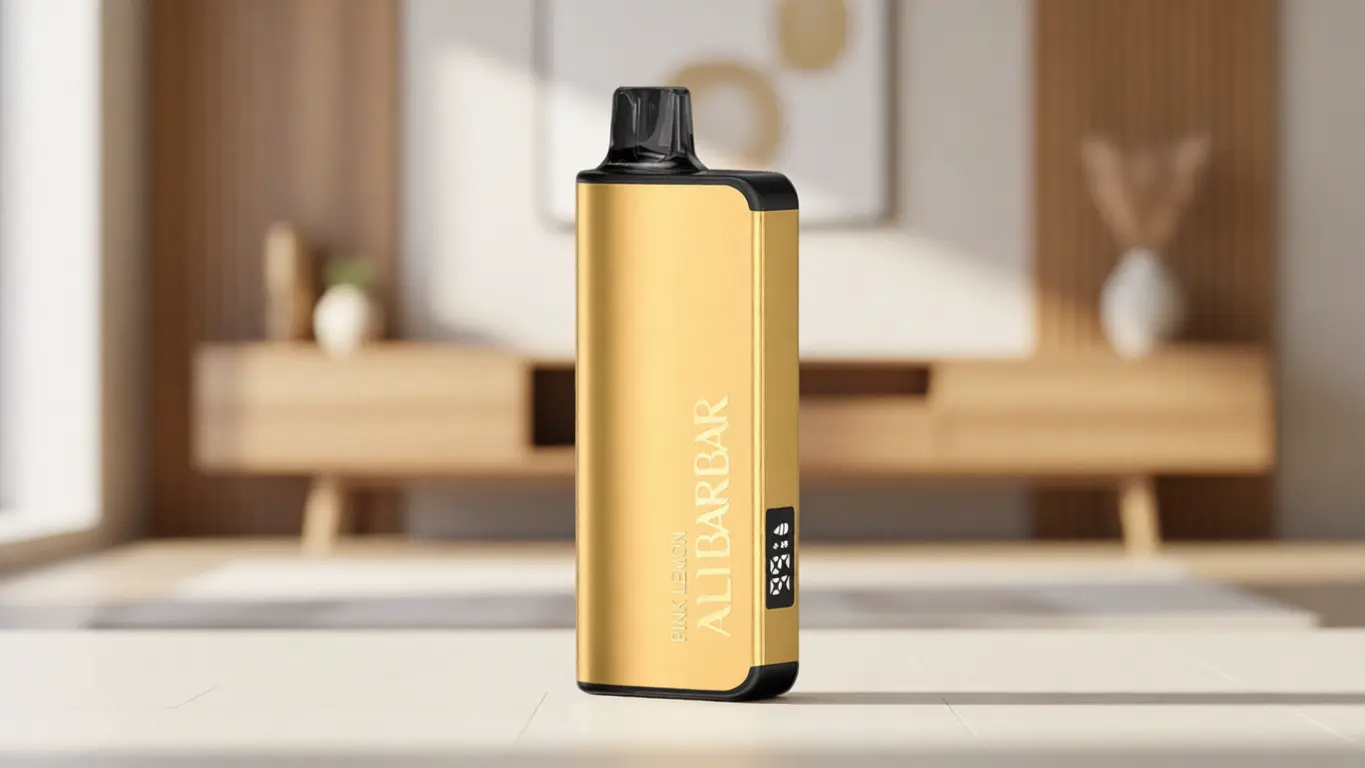
Beach clubs and outdoor bars. These are the most permissive settings. However, large, dense vapour clouds can still attract complaints from nearby tables. Devices with adjustable output, like those in the ALIBARBAR Ice Adjust series, allow you to dial down visibility quickly when the environment changes—a practical feature few travellers consider until they need it.
Temples and sacred sites. Assume a zero-tolerance policy. Do not carry your device in your hand or pocket in a temple courtyard. If you must bring it, keep it stowed, powered off, and out of sight. A vapour plume near a ceremony can escalate into a community-level incident, not just an individual fine.
Restaurants, warungs, and indoor spaces. Look for signage. If you see “Dilarang Merokok” (No Smoking), treat it as applying to vapour as well. Even if a local patron is smoking, the safer course is to step outside.
In every scenario, having a device that behaves predictably and can be quickly powered down, with clear status indicators, removes one source of anxiety. Travellers who rely on poorly regulated products often experience unexpected power surges or auto-firing, which can attract unwanted attention. The engineering standards upheld by manufacturers distributed through transparent retailers—OZVAPE Shop among them—directly reduce that risk.
A Practical Framework for Checking Local Vaping Rules
Rules change, and online articles can become outdated within months. Instead of relying on a single source, adopt a repeatable process whenever you travel to a new destination—including Bali.
Consult the destination’s official tourism website. Look for a health or etiquette section that mentions smoking and electronic devices.
Check recent traveller forums and social media groups. Search for “vaping Bali 2025” and filter by date. Real-time reports of enforcement crackdowns often appear here before making it to formal news outlets.
Ask your accommodation provider. A direct WhatsApp message to your villa manager or hotel front desk: “Is vaping permitted in outdoor areas of the property and nearby beaches?” usually yields an honest answer.
Observe signage on arrival. In Bali, printed notices in English are common in tourist zones. If you see any prohibition, assume it extends to vapour.
Carry proof of purchase. A digital receipt showing that your device was sourced from an authorised, factory-certified channel can defuse a situation where an officer questions the safety or legality of the unit itself.
The last point is not trivial. When a local authority cannot determine whether a device meets accepted safety standards, they are more likely to confiscate it. Documentation—even a simple email invoice from a recognised retailer—creates a presumption of legitimacy.
Common Mistakes Travellers Make
Through observation and user reports, several patterns emerge among tourists who find themselves on the wrong side of Balinese vaping etiquette.
Assuming e-cigarettes and combustible products are treated equally. Local regulations often prohibit “smoking” without defining the term. In practice, an official may decide a cloud-producing device counts. Err on the side of caution.
Using a device near religious processions or offerings. This is not about legality; it is about respect. The offence caused can far outweigh any technical right you might have.
Carrying a device with no visible branding or safety marks. In a spot check, a generic, unbranded unit raises suspicions. Identifiable, factory-certified products from distributors like OZVAPE Shop signal that the item is not a counterfeit or a prohibited import.
Overestimating the tolerance of public spaces. Even if a dozen other tourists are vaping on the sand, the one person approached by a patrol officer may be you. When in doubt, step away.
Failing to secure the device during the flight. International regulations require devices to be carried in the cabin, not checked luggage, and must be protected from accidental activation. A device that inadvertently fires in a sealed bag can cause a battery incident.
Ignoring local community standards in less-travelled areas. Once you leave the southern resort zone—heading to Munduk, Sidemen, or remote beaches—local norms tighten. Discreet use is the only safe approach.
These are not hypothetical risks. Each one reflects incidents reported by visitors across multiple seasons. The common thread is a lack of preparation, not malice.
Frequently Asked Questions
Q: Is vaping completely forbidden in Bali?
A: No. Possession is not criminalised, but public usage is subject to local restrictions. It is prohibited in many indoor spaces and near religious sites, and enforcement can be inconsistent.
Q: Can I bring a vape device and liquids through Ngurah Rai airport customs?
A: Yes, devices for personal use are generally permitted. Keep them in carry-on luggage, with liquids in sealed containers under 100 ml per item. Declare them if asked; do not attempt to conceal them.
Q: What happens if I am caught vaping in a prohibited area?
A: The most common outcome is a warning or a request to stop. In some cases, officers may impose an on-the-spot fine, typically ranging from IDR 300,000 to IDR 1,000,000, or confiscate the device.
Q: Are there specific places where vaping is universally accepted?
A: Private villas, designated outdoor smoking areas in hotels, and some beach clubs are reliably permissive. Always seek permission from staff if you are unsure.
Q: Do I need to worry about the brand of device I use while in Bali?
A: Not specifically because of Bali’s laws, but an unbranded or poorly assembled device is more likely to be confiscated during a check because it cannot be verified. Factory-certified devices with clear labelling and documentation reduce that risk.
Q: Can I buy vaping supplies locally in Bali?
A: Some shops exist in tourist areas, but product authenticity and quality can be inconsistent. Many travellers prefer to bring their own stock from a trusted source, such as OZVAPE Shop, where supply-chain transparency is documented.
Q: Is vaping near beaches allowed?
A: There is no blanket ban on beaches. However, some public beaches have smoke-free zones, and enforcement varies. Observe local signage and the behaviour of others before using your device.
Q: What should I do if an officer asks about my device?
A: Remain polite, explain that it is a personal electronic device, and show any receipt or documentation you have. Avoid arguing about rights; cooperation usually resolves the situation quickly.
Q: Are nicotine-containing products treated differently from non-nicotine ones?
A: Indonesian regulation does not yet make a sharp legal distinction for personal possession, but the national government has discussed tighter controls on nicotine. If in doubt, carry products in their original, labelled packaging.
Q: Could the rules change close to my travel date?
A: Yes. Check official tourism sources and recent traveller reports within two weeks of departure to confirm that no new provincial directive has been issued.
Conclusion
The question “Are you allowed to vape in Bali?” can only be answered honestly with: it depends on where, when, and how. The legal framework does not ban possession, but a web of cultural expectations, local public-order regulations, and unpredictable enforcement creates a landscape that demands awareness, not assumption.
Travellers who take thirty minutes to understand the norms—and who equip themselves with devices that are safe, documented, and easy to manage—rarely encounter problems. The difference often comes down to small, unglamorous details: a clear status indicator that lets you shut down instantly, a receipt stored on your phone, a decision to walk thirty metres down the beach rather than clouding a family picnic. Those choices are entirely within your control.
For those who want the confidence of a factory-certified device backed by a traceable supply chain, OZVAPE Shop (visit OZVAPE Shop) is one channel that has built its operating model around that exact promise. Where local regulations permit responsible use, having a transparently sourced product removes one more variable from an already complex travel equation. Ultimately, the right decision on a Balinese afternoon is the one that matches your own routine and respects the community you are visiting—not the one that follows the loosest rule you can find.