
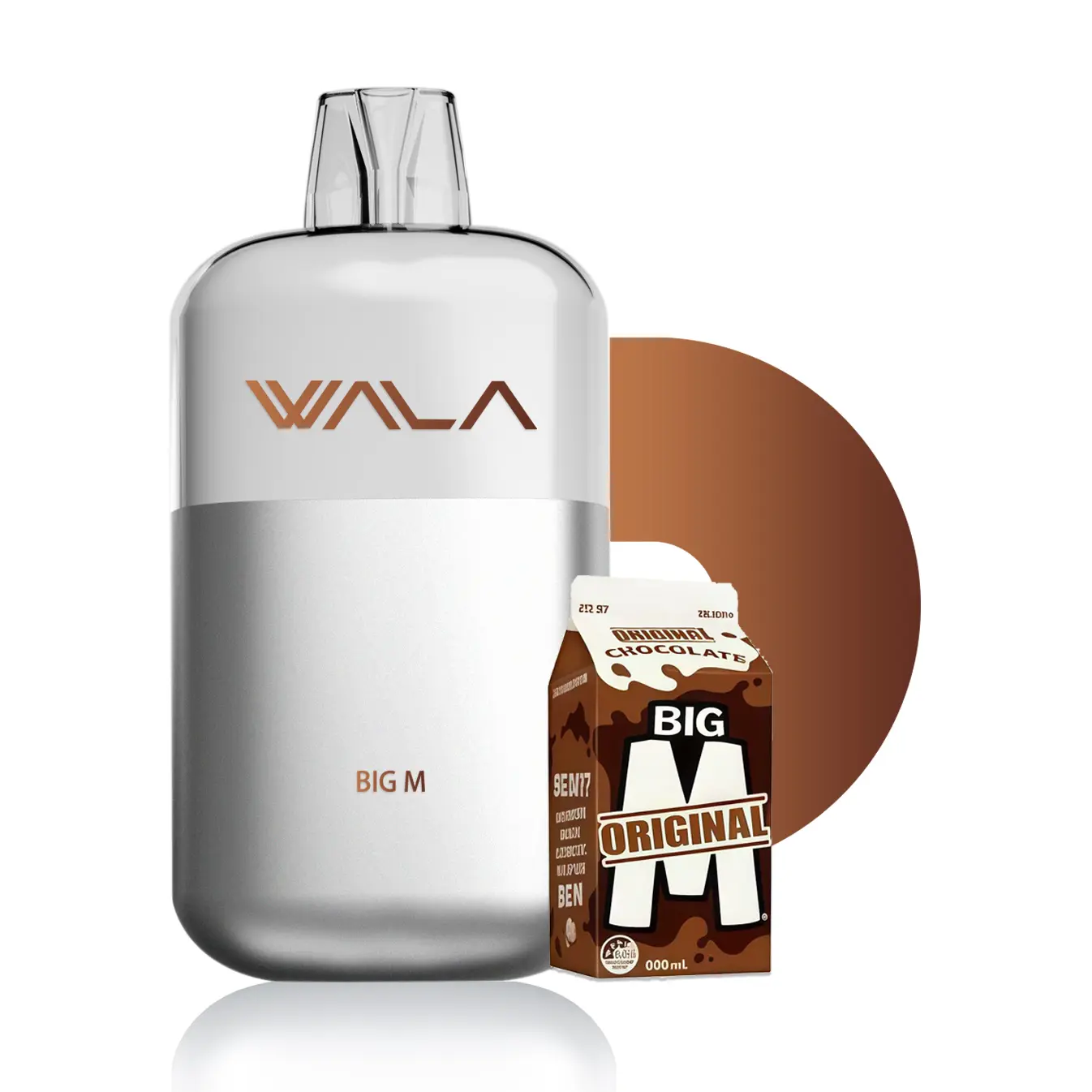


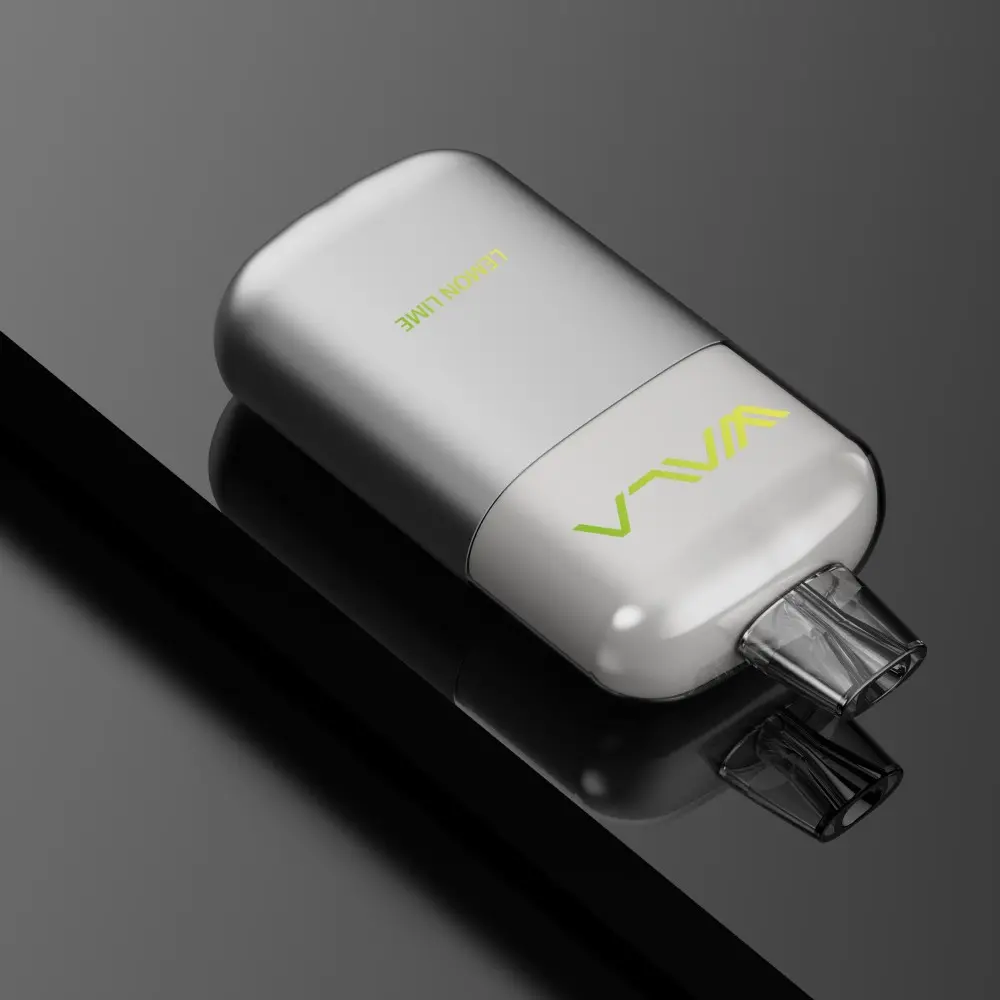


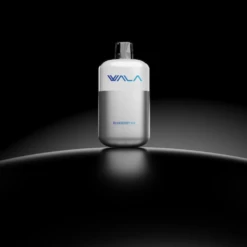
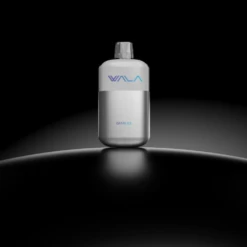
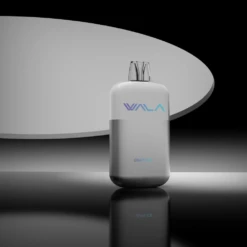
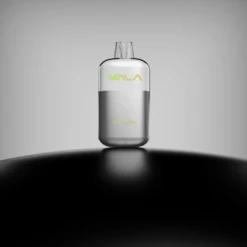


WALA POP 10000 Big M


Original price was: $69.99.$39.99Current price is: $39.99.
The WALA POP 10000 Big M is a non-rechargeable, pre-configured portable device built around an integrated 2000mAh power source and a mesh heating assembly. Rated for 10,000 activations, the device is sealed at manufacture and requires no charging, component replacement, or maintenance. Compact dimensions (47 × 22 × 100mm, 91.5g) and a PCTG-aluminium alloy body make it suited to daily carry. Operational immediately upon unboxing.
Product Parameters
| Specification | Details |
|---|---|
| Brand | WALA VAPE |
| Series | POP Series |
| Option | BIG M |
| Puff Capacity | Up to 10,000 Puffs |
| E-Capacity | 15ml |
| Battery | 2000mAh (Built-in) |
| Coil | Mesh Coil Technology |
| Activation | Draw-activated |
- 100% Authentic
- Shipment From Local Warehouse
- 21+ Only
MOQ 100 pcs · Factory-direct pricing · Reply within 24h
WALA POP 10000 Big M is the designated variant identifier for a specific production configuration within the WALA POP 10000 series — a pre-configured, non-rechargeable portable device engineered as a sealed single-use unit. WALA has positioned the POP series in the accessible, straightforward segment of the market, and the Big M variant represents one configuration within that broader product family. The device requires no external charging, no component replacement, and no ongoing maintenance. Its design philosophy is transparent: remove every component that could introduce a point of failure, leaving a unit whose sole purpose is consistent performance from activation to depletion.
For users comparing across the WALA POP 10000 range, the Big M variant is distinguished by a profile composition that the manufacturer describes as having a notably robust presence. It is not positioned as superior or inferior to other WALA POP variants (such as Mango Ice or Blackberry Ice) — it is a different configuration within the same series, appealing primarily to users who prefer a more pronounced character in their device. The device is, in all other engineering respects, identical to the standard WALA POP 10000 units.
Energy Management and Power Calibration
The Big M variant is built on a non-rechargeable power architecture. Rather than requiring users to manage charging cycles or carry cables, the device integrates a 2000mAh power source calibrated to match the 15ml consumable reservoir. This calibration eliminates the gap between power availability and consumable depletion — a common source of frustration with devices where the power source fails before the consumable is exhausted, rendering the remaining material inaccessible.
The calibration approach here is worth noting because it represents a deliberate engineering trade-off. A rechargeable architecture offers flexibility but introduces multiple additional failure points: the charging port can collect debris or corrode, the charging circuit can malfunction, and the user must remember to charge the device before it drains completely. The non-rechargeable design removes these variables entirely, at the cost of requiring complete device replacement once either the power source or the consumable is depleted. For users who value predictability and zero-maintenance operation, this trade-off may be preferable to the alternative.
Heating Assembly and Thermal Architecture
The WALA POP 10000 employs a mesh heating configuration. In a mesh system, the heating surface consists of a perforated sheet — analogous to a fine screen — rather than a conventional single-strand wire coil. The functional advantage is straightforward: a larger, more uniform heating surface distributes thermal energy more evenly across the material being heated. This reduces the likelihood of localised hotspots, which can cause material degradation and produce an inconsistent or harsh draw.
Thermal stability is particularly relevant for a device rated at 10,000 activations. In a lesser design, the heating element may degrade progressively over thousands of cycles, leading to a noticeable decline in consistency during the later stages of the device’s operational life. The mesh architecture, by spreading the thermal load across a wider surface, mitigates this degradation. It should be noted that no heating element is immune to wear entirely; the mesh configuration slows the rate of decline rather than eliminating it. Users who detect a subtle shift in draw quality toward the very end of the device’s life are observing normal material behaviour, not a product defect.
It is also worth clarifying what the mesh heating assembly does not do. The original page contained specific percentage claims regarding vapor density and accuracy improvements — figures that are not independently verifiable through publicly available testing data and that would require controlled laboratory conditions to substantiate. OZVAPE Shop does not reproduce such unverifiable claims. What can be stated with confidence is that mesh heating assemblies, as a category, offer better thermal distribution than single-strand alternatives, and the practical benefit most users report is a reduction in harsh or uneven draws.
Physical Construction and Material Selection
The Big M variant shares the same physical construction as all WALA POP 10000 units. The body uses medical-grade PCTG (a glycol-modified polyester) and high-strength aluminium alloy. PCTG is selected for its chemical resistance and impact durability — it does not craze or crack under normal handling stresses, and it maintains its structural integrity across temperature variations that a device might encounter during daily use. The aluminium alloy provides rigidity without adding excessive weight.
At 91.5 grams, the device occupies the middle ground of the portability spectrum. It is light enough to carry without being consciously aware of it, yet has enough mass to feel stable in the hand rather than fragile or insubstantial. The weight distribution is slightly bottom-biased due to the 2000mAh power source, which sits in the lower portion of the chassis. This has the practical effect of making the device more stable when placed upright on a flat surface — a minor detail, but one that users who work at desks tend to appreciate.
The mouthpiece contour follows a gentle curve that accommodates prolonged contact without causing the irritation that sharper or narrower designs can produce over extended sessions. The draw is entirely draw-activated — there is no button, no power cycling, and no setup sequence. The user removes the device from its packaging and it is usable immediately. The absence of a charging port means there is no ingress point for pocket lint, moisture, or dust, which addresses another common long-term durability concern with rechargeable designs.
Understanding the “Big M” Designation
The “Big M” label is best understood as a variant identifier — a naming convention that distinguishes this particular configuration from other WALA POP 10000 variants. It does not denote a fundamentally different device; the engineering specifications and build materials remain constant across the POP 10000 line. What differs is the composition of the consumable material, which in the Big M variant is formulated to produce a more pronounced, full-bodied character.
This distinction matters because users who are familiar with one WALA POP 10000 variant should not assume that the Big M will behave identically. The draw mechanics, battery behaviour, and build quality will be consistent across the line, but the sensory experience will differ. Users who have tried a milder WALA POP variant and found it insufficiently pronounced may find the Big M more aligned with their preferences. Conversely, users who prefer a subtler profile may wish to consider one of the other variants in the series, such as Blackberry Ice or Mango Ice.
Usage Patterns and Suitability
The 10,000-activation rating represents the manufacturer’s estimate of operational life under standardised testing conditions. Actual duration will vary with individual usage — shorter, more frequent activations produce a different total lifespan than fewer but longer activations. A user who takes approximately 200 activations per day can expect the device to last roughly 50 days. A user who takes 400 activations per day may see a correspondingly shorter lifespan. Both patterns fall within normal usage variability, and neither indicates a product fault.
The Big M variant is suited to users who prefer a device that provides noticeable presence without needing to be actively managed. Its non-rechargeable, sealed design makes it especially appropriate for situations where charging access is unavailable — travel, extended outdoor activity, or as a secondary device kept in reserve. The sealed architecture also means that the device is less susceptible to environmental factors than rechargeable alternatives, as there is no open port through which moisture or particulate matter could enter.
Sourcing Traceability
WALA POP devices supplied through OZVAPE Shop are obtained through authorised distribution channels with batch-level documentation. This sourcing discipline is the primary mechanism by which users can distinguish factory-certified units from non-authorised inventory circulating through the broader market. A device purchased from a documented channel carries a verifiable chain of custody; a device from an unknown channel carries no such assurance. OZVAPE Shop does not stock units from grey-market suppliers, does not participate in parallel importation, and maintains receiving protocols designed to identify packaging anomalies before inventory reaches users.
Be the first to review “WALA POP 10000 Big M”
- Credit card transactions processed through Stripe (Mastercard or Visa)
- Google Pay, Apple Pay,...
- Buy now, pay later options: Klarna, Zip Pay,...
- Bank transfer
Related products


Disposable Vapes
Disposable Vapes

Disposable Vapes

Disposable Vapes

Disposable Vapes
Disposable Vapes

Disposable Vapes
Disposable Vapes
Reviews
There are no reviews yet.